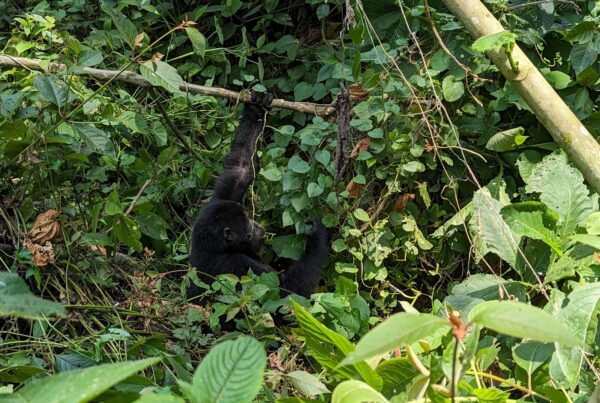
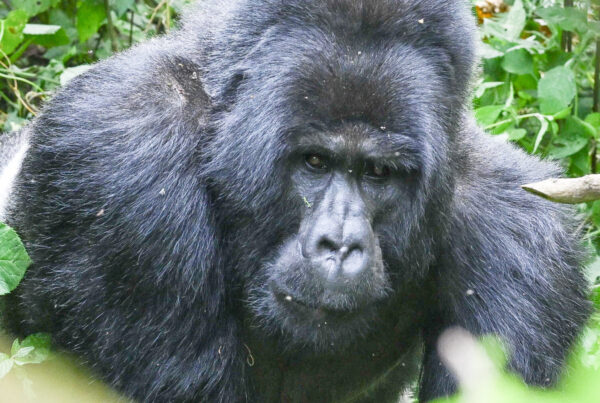
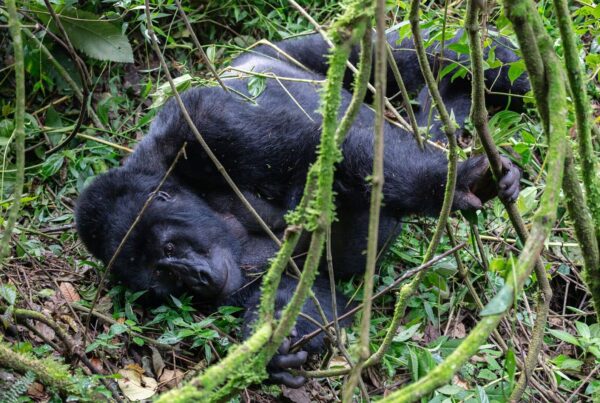
Bwindi Impenetrable National Park is home to more than 20 habituated mountain gorilla families across four trekking sectors, making it the largest gorilla trekking destination in the world. Each family has a distinct history, range, and trek difficulty, so understanding the groups helps you choose the right sector and set realistic expectations. See also our full guide to Uganda gorilla families and the Bwindi trekking overview.
- Total habituated families: 20+ groups open to tourism (2026)
- Trekking sectors: Buhoma, Rushaga, Ruhija, Nkuringo
- Group sizes: 5 to 40+ individuals (varies by family)
- Daily visitor limit: 8 people per gorilla family per day
- Trek duration: 2–8 hours depending on family location that day
Bwindi Impenetrable National Park has more habituated gorilla families available for tourism than any other gorilla trekking site in the world. Across the park’s four sectors — Buhoma, Rushaga, Ruhija, and Nkuringo — over 20 gorilla families have been habituated to human presence through years of research and preparation by Uganda Wildlife Authority rangers and researchers. Each family has its own name, history, composition, and character; some have been receiving visitors since the park opened in 1993, others are more recently habituated. Understanding the gorilla families at Bwindi provides context for the experience and helps visitors appreciate that their encounter is with a specific, known group of individuals with their own social history.
How Habituated Gorilla Families Are Created
Habituating a wild gorilla family to comfortable tolerance of human proximity takes 2 to 4 years of daily close-range contact by a dedicated team of UWA researchers and rangers. The process involves gradually reducing the distance between the human observers and the gorilla family over many months, allowing the gorillas to learn that human presence does not represent a threat. During the habituation period, no tourism visits occur — the family is only exposed to the small, consistent research team. When the gorillas reliably tolerate human approach to within 7 metres without displaying stress responses, the family is considered habituated and eligible for tourism.
The habituation process is expensive, time-consuming, and not without risk — partially habituated silverbacks occasionally charge or redirect aggression onto researchers, and the physical demands of following gorilla families through dense highland forest daily for years requires dedicated, well-trained personnel. The investment that has produced Bwindi’s 20+ habituated families represents decades of sustained institutional commitment by UWA and supporting conservation organisations.
Buhoma Sector Gorilla Families
The Mubare group is Bwindi’s oldest habituated gorilla family — the first group prepared for tourism from 1990 to 1993 and among the first gorilla families in Uganda to receive visitors. For much of its history the Mubare group was led by Ruhondeza, a silverback who was one of the most photographed individual gorillas in Bwindi. The group has gone through periods of social change including the loss of dominant silverbacks and subsequent reorganisation, and continues to be one of Buhoma’s trekking options with a smaller current size than at its peak.
The Habinyanja group was habituated between 1995 and 1997 and has historically been one of Buhoma’s larger families, at times exceeding 20 members. The group has experienced splits and social reorganisations over the years — a natural process in gorilla social structure as sub-adult males mature and sometimes leave with females to form new groups. The Habinyanja family and the Rushegura family that split from it in 2002 represent the kind of social dynamic that researchers in Bwindi document continuously as the gorilla population evolves within the park.
The Rushegura group, having split from Habinyanja, is another Buhoma family with its own silverback leadership and composition. Buhoma also has additional families that have been habituated over the years, with specific composition and accessibility varying as groups naturally evolve.
Rushaga Sector Gorilla Families
The Nshongi group is the largest gorilla family in Bwindi and has at various times comprised over 25 members — an unusually large gorilla group that provides exceptional viewing with numerous individuals visible simultaneously. The Nshongi group’s large size and the complexity of its social interactions make a Nshongi trek particularly rewarding for visitors interested in gorilla social behaviour. The group has experienced splits over the years as large gorilla groups tend to do, with some individuals departing to form or join other groups.
The Mishaya group was formed by a silverback who split from Nshongi and took a portion of the group to form a new family unit. The Mishaya group’s origin from Nshongi illustrates the natural social dynamics of gorilla communities — groups grow, tensions develop between silverbacks, splits occur, and new family units form. Mishaya has established itself as a stable independent family with its own home range in Rushaga’s southern forest.
The Kahungye group and the Busingye group are among other habituated families in Rushaga, contributing to the sector’s distinction of having the highest number of habituated families of any Bwindi sector. This abundance of families means that Rushaga typically has the best gorilla permit availability of any sector and can accommodate visitors whose Buhoma or other sector permit dates are not available.
Ruhija Sector Gorilla Families
The Bitukura group is one of Ruhija’s best-known gorilla families, with a reputation for relatively settled, accessible behaviour that has made it a favourite for wildlife photographers. The group has had periods when it was regularly encountered in open forest areas near the trailhead, producing unusually good visibility and photography conditions. The Bitukura group’s home range in Ruhija’s high montane forest gives encounters in the atmospheric, moss-draped forest zone that distinguishes the sector from lower-altitude trekking.
The Oruzogo group and the Mukiza group are among other habituated families available for trekking in Ruhija. Ruhija’s smaller number of tourism families compared to Rushaga or Buhoma reflects the sector’s lower tourism development — a characteristic that also means fewer visitors on trek days and a quieter, more intimate forest experience for those who do trek there.
Nkuringo Sector Gorilla Families
The Nkuringo group, named after the volcanic ridge above the sector, is the primary gorilla family associated with Nkuringo sector and carries one of the more poignant histories in Bwindi’s conservation story. The group’s silverback Rafiki was killed by poachers in June 2020 in a widely reported incident that shocked the Uganda conservation community and attracted international media coverage. Six suspects were arrested and prosecuted in Uganda’s court system — a landmark case in gorilla poaching prosecution.
Following Rafiki’s death, the Nkuringo group underwent the social disruption typical of gorilla families that lose their dominant silverback. Sub-adult males competed for dominance, group composition shifted, and rangers monitored the ongoing reorganisation carefully. The group has since stabilised under new male leadership and trekking has resumed. The history of Rafiki and the legal case that followed his death are now an integral part of the Nkuringo trekking experience — his story personalises the conservation challenge in ways that abstract statistics cannot.
The Gorilla Habituation Experience Families
In addition to fully habituated families available for standard 1-hour trekking permits, Bwindi has families that are in the process of habituation and available for the Gorilla Habituation Experience (GHE) — a 4-hour extended visit that allows visitors to be present during the ongoing habituation process. GHE families at Buhoma and Rushaga sectors are not fully habituated and their responses to visitor presence may be less predictable than fully habituated families, but the extended time and the unique context of witnessing an ongoing scientific process make the GHE a deeply distinctive experience for those who choose it.
What Family Will You Trek?
The specific gorilla family assigned to your trekking group on any given day is determined by UWA rangers on the morning of the trek, based on visitor group composition, physical fitness, and the ranger assessment of which available family is most appropriate. You cannot choose your specific family when booking, though you can indicate preferences or special considerations to your operator who may be able to communicate these to UWA in some cases.
Whatever family you are assigned, the encounter itself is with wild gorillas in their natural habitat — animals that have been habituated to human presence but have not been tamed, domesticated, or otherwise altered from their wild nature. The specific family you meet will be different from any other visit, and every individual gorilla in your encounter has a personal history, a place in the social hierarchy, and a character that rangers who monitor them daily can describe in detail. Ask your ranger-guide about the individual gorillas you encounter — the personal stories and research knowledge they carry add a dimension to the encounter that the visual experience alone does not provide.
Final Thoughts
Bwindi’s 20+ habituated gorilla families represent a conservation achievement of extraordinary scope — the result of decades of investment, danger, and dedication by researchers, rangers, and conservation organisations committed to ensuring that these animals survive. Each family name, each silverback biography, each group history is a chapter in the ongoing story of mountain gorilla conservation that visitors enter for one hour and carry with them for the rest of their lives.
How many habituated gorilla families are there in Bwindi?
As of 2026, Bwindi has more than 20 gorilla families habituated for tourism, spread across four trekking sectors. This is the highest concentration of trekking gorilla families at any single site in Africa.
Which Bwindi sector has the most gorilla families?
Rushaga sector in the south of Bwindi has the highest number of habituated gorilla families, with more than eight groups available for trekking. It is the most flexible sector for travelers who want permit availability or family selection options.
Can I choose which gorilla family I trek to in Bwindi?
You can request a specific family when booking, but assignment is not always guaranteed and depends on availability. Rangers make final group assignments on trek morning based on conditions, group size, and gorilla movements that day.
What is the maximum number of visitors allowed per gorilla family per day?
Uganda Wildlife Authority limits each gorilla family to 8 visitors per day. This cap protects the gorillas from disease exposure and behavioral stress, and it also ensures a quality experience for trekkers without overcrowding.
Which Bwindi gorilla family is best for first-time trekkers?
Families in Buhoma sector and lower Rushaga tend to be located at shorter trek distances from trailheads, making them more accessible for first-time visitors. Your operator can advise based on your fitness level and the time of year you travel.
- Gorilla Family Groups in Uganda: Meet the Habituated Families
- Top 10 Habituated Gorilla Families in Bwindi Impenetrable Forest
- The Gorilla Family Photo Album: Every Habituated Family in Bwindi Pictured
- Rushaga Sector Bwindi: Which Gorilla Families and How to Book
- Rushaga: The Road to Southern Bwindi’s Gorilla Families 2027
- How habituated gorilla families are named and numbered: the science of identification
- Gorilla families with the best reputation for close encounters in Bwindi
- Bwindi at dawn: what happens in the forest before the trekking groups arrive
- Bwindi Impenetrable Forest – Gorilla Trekking in Uganda’s UNESCO Jungle
- Top Gorilla Trekking Destinations in Uganda – Bwindi vs. Mgahinga 2025