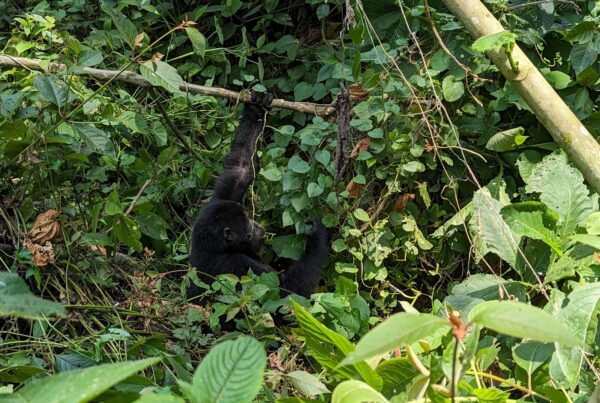
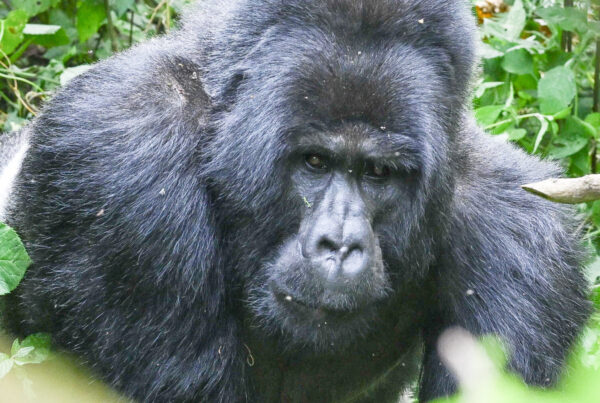
Bwindi Impenetrable National Park is the forest at the centre of mountain gorilla conservation — a 331-square-kilometre ancient rain forest in southwestern Uganda’s Kigezi highlands that holds approximately 500 individual mountain gorillas, roughly half the total world population of a subspecies that was considered near extinction fewer than forty years ago and whose partial recovery is one of conservation’s most significant documented achievements. The park is a place of extraordinary biodiversity (120+ mammal species, 350+ birds, 1,000+ plant species), complex conservation history (from threatened forest to UNESCO World Heritage Site in a generation), and genuine visitor impact — every gorilla trekking permit contributes directly to the ranger operation and community revenue-sharing programme whose combined effect has stabilised the gorilla population and made the standing forest economically valuable to the communities who live beside it. This guide covers what Bwindi is, how it works, and what a visit involves. For the trek planning details, see the Bwindi sector guide and the permit guide.
Bwindi Impenetrable National Park: Overview
- Location: Southwestern Uganda, Kigezi highlands, adjacent to DRC border — 540km from Kampala
- Sectors: Four — Buhoma (north), Ruhija (northeast), Rushaga (south), Nkuringo (southwest)
- Habituated gorilla families: 21+ families across all four sectors (number grows as new habituation projects complete)
- Daily permits available: 8 visitors per habituated family per day — approximately 170-200 permits available across all families
- Permit cost: USD 800 per person (as of 2024 UWA pricing)
- Nearest airport: Kihihi (domestic, 1-2 hours from Rushaga) or Entebbe (international, 9-10 hours by road)
Bwindi Impenetrable National Park is the most biodiverse forest in East Africa and home to approximately half the world’s mountain gorilla population. Located in southwestern Uganda in the Kigezi Highlands, Bwindi is the centrepiece of Uganda’s wildlife tourism industry, a UNESCO World Heritage Site, and one of the few places on Earth where it is possible to encounter mountain gorillas in their natural habitat. For anyone planning a gorilla trekking experience, understanding Bwindi — its geography, ecology, history, and the practical realities of visiting — is the essential foundation.
Location and Access
Bwindi Impenetrable National Park lies in southwestern Uganda, straddling the border with the Democratic Republic of Congo at the edge of the Albertine Rift Valley. The park is approximately 490 kilometres southwest of Kampala by road, a journey that takes 8 to 10 hours depending on road conditions and stops. From Entebbe International Airport, the drive is slightly longer. Many visitors opt to fly to Kihihi airstrip (serving Buhoma sector) or Kisoro airstrip (serving Nkuringo, Rushaga, and Mgahinga), which reduces travel time to under an hour from the airstrip to the park entrance.
The road journey, while long, offers its own rewards: the drive through Uganda’s southwestern highlands passes through tea estates, terraced hillside farms, volcanic crater lakes, and some of East Africa’s most dramatic highland landscapes. Many itineraries break the journey at the equator crossing near Masaka or with a stop at Lake Bunyonyi — one of Uganda’s most beautiful crater lake landscapes — before continuing to Bwindi.
Park Characteristics
Bwindi covers 331 square kilometres of montane and lowland forest at elevations ranging from 1,160 to 2,607 metres above sea level. The park’s name translates roughly as impenetrable — reflecting the dense, tangled nature of the vegetation at lower elevations, where thick undergrowth, fallen trees, and vine networks create the labyrinthine landscape for which the forest is named.
The park is divided into four management sectors, each with its own trekking headquarters, habituated gorilla families, and tourist infrastructure: Buhoma in the north, Ruhija in the northeast, Rushaga in the south, and Nkuringo in the southwest. Each sector has a distinct character and offers different trek difficulty levels, accommodation options, and complementary activities that make sector selection an important part of planning a Bwindi visit.
Biodiversity Beyond Gorillas
Bwindi’s biodiversity extends far beyond its mountain gorillas. The park is recognised as one of the most biologically rich forests on the African continent, with over 1,000 flowering plant species, 347 bird species (including 23 Albertine Rift endemics and several globally threatened species), 120 mammal species, and over 200 butterfly species. For birders, Bwindi is one of Africa’s premier destinations: the African green broadbill, Shelley’s crimsonwing, Grauer’s warbler, and numerous other Albertine Rift endemic birds are present in the forest, making gorilla trekking a naturalist experience that extends well beyond the hour with the gorillas themselves.
Large mammals present in Bwindi include forest elephants (occasionally encountered on treks in some sectors), African buffalo, common chimpanzee, black-and-white colobus monkey, red-tailed monkey, l’Hoest’s monkey, giant forest hog, African golden cat, and leopard. The mammal community of a complete Afrotropical montane forest is represented within the park’s 331 square kilometres in a way that makes Bwindi exceptional even among Uganda’s national parks.
Gorilla Families and Trekking
Bwindi currently has over 20 habituated gorilla families available for trekking and research, distributed across the four sectors. Each sector has between 3 and 8 habituated families available for tourism on any given day. Uganda Wildlife Authority issues a maximum of 8 permits per gorilla group per day, meaning the total daily trekking capacity across all Bwindi sectors is significant but controlled.
Gorilla permit prices in Uganda are $800 per person for foreign non-residents, $700 for foreign residents and East Africa Community citizens, and 300,000 UGX for Ugandan nationals. Permits must be purchased in advance through Uganda Wildlife Authority or accredited tour operators. During peak season (June to August and December to January), permits sell out months in advance, making early booking essential.
Trek difficulty varies considerably between families and sectors. Buhoma sector has families with reputations for accessible treks — some require as little as 30 minutes of walking from the trailhead. Ruhija and Nkuringo sectors have reputations for more challenging treks in steeper terrain. Rushaga offers a range of difficulty levels and has been developing rapidly as an alternative to Buhoma for visitors seeking good infrastructure with more choice of trek difficulty.
The Trekking Experience
Gorilla trekking at Bwindi follows a consistent format across all sectors. Visitors report to the sector headquarters for a pre-trek briefing that covers rules, protocols, and what to expect. Ranger-guides and trackers lead groups through the forest to locate the assigned gorilla family. Once found, visitors spend exactly one hour in the gorillas’ presence before returning to the trailhead.
The trek to the gorillas can take anywhere from 30 minutes to 4 hours depending on the family’s location on the day. Trackers who follow the family from the previous evening’s nest site radio ahead to guide the visitor group to the gorillas efficiently, but the time required to reach them reflects where in their home range they happen to be. Physical fitness, appropriate footwear, and the willingness to navigate steep and sometimes muddy terrain are important practical considerations for all visitors.
The hour with the gorillas is universally described by visitors as one of the most profound wildlife experiences of their lives. The combination of the gorillas’ physical scale, their behavioural complexity, their observable intelligence, and the intimacy of close-range encounter in a natural forest setting creates an experience that photographs and descriptions cannot adequately convey.
Best Time to Visit
Bwindi can be visited year-round, as gorilla trekking permits are available in all months and the gorillas are present in the forest throughout the year. However, the experience varies significantly by season. The dry seasons — June to August and December to January — offer the most comfortable trekking conditions: drier forest floors, clearer skies, less mud, and easier navigation. These are also the peak tourist seasons with the highest permit demand.
The wet seasons — March to May and September to November — bring heavier rainfall that makes trails muddier and treks more physically demanding, but also produce lush, green forest conditions, reduced visitor pressure, and sometimes more settled gorilla behaviour as families concentrate in productive feeding areas during the wet-season flush of new vegetation. Wet season permits are more readily available and some lodges offer reduced rates, making this season attractive for budget-conscious visitors willing to embrace wetter conditions.
Where to Stay
Accommodation options around Bwindi range from budget guesthouses in nearby towns to luxury forest lodges perched at the forest edge with views over the park and gorilla habitat. The most established lodge concentration is in Buhoma, where properties including Buhoma Lodge, Gorilla Forest Camp, and Bwindi Lodge have been operating for years and offer well-developed service standards. Rushaga, Nkuringo, and Ruhija all have their own lodge options at various price points.
Many visitors stay at lodges adjacent to the park entrance in their chosen sector to minimise travel time on trek day and to enjoy the atmosphere of being at the forest’s edge in the evening and morning. The combination of forest sounds at night, early morning bird activity, and proximity to the landscape that contains the gorillas adds to the overall experience of a Bwindi visit.
Practical Information
Visa requirements: Most nationalities require a visa to enter Uganda, available online in advance through the Uganda e-visa portal or on arrival at Entebbe International Airport. East African Community citizens (Uganda, Kenya, Tanzania, Rwanda, Burundi, South Sudan, DRC) do not require a visa for short stays.
Health requirements: Yellow fever vaccination is required for all visitors. Malaria prophylaxis is recommended for the Bwindi area. Travel insurance including medical evacuation coverage is strongly recommended.
Currency: Uganda Shilling (UGX). USD cash is widely accepted for tourism services. ATMs are available in Kisoro and Kabale towns but reliability varies — carry sufficient cash from Kampala or Entebbe.
Final Thoughts
Bwindi Impenetrable National Park is not simply a destination — it is an experience that visitors consistently describe as life-changing. The combination of mountain gorilla encounters, extraordinary biodiversity, dramatic highland landscape, and the sense of being in one of Africa’s last great forests creates something that transcends conventional wildlife tourism. Plan carefully, book early, and arrive knowing that what you will encounter in Bwindi’s forest is available nowhere else on Earth.
Frequently asked questions about Bwindi Impenetrable National Park
How many gorilla families are habituated at Bwindi?
Bwindi Impenetrable National Park has over 21 habituated gorilla families available for tourist trekking across its four sectors — Buhoma (north), Ruhija (northeast), Rushaga (south), and Nkuringo (southwest). The habituation process for a new gorilla family takes approximately 2-3 years of daily ranger contact before the family tolerates the close human presence required for tourist trekking, which means the number of available families grows incrementally as UWA’s habituation programme progresses with previously unhabituated groups. Each sector has between 3-8 habituated families, with Rushaga sector having the largest number of families and consequently the largest daily permit capacity of any single sector. The families accessible through the research habituation programme (available to researchers rather than tourists) are separate from the tourism habituation programme and provide additional study access to gorilla behaviour outside the tourist visit structure. Not all of Bwindi’s estimated 500 mountain gorillas are in habituated families — unhabituated gorillas range throughout the park and are only monitored, not trekked. The total of 21+ habituated families at Bwindi plus the Virunga families in Rwanda and DRC means that Bwindi is the largest single gorilla trekking destination by family and daily permit volume.
What is the difference between Bwindi’s four sectors?
Bwindi’s four sectors (Buhoma, Ruhija, Rushaga, Nkuringo) differ in altitude, terrain difficulty, lodge quality, permit availability, and the character of the gorilla families based there — differences that are practically important for trip planning. Buhoma (north, 1,600-1,800m): the original and most-established gorilla trekking sector; easiest terrain of the four sectors with accessible valley trails; the best lodge infrastructure of any sector with several established mid-range to premium lodges directly at the gate; 4-5 habituated families; the sector most suitable for visitors with fitness uncertainty. Ruhija (northeast, 1,800-2,200m): highest-altitude sector, most demanding terrain, smallest number of families; exceptional bird diversity including several Albertine Rift endemics more accessible here than at lower sectors; fewer visitors than Buhoma or Rushaga; appropriate for fit visitors interested in the combination of gorilla trekking and high-altitude birding. Rushaga (south, 1,600-1,900m): the largest sector by family number and permit volume; terrain intermediate between Buhoma and Ruhija; several good lodges including Gorilla Safari Lodge and Bwindi Lodge; the best option for visitors who have been unable to secure permits at Buhoma due to high demand. Nkuringo (southwest, 1,800-2,000m): remote and elevated sector adjacent to the Virunga conservation area; dramatic landscape with views toward DRC; fewer visitors; terrain similar to Ruhija in difficulty.
How long should you spend at Bwindi for a gorilla trekking visit?
The minimum time needed at Bwindi for a single gorilla trek is 2 nights — one arrival night before the trek (the trek departs at 7-8am from the sector gate, and arriving from Kampala on the same day means arriving in darkness after a 9-10 hour road journey, which is not recommended) and one night after the trek (the evening after the encounter requires physical recovery and the experience benefits from a relaxed morning departure rather than an immediate onward journey). For visitors booking a second trek or combining gorilla trekking with other Bwindi activities (birding, community walks, Batwa trail), 3-4 nights is the appropriate stay. For second-trek permits: two consecutive trek days are possible and are booked by a significant proportion of visitors who believe (accurately, based on visitor accounts) that the second encounter builds on the first with less logistical anxiety and more observational depth. The second permit is the same USD 800 cost — most visitors who afford the first consider the second a high-value addition. The lodge stays at Bwindi are among the most atmospheric in Uganda — the highland forest setting, the evening sounds, and the quality of the better lodge properties at Buhoma and Rushaga make the multi-night stay genuinely pleasant rather than merely logistically necessary. Budget the stay appropriately for what the experience is, not merely the minimum required to complete the trek.
What other wildlife can you see at Bwindi besides mountain gorillas?
Bwindi’s 120+ mammal species and 350+ bird species make it one of the most wildlife-rich forests in Africa beyond the mountain gorillas, though the forest’s density means that most non-gorilla wildlife observation is incidental rather than sought. The mammals most commonly encountered on gorilla treks or forest walks: chimpanzees (Bwindi has a chimpanzee population, though they are not habituated for tourist trekking — hearing chimps in the forest is common; seeing them is occasional); black-and-white colobus monkeys (commonly seen in forest canopy, especially at forest edges near the sector lodges); red-tailed monkeys and L’Hoest’s monkeys (mid-canopy species seen regularly near the lodge forest edge); forest elephants (not commonly encountered on day treks but active in the park — evidence of elephant passage through the vegetation is frequent); forest buffalo (single animals occasionally encountered at forest edges); and various duiker species in the undergrowth. The bird wildlife is the most reliably accessible non-gorilla wildlife category: the approach trek during the early morning birding window (6-9am) passes through forest that holds African Green Broadbill, Handsome Francolin, Yellow-eyed Black-Flycatcher, and the various hornbill species that define the soundscape of the Bwindi approach. For dedicated non-gorilla wildlife observation, a morning forest walk with a specialist bird or mammal guide provides better observation structure than the incidental sightings during the gorilla trek itself.
Can you combine Bwindi gorilla trekking with Rwanda gorilla trekking in one trip?
Combining Uganda and Rwanda gorilla trekking in a single trip is logistically straightforward and is done by a significant proportion of visitors who want to experience both the Bwindi and Virunga gorilla populations. The border crossing between Uganda and Rwanda is at Katuna/Gatuna, approximately 2-2.5 hours from Bwindi’s Rushaga and Nkuringo sectors — the proximity means a Bwindi to Volcanoes National Park transfer can be completed in a half-day drive. The East Africa Tourist Visa (USD 100, applied for online before travel) covers Uganda, Rwanda, and Kenya in a single visa, eliminating separate visa costs for the combined trip. The gorilla permit comparison: Uganda’s permit is USD 800; Rwanda’s permit is USD 1,500 — the Rwanda premium reflects both the higher operating cost of Volcanoes National Park and Rwanda’s deliberate positioning as a premium gorilla destination. The Bwindi vs Virunga comparison as gorilla trekking experiences: both provide genuine mountain gorilla encounters with habituated families; the Virunga volcano landscape is distinct from Bwindi’s ancient forest and provides different photographic and environmental character; the Rwanda tourism infrastructure is generally of higher standard than Uganda’s but at proportionately higher cost. A typical combined itinerary: 3-4 days in Uganda (Bwindi gorilla trek + optional Kibale or Queen Elizabeth visit) followed by 2-3 days in Rwanda (Volcanoes NP gorilla trek, Kigali city) for a 7-10 day combined trip.
Plan your Bwindi gorilla trekking visit
- Bwindi Sector Guide — full sector comparison for Buhoma, Ruhija, Rushaga, and Nkuringo
- Uganda Gorilla Families — the habituated families at each sector with trek difficulty and family character
- Gorilla Permit Guide — the permit booking process and direct UWA booking instructions
- Full Safari Cost Guide — complete trip cost breakdown for Bwindi visits
- Safari Itineraries — Uganda gorilla trekking itineraries from 3-day Bwindi-only to 10-day full Uganda circuit
- The History of Bwindi Impenetrable National Park: From Forest to World Heritage Site
- Bwindi Impenetrable Forest – Gorilla Trekking in Uganda’s UNESCO Jungle
- Uganda Gorilla Trekking Bwindi Impenetrable Forest: The Complete Guide
- Where Exactly Is Bwindi Impenetrable Forest? Location, Geography, and How to Get There
- How Old Is the Bwindi Impenetrable Forest? Age and History
- Kibale Forest National Park: Uganda’s Chimpanzee Trekking Capital
- Bwindi Impenetrable Forest: Ecology, History, and Conservation
- What Bwindi Impenetrable Forest Looks Like From the Air: Drone Footage
- Bwindi Impenetrable Forest: Book Your Gorilla Trek for 2027 Now
- Weather at Bwindi Impenetrable Forest: temperature, rainfall and what to expect