The Aerial Photography Dream That Hits Regulatory Reality
For photographers and videographers planning a gorilla trekking trip, the temptation to bring a drone is powerful. Aerial footage of Bwindi’s mist-covered canopy, the dramatic volcanic ridges, and the emerald valleys would be spectacular, offering perspectives that ground-based photography cannot match. The idea of capturing the forest from above, of revealing its scale and texture in ways that few images do, is genuinely exciting for creative professionals and enthusiastic amateurs alike.
The reality, however, is that drone use in Uganda’s national parks, including Bwindi Impenetrable National Park, is heavily restricted and practically impossible for tourists. Understanding why these restrictions exist, what the legal framework actually says, and what alternatives exist for aerial photography helps set realistic expectations and avoids the serious consequences of violating Uganda’s drone regulations.
Uganda’s Drone Regulatory Framework
Uganda regulates drones through the Civil Aviation Authority, which requires registration, licensing, and operational permits for all drone operations. For commercial drone use, operators must obtain a Remote Pilot License, register their aircraft, and secure flight authorisation for each operation. Recreational drone use, while less stringently regulated, still requires registration and adherence to operational restrictions.
More critically for gorilla trekkers, the Uganda Wildlife Authority prohibits drone use within all national parks without specific research permits. This prohibition is absolute and applies regardless of whether you hold Civil Aviation Authority approvals. UWA’s jurisdiction over national park airspace supersedes general aviation permissions, meaning that even a fully licensed commercial drone operator cannot legally fly in Bwindi without UWA’s explicit authorisation.
Why Drones Are Prohibited in Bwindi
The prohibition on drones in Bwindi exists for multiple compelling reasons, all related to gorilla welfare and conservation. Mountain gorillas are sensitive to disturbance, and the sound of drone rotors, the visual intrusion of an aerial device, and the potential for drones to crash or malfunction in the forest all create unacceptable risks to animals that are already stressed by human presence during trekking encounters.
Gorillas have been observed reacting strongly to unfamiliar sounds and objects. A drone buzzing overhead could trigger defensive behaviours, disrupt feeding patterns, or cause a family to flee its habitat area. Given that each gorilla family is limited to one hour of human contact per day, any disturbance caused by drones directly reduces the quality of that precious hour for both gorillas and permitted trekkers.
There are also security and privacy concerns. Drones could theoretically be used for poaching surveillance or to locate gorilla families outside permitted trekking protocols. While most tourists have no such intentions, blanket prohibitions are easier to enforce than nuanced permissions that attempt to distinguish legitimate photography from harmful activities.
Consequences of Illegal Drone Use
Violating Uganda’s drone regulations can result in serious consequences. Drone equipment may be confiscated by park rangers or customs officials. Fines can be substantial, ranging from hundreds to thousands of dollars depending on the violation’s severity. In extreme cases, criminal charges and imprisonment are possible, though these are typically reserved for commercial operators or repeat offenders rather than tourists who unknowingly violate regulations.
Perhaps the most significant consequence is the impact on your gorilla trekking experience. If rangers discover drone equipment during the mandatory baggage check at the pre-trek briefing, you may be denied participation in the trek, forfeiting your eight-hundred-dollar permit with no possibility of refund. The embarrassment and disappointment of being excluded from the encounter you have travelled across the world to experience is a heavy price for bringing prohibited equipment.
Alternatives for Aerial Photography
If aerial perspectives are essential to your project, several alternatives exist that do not involve drones. Some lodges near Bwindi are situated on elevated ridges that offer spectacular panoramic views over the forest canopy. Strategic viewpoint selection, particularly at sunrise or sunset when mist creates dramatic atmospheric effects, can produce images with aerial-like grandeur without leaving the ground.
For professional filmmakers with legitimate projects, UWA does issue research and filming permits that may include limited drone authorisation under strict supervision. These permits require extensive advance application, justification of the drone’s necessity, and operational restrictions that make them impractical for standard tourism photography. The application process takes months and is not guaranteed to succeed.
Practical Advice for Photographers
Leave your drone at home. The regulatory barriers are insurmountable for tourists, the risks to gorillas are real, and the consequences of violation are severe. Instead, invest in high-quality ground-based photography equipment: a camera with excellent low-light performance for forest conditions, a telephoto lens for detail shots, and perhaps a lightweight monopod for stability during the trek.
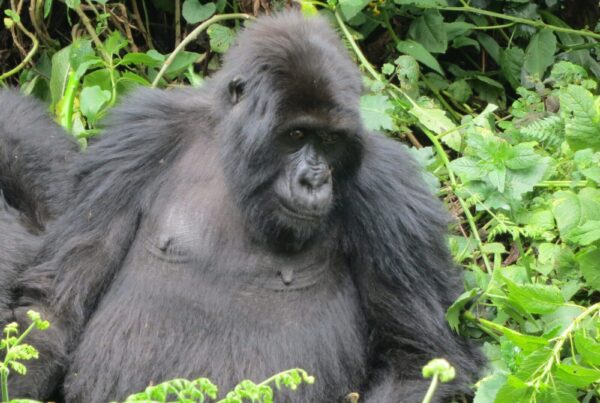
The best gorilla photographs are taken at eye level, metres from the animals, capturing expressions and interactions that no aerial perspective could reveal. A drone might show you the forest’s scale, but a well-composed ground-level image shows you the gorilla’s soul. That is what you came for.
Final Thoughts
The prohibition on drones in Bwindi is not bureaucratic obstructionism but a necessary protection for one of the planet’s most vulnerable great ape populations. Mountain gorillas number barely one thousand individuals, and their tolerance for human presence is carefully managed to prevent stress and behavioural disruption. Drones represent an intrusion that this fragile balance cannot accommodate.
When you leave your drone behind and enter Bwindi’s forest on foot, you are accepting the limitations that make the encounter possible. You will not capture aerial footage, but you will capture something more valuable: the intimate, ground-level connection with wild creatures who have chosen, through decades of careful habituation, to tolerate your presence. That connection is worth more than any drone video.
- What Bwindi Impenetrable Forest Looks Like From the Air: Drone Footage
- Drone regulations in Uganda: can you fly a drone near Bwindi National Park?
- Gorilla Trekking in Mgahinga vs Bwindi: Key Differences Explained
- How Do Rangers Find Gorillas Every Morning in Bwindi? The Tracking Process Explained
- Is the Drive to Bwindi Really 8 Hours? All the Options Explained
- Drone photography Uganda: where it is legal and where it is banned
- Drone photography rules and regulations in Uganda’s national parks
- Uganda’s Bwindi Impenetrable Forest: a UNESCO World Heritage Site explained
- Drone photography restrictions in Uganda national parks: rules and alternatives
- The hagenia-hypericum zone: Bwindi’s high-altitude forest belt explained