Updated
gorilla trekking Uganda still new surprise is one of Africa’s most extraordinary wildlife experiences, connecting travellers with mountain gorillas in their natural forest habitat. Gorilla trekking at Bwindi has been operating for over thirty years — the first tourist group visited the Mubare family in Buhoma sector in 1993, and hundreds of thousands of visitors have followed since then, generating revenue that has funded the rangers who protected the gorillas through the 1990s instability, the mid-2000s consolidation, and the slow but measurable population recovery that brought mountain gorilla numbers from approximately 254 individuals in 1981 to over 1,000 in 2018. The gorilla encounter has survived three decades of visitors because the model built around it is genuinely protective, not just economically useful. Plan your own visit with a gorilla trekking permit or a 7-day Uganda gorilla safari.
- First tourist trek: 1993, Buhoma sector, Mubare family — the first habituated family opened to visitors; a group of 6 tourists under armed escort due to security conditions at the time
- Mountain gorilla population 1981: approximately 254 individuals; today (2025): over 1,000 — a population that has more than quadrupled while under tourism and conservation management
- Permit revenue: USD 800 per permit; 20% goes directly to local communities adjacent to Bwindi and Mgahinga; the rest funds UWA operations
- Today’s habituated families: over 20 families habituated across four Bwindi sectors and Mgahinga NP; the largest single site in the world for habituated mountain gorilla trekking
Gorilla trekking at Bwindi has been operating for over thirty years. The first tourist group visited the Mubare family in Buhoma sector in 1993. Hundreds of thousands of visitors have followed since then. The gorilla families have learned to tolerate the eight-person groups that appear in their home range daily, regard the visitors with habituated indifference, and continue with their morning routines largely unaffected. By any objective measure, this is a mature, well-established tourism product.
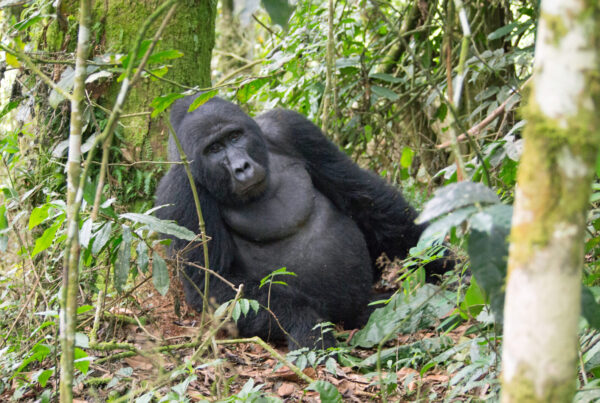
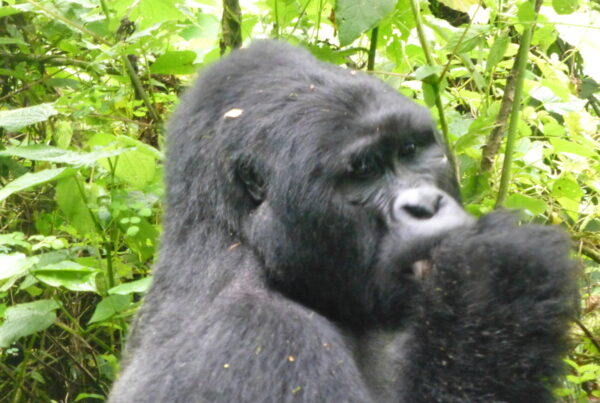
And yet everyone who does it for the first time — regardless of how much research they have done, how many accounts they have read, how many photographs they have seen — describes the encounter as genuinely surprising. Not surprising in the sense of unexpected, but surprising in the sense that the reality exceeds the expectation that the accumulated familiarity of thirty years of documentation has created. The encounter still feels new to everyone who has it for the first time. This is one of the most remarkable properties of the gorilla experience.
The Wildlife Encounter That Has Survived 30 Years of Visitors and Still Feels New
Why Thirty Years of Documentation Cannot Prepare You
Thirty years of gorilla trekking documentation — accounts, photographs, films, social media posts — has produced a comprehensive pre-arrival picture of what the experience involves. The visitor who arrives at Bwindi in 2027 knows, intellectually, what they are about to encounter. They have seen the photographs of silverbacks. They have read descriptions of the moment of first sighting. They have watched documentaries of the specific gorilla families they might encounter.
None of this preparation is sufficient because the preparation is mediated — experienced through a screen, a page, someone else’s sensory apparatus. The actual encounter is unmediated. The physical presence of a mountain gorilla — its size, its smell, the specific quality of its gaze, the sound of its breathing and movement — arrives at your nervous system directly, without the mediation of any representation, and produces a response that the preparation did not prepare you for because the preparation was not experienced by the same nervous system that is now receiving the actual thing.
The Thirty-Year Paradox
The paradox of gorilla trekking is that its thirty-year history of documentation has both promoted it and failed to convey it. The documentation creates awareness and desire. It does not create anticipation proportional to the actual experience. Visitors arrive expecting something extraordinary and encounter something more extraordinary than they expected. This gap — between documented expectation and undocumented reality — is preserved across thirty years of visitors because the undocumented reality is the physical, embodied encounter that no documentation can reproduce.
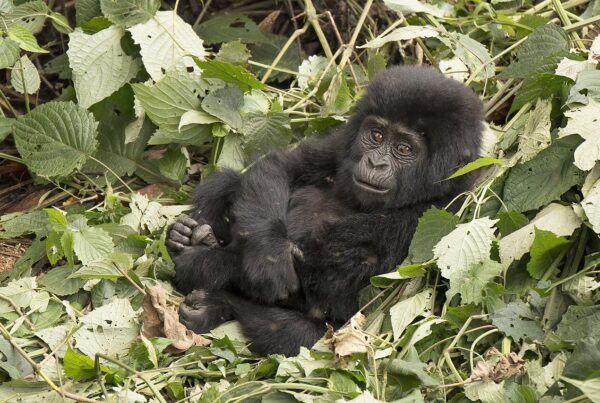
The conservation success that has produced a growing gorilla population also means that each new cohort of habituated groups contains animals born after the tourism programme was established — animals that have lived their whole lives with the presence of humans as an ordinary fact of their environment. The specific encounter of 2027 is different in its details from the encounter of 1993, not because the fundamental experience is different but because the specific gorilla families are different, the specific rangers are different, and the specific visitor is different. The newness is preserved by specificity.
What This Means for Your Experience
The thirty years of visitors who have been through Bwindi before you have not worn out the experience you are about to have. They could not wear it out because the experience is specific to your particular encounter with a particular gorilla family on a particular morning. The documentation they produced will not fully prepare you, and that is exactly as it should be. The permit at $800 in 2027 buys access to something that is still new to everyone who has it for the first time, despite thirty years of evidence that it is new to everyone who has it for the first time. Contact us to book yours.
How did gorilla trekking start in Uganda?
The first tourist gorilla trek in Uganda was in 1993. Background: gorilla habituation began at Bwindi in the late 1980s under the Institute of Tropical Forest Conservation (ITFC) with support from the International Gorilla Conservation Programme (IGCP); the process of habituating a gorilla family takes 2-3 years of daily non-threatening contact. The Mubare family: the first family habituated at Bwindi was the Mubare family in the Buhoma sector; the 1993 first trek took place under armed escort due to lingering post-war insecurity; six visitors, under the leadership of Ugandan rangers and IGCP staff, constituted the first group. Expansion: subsequent habituation of additional families across Buhoma, Ruhija, Rushaga, and Nkuringo sectors expanded capacity through the 2000s and 2010s; Mgahinga Gorilla NP added further capacity with the Nyakagezi family.
Why hasn’t 30 years of tourism harmed the gorillas?
The model is specifically designed to prevent harm. The 60-minute rule: the strict one-hour contact limit reduces cumulative stress on the gorillas; there is evidence that cortisol levels in habituated gorillas are elevated during visits — the limit keeps this manageable. Group size: maximum 8 visitors per family per day; this is a deliberate compromise between revenue generation and impact minimisation; higher numbers would increase both revenue and stress. Disease protocol: the 7-metre rule; mandatory masks for ill visitors (now full masking since COVID-19 protocol updates); health screening at the trek briefing; sick visitors excluded from trekking. Population result: the mountain gorilla is the only great ape whose population is increasing; the IUCN downlisted it from Critically Endangered to Endangered in 2018 based on the population increase; the tourism model is cited as a direct contributing factor in the conservation case.
How has the gorilla trekking experience changed since 1993?
The experience has changed significantly in logistics but the core encounter is identical. 1993: armed escort required; only one family available; one sector (Buhoma); limited accommodation; foreign visitors only. Today: no security concerns; over 20 habituated families; four sectors in Bwindi plus Mgahinga; a wide range of accommodation from budget to ultra-luxury; the permit price has risen from USD 175 in 1993 to USD 800 today. What has not changed: the gorillas are in their own wild forest; the trek is physically demanding and genuinely wild; the 60-minute encounter remains unmediated; there are no fences, no feeding, no artificial management of gorilla behaviour. The unchanged quality: the encounter available to a visitor in 2027 is substantively identical to the encounter available in 1993 — the protocol is the same; the gorillas are genuinely wild. Book through an accredited Uganda tour operator to secure your gorilla permit.
Which gorilla families have been trekked the longest?
The original families are still active and some are still led by silverbacks descended from the original habituated males. Mubare family (Buhoma sector): the first habituated family; still trekking; the current silverback and group structure reflects natural changes over 30 years — splits, new leadership, juvenile dispersal. Habinyanja and Rushegura families: also Buhoma sector; established in the late 1990s; among the most visited families in Bwindi. Bitukura and Oruzogo (Ruhija sector): established in the 2000s; Ruhija sector is at higher altitude and is accessible from Kabale; families here range in montane forest habitat different from Buhoma’s. Nshongi group (Rushaga): historically the largest family in Bwindi at over 35 members; it has since split; Rushaga sector has the most families and the most trekking options.
What should I know before booking a gorilla trek today?
Key facts for 2027 gorilla trekking. Permit price: USD 800 per person; non-negotiable; book as far in advance as possible especially December, January, June, and July which sell out months ahead; see full cost breakdown. How to book: through Uganda Wildlife Authority directly or through an accredited Uganda tour operator. Which sector: see the sector comparison; Buhoma is the most established; Rushaga has the most families; Ruhija is least busy; Nkuringo is most scenic. Fitness: treks can be 1-8 hours of hiking depending on where the gorillas are; average is 2-4 hours; porters are available at all sectors and strongly recommended for less-fit visitors. What to bring: read 30 things to know before your trek.
- The Wildlife Encounter That Has Survived 30 Years of Visitors and Still Feels New
- Wildlife in Uganda – Where Nature Still Roars, Hums, and Soars Free
- Best Wildlife Encounters on Earth: Why Gorilla Trekking Makes Every List
- 10 Wildlife Encounters That Compete With Gorillas: None Win
- The Guardian Called Uganda Gorilla Trekking the World’s Greatest Wildlife Encounter
- Why Gorilla Trekking Beats Every Other Wildlife Encounter on Earth
- 15 Bucket List Wildlife Encounters: Where Gorilla Trekking Ranks
- Africa’s Top 10 Wildlife Encounters Ranked by People Who Have Done Them All
- The 5 African Wildlife Encounters That Will Change How You See the World
- Africa’s 10 Most Unusual and Rare Wildlife Encounters