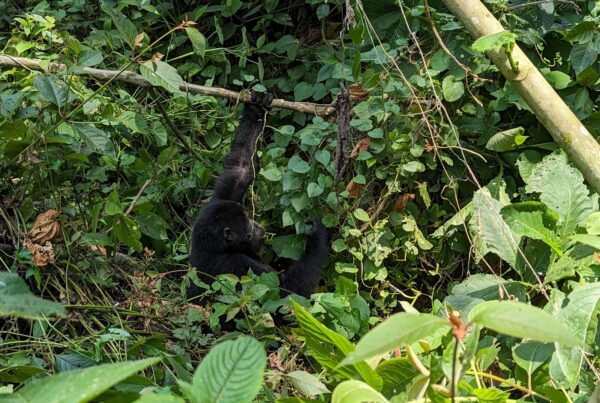
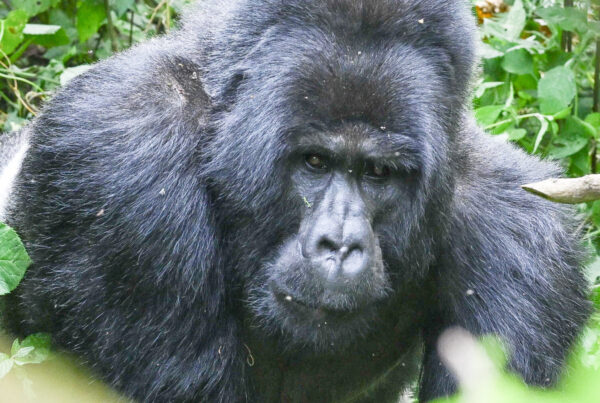
This is a strong claim. Every other wildlife encounter on earth. Not just the ones you have heard of, not just the commonly compared ones, but every encounter — polar bears, tiger sightings, whale shark dives, wildebeest migrations, penguin colonies in Antarctica, humpback whale breaches in the Pacific. We make this claim in 2027 not as marketing hyperbole but as a carefully considered position based on what gorilla trekking actually delivers and how it compares to the alternatives across every dimension that matters for the quality of a wildlife experience. This post defends the claim.
The Five Dimensions of Wildlife Encounter Quality
To compare wildlife encounters usefully, you need criteria. We use five: the quality of mutual recognition between observer and animal; the reliability of the encounter; the physical engagement required; the conservation narrative attached to the experience; and the emotional afterlife — how long and how richly the memory of the encounter continues to expand. Gorilla trekking scores at or near the top on all five. No other wildlife encounter does.
Mutual Recognition: The Defining Criterion
The encounter with a mountain gorilla is not simply the experience of being in the presence of a large, charismatic animal. It is the experience of being observed, assessed, and in some cases apparently recognised by a being that is 98 percent genetically identical to you and that has the social and cognitive complexity to know the difference between a threat and a harmless observer. When a silverback holds your gaze for five seconds, or a juvenile approaches your group to within a metre out of what appears to be simple curiosity, the encounter has a quality of mutual recognition that no other wildlife experience routinely provides.
Tiger encounters involve a predator who may or may not notice you depending on wind direction and concealment. Whale shark dives involve a filter feeder who is indifferent to human presence. Polar bear viewing involves a predator whose interest in you is investigative rather than social. None of these create the sense of being seen by another mind — of mutual, social awareness across the species boundary — that gorilla trekking at its best produces.
Reliability: The Encounter Is Guaranteed
Gorilla trekking in Uganda has an effective encounter rate of approximately 100 percent for trekkers departing on permitted days. The gorilla families are habituated, tracked daily, and within known home ranges that guides navigate with decades of local knowledge. You will see gorillas. The variable is how long the trek takes and what the gorillas are doing when you find them — but the encounter itself is essentially guaranteed. This reliability is matched by very few other wildlife experiences. Tiger sightings in Indian reserves are typically 50 to 80 percent reliable on any given game drive. Polar bear proximity encounters are perhaps 60 to 75 percent reliable in Churchill. Whale shark encounters in peak locations are 85 to 95 percent. Gorilla trekking’s near-100 percent reliability is exceptional in premium wildlife tourism.
Physical Engagement: The Encounter as Earned
Most wildlife encounters are delivered to you. You sit in a vehicle, on a boat, on a viewing platform. The animal comes to the proximity of your observation point, or it does not. Gorilla trekking demands that you go to the animal — through dense forest, over steep terrain, for however long it takes. When you arrive at the gorilla family, you have worked for the encounter. The physical engagement of the trek shapes the emotional response of the encounter in a way that delivered experiences do not. Trekkers consistently describe the encounter as feeling more significant, more earned, more personally meaningful than vehicle-based wildlife encounters of comparable visual quality.
Conservation Narrative: Active Success
Mountain gorilla conservation is the most successful great ape conservation programme in history. Population tripled in 30 years. Tourism revenue directly funding the protection that produced that recovery. Your permit fee part of a documented conservation financing mechanism. No other premium wildlife encounter combines this level of conservation success, this directness of visitor contribution, and this clarity of causal link between tourism and species recovery.
Emotional Afterlife: The Memory That Grows
The final criterion — the longevity and richness of the memory — is the hardest to measure but the most reported. Gorilla trekking veterans consistently describe the encounter as one that grows richer in memory rather than fading. The specific details — the silverback’s face, the juvenile’s tumble, the quality of the morning light in the clearing — remain vivid years and decades later in a way that most wildlife encounters do not. This is the ultimate test of an experience’s quality. Gorilla trekking passes it more consistently than any other wildlife encounter we know of. Contact us to plan yours in 2027.
Frequently Asked Questions
Kibale Forest National Park, near Fort Portal, has the highest density of chimpanzees in Africa and is Uganda’s premier chimpanzee destination. The standard chimp trekking permit costs $300 FNR. The Chimpanzee Habituation Experience at Kibale ($400 FNR) gives 4 hours with a habituated community — Uganda’s only chimp habituation programme.
Yes — the gorilla + chimp combination is Uganda’s most popular primate itinerary. A typical 8-day route: Entebbe → Kibale Forest (2 nights, chimp trekking) → Queen Elizabeth National Park (2 nights, game drives) → Bwindi (2 nights, gorilla trekking) → Entebbe. Charter flights on any leg reduce travel time significantly.
Uganda has 13 primate species. Commonly seen: olive baboon, vervet monkey, red-tailed monkey, black-and-white colobus, L’Hoest’s monkey, grey-cheeked mangabey. Golden monkeys are found at Mgahinga. Kibale Forest has the highest primate diversity of any East African forest. A dedicated primate safari can tick 7–8 species in a single itinerary.
Uganda has over 1,060 recorded bird species — one of the highest counts of any country in Africa. Bwindi alone has 350+ species including 23 Albertine Rift endemics. Murchison Falls, Queen Elizabeth, and the wetlands around Entebbe round out a world-class birding circuit. The African green broadbill and Shelley’s crimsonwing are Bwindi specialities.
Uganda is home to the mountain gorilla (Gorilla beringei beringei), one of two subspecies of eastern gorilla. They live exclusively in the Virunga volcanic highlands (Uganda/Rwanda/DRC) and Bwindi Impenetrable Forest (Uganda only). Mountain gorillas are the only gorilla subspecies that cannot survive in captivity — every individual you can trek is a wild animal.