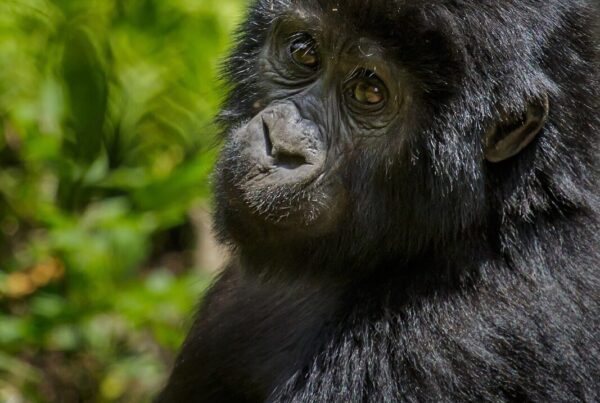
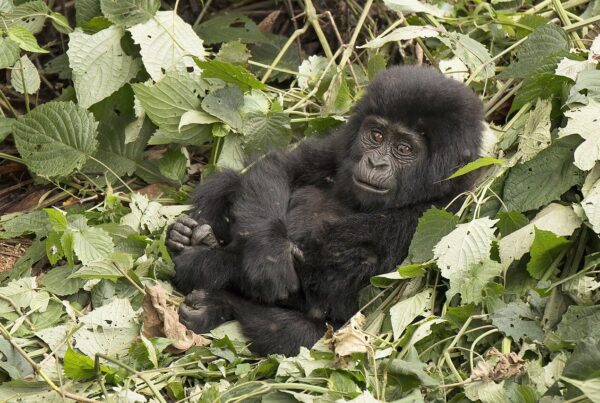
The Guardian is one of the world’s most widely read English-language newspapers and has a long tradition of serious, critically engaged travel journalism. When The Guardian calls gorilla trekking Uganda the world’s greatest wildlife encounter — as it has in multiple features and reader polls over the years — it is a significant editorial endorsement from a publication with no commercial stake in promoting the experience. Here is what that recognition means and why it is earned.
What The Guardian’s Coverage Focuses On
The Guardian’s travel features on gorilla trekking Uganda tend to focus on three intersecting themes: the experience itself, the conservation story, and the ethical dimensions of wildlife tourism. The Guardian’s travel journalism is characteristically more analytical and ethically engaged than many other publications — it is less likely to produce a brochure-style “you must go” piece and more likely to interrogate why the experience matters and what its broader significance is. When The Guardian’s travel section recommends gorilla trekking Uganda in this context — having considered the ethics, the conservation model, and the experience quality — the recommendation carries more weight than a straightforward promotional feature in a tourism publication.
Guardian Reader Polls and Rankings
The Guardian and its sister publication The Observer have run reader polls on the world’s greatest wildlife experiences in multiple years. Gorilla trekking Uganda consistently appears at or near the top of these polls, alongside whale watching in the Azores, polar bear expeditions in Churchill, and penguin colonies in Antarctica. In at least two Guardian polls, gorilla trekking Uganda was ranked first. These are reader-generated rankings, not editorial choices — they reflect the actual assessment of Guardian readers who have made the journeys being rated. Readers of The Guardian travel section tend to be experienced, critical, and knowledgeable travellers. Their ranking of gorilla trekking Uganda as the world’s greatest wildlife encounter is the verdict of people who know what they are comparing it to.
Why This Endorsement Matters
Editorial endorsements from publications like The Guardian are different from operator testimonials or TripAdvisor reviews — they are independent assessments from journalists with reputational stakes in honest evaluation. The Guardian does not receive commercial benefit from recommending gorilla trekking Uganda. When its travel editors and readers consistently place the Bwindi gorilla encounter at the top of their wildlife experience rankings, it reflects the experience’s actual quality relative to every other wildlife encounter on earth. This is the context in which 800 USD for a gorilla permit should be understood: not as a cost but as the price of admission to the world’s greatest wildlife encounter by the considered assessment of people qualified to make that judgment. Contact us to experience it for yourself in 2027.
Frequently Asked Questions
Kibale Forest National Park, near Fort Portal, has the highest density of chimpanzees in Africa and is Uganda’s premier chimpanzee destination. The standard chimp trekking permit costs $300 FNR. The Chimpanzee Habituation Experience at Kibale ($400 FNR) gives 4 hours with a habituated community — Uganda’s only chimp habituation programme.
Yes — the gorilla + chimp combination is Uganda’s most popular primate itinerary. A typical 8-day route: Entebbe → Kibale Forest (2 nights, chimp trekking) → Queen Elizabeth National Park (2 nights, game drives) → Bwindi (2 nights, gorilla trekking) → Entebbe. Charter flights on any leg reduce travel time significantly.
Uganda has 13 primate species. Commonly seen: olive baboon, vervet monkey, red-tailed monkey, black-and-white colobus, L’Hoest’s monkey, grey-cheeked mangabey. Golden monkeys are found at Mgahinga. Kibale Forest has the highest primate diversity of any East African forest. A dedicated primate safari can tick 7–8 species in a single itinerary.
Uganda has over 1,060 recorded bird species — one of the highest counts of any country in Africa. Bwindi alone has 350+ species including 23 Albertine Rift endemics. Murchison Falls, Queen Elizabeth, and the wetlands around Entebbe round out a world-class birding circuit. The African green broadbill and Shelley’s crimsonwing are Bwindi specialities.
Uganda is home to the mountain gorilla (Gorilla beringei beringei), one of two subspecies of eastern gorilla. They live exclusively in the Virunga volcanic highlands (Uganda/Rwanda/DRC) and Bwindi Impenetrable Forest (Uganda only). Mountain gorillas are the only gorilla subspecies that cannot survive in captivity — every individual you can trek is a wild animal.