Updated
15 bucket list wildlife encounters ranked gorilla trekking is one of Africa’s most extraordinary wildlife experiences, connecting travellers with mountain gorillas in their natural forest habitat. Travel writers, wildlife experts, and veteran safari guides have compiled countless lists of the world’s greatest wildlife encounters. The specific rankings vary depending on the criteria used, the regions emphasised, and the personal experience of the compiler. But across all the lists — published by National Geographic, Condé Nast Traveler, BBC Wildlife Magazine, African Wildlife Foundation, and dozens of specialist travel publications — certain experiences appear consistently, and gorilla trekking in Uganda consistently ranks among the top three of any list that includes it. This post presents 15 of the most acclaimed wildlife encounters on earth and situates gorilla trekking within that hierarchy.
15 Bucket List Wildlife Encounters: Where Gorilla Trekking Ranks
Tier 1: The Experiences That Defined Wildlife Travel
The top tier of any wildlife experience ranking includes encounters so singular that most compilers simply list them first and note that the ranking below them is debatable. Gorilla trekking in Uganda occupies this tier. Its specific combination of intimacy, primate connection, conservation narrative, and emotional impact make it uniquely defensible as the finest wildlife encounter available to any traveller on earth. It shares this tier with one other experience: the encounter with a great whale at close range from a small vessel — blue whale off Sri Lanka, humpback in the Silver Bank — which matches gorilla trekking for the scale of the emotional response it produces, if not for the quality of mutual recognition.
Tier 2: The Experiences That Are Exceptional but Distinct
The second tier includes experiences that are extraordinary in their own terms but which most experienced wildlife travellers would rank below gorilla trekking on at least one significant criterion. The Great Migration river crossing: spectacular but shared with crowds and unreliable on any given day. Chimpanzee tracking in Kibale: the closest experience to gorilla trekking that exists, but with smaller subjects and less emotional intensity for most trekkers. Antarctica expedition: the most extreme environment, with extraordinary wildlife, but defined by landscape more than animal encounter. Tiger safari at Ranthambore or Bandhavgarh: the most adrenaline-intensive wildlife encounter available in Asia, with an encounter rate that has improved significantly in recent years. Wild orangutan in primary Borneo forest: the closest non-African equivalent to gorilla trekking, limited by encounter reliability.
Tier 3: The Experiences That Belong on Every Serious List
Galapagos wildlife encounters (giant tortoises, marine iguanas, blue-footed boobies in an ecosystem of extraordinary tameness). Polar bear viewing in Churchill or Svalbard (visceral, dramatic, and carrying the conservation urgency of a climate-threatened species). Diving with whale sharks (scale, beauty, and the experience of moving through water beside the world’s largest fish). Humpback whale watching in Tonga or Polynesia (the only cetacean encounter that approaches the intimacy of gorilla trekking). Komodo dragon trekking (the only encounter with an apex lizard predator in its natural habitat). Walking safari in the Luangwa Valley (the finest walking wildlife encounter in Africa). Wild dog pack sighting in Botswana’s Linyanti (the rarest and most endangered of Africa’s large predators, in the best habitat remaining for wild dogs anywhere).
Tier 4: The Experiences That Reward the Committed Traveller
Snow leopard sighting in Ladakh (increasingly accessible but still genuinely rare, with the most dramatic high-altitude landscape of any wildlife search). Shoebill stork at Mabamba, Uganda (the single most sought-after bird species in Africa, reliably found in only a handful of locations). Ethiopian wolf in the Bale Mountains (the world’s rarest canid, in extraordinary Afroalpine habitat). Mountain nyala in Ethiopia’s Bale Mountains (one of the most restricted-range large mammals in Africa, in habitat that almost no travellers visit). Resplendent quetzal in cloud forest Guatemala (the closest the Americas come to a “must-see” bird equivalent of the Shoebill).
Gorilla Trekking’s Position Is Not Accidental
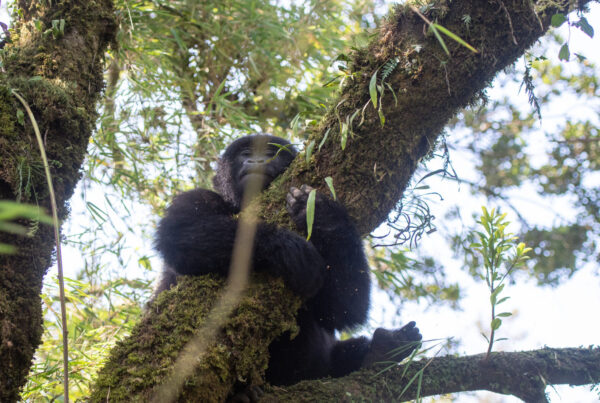
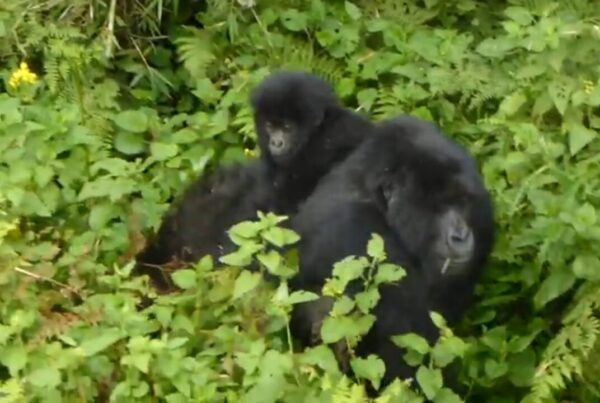
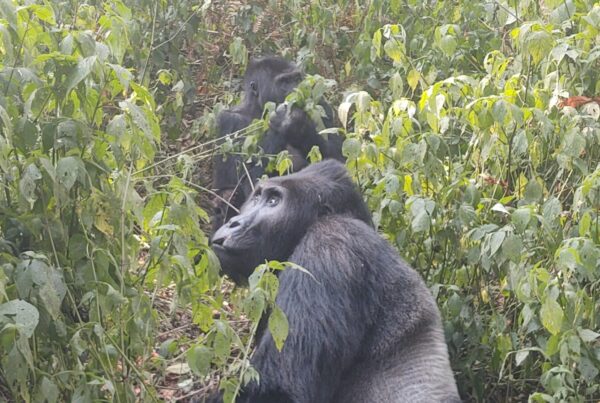
Gorilla trekking ranks at the top of every list because it combines more of the dimensions that define a great wildlife encounter — mutual recognition, reliability, physical engagement, conservation success, and emotional afterlife — than any other experience on earth. That is not a marketing claim. It is the consistent judgment of the people who have done the most wildlife travel and thought most seriously about what makes an encounter extraordinary. Contact us to plan your 2027 Uganda gorilla trek.
Frequently Asked Questions
Kibale Forest National Park, near Fort Portal, has the highest density of chimpanzees in Africa and is Uganda’s premier chimpanzee destination. The standard chimp trekking permit costs $300 FNR. The Chimpanzee Habituation Experience at Kibale ($400 FNR) gives 4 hours with a habituated community — Uganda’s only chimp habituation programme.
Yes — the gorilla + chimp combination is Uganda’s most popular primate itinerary. A typical 8-day route: Entebbe → Kibale Forest (2 nights, chimp trekking) → Queen Elizabeth National Park (2 nights, game drives) → Bwindi (2 nights, gorilla trekking) → Entebbe. Charter flights on any leg reduce travel time significantly.
Uganda has 13 primate species. Commonly seen: olive baboon, vervet monkey, red-tailed monkey, black-and-white colobus, L’Hoest’s monkey, grey-cheeked mangabey. Golden monkeys are found at Mgahinga. Kibale Forest has the highest primate diversity of any East African forest. A dedicated primate safari can tick 7–8 species in a single itinerary.
Uganda has over 1,060 recorded bird species — one of the highest counts of any country in Africa. Bwindi alone has 350+ species including 23 Albertine Rift endemics. Murchison Falls, Queen Elizabeth, and the wetlands around Entebbe round out a world-class birding circuit. The African green broadbill and Shelley’s crimsonwing are Bwindi specialities.
Uganda is home to the mountain gorilla (Gorilla beringei beringei), one of two subspecies of eastern gorilla. They live exclusively in the Virunga volcanic highlands (Uganda/Rwanda/DRC) and Bwindi Impenetrable Forest (Uganda only). Mountain gorillas are the only gorilla subspecies that cannot survive in captivity — every individual you can trek is a wild animal.