Updated
60 minutes gorilla encounter Uganda worldview is a subject central to Uganda’s wildlife tourism, where mountain gorilla conservation and responsible visitor experiences go hand in hand. The Uganda Wildlife Authority allocates exactly sixty minutes of contact time with each habituated gorilla family per visitor group per day — not fifty-five minutes, not an hour and fifteen, exactly sixty minutes timed from the moment the group reaches the family, after which the ranger signals that it is time to leave, and the group retreats in the direction they came from, and the gorillas continue what they were doing before the visitors arrived. The constraint of sixty minutes shapes the experience in ways that are worth understanding before you arrive. Plan your trek with a gorilla trekking permit, a 7-day Uganda gorilla safari, or a 3-day fly-in Bwindi itinerary.
- Time limit: 60 minutes of contact time with the gorilla family, strictly enforced; the clock starts when the first gorilla is sighted, not when you begin the trek
- Why 60 minutes: disease risk mitigation; stress reduction; the one-hour rule is the product of decades of veterinary and conservation research on optimal visitor-gorilla contact limits
- Group size: maximum 8 visitors per family per day; a deliberate limit that shapes the intimacy of the experience at Bwindi and Mgahinga
- After the visit: rangers and gorilla monitors stay with the family all day; tracking daily movements to prepare for tomorrow’s trek; this continuous monitoring is what keeps the success rate above 95%
The Uganda Wildlife Authority allocates exactly sixty minutes of contact time with each habituated gorilla family per visitor group per day. Not fifty-five minutes. Not an hour and fifteen. Sixty minutes, timed from the moment the group reaches the family, after which the ranger signals that it is time to move away and the trek back begins. This fixed duration is conservation policy, not visitor experience management — it exists to limit stress and disease exposure for the gorillas. But it also creates a specific experiential structure: a known, bounded time in which the encounter happens.
In sixty minutes — the same duration as a standard therapy session, a university lecture, a short film — something happens that most visitors cannot fully process in the forest and continue processing for days and weeks afterward. What the sixty minutes contains is not sixty minutes of spectacle. It is sixty minutes of presence, during which the ordinary frameworks through which most people relate to the natural world are quietly but decisively challenged.
What 60 Minutes in the Company of Wild Gorillas Does to Your Worldview
The First Ten Minutes: Calibration
The first ten minutes after finding the gorilla family are typically spent in a mixture of awe and logistics. The ranger manages the group’s position — maintaining the required eight-metre distance, keeping the group quiet, ensuring nobody is between the gorillas and their preferred movement direction. Cameras come out. People try to process the visual information of a scene that has no precedent in their experience. The instinct to photograph competes with the instinct to simply look. Most people do both, and neither fully satisfies.
Minutes Ten to Thirty: Habituation to the Extraordinary
By the fifteen-minute mark, something shifts. The initial disorientation of encountering something unprecedented begins to give way to a different quality of attention — steadier, less reactive, more willing to let the scene come to you rather than reaching after it. The cameras lower more often. The gorillas continue what they were doing before you arrived: feeding, moving, grooming, resting, playing. The encounter settles into its ordinary extraordinary rhythm.
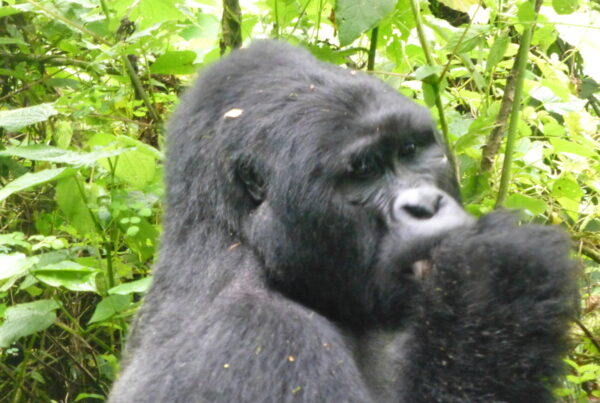
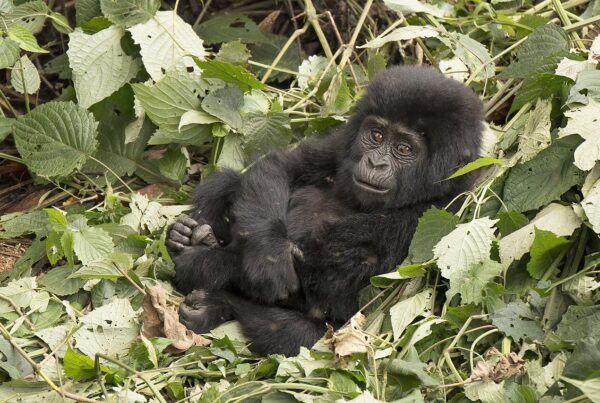
This phase — the middle of the hour — produces the most significant memories for most visitors. Not the dramatic moments of initial sighting or silverback posturing, but the quiet moments of ordinary gorilla life observed at close range: a mother examining her infant’s hand, two juveniles play-wrestling with the specific abandon of young animals everywhere, the silverback’s vast bulk settling into rest with an exhalation that you feel as much as hear.
The Last Ten Minutes: Everything You Missed
When the ranger announces that you have ten minutes remaining, something sharpens. The awareness that this specific encounter — this specific morning with this specific family — is ending creates an intensification of attention that is often the most productive period of the hour. People who have been photographing throughout put their cameras down and simply watch. The gorillas, unaware of the countdown, continue with their morning. The contrast between the animals’ complete indifference to the ending and the visitors’ acute awareness of it produces a specific quality of bittersweetness that many people describe as among the most affecting moments of the encounter.
What the Hour Leaves Behind
The sixty minutes end. The walk back begins. What the hour leaves behind in the person who experienced it is not a specific thought or a specific changed belief. It is a shift in the default assumption about what the natural world contains — a shift from abstract knowledge of biodiversity and evolution to embodied experience of a specific other form of intelligence in a specific wild place. The shift is small and permanent. The worldview that contains it is different from the worldview that did not. That is what $800 and sixty minutes in Bwindi provide. Contact us to book it for 2027.
Why is the gorilla visit limited to 60 minutes?
The 60-minute limit is evidence-based and specifically motivated by disease risk. Disease transmission: mountain gorillas are susceptible to human respiratory viruses; a common cold that is mild in a human can be fatal in a gorilla with no prior exposure; longer visits increase transmission probability. Stress: even habituated gorillas show elevated cortisol (stress hormone) during visitor contact; one hour represents a compromise — long enough for a meaningful visitor experience, short enough to keep cumulative stress within acceptable limits. Research basis: the one-hour rule was developed from research at Rwanda’s Virunga sites and adopted across Uganda and Rwanda; it reflects the consensus of veterinary and conservation researchers over decades. Why not longer: the experience available in 60 minutes is substantively complete; there is no evidence that 90 minutes produces a meaningfully better visitor experience; the cost in gorilla wellbeing is not worth the marginal gain; booking at Bwindi or Mgahinga includes exactly this hour.
How should I spend the 60 minutes to get the most from the encounter?
The encounter rewards a particular kind of attention. The first ten minutes: the first sight of the gorillas produces an adrenaline response in most visitors; the instinct is to photograph immediately; this is fine but do not spend the entire first ten minutes looking through a lens. The middle period: once the initial excitement subsides, watch behaviour; how is the silverback positioned?; what are the infants doing?; is there any grooming?; where are females relative to the male? The last fifteen minutes: put the camera down for the last ten to fifteen; visitors who report the most powerful encounters tend to spend the last portion simply watching without a device. The guide’s role: your ranger will narrate and point out behaviours; ask questions during quiet moments; the guide’s knowledge is specific to the family and adds context that dramatically enhances what you see. See also: 30 things to know before your gorilla trek.
What is the habituation experience and how does it differ from the standard trek?
The gorilla habituation experience is a separate and longer product. What it is: instead of visiting a fully habituated family for 60 minutes, visitors join the habituation team working with a semi-habituated family for up to four hours; the gorillas are in an earlier stage of the habituation process and may react to the visitors more actively. Where available: the habituation experience model exists for both gorillas (at Rushaga sector) and chimpanzees (at Kibale). Who it suits: researchers, serious wildlife enthusiasts, and those who want more time with the gorillas; the experience is physically demanding and involves less guaranteed calm observation than the standard trek. Cost: the gorilla habituation experience costs USD 1,800 per person (2027); see full gorilla trekking cost breakdown.
What happens if the 60 minutes ends before I feel ready to leave?
The rule is enforced regardless of how the visit is going. The ranger’s signal: at 60 minutes the ranger signals the group to begin leaving; this is not negotiable; the rule exists for the gorillas’ welfare and cannot be extended by payment or request. What visitors say: the universal reaction to the departure signal is that the hour went too fast; this is reported even by visitors who spent the hour in difficult terrain or rain; the experience compresses time in a way that most activities do not. The one exception: if the gorillas approach the group and the visit is interrupted for safety (a silverback approaching closely), the group may need to back away and pause; this time is not typically added to the allocated hour. Make the most of it: read which Bwindi sector to choose and the 5 common mistakes to avoid before your visit.
Can I do a second gorilla trek the next day with a different family?
Yes — and this is one of the most rewarding ways to experience gorilla trekking. Multiple permits: there is no rule against purchasing permits for consecutive days; each permit is for one family on one day; buying two or more permits allows visits to different families. Different families: each habituated family at Bwindi has a different silverback, different group size, different personality at the family level; consecutive-day treks are notably different experiences. Different sectors: trekking in Buhoma one day and Rushaga the next involves different forest, different altitude, and different terrain; this maximises the diversity of the experience. Logistics: travel between sectors on consecutive days requires an overnight between them; an accredited operator can arrange the logistics seamlessly including inter-sector transfers and accommodation at each sector.
- What 60 Minutes in the Company of Wild Gorillas Does to Your Worldview
- Why Gorilla Trekking in Uganda Is Africa’s Most Unforgettable Wildlife Adventure
- Gorilla Behaviour in the Wild: Understanding the Gentle Giants of Africa
- What a 3-Day Uganda Wildlife and Cycling Safari Did to My Family Was Beyond Anything We Expected
- Wildlife in Uganda – Where Nature Still Roars, Hums, and Soars Free
- Why a 2-Day Uganda Wildlife and Cycling Safari Is the Perfect Business Break
- Game Drives in Kidepo Valley National Park: Into Uganda’s Wildest Frontier
- Why Would My Soul Long for a 9-Day Uganda Gorilla Trekking and Wildlife Safari?
- 3 Days Congo Gorilla Trekking Safari: Raw Encounters in Africa’s Wildest Jungle
- Murchison Falls Uganda Wildlife Safari — 4-Days: Where the Nile Breaks and the Wild Roars