Africa is famous for its Big Five, its wildebeest migration, and its savannah landscapes. These are extraordinary experiences that deserve their reputations. But Africa also offers wildlife encounters that fall outside the standard safari circuits — rare, unusual, and in some cases genuinely strange in ways that even experienced Africa travellers have not anticipated. This is a guide to ten of the most unusual, from the well-known-but-rarely-seen to the genuinely obscure.
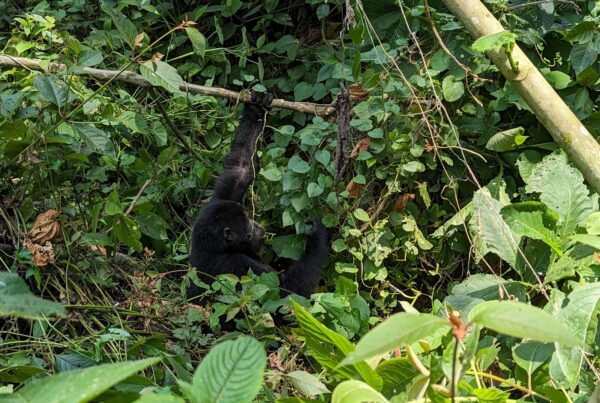
1. Mountain Gorilla Trekking, Uganda
The mountain gorilla is so famous as a wildlife destination that it may not seem unusual. But the quality of the encounter — walking into ancient rainforest on foot, spending one hour at ten metres from wild animals that share 98% of your DNA, in a group of eight people, for a world population of 1,100 — is genuinely unlike anything else in African wildlife tourism. The permit costs $800 USD in Uganda in 2027. The experience is not replicable anywhere else on earth.
2. Shoebill Stork, Uganda
The shoebill (Balaeniceps rex) looks like a creature from a prehistoric era — five feet tall, with a massive shoe-shaped bill capable of swallowing a lungfish whole. It stands motionless in papyrus swamps for hours, and when it moves, it does so with a slow deliberateness that seems to belong to a different timescale from normal birdlife. Uganda’s Mabamba Swamp offers the most reliable shoebill encounters in the world, reached by dugout canoe through papyrus channels. Nothing in African birdwatching prepares you for the first time one turns its head and fixes you with an ancient, slightly contemptuous stare.
3. Bonobo Encounter, DRC
Bonobos — the most closely related species to humans alongside chimpanzees — exist only in the DRC. Their female-dominated, highly social, conflict-resolving social system makes them fascinating subjects for observation. Accessible habituation sites are limited and logistics complex, but the Kokolopori Bonobo Reserve has developed trekking programmes for committed visitors. The encounter quality, when it happens, is extraordinary.
4. Tree-Climbing Lions, Uganda
Lions famously do not climb trees — except in two locations in the world: Ishasha sector of Uganda’s Queen Elizabeth National Park and Lake Manyara National Park in Tanzania. The Ishasha lions regularly drape themselves in fig trees several metres above the ground, apparently to escape ground heat and biting insects. The combination of lions in trees with the Albertine Rift escarpment landscape is visually extraordinary and genuinely unusual in big cat behaviour terms.
5. Sitatunga Antelope in Papyrus, Uganda
The sitatunga is a semi-aquatic antelope that lives in swamp forest and papyrus margins, walking on elongated hooves adapted for soft ground and swimming through deep water to escape predators. It is rarely seen because it inhabits environments that most safari vehicles cannot access. Boat-based wildlife viewing in Uganda’s Bigodi Wetland Sanctuary and Mabamba gives close views of an animal that most Africa visitors never encounter.
6. Nile Crocodile Nesting, Uganda
The boat trip to the base of Murchison Falls on the Nile passes some of the largest Nile crocodile concentrations in East Africa. At certain times of year, nesting females can be observed at close range — an encounter with one of Africa’s most ancient and formidable predators in genuinely wild conditions. The crocodiles are large (some exceed five metres), numerous, and entirely indifferent to the presence of tourist boats.
7. Golden Monkey Trekking, Rwanda and Uganda
The golden monkey (Cercopithecus kandti) is an Albertine Rift endemic found only in the Virunga Massif bamboo forests. It is one of the most beautiful primates in Africa — vivid orange-gold back, black limbs and face — and can be tracked in Mgahinga Gorilla National Park in Uganda and Volcanoes National Park in Rwanda. The encounter is less regulated than gorilla trekking and often more physically active, as the monkeys move quickly through the bamboo. It is among the rarest primate trekking experiences in Africa.
8. Night Stalking for African Civets, Uganda
Guided night walks in the forest margins around Bwindi and Kibale reveal a nocturnal world invisible during daylight: African civets, genets, bushbabies, and a range of nocturnal invertebrates. The civet — a large, cat-like viverrid with a distinctive black-and-white pattern — is often seen on night walks near lodge boundaries where it forages in the undergrowth. For most visitors, it is their first close encounter with an animal they have never seen in a zoo.
9. Mahale Chimpanzees and Lake Tanganyika, Tanzania
Reaching Mahale Mountains National Park requires a flight to Kigoma and a multi-hour boat journey across Lake Tanganyika. The result is a chimpanzee tracking experience in one of the most remote and beautiful settings in Africa — mountain forest running directly to the lake shore, with afternoon swimming in water so clear that the lake floor is visible at fifteen metres. The combination of the world’s most intensively studied chimpanzees with a setting of extraordinary natural beauty makes Mahale one of the rarest combined wildlife and landscape experiences anywhere on the continent.
10. Whale Sharks From an African Boat, Mozambique
The Bazaruto Archipelago and Tofo Bay on Mozambique’s Indian Ocean coast offer some of the most reliable whale shark encounters available anywhere in the world, with snorkelling and diving alongside the largest fish species on earth. Combined with the archipelago’s dugong population — one of the last viable dugong populations in the Indian Ocean — Mozambique’s coastal marine wildlife encounters are genuinely unusual and too rarely included in East and Southern Africa itineraries. The combination of terrestrial gorilla trekking in Uganda with a Mozambique marine extension creates an Africa trip that spans the continent’s extraordinary range.
Frequently Asked Questions
Kibale Forest National Park, near Fort Portal, has the highest density of chimpanzees in Africa and is Uganda’s premier chimpanzee destination. The standard chimp trekking permit costs $300 FNR. The Chimpanzee Habituation Experience at Kibale ($400 FNR) gives 4 hours with a habituated community — Uganda’s only chimp habituation programme.
Yes — the gorilla + chimp combination is Uganda’s most popular primate itinerary. A typical 8-day route: Entebbe → Kibale Forest (2 nights, chimp trekking) → Queen Elizabeth National Park (2 nights, game drives) → Bwindi (2 nights, gorilla trekking) → Entebbe. Charter flights on any leg reduce travel time significantly.
Uganda has 13 primate species. Commonly seen: olive baboon, vervet monkey, red-tailed monkey, black-and-white colobus, L’Hoest’s monkey, grey-cheeked mangabey. Golden monkeys are found at Mgahinga. Kibale Forest has the highest primate diversity of any East African forest. A dedicated primate safari can tick 7–8 species in a single itinerary.
Uganda has over 1,060 recorded bird species — one of the highest counts of any country in Africa. Bwindi alone has 350+ species including 23 Albertine Rift endemics. Murchison Falls, Queen Elizabeth, and the wetlands around Entebbe round out a world-class birding circuit. The African green broadbill and Shelley’s crimsonwing are Bwindi specialities.
Uganda is home to the mountain gorilla (Gorilla beringei beringei), one of two subspecies of eastern gorilla. They live exclusively in the Virunga volcanic highlands (Uganda/Rwanda/DRC) and Bwindi Impenetrable Forest (Uganda only). Mountain gorillas are the only gorilla subspecies that cannot survive in captivity — every individual you can trek is a wild animal.