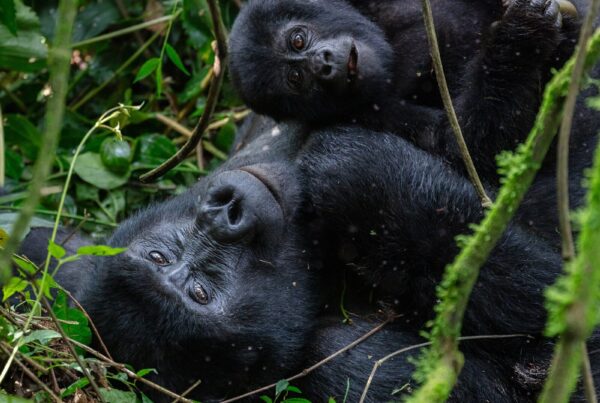
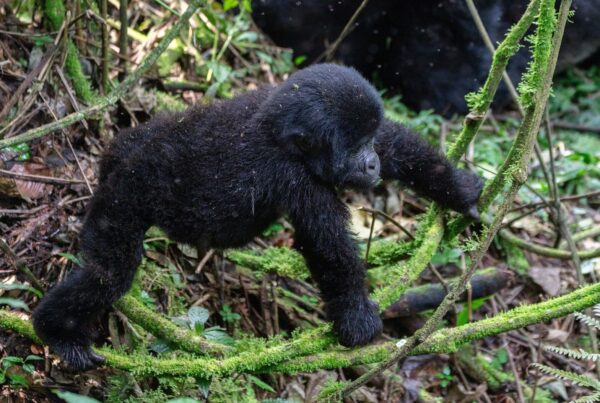
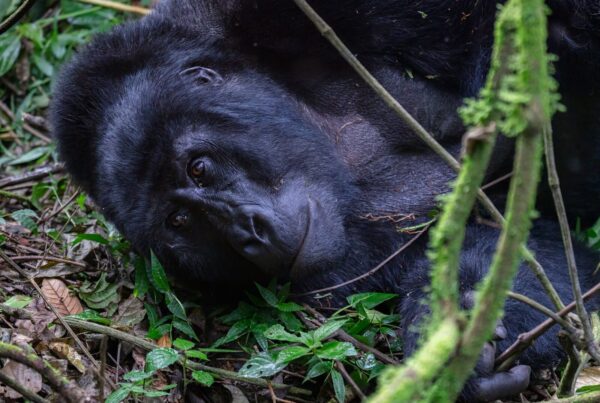
The conservation history of Bwindi Impenetrable National Park — from unprotected ancient forest under active agricultural encroachment in the 1970s to UNESCO World Heritage Site and home of approximately half the world’s mountain gorilla population today — is a story of near-miss loss and consequential recovery that most gorilla trekking visitors are aware of only in the broadest outline, and whose specific decisions, organisations, and individuals produced the outcomes that make the 2024 gorilla encounter possible. Understanding the Bwindi conservation story is not merely background information for the trek — it contextualises the permit payment, explains the ranger infrastructure, clarifies the community revenue-sharing model, and provides an account of how the specific conservation choices made between the 1970s and the 1990s determined whether or not mountain gorillas would still exist in Uganda at the scale required for a viable population. This guide covers that history with the specificity that the story deserves. For the current status of the park and trek logistics, see the Bwindi sector guide.
Bwindi: Key Conservation Timeline
- 1932: Established as Kayonza and Kasatoro Crown Forest Reserves (early colonial protection, inadequately enforced)
- 1964-1980: Active government-promoted agricultural settlement encroaches into forest boundaries; gorilla population declining
- 1991: Gazetted as Bwindi Impenetrable National Park by Ugandan government — marking the conservation turning point
- 1993: First gorilla trekking tourists permitted access to Mubare family at Buhoma sector
- 1994: UNESCO World Heritage Site designation — international recognition of the forest’s global significance
- 1994: Buhoma sector tourist camp attack by Rwandan Hutu interahamwe rebels kills 8 visitors — park temporarily closed
Bwindi Impenetrable National Park is not merely a destination for gorilla trekking. It is a living remnant of ancient equatorial forest that has persisted for tens of thousands of years, surviving ice ages, climate shifts, and the accelerating transformation of the African landscape by human activity. Understanding the history of this extraordinary place, from its geological origins through its gazettement as a national park to its designation as a UNESCO World Heritage Site, deepens appreciation for the privilege of entering its green depths and sharing an hour with the mountain gorillas who have inhabited these forests since before recorded human history.
This guide traces the complete history of Bwindi, from the volcanic eruptions that shaped its mountainous terrain to the conservation victories that have preserved it into the twenty-first century. It examines the human communities who lived in and around the forest for millennia, the colonial era that first brought international attention to its biodiversity, the challenges of protection in a densely populated region, and the tourism system that now funds its continued survival.
Geological Origins and Ancient Forest
The Bwindi forest sits within the Albertine Rift, the western branch of East Africa’s Great Rift Valley, where tectonic forces have been pulling the continent apart for millions of years. Volcanic activity in the region, particularly during the Pliocene and Pleistocene epochs, created the mountainous terrain that defines Bwindi today. Erosion of volcanic deposits produced the nutrient-rich soils that support the forest’s extraordinary plant diversity.
The forest itself is a remnant of the vast equatorial rain forest that once stretched across much of Central Africa. As climate patterns shifted over millennia and human activity expanded, these forests contracted, leaving isolated patches like Bwindi as islands of ancient biodiversity surrounded by agricultural land. Some of the trees in Bwindi are centuries old, their roots anchored in soil that has never been ploughed, their canopies sheltering generations of wildlife.
The term impenetrable refers not to the forest’s hostility but to its density. The vegetation is extraordinarily thick, with thickets of bamboo, vines, ferns, and undergrowth that make passage difficult without cutting trails. This density, which frustrates human movement, has protected the forest’s inhabitants from excessive human disturbance throughout history.
Early Human Inhabitants
Human communities have lived in the Bwindi region for thousands of years. Archaeological evidence suggests hunter-gatherer presence dating back to the late Stone Age. The Batwa people, traditional forest dwellers sometimes called pygmies for their relatively short stature, inhabited Bwindi and surrounding forests for centuries, living by hunting small game, gathering wild plants, and harvesting honey.
The Batwa’s relationship with the forest was not one of conquest but of integration. They understood its patterns, respected its spirits, and took only what they needed to survive. Their knowledge of medicinal plants, animal behaviour, and forest navigation was encyclopaedic and passed orally through generations. This traditional ecological knowledge, much of which has been lost as the Batwa were displaced from the forest, represented a sustainable model of human-forest coexistence that modern conservationists study with respect.
As agricultural communities, primarily Bantu-speaking farmers, expanded into the region, the Batwa gradually lost access to their traditional forest lands. By the time colonial administrators arrived in the late nineteenth century, the Batwa were already marginalised, dependent on trade with agricultural neighbours and occasional forest visits for resources they could not obtain elsewhere.
Colonial Era and Early Conservation
The colonial period brought profound changes to the Bwindi region. British administration, following the establishment of the Uganda Protectorate in 1894, introduced new land tenure systems, taxation, and infrastructure that altered traditional patterns of land use. Forests that had been managed communally became state property, and hunting, which had been sustainable at traditional scales, was regulated and commercialised.
However, the colonial era also produced the first scientific documentation of Bwindi’s biodiversity. European naturalists and colonial officers recorded the presence of mountain gorillas, chimpanzees, forest elephants, and hundreds of bird species. These records, though fragmentary by modern standards, established Bwindi’s reputation as a place of exceptional biological importance.
The colonial administration designated parts of the Bwindi forest as Crown Forest Reserves in the 1930s and 1940s, providing nominal protection that restricted large-scale clearing while allowing continued extraction of timber, honey, and other resources. This protection was incomplete and often unenforced, but it established the principle that the forest merited special status.
Gazettement as a National Park
Bwindi Impenetrable Forest Reserve was formally designated as a national park in 1991, a decision that transformed its management and its relationship with surrounding communities. The gazettement expanded protected area boundaries, prohibited all resource extraction, and established the infrastructure for modern conservation management including ranger patrols, research programmes, and tourism development.
The creation of the park was not without controversy. Communities who had traditionally used forest resources for generations suddenly found their access restricted. The Batwa, in particular, were effectively evicted from their ancestral lands, creating a human rights dilemma that conservation authorities continue to grapple with decades later. The tension between conservation and community rights remains one of the most challenging aspects of Bwindi’s management.
However, the gazettement also created the legal framework that has enabled mountain gorilla conservation to succeed. Without national park status, the habitat destruction that threatened gorillas throughout the twentieth century would likely have continued unabated. The park boundaries, though contested, provide the spatial protection that gorilla populations require to persist.
UNESCO World Heritage Designation
In 1994, Bwindi Impenetrable National Park was inscribed as a UNESCO World Heritage Site, recognising its outstanding universal value for biodiversity conservation. The designation brought international prestige, increased tourism interest, and access to conservation funding mechanisms available only to World Heritage properties.
The World Heritage status also imposed obligations. Uganda committed to maintaining the park’s ecological integrity, managing tourism sustainably, and addressing threats to its biodiversity. Periodic monitoring by UNESCO evaluates whether these obligations are being met, creating accountability that national management alone might not provide.
The designation reinforced Bwindi’s position as one of Africa’s most important protected areas. It joined a select group of natural sites recognised globally for their irreplaceable contribution to Earth’s biological heritage, alongside places like the Serengeti, the Galapagos Islands, and the Great Barrier Reef.
Modern Conservation and Tourism
Since the 1990s, Bwindi’s management has evolved in response to growing tourism pressure, scientific advances, and changing community relationships. Gorilla tourism, initiated in the early 1990s, has become the primary revenue source for park management and the surrounding communities. The habituation of specific gorilla families for tourism, combined with strict visitor limits and health protocols, has created a model for sustainable great ape tourism that other countries have studied and emulated.
Scientific research within the park has expanded understanding of Bwindi’s biodiversity far beyond gorillas. Studies of forest ecology, bird populations, butterfly diversity, and plant taxonomy have revealed the extraordinary complexity of this small forest fragment. The Bwindi ecosystem, though covering only three hundred thirty-one square kilometres, contains an estimated one hundred sixty tree species, one hundred four fern species, and over one thousand flowering plant species.
Community conservation programmes have attempted to address the historical injustices of park creation while maintaining ecological protection. Revenue sharing, employment opportunities, and collaborative management initiatives have reduced conflict between the park and surrounding communities, though challenges remain. The Batwa, in particular, continue to advocate for recognition of their historical forest rights and for access to alternative livelihoods that compensate for their displacement.
Final Thoughts
When you enter Bwindi Impenetrable National Park, you are not merely visiting a tourist destination. You are stepping into a fragment of ancient Africa that has persisted through geological upheaval, climate change, and the transformative impact of human civilisation. The forest you walk through has sheltered gorillas, chimpanzees, elephants, and countless other species for millennia. The trees you pass are older than most nations. The ecosystem you observe is a window into a world that once covered much of the continent.
Your presence, through the permit fees you pay and the attention you bring, contributes to the continuation of this remarkable place. The history of Bwindi is not a closed book. It is being written now, with every conservation success, every community partnership, every trekker who leaves with a deeper commitment to protecting the natural world. You are part of that history, however briefly, and the forest will remember your footsteps long after you have returned home.
Frequently asked questions about Bwindi’s conservation history
When did gorilla trekking begin at Bwindi?
Gorilla trekking at Bwindi began in 1993 — two years after the National Park gazettal — when Uganda Wildlife Authority opened the Buhoma sector to tourist trekking with the Mubare gorilla family, the first family to complete the habituation process. The Mubare habituation had begun in 1991 under the Mountain Gorilla Project and Uganda Wildlife Authority’s joint programme, and the 2-year habituation timeline produced a tourism-ready family by 1993. The first trekking groups were small (the 8-visitor per family maximum was established as the original access rule and has been maintained to the present), and the Buhoma camp infrastructure was basic — a visitor information centre, a community campsite, and the ranger office that served as the briefing station. The first years of Bwindi gorilla trekking were interrupted by the catastrophic event of March 1999, when Rwandan Hutu Interahamwe rebels crossed the DRC border, entered the Buhoma sector, and killed 8 international tourists and 2 Ugandan rangers in a targeted attack on the tourist camp. The park was closed for several months following the attack and visitor numbers took years to recover. The March 1999 attack remains the most serious security incident in Uganda’s gorilla trekking history and shaped both the security protocols at Bwindi and the international perception of Uganda as a destination for years afterward. The sector has operated without comparable security incidents since 1999.
How did Bwindi change from a threatened forest to a protected park?
The transition of Bwindi from a Forest Reserve under active encroachment pressure to a fully protected National Park involved a convergence of conservation organisation advocacy, Ugandan government policy decisions, and the developing economic case for the forest’s tourism value that together produced the 1991 National Park gazettal. The threat in the 1960s-1970s was specific: Uganda’s government actively promoted agricultural settlement in Kigezi district under population pressure policies that included forest clearance within the boundaries of what was technically protected as a Crown Forest Reserve — the reserve designation provided legal protection that was not operationally enforced. Gorilla population surveys conducted in the 1980s by researchers including Ian Redmond, Craig Sholley, and the Mountain Gorilla Project documented the declining population across the Virunga range and Bwindi and produced the quantitative data that demonstrated the crisis: an estimated 242 mountain gorillas remained in the Virunga census of 1981, a number considered at or near the minimum viable population. The advocacy produced by this data — through the Mountain Gorilla Project, WWF, and the Dian Fossey Gorilla Fund — combined with Uganda’s post-Amin stabilisation under the Museveni government (which brought institutional capacity to actually manage conservation commitments) produced the 1991 National Park gazettal. The gorilla tourism economic model, which had been developing in Rwanda since the 1970s under Dian Fossey’s opposition and then acceptance of tourism, provided the specific mechanism by which the forest could be economically self-sustaining as a park rather than dependent on external conservation charity.
What was the role of Dian Fossey in mountain gorilla conservation?
Dian Fossey’s role in mountain gorilla conservation is foundational but more complex than the popular narrative of “the woman who saved the gorillas” conveys — her legacy includes the research that established the baseline for gorilla population management, the advocacy that drove the international attention that funded early conservation, and a contested position on gorilla tourism that was later reversed and whose reversal contributed directly to the revenue model that currently funds the conservation system. Fossey established the Karisoke Research Centre in Rwanda’s Volcanoes National Park in 1967 and conducted 18 years of field research on the Virunga mountain gorilla population — research that produced the first comprehensive understanding of gorilla social structure, family dynamics, and ranging behaviour that informed the habituation methodology used for all subsequent gorilla trekking programmes. Her advocacy against poaching (including the controversial “active conservation” anti-poaching operations that created significant local opposition) and her international fundraising through her 1983 book Gorillas in the Mist drove the global awareness of the mountain gorilla’s crisis that produced conservation funding. Her opposition to gorilla tourism — she believed tourist contact threatened disease transmission and disturbed gorilla behaviour — was overridden after her murder in 1985 by the conservation organisations that succeeded her at Karisoke, who implemented the tourism revenue model that the Rwandan and Ugandan gorilla conservation systems now depend on. The post-Fossey assessment: tourism managed with strict health protocols (the 7-metre distance rule, mandatory masks for sick visitors, group size limits) generates the revenue that anti-poaching, ranger salaries, and community programmes require, and the revenue model has been essential to the population recovery. Fossey’s research and advocacy created the conditions for the conservation system; the tourism model she opposed finances its operation.
How has the mountain gorilla population changed since Bwindi’s protection began?
The mountain gorilla population change since the 1991 Bwindi gazettal and the broader 1980s-1990s conservation intervention is one of the few documented wildlife recovery stories in Africa — a population that was declining toward the minimum viable threshold in the early 1980s and has grown consistently through the conservation period to the current level. The specific numbers: the 1981 Virunga census estimated 242 individuals in the Virunga mountains (the range shared by Rwanda, DRC, and Uganda); the first comprehensive Bwindi census was conducted in 2002 and found approximately 320 gorillas in Bwindi. The 2006 combined Virunga census found 380 individuals; the 2010 census found 480; the 2016 census documented over 604 across both populations combined (Virunga + Bwindi); the 2018 combined assessment reached the threshold of 1,000 individuals that enabled the International Union for Conservation of Nature to downlist the mountain gorilla from Critically Endangered to Endangered — the only great ape subspecies to be downlisted during the period when all other great apes were being uplisted toward greater threat status. The current (2024) estimate exceeds 1,000 individuals across both populations. The growth rate of approximately 3-4% per year since the mid-1990s is specifically attributed to the combination of anti-poaching protection (dramatically reduced snaring and hunting pressure), veterinary intervention (medical treatment of snare injuries and respiratory illness), and community economic investment (the revenue-sharing model reducing the economic incentive for habitat conversion). The conservation system works — the numbers demonstrate it.
What was the Revenue Sharing Scheme and how does it work?
The Revenue Sharing Scheme (RSS) is the mechanism by which Uganda Wildlife Authority returns a proportion of national park entrance fees to the communities adjacent to Bwindi (and Uganda’s other national parks) — a policy that was designed specifically to address the contradiction between conservation and community economic interest that had driven forest encroachment in the decades before the National Park gazettal. The mechanism: 20% of Uganda Wildlife Authority’s gate entry fees are allocated to a community fund managed jointly by UWA and district local governments adjacent to each national park; the fund finances community infrastructure projects including schools, health centres, roads, and community enterprise development in the parishes that border the park boundary. The conservation logic: communities that receive economic benefit from the standing forest have a direct economic stake in its continued protection that communities excluded from benefit do not have; reducing the economic incentive to convert forest to agricultural land reduces the pressure on the park boundary; and community members who associate the park with school buildings, clinic construction, and road improvement are less likely to support or engage in poaching and encroachment than communities for whom the park is purely a source of restrictions on their land use. The RSS programme has distributed hundreds of millions of Ugandan shillings to border communities since its establishment in the 1990s. The scheme is not a complete solution to the community-conservation tension — land pressure continues to grow as the population of the Kigezi highlands increases, and the boundary between protected forest and community land remains a site of ongoing negotiation. But the economic model has changed the conservation calculus for border communities in a way that purely prohibitive protection never did.
Understand the history behind your Bwindi gorilla trek
- Bwindi Sector Guide — the current state of the park the history created
- Uganda Gorilla Families — the families whose protection the conservation history made possible
- Gorilla Permit Guide — the permit whose revenue continues the conservation system this history describes
- Full Safari Cost Guide — understanding the full cost chain from permit to conservation outcome
- Safari Itineraries — Uganda itineraries that include conservation programme and community visit components
- Uganda’s Bwindi Impenetrable Forest: a UNESCO World Heritage Site explained
- Bwindi Impenetrable National Park: Uganda’s Gorilla Forest
- How Old Is the Bwindi Impenetrable Forest? Age and History
- Bwindi Impenetrable Forest: Ecology, History, and Conservation
- Kibale Forest National Park: the primate capital of the world
- Bwindi Impenetrable Forest – Gorilla Trekking in Uganda’s UNESCO Jungle
- World Wildlife Day 2026: Protect Medicinal and Aromatic Plants – Conserving Health, Heritage and Livelihoods in Uganda’s Gorilla Forests
- Uganda Gorilla Trekking Bwindi Impenetrable Forest: The Complete Guide
- Where Exactly Is Bwindi Impenetrable Forest? Location, Geography, and How to Get There
- Kibale Forest National Park: Uganda’s Chimpanzee Trekking Capital