The Batwa are Uganda’s forest-dwelling indigenous people — hunter-gatherers who lived inside Bwindi Impenetrable Forest, Mgahinga Gorilla National Park, and other montane forests of southwestern Uganda for centuries before being evicted when the parks were gazetted in 1991 — and understanding their situation is both an ethical imperative for gorilla trekking visitors and a window into the complex tension between conservation goals that protect the mountain gorillas and the human rights of the people who shared that forest as their home: the Batwa are today the most marginalised ethnic group in Uganda, landless, largely excluded from the formal economy, and living on a forest edge that is no longer theirs to enter and live within. Batwa context is essential for Bwindi gorilla trekking visitors and Uganda safari ethical engagement.
- Population: approximately 6,000-7,000 Batwa in Uganda; one of the smallest ethnic groups; concentrated in Kisoro, Kabale, and Kanungu districts
- Eviction: 1991, when Mgahinga and Bwindi were gazetted as national parks; the Batwa received no compensation or land resettlement
- Current situation: primarily landless; income from casual labour, charcoal making, and conservation tourism cultural programs
- Conservation tourism: Batwa cultural experiences are available at both Bwindi and Mgahinga; organised through UWA and community trusts
The Batwa are Uganda’s forest-dwelling indigenous people — hunter-gatherers who lived inside Bwindi Impenetrable Forest, Mgahinga Gorilla National Park, and other montane forests of southwestern Uganda for centuries before being evicted when the parks were gazetted in 1991. The creation of gorilla conservation areas that enabled Uganda’s gorilla trekking industry came at a direct cost to the Batwa, who lost their ancestral home without adequate compensation or alternative livelihood. In 2027 the Batwa community in southwestern Uganda is small, marginalized, and fighting to preserve cultural identity under difficult conditions. For gorilla trekking visitors, understanding the Batwa is an ethical obligation that comes with visiting their former territory.
Who the Batwa Are
The Batwa (singular Mutwa) are classified as one of the Twa people — a term used broadly for forest-dwelling hunter-gatherer communities in Central and East Africa. They are among the oldest inhabitants of the Great Lakes region, with archaeological and genetic evidence suggesting continuous habitation of these forests for thousands of years. In Uganda the Batwa lived inside what is now Bwindi and Mgahinga, moving through the forest following seasonal resources — honey, fruit, tubers, small game, and medicinal plants. They had no permanent settlements in the Western sense — their homes were temporary forest camps that moved with the resources.
The 1991 Eviction
When Bwindi and Mgahinga were gazetted as national parks in 1991, the Ugandan government and international conservation organizations implementing the protected area policy displaced the Batwa from the forest without providing adequate compensation, alternative land, or livelihood support. The eviction was implemented rapidly and the Batwa — who had no legal land titles, no formal engagement with the state bureaucracy, and no political representation — had no effective recourse. They were moved to the forest margins and left largely unsupported. The displacement from the forest was not just a loss of shelter — it was the destruction of an entire way of life, a knowledge system, and a cultural identity rooted in specific forest relationships that could not be replicated elsewhere.
The Batwa Today
In 2027 the Batwa in southwestern Uganda number approximately 6,000 to 7,000 people living in small communities on the margins of Bwindi, Mgahinga, and surrounding areas. Landlessness is the defining challenge — many Batwa remain without secure land tenure, living on land owned by others or on small plots provided by NGOs. Poverty rates are among the highest of any community in Uganda. Access to education and healthcare, while improving, lags behind national averages. Discrimination from neighboring Bantu communities — a long-standing tension rooted in the historical social hierarchy between Batwa and their farming neighbors — continues to affect access to land, markets, and services.
Cultural Preservation Efforts
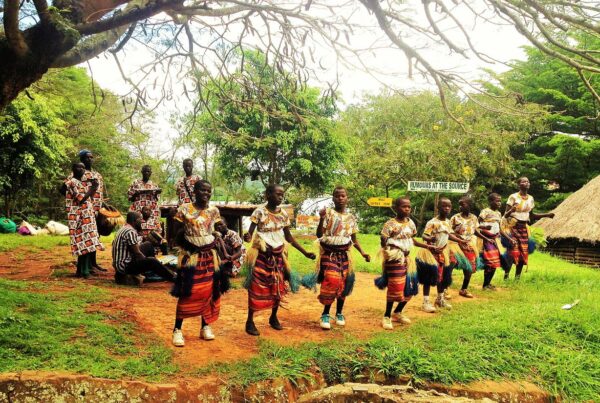
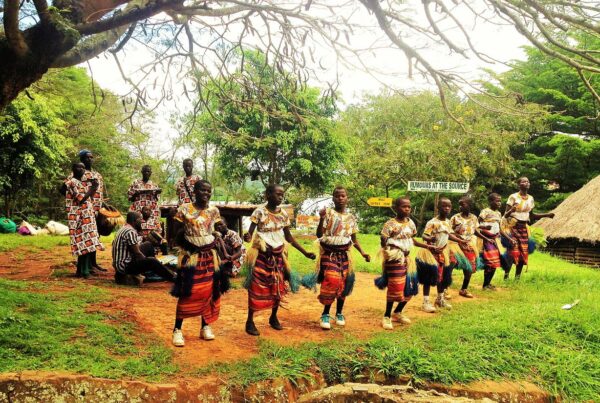
Despite the displacement and its consequences, Batwa cultural knowledge has not been entirely lost. Traditional skills — tracking forest animals, identifying medicinal plants, making traditional tools from natural materials, and performing the songs and dances specific to Batwa culture — are maintained by older community members and transmitted to younger generations through deliberate cultural programs. The Batwa Experience is an organized cultural tour near Bwindi and Mgahinga where Batwa guides lead visitors through demonstrations of traditional forest skills in and around the park boundary. The program provides income to Batwa families and creates a cultural interface between the community and gorilla trekking visitors.
The Batwa Experience: What Visitors Can Do
Adding a Batwa cultural experience to a gorilla trekking itinerary at Bwindi or Mgahinga is strongly recommended as both an enriching activity and a direct way of supporting the community. The experience is organized through lodges and community tourism operators and involves accompanying Batwa guides into or near the forest boundary for demonstrations of honey-gathering, fire-making, plant medicine identification, arrow and bow making, and traditional songs and dance. It takes 2 to 3 hours, costs approximately $30 to $50 per person, and the revenue goes directly to the participating Batwa families. It is one of the most meaningful cultural activities available anywhere in Uganda.
The Batwa story is inseparable from the gorilla trekking story in Uganda. The parks that protect the gorillas are the forests from which the Batwa were removed. Any honest engagement with gorilla conservation in 2027 includes acknowledgment of this history and a commitment to ensuring the Batwa benefit from the tourism economy that now occupies their ancestral home. Adding a Batwa experience to your gorilla trekking itinerary is the most direct way to act on that acknowledgment.
What was Batwa life like inside Bwindi before eviction in 1991?
The Batwa lived in Bwindi Impenetrable Forest and the other montane forests of southwestern Uganda for a period estimated at several hundred years to millennia; their relationship to the forest was one of total integration rather than habitation at the forest edge. The hunter-gatherer economy: the Batwa hunted forest animals including forest elephant, forest buffalo, and various antelope species; they gathered honey from wild bee colonies in forest trees — the Batwa honey gatherers climbed the largest forest trees to access bee colonies and were known throughout the region for this specialised skill; they also gathered wild fruits, mushrooms, tubers, and medicinal plants. Relationship with the gorillas: the Batwa lived alongside the mountain gorillas of Bwindi and Mgahinga for generations; traditional Batwa accounts describe the gorillas as forest neighbours rather than as a resource to be hunted; Batwa oral tradition includes gorilla observation and story in ways that reflect long coexistence. Social structure: the Batwa lived in small mobile family groups that moved through the forest seasonally following food availability; no permanent settlements within the forest; the forest was home in the fullest sense.
What happened to the Batwa when Bwindi and Mgahinga became national parks?
The 1991 gazettement of Bwindi Impenetrable Forest and Mgahinga Gorilla National Park as protected areas ended the Batwa’s right to live within and use these forests. The eviction process: the Batwa were required to leave the forest and settle outside the new park boundaries; no compensation was paid at the time of eviction; no land was provided to replace what they lost; the Batwa were expected to join the agricultural smallholder economy of the surrounding Bakiga and Bafumbira communities — a completely different way of life for a hunter-gatherer people. The immediate impact: eviction from the forest was catastrophic for the Batwa; without the forest’s food resources, they had no reliable food source; without land, they could not farm; without money, they could not buy; malnutrition, disease, and poverty increased sharply in the years immediately after 1991. The legal situation: the Batwa’s claim to land rights and compensation has been litigated and advocated; no comprehensive settlement has been reached; they remain without formal land rights in the areas that were their home.
What Batwa cultural experience programs exist for gorilla trek visitors?
Several structured programs allow gorilla trek visitors to engage with Batwa culture in ways that provide income to Batwa communities. The Batwa Trail at Mgahinga: the Uganda Wildlife Authority operates a guided Batwa Trail at Mgahinga Gorilla National Park in which Batwa guides take visitors on a walk through the forest describing traditional uses of forest plants, demonstrating fire-making, honey gathering, hunting techniques, and forest knowledge; the trail is an official UWA activity; fees support the Batwa guides. Bwindi Batwa experiences: community-based Batwa cultural experiences are available near Buhoma and Nkuringo sectors through local tour operators; these include cultural demonstration sessions, story-telling, and craft exhibitions. The Mgahinga Gorilla Trust: a UK-registered charity specifically focused on Batwa welfare; their programs include Batwa healthcare, education support, and craft production; their Batwa craft and cultural program in Kisoro is accessible to visitors. Quality note: the ethical quality of Batwa experiences varies; programs run through UWA and the Mgahinga Gorilla Trust are more accountable than informal arrangements.
What is the Batwa’s relationship with the mountain gorillas?
The Batwa’s historical relationship with the mountain gorillas of Bwindi and Mgahinga is one of the most interesting dimensions of the conservation story and challenges some assumptions about the relationship between indigenous people and wildlife conservation. Coexistence for millennia: the Batwa and the gorillas of Bwindi coexisted within the same forest for centuries or longer without the Batwa hunting gorillas; gorilla hunting was taboo in Batwa tradition; the evidence for this is both oral (Batwa accounts) and conservation (gorilla populations survived in Bwindi despite human coexistence). The irony of conservation: the Batwa were evicted to protect the gorillas, yet the Batwa were not the primary threat to the gorillas; the primary threats were agricultural encroachment by larger farming communities and poaching by non-Batwa actors; the Batwa were, in effect, punished for a threat they had not created. Contemporary relationship: some Batwa work as trackers and park rangers using their deep forest knowledge; their knowledge of gorilla habitat and forest trails is valued by UWA; this is one of the more productive engagement models.
How can gorilla trek visitors support the Batwa ethically?
Supporting the Batwa ethically as a gorilla trek visitor requires choosing mechanisms that provide sustainable income rather than charity dependency. Participate in UWA or trust-organised programs: the Batwa Trail at Mgahinga and trust-organised experiences in Kisoro and Bwindi provide direct income to Batwa guides and performers in a structured way that the Batwa themselves have negotiated and participate in. Buy Batwa-made crafts: the Mgahinga Gorilla Trust and Bwindi-adjacent community cooperatives produce Batwa crafts including baskets, beadwork, and wood carvings; buying directly from certified Batwa craft programs puts money in Batwa hands. Donate to the Mgahinga Gorilla Trust: the Trust accepts direct donations that fund Batwa healthcare, school fees, and sustainable livelihood programs; this is the most direct conservation-plus-community donation mechanism. What not to do: do not give money directly to Batwa individuals on the street or at park entrances; this creates dependency and can be exploited by intermediaries; structured program participation is more beneficial. The broader ethical position: the Batwa situation is a case where conservation success (gorillas are thriving) and human rights failure (a people dispossessed without redress) coexist; a full understanding of the gorilla story includes this dimension.
- The Batwa People: Uganda’s Original Forest Dwellers and Their Story
- Uganda’s Forgotten Tribe: The Batwa People and Their Forest Home
- The Batwa trail experience: walking in the footsteps of Uganda’s forest people
- Batwa Pygmies of Buniga Forest Uganda
- Bakiga people: the highland farmers near Bwindi Forest
- Bakiga culture and the people of Kigezi: meeting the communities near Bwindi
- The Batwa pygmies of Bwindi: history, displacement, and cultural tourism today
- The Batwa pygmies of Bwindi: history, displacement, and cultural tourism today
- The Bakiga people: farmers and forest neighbours of Bwindi’s highland communities
- Bwindi Impenetrable Forest – Gorilla Trekking in Uganda’s UNESCO Jungle