TALK TO AN EXPERT +256 716 068 279 WHATSAPP OPEN NOW.
History & Anthropology

The Batwa trail experience: walking in the footsteps of Uganda’s forest people

Home / Travel News, Stories & Tips / Tales from the Mist / The Batwa trail experience: walking in the footsteps of Uganda’s forest people

Before the national parks existed, the Batwa lived inside the forest. For thousands of years, this small-statured people — related to other forest-dwelling groups across Central Africa — inhabited the dense montane forests of what is now Bwindi Impenetrable and Mgahinga national parks, hunting, gathering, and maintaining an intimate relationship with the forest that sustained them completely. In 1991 and 1992, when Uganda established these parks to protect the mountain gorillas, the Batwa were evicted. They received no land, no compensation, and no consultation. They became the conservation refugees of the gorilla programme.

A history of displacement

The Batwa displacement from Bwindi and Mgahinga was part of a broader pattern in East and Central African conservation that prioritised wildlife protection over indigenous rights. The same logic — that intact wilderness requires human absence — drove similar evictions from other protected areas across the region. In retrospect, this approach is understood as both ethically indefensible and ecologically dubious: the Batwa had lived sustainably within these forests for millennia without reducing their biodiversity to anything approaching the damage wrought by agricultural encroachment.

The consequences of eviction were devastating. The Batwa had no agricultural tradition, no land ownership, and no money. Many settled in extreme poverty around the park boundaries, dependent on handouts and occasional day labour. Their knowledge — of medicinal plants, of animal behaviour, of forest navigation, of sustainable harvesting — became immediately redundant in a context where they could no longer enter the forest. Infant mortality rose, food security collapsed, and the community’s cultural coherence began to fracture without the forest that had defined it.

The Batwa Trail programme

The Batwa Trail, operated in partnership with the Mgahinga Gorilla National Park and Batwa community organisations, was developed as an attempt to restore some economic benefit to a community whose sacrifice had contributed to the gorillas’ survival. The trail allows Batwa elders to lead visitors through forest areas adjacent to or within the national park, demonstrating traditional forest skills, sharing cultural practices, and connecting visitors to a way of life that no longer exists in its original form but whose knowledge remains alive in the memories of elders.

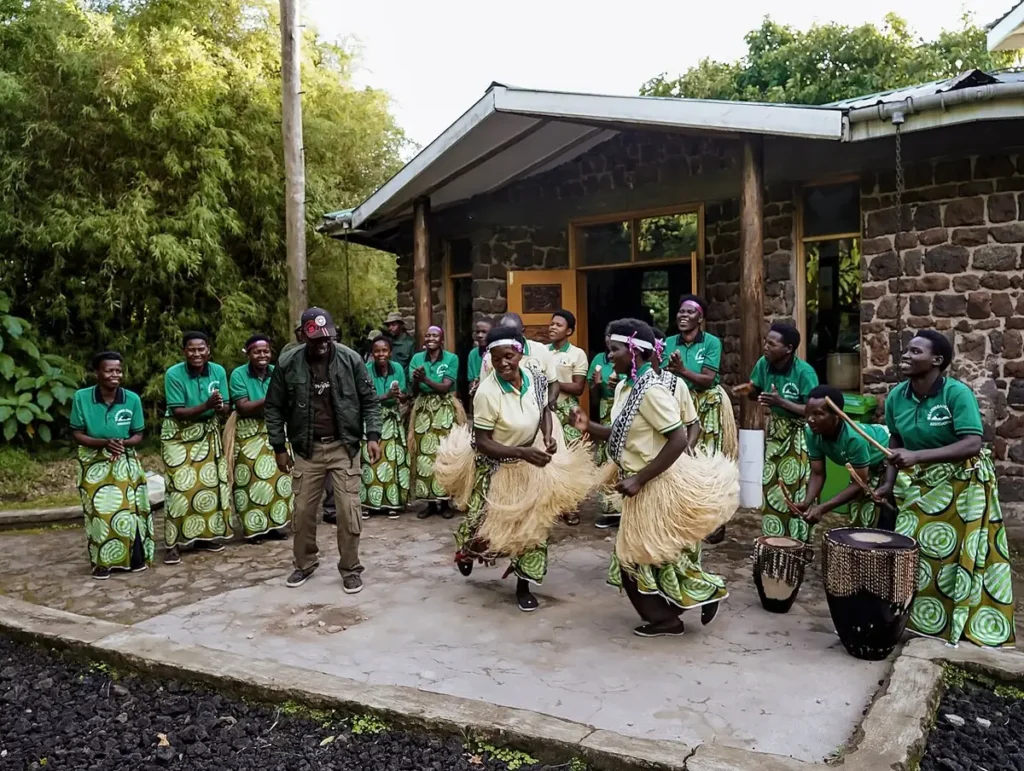
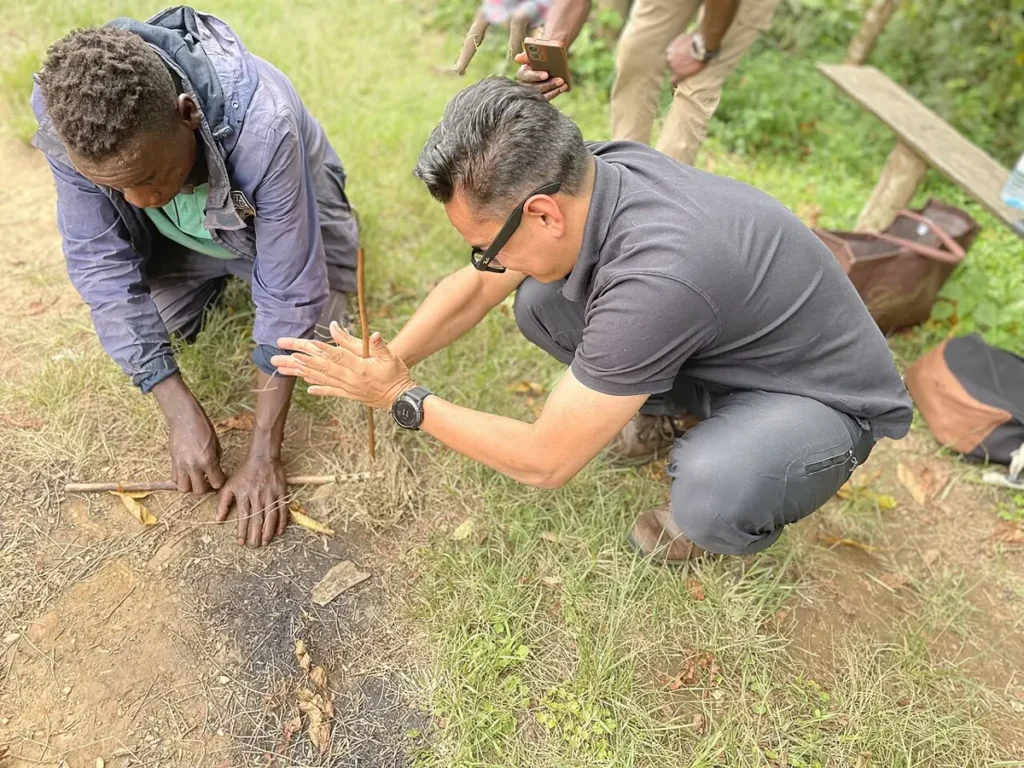
The experience typically includes: demonstrations of traditional fire-making using friction techniques; honey harvesting from wild beehives using traditional methods; demonstrations of hunting with bows and gathered plants used in traditional medicine; traditional music and dance; and narrative accounts of life in the forest before the parks — hunting stories, birth and death rituals, relationships with the animals that shared their forest home.

What makes the Batwa Trail distinctive is not the entertainment value of these demonstrations — though they are genuinely impressive — but the emotional authenticity behind them. The elders leading the trail are not performing for tourists; they are sharing knowledge they acquired in the forest as children, during a way of life that was forcibly ended during their own lifetimes. The sense of loss is palpable and creates an encounter that is as emotionally affecting as it is intellectually interesting.

Meeting the forest’s original conservationists

The Batwa’s relationship with the forest that is now Bwindi and Mgahinga was profoundly different from the park-and-ranger model of conservation that replaced them. The Batwa did not manage the forest through rules and enforcement; they managed it through cultural norms, spiritual relationships, and accumulated ecological knowledge that had been refined across hundreds of generations.

Animals were hunted, but with restrictions on what could be taken, when, and how much. Certain species were protected by taboo. Medicinal plants were harvested according to protocols that preserved the plant’s capacity to regenerate. The forest was understood as a community of relationships in which the Batwa participated, not a resource to be extracted. This framework did not prevent all impact, but it produced a relationship with the forest ecosystem that sustained both the human community and the biodiversity that modern conservation now struggles to protect.

There is a profound irony in the fact that the Batwa were removed from the forest to protect it — and that the mountain gorillas, whose survival the conservation programme was designed to ensure, share many of the same territories where the Batwa once lived. Whether the forest is better protected without the Batwa than with them is a question that contemporary conservation scholars take seriously, and the growing evidence from other areas of Africa suggests that indigenous stewardship, properly supported, is often more effective than external enforcement-based conservation.

The rights question

The International Labour Organisation’s Convention 169 on Indigenous and Tribal Peoples, and the United Nations Declaration on the Rights of Indigenous Peoples, both establish clear principles about the rights of indigenous communities in conservation contexts: the right to free, prior, and informed consent before actions that affect their territories; the right to participate in decision-making about conservation in their ancestral lands; and the right to benefit from any economic activity — including tourism — conducted in or around those lands.

Uganda has made some progress toward recognising Batwa rights, and the Batwa Trail programme represents a partial form of benefit-sharing from the tourism economy that the gorillas have generated. However, advocates for the Batwa community argue that tourism revenue sharing falls short of the land rights and genuine participation in park management that full recognition of indigenous rights would require. The conversation about what justice for the Batwa looks like continues.

How to participate responsibly

The Batwa Trail is bookable through lodges in the Mgahinga and Bwindi areas and directly through community organisations. The trail fee is designed so that the majority goes directly to Batwa community funds rather than being absorbed by lodge or park administration overhead. Check with the operator about the revenue distribution before booking — transparency about how fees are allocated is a reasonable expectation from any responsible cultural tourism programme.

Engage with the experience as a genuine learning encounter rather than entertainment. The Batwa elders leading the trail are sharing something of their own history and culture — the same respect and attentiveness you would bring to any serious cultural exchange is appropriate here. Listen more than you photograph. Ask questions about the forest, the animals, the plants — not about the eviction and its aftermath unless the elder raises it themselves.

The Batwa Trail adds a dimension to the Bwindi/Mgahinga experience that the gorilla trek alone cannot provide: a human story behind the conservation success. The gorillas survived in part because a community was removed from their habitat. Understanding that trade-off, and meeting the community that bore its cost, is an important part of understanding what gorilla conservation actually required — and what it continues to require.

Ready to experience Uganda’s mountain gorillas in 2026? Secure your gorilla permits early and let us craft a seamless safari tailored to your travel style, preferred trekking sector, and accommodation level. From luxury lodges to well-designed midrange journeys, every detail is handled for you. Every itinerary is carefully planned to maximize your time in the forest while ensuring comfort, safety, and unforgettable encounters.

Have questions about gorilla permits, travel dates, or the best itinerary for you? Speak with a safari expert and get clear, honest guidance to plan your trip with confidence.

When is the last time you had an adventure? African Gorillas!!! Up Close With Uganda’s Wild Gorillas Touched by a Wild Gorilla: An Unforgettable Encounter Inside Gorilla Families: Bonds, Hierarchies & Jungle Life Face to Face With a Silverback: The Wild Encounter You’ll Never Forget