The Bakiga — whose name translates from Rukiga as “people of the mountains” — are the dominant ethnic group of Uganda’s southwestern highlands, occupying the same steep, terraced hillsides of Kabale, Kisoro, and Rukiga districts that surround Bwindi Impenetrable National Park, making them the gorilla’s closest human neighbours and the community whose cooperation is most directly tied to the long-term survival of the mountain gorilla population. Visitors on gorilla trekking safaris at Bwindi are arriving in Bakiga country — and the community visits, craft cooperatives, and cultural programmes offered near Buhoma and Rushaga are all principally Bakiga in character. See Uganda gorilla safari packages that include community and cultural visits.
- Location: southwestern Uganda — Kabale, Kisoro, Rukiga districts (Kigezi region)
- Language: Rukiga (also written Rukiga or Kiga) — a Bantu language closely related to Kinyarwanda
- Livelihood: intensive highland agriculture — terraced cultivation of sorghum, millet, potatoes, beans, peas
- Traditional dance: Ekitaguriro — dramatic jumping dance performed by men at celebrations
- Gorilla connection: Bwindi Impenetrable NP is surrounded by Bakiga communities on all sides
- Population: approximately 3 million people across the Kigezi region
The Bakiga are the dominant ethnic group of southwestern Uganda, inhabiting the highland districts around Kabale, Kisoro, and Rukiga that border the Democratic Republic of Congo and Rwanda. Their mountainous homeland — a landscape of steep ridges, terraced hillsides, and mist-filled valleys — has shaped a culture of industrious farming, strong community bonds, and vibrant artistic expression. For visitors to Bwindi Impenetrable Forest in 2027, understanding the Bakiga is essential to understanding the land around the gorillas.
Origins and homeland of the Bakiga
The name Bakiga means “people of the mountains” in their language, Rukiga. They are a Bantu-speaking people who settled the highlands of southwestern Uganda many centuries ago, likely arriving from Rwanda and pushing into the difficult mountain terrain where they could farm and defend their communities from more powerful lowland kingdoms. Their mountainous homeland — known as Kigezi — was long referred to as “the Switzerland of Africa” by colonial administrators impressed by its dramatic terrain.
The Bakiga were historically known as fiercely independent people who resisted incorporation into the Ankole Kingdom to their north and maintained autonomous clan-based governance. British colonial administrators found them difficult to rule through indirect means and eventually established direct administrative control. Despite this history of resistance, the Bakiga have integrated fully into modern Uganda while maintaining strong cultural identity.
Bakiga farming and the terraced hillsides
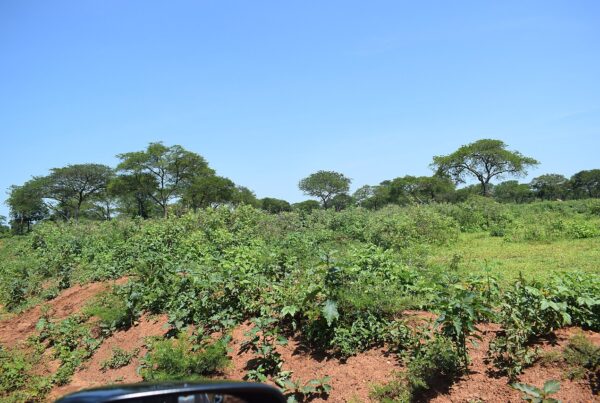
The Bakiga are exceptional farmers. The terraced hillsides of Kigezi are among the most photographed landscapes in Uganda — a testament to generations of careful land management in a region where flat ground barely exists. Every available slope has been shaped into flat cultivation terraces to prevent erosion and maximize yield. This agricultural engineering is entirely traditional, developed without outside intervention.
The primary crops are sorghum, millet, beans, sweet potatoes, and Irish potatoes. Sorghum is central not just as food but as the raw material for bushera (a fermented sorghum drink) and waragi (local gin). Women traditionally do much of the cultivation work while men handle heavier clearing and construction tasks. The Bakiga proverb “he who does not work does not eat” reflects a cultural ethos where productive labor is a moral virtue.
Interlocking community work ethic
Traditional Bakiga society operated on a communal labor system called obusoga where neighbors pooled their work on each other’s farms in rotation. This mutual aid system meant no family had to face a major agricultural task alone. Though modernization has weakened some of these bonds, the cooperative spirit remains visible in how Bakiga communities respond to shared challenges.
Bakiga social structure and family life
Bakiga society is organized around patrilineal clans. Clan membership determines inheritance, land rights, and marriage rules — a person cannot marry within their own clan. Elders hold significant authority in resolving disputes and guiding community decisions. Traditional Bakiga homes are round with conical thatched roofs, though rectangular mud-brick homes have largely replaced them in most areas.
Marriage customs involve bride wealth paid in cattle, goats, and increasingly cash. Elaborate negotiations between families precede marriage. Polygamy was historically common among men with sufficient wealth but is less common today among younger generations. Children are considered the greatest wealth and large families remain the norm in rural areas.
Bakiga dance: ekitaguriro
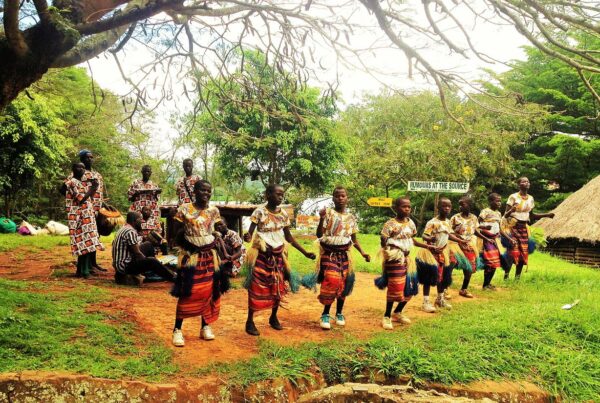
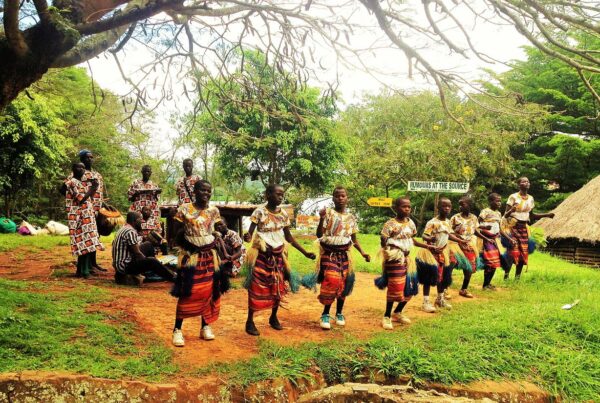
The most famous Bakiga cultural expression is the ekitaguriro dance — a spectacular, high-energy performance in which dancers leap into the air, spin, and perform acrobatic movements with apparent ease. Traditionally performed by young men and women at celebrations, harvests, and ceremonies, ekitaguriro is now performed at cultural events across Uganda and internationally. It has become something of a symbol for Kigezi pride.
Performers wear traditional attire — animal skin capes for men, colorful wraps for women — and accompany the dance with singing and percussion. The athleticism required is considerable; experienced performers can leap nearly a meter off the ground while maintaining graceful body positions. Watching ekitaguriro live is one of the genuine cultural highlights of visiting southwestern Uganda.
The Bakiga and Bwindi Forest
The Bakiga have farmed right up to the edges of Bwindi Impenetrable Forest for generations. Their relationship with the forest is complex — it was a source of medicinal plants, wild foods, honey, and building materials, but also a dangerous place where wild animals threatened crops and livestock. When Bwindi was gazetted as a national park in 1991, many Bakiga communities were restricted from accessing forest resources they had depended on for generations.
Today, community benefit sharing programs return a portion of gorilla trekking revenue (gorilla permits cost $800 in 2027) to surrounding communities for schools, health clinics, and infrastructure. Cultural tourism has also created income opportunities for Bakiga guides, craft sellers, and cultural performance groups that serve visitors staying near Buhoma, Nkuringo, and Rushaga trekking sectors.
Visiting Bakiga communities near Bwindi
Several community tourism projects near Bwindi offer genuine Bakiga cultural experiences. The Buhoma Community Rest Camp and associated cultural programs have been running for decades. Visitors can join guided walks to Bakiga homesteads, participate in cooking demonstrations, learn about traditional medicine, and watch ekitaguriro performances. Craft cooperatives sell high-quality baskets, woven mats, and carved items made by local artisans.
Combining a gorilla trek with a half-day Bakiga cultural immersion creates one of the most complete Uganda experiences available — wildlife in the morning, human heritage in the afternoon, with both connected deeply to the same remarkable landscape.
Who are the Bakiga and what is their historical background?
The Bakiga are a Bantu-speaking people who settled the Kigezi highlands of southwestern Uganda several centuries ago, likely migrating from what is now Rwanda. Their name means “people of the mountains” in their language, Rukiga. Historically they were highland farmers and warriors, known for fierce resistance to centralised political authority — unlike their neighbours in the lowland kingdoms (Buganda, Bunyoro, Ankole), the Bakiga maintained a decentralised, clan-based social organisation without a single paramount chief. British colonial administration struggled to impose centralised control over Bakiga territory, eventually placing the Kigezi region under indirect rule through appointed chiefs rather than working through an existing royal structure as they did with Buganda and Ankole.
How do the Bakiga farm the steep Kigezi highlands?
Bakiga agriculture is one of Africa’s most impressive examples of hillside cultivation. The steep ridges of Kigezi — some with slopes of 45 degrees or more — are almost entirely terrace-farmed, with generations of work having shaped the landscape into a staircase of cultivated plots. Terracing prevents erosion and retains water on slopes that would otherwise lose topsoil rapidly. Principal crops include sorghum (the traditional staple, used for brewing kwete beer and as porridge), millet, Irish potatoes (introduced by Belgian missionaries but now a dietary cornerstone), beans, peas, and vegetables. The Bakiga farming landscape seen from above — looking down from the hills surrounding Bwindi — is visually striking and forms the human context within which the gorillas’ forest island exists.
What is Ekitaguriro dance and when is it performed?
Ekitaguriro is the principal traditional dance of the Bakiga, performed primarily by men (though women participate in some contexts). The dance is characterised by dramatic vertical jumping — performers leap as high as possible while maintaining a specific body posture, with judges or observers evaluating the height and control of the jump. It is performed at weddings, community celebrations, harvest festivals, and cultural events. The jumping component is thought to have origins in warrior tradition — demonstrating physical strength and agility. Community cultural programmes near Bwindi’s Buhoma sector commonly include an Ekitaguriro demonstration for visitors, often performed by community groups that receive a share of the tourism income generated.
How do the Bakiga relate to gorilla conservation at Bwindi?
The Bakiga are the community whose land was most directly affected by Bwindi’s gazettement as a national park in 1991. Community members who had cultivated plots within the forest boundary were removed, creating resentment that, if unaddressed, would have led to continued poaching and encroachment. The gorilla tourism revenue-sharing model — which channels a percentage of permit fees to surrounding communities — was specifically designed to make conservation economically rational for Bakiga families. Community programmes including the Bwindi Community Hospital, the Ride 4 a Woman cooperative, and the Buhoma Community Rest Camp are all Bakiga-run enterprises that have shifted local attitudes toward gorilla conservation by making the gorillas’ presence economically beneficial rather than merely an imposed restriction.
What cultural experiences can visitors have near Bwindi with Bakiga communities?
Near Bwindi’s Buhoma sector, visitors can arrange: village walks through Bakiga homesteads with a guide explaining farming practices, food preparation, and household life; cultural dance performances including Ekitaguriro by local groups; craft cooperative visits where Kigezi baskets and beadwork are made and sold; and the Batwa trail, which includes encounters with the Batwa pygmy community (the original forest inhabitants displaced by Bwindi’s gazettement) alongside visits to Bakiga homesteads. These experiences are charged separately from gorilla permits and revenue goes directly to participating communities. Most lodges near Bwindi can arrange these activities for the afternoon of the trek day or the following morning.
- The Bakiga people: farmers and forest neighbours of Bwindi’s highland communities
- Bakiga culture and the people of Kigezi: meeting the communities near Bwindi
- Waterfall hikes near Bwindi: rivers and cascades in Uganda’s highland forests
- Ugandan music and cultural performances near Bwindi: the arts of the Bakiga people
- The Bwindi Tea Factory and the Women Who Run It Near the Forest
- Where to Eat Near Bwindi Forest: Lodges and Local Spots 2027
- Best Lodges Near Bwindi Impenetrable Forest: Top 10 Ranked
- Best Lodges With Swimming Pools Near Bwindi Forest
- Top 5 Tree House Lodges Near Bwindi Impenetrable Forest
- Top honeymoon lodges near Bwindi Impenetrable Forest