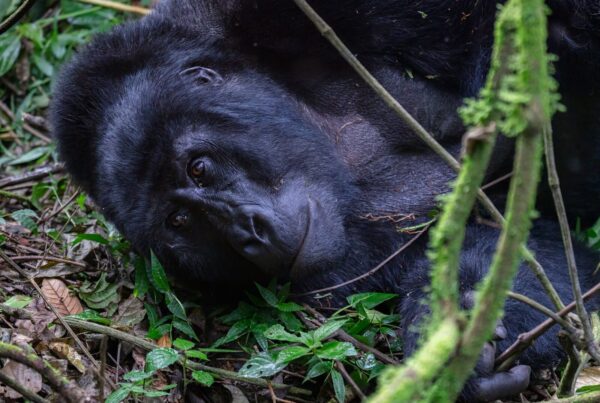
Before Bwindi was a national park, before it was a gorilla trekking destination, before it had a name that appeared on wildlife tourism itineraries, the forest was home. The Batwa people — the indigenous hunter-gatherers who lived inside what is now Bwindi Impenetrable National Park for centuries — knew the forest in a way that no ranger, researcher, or visitor has replicated since. They knew which plants held medicine. They knew where the animals slept. They knew the forest’s rhythms in every season and understood the gorillas as neighbours rather than subjects of conservation. When Bwindi was gazetted as a national park in 1991, the Batwa were evicted from their home. This is their story.
Who the Batwa Are
The Batwa — sometimes called Twa or, historically and now considered problematic, pygmies — are one of the indigenous forest-dwelling peoples of Central and East Africa. Genetically and culturally distinct from the Bantu-speaking farming communities that surround them, the Batwa lived as semi-nomadic hunter-gatherers in the mountain forests of the Albertine Rift for thousands of years. Their material culture was adapted entirely to the forest: temporary shelters built from forest materials, hunting with bows and snares, knowledge of hundreds of plant species for food and medicine, and a spiritual relationship with the forest that framed it as the source of all life rather than a resource to be exploited.
The Batwa communities of south-western Uganda lived in and around what is now Bwindi Impenetrable National Park, Echuya Forest Reserve, and Mgahinga Gorilla National Park. They shared the forest with mountain gorillas and other wildlife not in competition but in ecological balance — taking from the forest what they needed and leaving the rest undisturbed. Archaeological and oral history evidence suggests that the Batwa presence in these forests extends back several thousand years.
The 1991 Eviction
When Bwindi was gazetted as a national park in 1991, the Ugandan government and international conservation organisations made the decision that the park’s integrity required the removal of all human inhabitants from within the park boundary. The Batwa — estimated at the time at approximately 1,500 to 2,000 individuals in the Bwindi-Mgahinga area — were resettled in communities outside the park boundary. They received no formal compensation, no land allocation, and no support programme adequate to transition a forest-based people to settled agriculture in a landscape where all available farmland was already occupied by neighbouring communities.
The consequences were severe and continue to be felt. The Batwa lost not only their homes but the entire material and spiritual basis of their culture. Forest-based skills became useless outside the forest. The medicinal plant knowledge accumulated over generations became inaccessible when the plants were inside a park they were no longer permitted to enter. The social structures of a nomadic forest people were disrupted by settlement in fixed communities alongside populations with whom they had historically had complex and often difficult relationships.
Life After Eviction
The Batwa communities surrounding Bwindi are among the most marginalised populations in Uganda. Literacy rates are lower than in surrounding communities. Land ownership rates are minimal — the Batwa received no formal land entitlement at the time of eviction. Many Batwa families subsist as casual agricultural labourers on land owned by neighbours. Child malnutrition rates are higher than the national average. Access to formal education, healthcare, and economic opportunity remains significantly limited.
Several organisations — including Kellermann Foundation, Mgahinga and Bwindi Impenetrable Forest Conservation Trust, and Uganda Batwa Development Programme — work specifically with the Batwa communities around Bwindi to address land rights, education, healthcare access, and economic inclusion. Progress has been made, but the displacement effects of 1991 have not been remedied and are widely regarded by human rights organisations as an ongoing injustice.
The Batwa Trail
The most direct way for gorilla trekking visitors to engage with the Batwa is through the Batwa Trail programme, available at the Buhoma sector of Bwindi. Batwa guides lead small groups of visitors along the edge of the forest, sharing traditional skills, ecological knowledge, and stories of life inside the park before 1991. The trail does not enter the core gorilla habitat but follows the forest boundary through terrain that the guides remember from their childhood. The experience is moving, informative, and deeply human in a way that the gorilla trek — however extraordinary — is not.
Income from the Batwa Trail goes directly to the participating Batwa community. For visitors who want their Uganda trip to include a meaningful engagement with the human dimension of Bwindi’s conservation story, the Batwa Trail is the most important addition to the itinerary. The forest that the gorillas inhabit is also the forest that the Batwa lost. Both stories are part of what Bwindi is.
Frequently Asked Questions
The global mountain gorilla population is approximately 1,100 individuals — one of the smallest populations of any great ape. They exist in two separate populations: one in the Virunga Massif spanning Uganda, Rwanda, and DRC; and one in Bwindi Impenetrable Forest (Uganda only). The population has grown from approximately 620 in the 1980s, largely due to tourism-funded conservation.
Uganda Wildlife Authority directs 20% of every gorilla permit fee to communities adjacent to Bwindi and Mgahinga. These funds pay for school construction, healthcare programmes, borehole maintenance, and community microfinance. Permit revenue also funds ranger salaries, anti-poaching patrols, and the research teams that monitor gorilla health daily.
The Batwa (also called Twa) are an indigenous forest people who lived inside Bwindi for thousands of years until it was gazetted as a national park in 1991. Conservation displaced them from their ancestral forest. Gorilla tourism revenue now funds Batwa cultural programmes and livelihoods. The Batwa Cultural Trail at Buhoma sector is run by the Batwa community and is one of the most authentic cultural experiences near Bwindi.
Mountain gorillas are classified as Endangered on the IUCN Red List — one step down from Critically Endangered, which they held until 2018. Their population has grown consistently since the 1980s, making them one of the few great ape populations increasing in number. This recovery is directly attributed to the conservation funding generated by gorilla tourism.
Uganda is home to the mountain gorilla (Gorilla beringei beringei), one of two subspecies of eastern gorilla. They live exclusively in the Virunga volcanic highlands (Uganda/Rwanda/DRC) and Bwindi Impenetrable Forest (Uganda only). Mountain gorillas are the only gorilla subspecies that cannot survive in captivity — every individual you can trek is a wild animal.