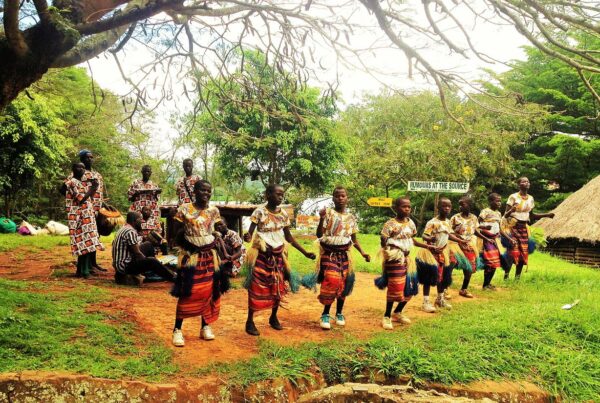
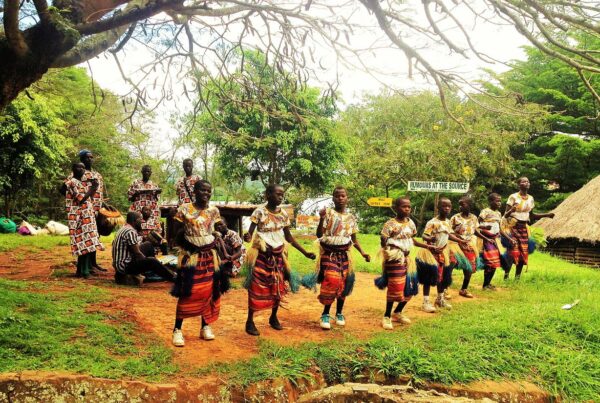
The Acholi are one of Uganda’s largest and most culturally distinct ethnic groups, inhabiting the Acholi sub-region of northern Uganda — primarily Gulu and Kitgum districts and the surrounding area — and their culture is known for its extraordinarily rich traditions of music, dance, and oral performance: the bwola royal dance performed in a circle around the chief’s compound, the larakaraka courtship dance where young men and women face each other in competitive display, the orak hunting songs that record specific game hunts with real place names and animal details, and the lyrical tradition of their praise poetry all survived the catastrophic disruption of the Lord’s Resistance Army insurgency (1986-2006) and have been significantly revived as part of northern Uganda’s cultural recovery. Cultural context enriches Uganda safari and gorilla trekking understanding.
- Location: Acholi sub-region: Gulu, Kitgum, Pader, Lamwo, Nwoya, Amuru districts; approximately 1.5 million people
- Language: Acholi (a Luo language; closely related to Langi and to Kenyan and South Sudanese Luo dialects)
- Key dance: Bwola (royal circle dance, UNESCO-recognised); Larakaraka (courtship dance); Orak (hunting celebration)
- Post-LRA recovery: the 20-year LRA insurgency displaced approximately 1.8 million Acholi people; cultural recovery has been significant since 2006
The Acholi are one of Uganda’s largest and most culturally distinct ethnic groups, inhabiting the Acholi sub-region of northern Uganda — primarily Gulu and Kitgum districts and the surrounding area. Their culture is known for its extraordinarily rich tradition of music and dance, a sophisticated oral literature of proverbs and folktales, and a strong community-based social structure organized around clans and lineages. The Acholi experienced devastating violence during the LRA conflict of the 1990s and 2000s but have demonstrated remarkable cultural resilience in recovery. In 2027 Acholi culture is experiencing renewal. This guide covers its key features.
The Acholi People and Their Territory
The Acholi are a Nilotic people — their linguistic and cultural origins lie in the Nilotic migration from the Sudan region into East Africa over many centuries. They speak Acholi (Luo), a Nilotic language related to the Luo languages spoken by communities in Kenya and South Sudan. The Acholi sub-region is characterized by open savanna, granite inselbergs rising from flat plains, and seasonal rivers. Gulu city, the largest urban center in northern Uganda, is the cultural and commercial capital of the Acholi region and has developed rapidly since the end of the LRA conflict.
Music and Dance
Acholi music and dance are among the most celebrated in Uganda. The most famous Acholi dance form is the Bwola — a royal dance performed at the court of the Rwot (chief) that involves large groups of men and women moving in circular formation around a central drummer. The Bwola dance is recognized by UNESCO as an important intangible cultural heritage and is performed at major ceremonies, celebrations, and cultural events throughout the year. The rhythmic complexity of Acholi drumming — using multiple drums of different pitches in interlocking patterns — is considered among the most sophisticated percussion traditions in East Africa.
The Larakaraka Dance
The Larakaraka is a courtship dance where young men and women demonstrate their eligibility and attractiveness through performance. The dance involves call-and-response between male and female groups, with increasingly energetic and skillful movement as participants try to impress potential partners. It is a social institution as much as a performance — the Larakaraka was historically one of the primary contexts in which young people met and assessed each other as marriage partners.
Oral Literature
Acholi oral literature is exceptionally rich, encompassing a wide repertoire of proverbs (ngero), folktales (pakruok), songs, and ceremonial speeches that encode moral values, historical knowledge, and social norms. The recitation of proverbs in everyday conversation is a mark of cultural competence and respected communication in Acholi society. Acholi proverbs use animal imagery extensively — the guinea fowl, the lion, the elephant, and various birds appear repeatedly as figures encoding different virtues and follies. Okot p’Bitek, one of Africa’s most celebrated poets, was Acholi — his poem “Song of Lawino” (1966) is written in the voice of an Acholi woman and draws deeply on Acholi oral tradition.
Post-Conflict Cultural Recovery
The LRA conflict (Lord’s Resistance Army) devastated northern Uganda from roughly 1986 to 2006. Over two million Acholi were displaced into internally displaced persons camps, cultural practices were suppressed or disrupted, and the trauma of mass atrocity left deep scars on the community. Cultural recovery has been a central element of post-conflict healing in Acholi. The Ker Kwaro Acholi — the traditional cultural institution equivalent to Buganda’s royal kingdom — has led cultural revitalization programs that restore dance, ceremony, and traditional authority structures. Music and dance have been used explicitly as trauma healing tools, with community performances providing opportunities for collective emotional processing that Western therapeutic models alone cannot provide.
Visiting Acholi Culture
The Acholi region is not on the main gorilla trekking circuit but is worth visiting for travelers with time to extend their Uganda itinerary northward. Gulu city has cultural centers, local markets, and music venues. The Acholi Inn in Gulu is a historic hotel that has hosted generations of travelers and journalists and can facilitate cultural tours to surrounding communities. The Royal Mile Museum in Gulu documents Acholi history. For visitors whose itinerary does not reach northern Uganda, some Kampala cultural centers host Acholi music and dance performances — ask your hotel or cultural tourism operator about current programming.
Acholi culture in 2027 is a story of extraordinary resilience — a community that absorbed devastating violence and emerged with its cultural identity not just intact but actively renewed. For visitors who understand that Uganda is far more than its gorilla parks, the Acholi north offers some of the most profound cultural experiences the country provides.
What is Bwola dance and why is it significant to Acholi culture?
Bwola is the royal dance of the Acholi people and one of the most important ceremonial performing arts of northern Uganda. UNESCO recognition: Bwola was inscribed on the UNESCO Representative List of the Intangible Cultural Heritage of Humanity in 2014 — only the second Ugandan cultural practice to receive this recognition after bark cloth production. The dance format: Bwola is performed in a circle around the rwot (chief) who sits at the centre; male dancers carry decorated drums and wear feather headdresses of guinea fowl and ostrich feathers; the dancing is continuous and highly coordinated; the drumming is complex, with multiple simultaneous rhythms from drums of different sizes. When it is performed: Bwola is performed at the installation of a new chief, at major community celebrations, at the return of war parties, and at funerals of senior figures; it is a statement of community cohesion and of the chief’s central role in community life. The LRA disruption: the LRA insurgency killed, abducted, and displaced Acholi community leaders including many traditional chiefs and cultural custodians; the Bwola tradition was severely disrupted; the post-2006 revival has been supported by cultural institutions and by the returned displaced population who maintained the tradition in IDP camps through the conflict.
What is Larakaraka and how does it function as a courtship dance?
Larakaraka is the Acholi courtship dance and one of the most visually spectacular and socially significant performing arts traditions of northern Uganda. The format: Larakaraka involves two lines of dancers — one of young men, one of young women — facing each other; the dancers perform in competitive sequence, with individual dancers stepping out to display their skill, beauty, and energy; the audience observes and appreciates. The courtship function: larakaraka is simultaneously a performance and a matchmaking event; young people display themselves to potential partners and to the community that will assess their suitability as spouses; a girl who dances particularly well will attract attention from families seeking brides for their sons. The music: larakaraka is accompanied by specific drumming and by singing in Acholi; the songs for larakaraka reference the qualities the community values in young men and women — strength, beauty, generosity, and dancing ability. Contemporary larakaraka: larakaraka is performed at weddings, at cultural festivals, and increasingly as a cultural tourism performance in Gulu town and at lodges in northern Uganda.
How did the LRA insurgency affect Acholi culture and what has been recovered?
The Lord’s Resistance Army insurgency (1986-2006) was the most catastrophic event in modern Acholi cultural history and its effects on cultural practice were profound and lasting. The displacement: at the peak of the conflict (2002-2006), approximately 1.8 million Acholi people lived in internally displaced person (IDP) camps in a forced resettlement policy (“protected villages”) designed to separate the civilian population from LRA fighters; this uprooting broke the village-based cultural transmission system where elders taught young people dance, song, and custom. Cultural loss: specific clans, specific chiefs, specific knowledge-holders were killed or abducted; entire bodies of oral knowledge — lineage genealogies, specific song cycles, healing knowledge — were lost with individual deaths. The recovery: since the return from camps (2006-2012), Acholi cultural organisations (Ker Kwaro Acholi — the Acholi cultural institution — and NGOs including Gulu-based arts organisations) have invested in cultural revival; Bwola troupes have reformed; cultural festivals have restarted; a new generation is learning practices that were nearly lost. The residual trauma: the cultural recovery cannot recover the specific individuals who carried unique knowledge; what has been recovered is the surviving portion of a once-richer tradition.
What is the contemporary arts scene in Gulu and northern Uganda?
Gulu town has developed a remarkable contemporary arts scene in the post-conflict period that blends Acholi traditional culture with contemporary African performance and visual arts. Gulu town: the regional capital of the Acholi sub-region; approximately 200,000 people; a 4-5 hour drive north of Kampala on the Kampala-Gulu highway; the town has transformed from a conflict-scarred administrative centre to a visible arts hub. GUSCO (Gulu Support the Children Organisation): one of the pioneering post-conflict rehabilitation organisations that used music and dance therapy to reintegrate LRA-abducted children; their cultural programme contributed significantly to the post-conflict arts revival. Theatre La Bonheur: a Gulu-based theatre and arts organisation producing contemporary drama that engages with the LRA conflict, displacement, and recovery themes. Visual arts: Gulu has a growing community of visual artists who have gained national and international exhibition; several working in materials associated with conflict — bullet casings, IDP camp debris — as a form of post-conflict witness. For visitors: a day in Gulu on the way north is a meaningful addition to any Uganda itinerary that includes Murchison Falls or the northern parks.
What other Acholi cultural traditions are worth knowing about?
The Acholi cultural tradition extends beyond the most visible dance forms to encompass a rich material and spiritual culture. Orak (hunting songs): the Acholi hunting tradition produced a specific song form that recorded specific hunts with precise geographic and animal detail; the orak singer was a cultural historian as much as a musician; the songs were historically sung at the return from a successful hunt and at celebrations; they survive in modified form in contemporary Acholi music. Praise poetry (olo): Acholi chiefs and warriors had personal praise singers who composed and performed praise poetry recording their subject’s deeds; this is analogous to the griot tradition of West Africa. The Acholi rwot (chief) institution: the Ker Kwaro Acholi (the cultural institution of the Acholi people) headed by a paramount chief (rwot) is the living institutional expression of Acholi political and cultural identity; it survived the LRA period and has been active in post-conflict cultural revival. Mato oput (reconciliation ceremony): the Acholi reconciliation ceremony is one of Uganda’s most sophisticated traditional justice mechanisms; it involves the sharing of a bitter herb drink between perpetrator and victim clans as a symbolic acceptance of restored relationship; it has been studied extensively as a model for post-conflict transitional justice.
- Ugandan music and dance: what to experience in communities near Bwindi
- Ugandan music traditions: from royal drums to Afrobeat on the road to Bwindi
- Gorillas in Popular Culture and Media: From Myth to Modern Day Icons
- Uganda Food Dishes You Should Try: A Taste of Tradition, Culture, and Heart
- Uganda Art & Music Scenes to Explore: Where Tradition Meets Vibrant Modernity
- Tipping Culture for Gorilla Guides in Uganda: What to Give
- Lake Victoria Uganda: Africa’s Largest Lake from the Northern Shore
- Gorilla Trekking vs Northern Lights: Which Experience Stays With You Longer?
- What Ugandans Eat for Breakfast: Food Culture Before the Safari
- The Ugandan Music Scene Nobody Outside Africa Knows About