Updated
You will not be the same person after the gorilla encounter that you were before it — this is not a dramatic claim; the change is not visible to others, you will not feel dramatically different in most of the ways you ordinarily feel different, but what changes is a specific thing: a frame of reference about what a wild animal encounter can be, now permanently anchored by the hour you spent in Bwindi Impenetrable Forest close enough to a mountain gorilla family to hear them breathe. Build the experience: cost breakdown, accredited Uganda operators, 7-day gorilla safari.
- The encounter: 60 minutes with a habituated gorilla family in Bwindi; 8 people maximum; gorillas at 7-metre range continuing normal family behaviour — feeding, grooming, playing
- DNA: 98.3% shared with humans; the behaviours visible during the hour — social bonds, hierarchy, maternal care, juvenile play — are immediately recognisable to human observers
- The permanence: visitors consistently report the gorilla experience remains their reference point for wildlife encounters years later; it changes not what they think but what they compare
- Access: USD 800 permit; 4 Bwindi sectors; permit booking info
You will not be the same person after the gorilla encounter that you were before it. This is not a dramatic claim. The change is not visible to others, and you will not feel dramatically different in most of the ways you ordinarily feel different or the same. What changes is a specific thing: a framework for what wildness is, what intelligence is, and what your relationship to the rest of the natural world actually consists of. This framework changes quietly, without announcement, and tends to remain changed.
What Happens to Your Perspective After You Spend an Hour With Wild Gorillas
The Immediate Aftermath
In the hours immediately after the gorilla encounter — the walk back through the forest, the return to the lodge, the lunch that happens while the experience is still very recent — most visitors describe a quality of heightened attention. Everything looks slightly more vivid. Small things that would normally be processed automatically — a bird call, the texture of a leaf, the quality of light in the afternoon forest — register with unusual clarity. This is not a sustained altered state. It is the ordinary consequence of genuine attention having been activated at high intensity, and it fades within a day or two into the background of ordinary perception.
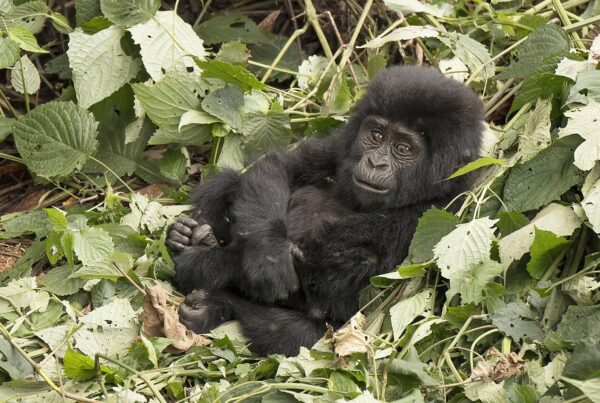
What does not fade as quickly is the specific vividness of the encounter itself. The image of the gorilla’s face. The particular quality of its gaze. The sound of the silverback’s breath. These remain specific and accessible in memory with unusual intensity for weeks and months after the experience, and tend to become part of the permanent experiential inventory that people carry throughout their lives.
The Medium-Term Perspective Shift
In the weeks and months after the gorilla trek, most visitors describe a subtler shift in how they relate to news and information about wildlife and conservation. Issues that previously felt abstract — deforestation, habitat loss, the decline of large mammal populations — feel personal and immediate in a way they did not before. The gorilla you watched feeding in Bwindi is now a specific, known individual rather than a representative of an abstract category. The threats to its habitat are threats to something specific that you have met.
This personalisation effect is one of the most significant conservation benefits of gorilla tourism. Visitors who have been to Bwindi become, with unusual reliability, advocates for gorilla conservation — not from obligation but from genuine investment in the outcome. The $800 permit buys not just access but investment: the emotional stake in the gorilla’s continued existence that only direct encounter can create.
The Long-Term Framework Change
The deeper and more persistent change that gorilla trekking veterans describe is a shift in the underlying framework through which they experience their relationship with the natural world. Before the encounter, nature was — for most urban-dwelling, screen-habituated people — a background: beautiful, important in the abstract, but separate from the foreground of daily life and personal significance. After the encounter, nature occupies a different position. Not foreground — people do not return from Bwindi and immediately move to the countryside. But the specific quality of separation diminishes. The gorilla’s reality is now part of their reality in a way that information and documentation could not achieve.
This shift is hard to describe in specific terms because it is pervasive rather than focused: it affects how you read certain news stories, how you respond to certain landscapes, what you find yourself caring about in conversations that touch on environmental topics. It is a background recalibration rather than a foreground conversion. But recalibrations of this kind, applied consistently over years, produce genuinely different people than the people who went to Bwindi without having the encounter first.
What This Means for the Decision
The perspective shift that gorilla trekking produces is not a reason to go in isolation. You could achieve some version of it through other means. But gorilla trekking achieves it with particular reliability, through a mechanism — the direct encounter with another great ape — that is not available in any other form. If you value this kind of perspective shift — if you sense that your relationship with the natural world could benefit from the correction that direct encounter provides — then the $800 permit is less the price of access and more the price of an internal shift that will affect how you think about the world for the rest of your life. Contact us for 2027 availability.
What specifically changes about your perspective after seeing mountain gorillas?
The change is documented in traveller accounts consistently enough to identify specific themes. Scale of encounter: most visitors arrive at Bwindi with a concept of what a wildlife encounter is — formed by zoo visits, documentaries, or other safaris; the gorilla encounter recalibrates this concept; subsequent wildlife experiences are measured against it. Understanding of relatedness: the 98.3% DNA shared with mountain gorillas is an abstract figure until you are 7 metres from one; the visibility of shared social behaviour — maternal care, juvenile play, hierarchical interactions — makes the evolutionary relationship real in a way that no amount of reading achieves. Conservation meaning: 1,063 mountain gorillas alive worldwide; Endangered IUCN; the encounter in the context of this reality produces a conservation awareness that is specifically grounded rather than abstract. The forest itself: Bwindi is one of the world’s most ancient continuously forested areas; the experience of moving through it to find the gorillas changes how many visitors think about forests generally.
How do visitors describe the gorilla encounter in their own words after returning?
The post-encounter descriptions are remarkably consistent in their shared elements and in their shared acknowledgement that description is inadequate. Most common theme: the animal’s eyes; nearly every account mentions eye contact with the gorilla as the moment that cannot be explained; the accounts describe not anthropomorphism but genuine mutual attention — two minds briefly aware of each other. Second theme: the family; the social structure of the gorilla family — the silverback’s authority, the mothers with infants, the juveniles wrestling — reads immediately to human observers because it is genuinely similar to human family dynamics at a structural level. Third theme: the hour was short; virtually everyone who has done a standard 60-minute Bwindi trek describes the hour as passing faster than any other hour of their lives. The language failure: the consistent acknowledgement across cultures that the experience exceeds the available vocabulary is itself data about what kind of encounter this is.
What Uganda wildlife experiences should I add to the gorilla trek to maximise the trip?
The gorilla trek at Bwindi is the centrepiece of a circuit that includes several world-class additional experiences. Chimpanzee trekking: Kibale Forest chimpanzee trekking is the complement most visitors add; chimps are more viscerally exciting (faster, louder, more dramatic social interactions) and share 98.7% DNA; the combination of chimp and gorilla in one trip is the primate sequence most wildlife travellers eventually want. Shoebill birding: Mabamba Bay by canoe for the shoebill is 40 minutes from Entebbe airport; the shoebill is as extraordinary to birders as the gorilla is to mammal watchers; add it on arrival. Savannah: Queen Elizabeth NP fits between Kibale and Bwindi; tree-climbing lions at Ishasha, Kazinga Channel hippos, Kasenyi game drives. Murchison Falls: Murchison Falls NP adds the Albert Nile boat safari at 2-3m range from hippos and crocodiles — a different kind of proximity.
Is the gorilla habituation experience worth the extra cost and time?
The habituation experience is a different product from the standard trek and worth specific consideration. What it is: 4 hours (vs 60 minutes for standard trek) with a partially habituated gorilla family at Rushaga sector, Bwindi; USD 1,800 per person. Who it’s for: researchers, photographers, and visitors who specifically want extended contact and to observe the habituation process itself; the longer time means more natural behaviour is visible. What you gain: 4x the time with gorillas; more opportunity to observe natural foraging, family interaction, silverback behaviour; the partially habituated family’s response to humans is itself more varied than a fully habituated family. The cost: USD 1,800 vs USD 800 standard; for most first-time visitors, the standard trek is the right starting point; the habituation experience is an upgrade for repeat visitors or those with specific professional purposes. See Bwindi sector guide.
What do people most regret about their gorilla trekking trip?
The post-trip regrets are specific and avoidable. Not hiring a porter: the most commonly mentioned practical regret; the porter costs USD 15-20, carries your bag, provides grip and support on steep sections; skipping it to save money is false economy on a trip that costs USD 800 in permit alone. Not spending enough days: visitors who plan one gorilla trek and no time to explore the forest or surrounding area consistently wish they had built in a second day at Bwindi. Not adding chimps: Kibale Forest is on the same western Uganda circuit; adding it requires only one extra day and USD 200 permit. Waiting too long: the most common meta-regret is that the trip happened later than it could have — the people who waited three years wish they had gone three years earlier. See 5 common gorilla trekking mistakes.
- What Happens to Your Perspective After You Spend an Hour With Wild Gorillas
- How Long Do You Spend With Gorillas During the Trek? The One-Hour Rule Explained
- Gorilla Pregnancy and Birth: What Happens in the Wild
- What Happens on Gorilla Trekking Day: An Hour-by-Hour Guide
- What Happens When You Stand in the Presence of a Silverback: Perspective
- What Happens to African Wildlife When Tourism Stops: The Evidence
- Why Gorilla Trekking in Uganda Is Africa’s Most Unforgettable Wildlife Adventure
- Gorilla Behaviour in the Wild: Understanding the Gentle Giants of Africa
- What a 3-Day Uganda Wildlife and Cycling Safari Did to My Family Was Beyond Anything We Expected
- Wildlife in Uganda – Where Nature Still Roars, Hums, and Soars Free