Updated
Gorilla Pregnancy and Birth: What Happens in the Wild
Reproduction in the World’s Largest Primates
Gorilla Pregnancy and Birth: What Happens in the Wild Reproduction in the World’s Largest Primates Gorilla reproduction is characterised by low frequency and high investment — each birth is a significant biological event in a species where females produce very few offspring across a lifetime. Gorilla reproduction is characterised by low frequency and high investment — each birth is a significant biological event in a species where females produce very few offspring across a lifetime. The pregnancy, birth, and early development of mountain gorilla infants follows patterns that researchers have documented in detail through decades of observation of habituated families in Bwindi and the Virungas. Understanding this reproductive biology contextualises both the value of each individual gorilla and the conservation mathematics that make every birth significant.
Gorilla Reproductive Biology
Female mountain gorillas reach sexual maturity at approximately 8 to 10 years of age. Males mature later, reaching sexual adulthood at around 12 years when they begin developing the silver saddle that marks silverback status, with full reproductive maturity around 15 to 18 years. This late maturity, particularly in males, reflects the extended period of growth and social development required for competitive adult existence.
Female gorillas do not have obvious visual oestrus signals, unlike many other primates. Their reproductive cycles are not marked by the dramatic swellings seen in chimpanzees and bonobos. Instead, receptivity is indicated through behavioural cues — increased social proximity to the silverback, vocalisation, and subtle postural signals that the dominant male reads and responds to. This cryptic oestrus may have evolved to reduce male conflict over access to fertile females in a social system where a single dominant male controls reproductive access.
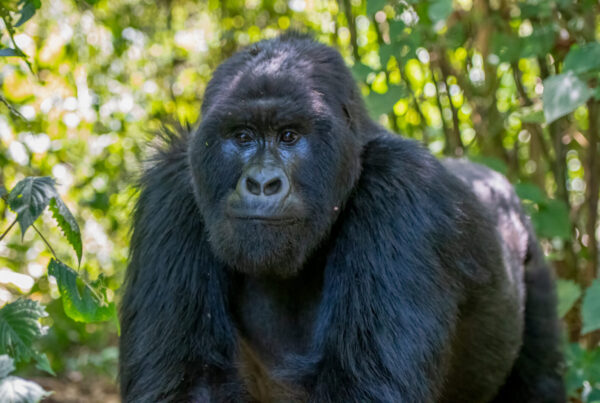
The silverback is the primary reproductive male in a gorilla family. He mates with all adult females in the group, and the high degree of paternal certainty in gorilla family structure means silverbacks actively protect infants they have fathered. In multi-male groups, subordinate males occasionally mate with females, but dominant silverbacks dramatically outreproduce them.
Gestation: A Long Pregnancy
Mountain gorilla gestation lasts approximately 8.5 months — slightly shorter than human pregnancy at 9 months, but remarkably close given that gorillas are about twice as large as humans at birth weight relative comparison would suggest. The length of gestation reflects the complexity of neurological and physical development required to produce a primate infant with the gorilla’s eventual cognitive sophistication.
During pregnancy, female gorillas continue normal social behaviour and foraging activity with few outward signs of their condition until relatively late in the pregnancy when abdominal enlargement becomes visible to observant researchers. Pregnant females show increased food intake in the final months, particularly of protein-rich vegetation that supports foetal development.
Birth: A Private Event
Gorilla births almost invariably occur at night, within the family’s sleeping nest site. Unlike many social mammals where births attract communal attention, gorilla birth appears to be a private affair managed entirely by the mother. No birth attendance by other group members has been reliably documented in wild mountain gorillas, though other females sometimes show elevated interest in the new mother and infant immediately post-birth.
The birth itself follows the typical mammalian pattern of uterine contractions and infant expulsion, managed by the mother alone. The newborn is typically positioned for head-first delivery. Complications during birth are rare in healthy wild gorillas but do occur, and Gorilla Doctors, the veterinary organisation supporting habituated population health, has occasionally provided post-birth medical support to mothers and infants with complications.
Birth weight is approximately 1.8 to 2.2 kilograms — considerably lighter than a human infant relative to maternal size, reflecting that gorillas, like most primates, are born relatively altricial (undeveloped) and complete much of their neurological maturation post-birth. The infant’s eyes are open at birth and it has a strong grasping reflex, capable of clinging to maternal fur from the first hours — an essential survival adaptation in a species where the mother must remain mobile.
Post-Birth Period
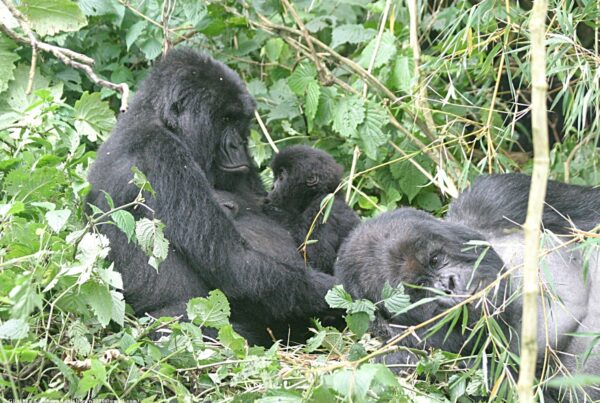
The immediate post-birth period involves intensive bonding behaviour. The mother cleans the infant, nurses immediately, and begins the continuous physical contact that characterises the first year of gorilla infancy. Other group members, particularly juveniles and young adult females, show intense curiosity about the newborn — approaching to look and sometimes attempting to touch — which the mother typically manages with protective posturing rather than outright aggression.
The silverback’s response to new infants varies with paternity confidence and individual temperament. Most silverbacks show increased vigilance following a birth in the group — their protective behaviour extends to the infant as a new group member whose survival contributes to the silverback’s reproductive success. As infants become mobile and approach the silverback directly, most tolerant silverbacks allow brief contact before returning to their own activities.
Interbirth Interval: The Reproductive Pace
The interval between successive gorilla births — the interbirth interval — is typically 4 to 5 years in successful mothers. This long interval reflects the intensive nursing commitment (up to 3 years), the physical demands of carrying and caring for a dependent infant through multiple years, and the hormonal suppression of ovulation during lactation (lactational amenorrhoea). A female whose infant dies in the first year returns to reproductive condition within months and can conceive again quickly, providing a biological mechanism for replacing lost infants that somewhat compensates for the low reproductive rate.
Over a lifetime of 35 to 40 reproductive years, a healthy female mountain gorilla may produce 6 to 10 live infants, of which perhaps 4 to 7 reach reproductive adulthood. With survival of perhaps half of offspring to reproductive age, each breeding female contributes approximately 2 to 3.5 individuals to the next generation — barely above replacement rate. This is why every individual’s survival matters enormously in a species with a population of only 1,063.
Final Thoughts
Gorilla reproduction is a slow, high-investment process that produces few offspring but invests heavily in each. The birth of a mountain gorilla infant is a genuinely significant conservation event, adding to a population that cannot afford attrition from disease, poaching, or habitat loss. The care and protection invested in each infant by its mother, the silverback, and the group is the evolutionary response to a reproductive strategy that requires maximum survival of each individual. When you see a mother gorilla with her infant in Bwindi, you are watching the species’ future being actively secured.