Updated
gorilla trekking Uganda perspective change is one of Africa’s most extraordinary wildlife experiences, connecting travellers with mountain gorillas in their natural forest habitat. You will not be the same person after the gorilla encounter that you were before it — the change is not visible to others, and you will not feel dramatically different in most of the ways you ordinarily feel different or the same, but something specific shifts: a particular kind of smallness that is not uncomfortable but that reorders, quietly, the hierarchy of things that felt important before you stepped into Bwindi Impenetrable Forest and spent an hour in the presence of a family of mountain gorillas going about their lives. Book your gorilla trekking permit and plan your 7-day Uganda gorilla safari.
- Time with the gorillas: exactly 60 minutes, regardless of where you find them or how long the trek took — this limit protects the gorillas from disease transmission
- Permit: USD 800 per person; booked through Uganda Wildlife Authority or a registered Uganda tour operator
- Success rate: historically 95%+ — gorilla families are tracked by rangers daily and located every morning before groups set out
- Best preparation: none required beyond reasonable fitness; the common trekking mistakes are avoidable with basic research
You will not be the same person after the gorilla encounter that you were before it. This is not a dramatic claim. The change is not visible to others, and you will not feel dramatically different in most of the ways you ordinarily feel different or the same. What changes is a specific thing: a framework for what wildness is, what intelligence is, and what your relationship to the rest of the natural world actually consists of. This framework changes quietly, without announcement, and tends to remain changed.
What Happens to Your Perspective After You Spend an Hour With Wild Gorillas
The Immediate Aftermath
In the hours immediately after the gorilla encounter — the walk back through the forest, the return to the lodge, the lunch that happens while the experience is still very recent — most visitors describe a quality of heightened attention. Everything looks slightly more vivid. Small things that would normally be processed automatically — a bird call, the texture of a leaf, the quality of light in the afternoon forest — register with unusual clarity. This is not a sustained altered state. It is the ordinary consequence of genuine attention having been activated at high intensity, and it fades within a day or two into the background of ordinary perception.
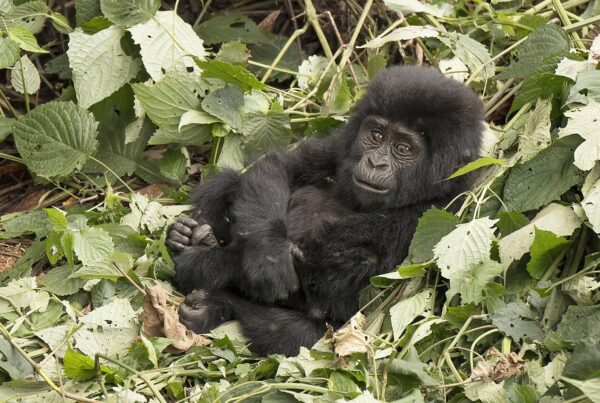
What does not fade as quickly is the specific vividness of the encounter itself. The image of the gorilla’s face. The particular quality of its gaze. The sound of the silverback’s breath. These remain specific and accessible in memory with unusual intensity for weeks and months after the experience, and tend to become part of the permanent experiential inventory that people carry throughout their lives.
The Medium-Term Perspective Shift
In the weeks and months after the gorilla trek, most visitors describe a subtler shift in how they relate to news and information about wildlife and conservation. Issues that previously felt abstract — deforestation, habitat loss, the decline of large mammal populations — feel personal and immediate in a way they did not before. The gorilla you watched feeding in Bwindi is now a specific, known individual rather than a representative of an abstract category. The threats to its habitat are threats to something specific that you have met.
This personalisation effect is one of the most significant conservation benefits of gorilla tourism. Visitors who have been to Bwindi become, with unusual reliability, advocates for gorilla conservation — not from obligation but from genuine investment in the outcome. The $800 permit buys not just access but investment: the emotional stake in the gorilla’s continued existence that only direct encounter can create.
The Long-Term Framework Change
The deeper and more persistent change that gorilla trekking veterans describe is a shift in the underlying framework through which they experience their relationship with the natural world. Before the encounter, nature was — for most urban-dwelling, screen-habituated people — a background: beautiful, important in the abstract, but separate from the foreground of daily life and personal significance. After the encounter, nature occupies a different position. Not foreground — people do not return from Bwindi and immediately move to the countryside. But the specific quality of separation diminishes. The gorilla’s reality is now part of their reality in a way that information and documentation could not achieve.
This shift is hard to describe in specific terms because it is pervasive rather than focused: it affects how you read certain news stories, how you respond to certain landscapes, what you find yourself caring about in conversations that touch on environmental topics. It is a background recalibration rather than a foreground conversion. But recalibrations of this kind, applied consistently over years, produce genuinely different people than the people who went to Bwindi without having the encounter first.
What This Means for the Decision
The perspective shift that gorilla trekking produces is not a reason to go in isolation. You could achieve some version of it through other means. But gorilla trekking achieves it with particular reliability, through a mechanism — the direct encounter with another great ape — that is not available in any other form. If you value this kind of perspective shift — if you sense that your relationship with the natural world could benefit from the correction that direct encounter provides — then the $800 permit is less the price of access and more the price of an internal shift that will affect how you think about the world for the rest of your life. Contact us for 2027 availability.
Why do people say gorilla trekking changes your perspective?
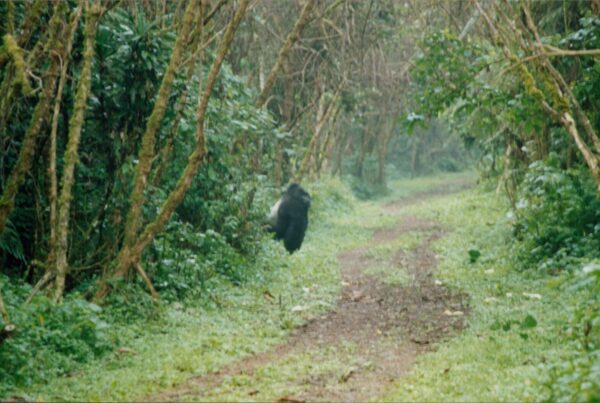
The accounts are specific and consistent across very different kinds of visitors. The scale recalibration: a silverback mountain gorilla moves through its forest with a gravity and self-possession that no zoo or documentary prepares you for; the physical reality of the animal in its own world resets your sense of where humans fit in the larger order. The 97% moment: intellectually knowing that gorillas share 97% of your DNA is different from watching a gorilla mother groom her infant the way a human parent would — the cognitive bridge closes in person in a way that data cannot replicate. The silence: guides ask for quiet in the gorilla’s presence; the enforced reduction to simply watching without narration or device mediation is unusual in modern experience; many visitors say it is the first time in years they were simply present without a layer of interpretation between themselves and the experience. Read more: 30 things to know before your gorilla trek and gorilla trekking for first-time visitors.
What specifically happens during the 60 minutes with the gorillas?
The 60 minutes have a typical arc that varies by family and day. Arrival: the ranger signals the group to slow and stay close; the gorillas appear through the vegetation; the first sight is often a large black shape that takes a moment to resolve into a gorilla; the timer starts. The first minutes: the group adjusts to the gorillas’ presence; guides position people at safe distances; the gorillas continue feeding, grooming, or resting with varying degrees of interest in the visitors. The middle period: gorillas move and the group follows; photography becomes easier as everyone settles; the silverback typically positions himself between the visitors and the rest of the family. The last minutes: the guide announces the final ten minutes; visitors put cameras down; many simply watch. Plan your fly-in 3-day Bwindi gorilla itinerary or 7-day gorilla trekking safari.
Does the emotional impact of gorilla trekking last after you return home?
The accounts from returning visitors are consistent on this. The lasting image: virtually every gorilla trekking visitor remembers a specific moment — not a general impression but a precise image: the silverback’s gaze from seven metres; a juvenile chasing its sibling through the undergrowth; a mother’s hand reaching for a leaf overhead. The photograph effect: unusually, photographs from the gorilla encounter tend not to replace the memory but to trigger it; looking at a photograph brings back the temperature of the forest and the particular quality of the silence more effectively than most travel photography does. Conservation awareness: many returning visitors report increased engagement with mountain gorilla conservation after the trip; some donate to the Dian Fossey Gorilla Fund or similar organisations; others become advocates in their networks. Return visits: a significant proportion of Bwindi gorilla trekking visitors return within 5 years; the repeat visitor rate for Uganda gorilla permits is unusually high for a single wildlife experience.
How should I prepare mentally for a gorilla trek?
Mental preparation is as important as physical preparation. Lower the expectations of dramatic action: gorillas are not performing; the family will feed, rest, groom, and move; if you arrive expecting a spectacular charge or dramatic event you may miss what is actually remarkable about the encounter. Accept the not-knowing: the trek duration is unknown; the gorillas’ location is unknown; the experience cannot be fully anticipated; the ability to be present with uncertainty is itself good practice. Read before you go: understand the gorilla trekking cost and choose your Bwindi sector before arrival; knowledge of what you will see reduces anxiety and frees attention for the actual encounter. Leave the phone: not literally, but decide in advance how much of the hour you will spend photographing versus simply watching; visitors who spend the entire hour behind a lens often feel they missed it.
Is there anything that can go wrong on a gorilla trek?
Honest preparation covers the real possibilities. Physical difficulty: the terrain can be much harder than expected; steep, wet, root-covered slopes; a physically unfit visitor may not complete the full trek; rangers provide support and porters can be hired to carry bags and assist; discuss fitness with your Uganda tour operator in advance. Gorilla charge: habituated gorillas are not dangerous but silverbacks occasionally charge; the protocol is to stay still, crouch, avoid eye contact; rangers handle this; no visitor has been seriously injured in a habituated gorilla encounter in Uganda’s 30-year history. Rain: Bwindi is a rainforest; it rains frequently; waterproof gear is essential; rain does not cancel the trek and does not affect the gorillas; some visitors find a wet forest encounter more atmospheric. Not finding them: extremely rare but possible; if the gorillas cross into DRC overnight the trek is cancelled and the permit rescheduled.
- What Happens to Your Perspective After You Spend an Hour With Wild Gorillas
- How Long Do You Spend With Gorillas During the Trek? The One-Hour Rule Explained
- Gorilla Pregnancy and Birth: What Happens in the Wild
- What Happens on Gorilla Trekking Day: An Hour-by-Hour Guide
- What Happens When You Stand in the Presence of a Silverback: Perspective
- What Happens to African Wildlife When Tourism Stops: The Evidence
- Why Gorilla Trekking in Uganda Is Africa’s Most Unforgettable Wildlife Adventure
- Gorilla Behaviour in the Wild: Understanding the Gentle Giants of Africa
- What a 3-Day Uganda Wildlife and Cycling Safari Did to My Family Was Beyond Anything We Expected
- Wildlife in Uganda – Where Nature Still Roars, Hums, and Soars Free