Updated
gorilla trekking day Uganda hour by hour guide is one of Africa’s most extraordinary wildlife experiences, connecting travellers with mountain gorillas in their natural forest habitat. Gorilla trekking day in Uganda is one of the most anticipated days most travellers will ever have. The anticipation is warranted — but knowing what to expect hour by hour means you arrive at each stage of the day with the right frame of mind, the right physical preparation, and the capacity to fully absorb what is happening rather than being surprised by it. This guide takes you from wake-up to the evening after your trek, hour by hour.
What Happens on Gorilla Trekking Day: An Hour-by-Hour Guide
5:00 to 5:30 AM: Wake Up
Your lodge will wake you or you have set your alarm. The forest at Bwindi at this hour is extraordinarily beautiful — the sounds of the forest at dawn, the cool mist over the canopy, the first light over the tree line. Take five minutes to stand outside your room and absorb it. This is your day. Today, everything you planned for is happening.
Dress in your trek clothes (already laid out the night before). Boots on, pack already loaded. Check your camera battery and settings one more time. Eat breakfast if it is available — most lodges serve an early breakfast on trek day (bread, eggs, fruit, hot drinks). Eat even if you are not particularly hungry; you will need the energy.
6:30 to 7:00 AM: Transfer to Briefing Point
Your guide or lodge vehicle takes you to the sector briefing point. The drive is typically 10 to 30 minutes depending on your lodge location relative to the park gate. Use this time to ask your guide any final questions: How far did the gorilla family travel yesterday? How many people are in the trek group? What family have you been assigned to?
At the briefing point, you will meet the other trekkers in your group (up to eight people total). Groups are assigned to gorilla families based on permit allocation. Register at the desk, present your permit, and collect any park entry stickers or documentation required.
7:00 to 7:30 AM: The Pre-Trek Briefing
The UWA ranger or your guide leads a briefing covering: gorilla behaviour and what to expect, the seven-metre proximity rule and why it matters (disease risk to gorillas), what to do if a gorilla approaches your group (stand still, do not make eye contact, crouch slightly, do not run), photography protocol (no flash, no drone, unlimited photos), health reminders (cover your mouth if you cough, do not trek if you are unwell), and the trek route for today based on the tracker team’s morning location report.
Pay attention to this briefing. The rules are not formalities. They exist for conservation reasons (disease risk is real) and safety reasons (gorilla incidents, while rare, are almost always the result of protocol violations). Guides who see trekkers half-listening to the briefing spend more of the trek managing behaviour and less of it helping you observe the gorillas.
7:30 AM to Encounter: The Trek
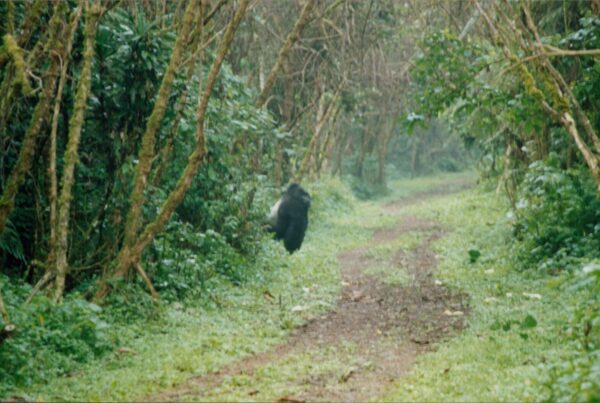
You enter the forest. The trail begins at the park boundary and immediately the environment changes: the sounds of vehicles and lodge activity fade, the forest closes around you, the light changes from open sky to filtered green canopy. The birdsong you hear on the approach is extraordinary — Bwindi has over 350 species including 23 Albertine Rift endemics. Your guide may name birds and other wildlife you encounter on the approach. Pay attention — this is part of the day, not just transport to the main event.
The terrain quickly becomes what it is: steep, uneven, sometimes muddy, sometimes requiring the use of hands as well as feet to navigate a scramble section. Your porter, if you have hired one, will position themselves to help you on difficult sections without being asked. Trust their judgment about where to place your feet.
Your guide is in radio contact with the tracker team that has been with the gorilla family since dawn. The trackers update the guide on the family’s position as they move. As you get closer, the guide’s pace and communication style shifts slightly — you are near. Stop talking unless necessary. Walk quietly. The gorillas know you are coming from some distance away, but your approach affects their behaviour. Calm, quiet approach produces calmer gorillas.
The First Sight: 30 Seconds That Change Your Day
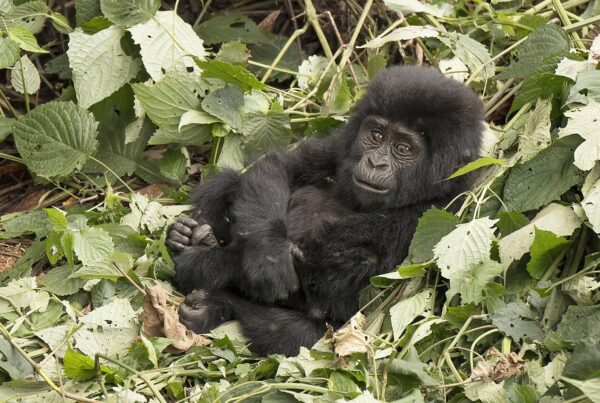
The guide stops. Points. You look in the direction indicated and see — movement in the vegetation, or a shape that resolves into something massive, or a flash of black fur in the canopy. The first sight of the gorilla family is rarely the dramatic scene your imagination has prepared. It is typically partial: a back, a hand, a face half-obscured by vegetation. Then the vegetation shifts, or you move to a better angle, and the family becomes visible. This moment — the first proper sight of a wild gorilla — is when most people who cry, cry.
The Hour: Make Every Minute Count
Your hour begins when the guide signals it. Watch the gorillas. Put your camera down periodically and just look. The camera is important — you want photographs — but the hour spent entirely behind a camera is an hour not fully experienced. Alternate: photograph for five minutes, watch for five minutes. Your guide will narrate: the silverback’s name, the family hierarchy, current behaviour. Listen. Ask questions quietly when the gorillas are calm and distant.
The Return and the Afternoon
When the hour ends, your guide signals withdrawal. You walk back to the briefing point — usually faster than the approach because you know the route. At the briefing point, you receive your gorilla trekking certificate. For most trekkers, the rest of the day is a gentle decompress: lunch at the lodge, a quiet walk, writing in a journal, or simply sitting with coffee looking at the forest. The afternoon after a gorilla trek is one of the finest afternoons in travel. You earned it. Contact us to plan your 2027 gorilla trekking day.
Frequently Asked Questions
Uganda is home to the mountain gorilla (Gorilla beringei beringei), one of two subspecies of eastern gorilla. They live exclusively in the Virunga volcanic highlands (Uganda/Rwanda/DRC) and Bwindi Impenetrable Forest (Uganda only). Mountain gorillas are the only gorilla subspecies that cannot survive in captivity — every individual you can trek is a wild animal.
The standard gorilla trekking permit gives you exactly 1 hour with the gorilla family. This time begins when you make first contact with the family — the ranger signals the start. The Gorilla Habituation Experience gives 4 hours with a semi-wild family. The walk to find the gorillas can take 30 minutes to 5 hours depending on where the family has moved.
Stay calm, crouch down slowly, avoid direct eye contact, and remain quiet. Do not run — running triggers a chase response. Rangers accompanying your group manage close approaches. Habituated gorillas are accustomed to humans and almost never make contact, but a charging silverback is managed by staying still and following ranger instructions immediately.
A maximum of 8 visitors per habituated gorilla family per day for standard trekking. The Gorilla Habituation Experience has a maximum of 4 visitors per family per day. These limits are set by UWA to minimise stress on the gorilla families and maintain the quality of the experience.
Uganda is home to the mountain gorilla (Gorilla beringei beringei), one of two subspecies of eastern gorilla. They live exclusively in the Virunga volcanic highlands (Uganda/Rwanda/DRC) and Bwindi Impenetrable Forest (Uganda only). Mountain gorillas are the only gorilla subspecies that cannot survive in captivity — every individual you can trek is a wild animal.