Understanding gorilla behaviour before entering the forest for a gorilla trek is one of the most practical steps a visitor can take to improve the quality of their own encounter — not because the gorillas behave differently depending on whether the visitor is educated, but because a visitor who can read what the silverback’s posture means, recognise the chest-beat as a communication signal rather than an aggression signal, understand why the family continues feeding while the trekking group stands 7 metres away, and interpret the vocalisation that signals the family’s mood is in a qualitatively different observational position than a visitor who stands in the forest watching an undifferentiated group of large primates. Mountain gorillas live in stable family units with specific social structures, communication systems, daily routines, and individual personalities that have been documented in detail through decades of research at Bwindi and the Virungas — and the 60-minute trekking encounter contains enough observable behaviour to be richly informative for a prepared visitor. This guide covers gorilla social structure, communication, daily activity patterns, diet, infant development, and the specific behaviours that trekking visitors are most likely to observe during a Bwindi encounter. For permit booking, see the permit guide; for the specific families you will visit, see the gorilla families guide.
Mountain Gorilla Behaviour: Key Facts for Trekkers
- Group structure: 5–40 individuals — one dominant silverback, females, juveniles, infants; sometimes subordinate blackbacks
- Daily routine: Dawn feeding (2–3 hours) → travel → midday rest → afternoon feeding → night nest-building at dusk
- Diet: Primarily herbivore — stems, shoots, leaves, bark, roots; some insects seasonally
- Chest beat: Communication signal (not an aggression signal) — used to convey location and status within and between groups
- Habituation: 2–3 year process before a gorilla family accepts daily human observation
- Mountain gorillas do not swim and do not climb high — their weight and forest structure mean ground-level movement dominates
To watch a gorilla in the wild is to enter a world that is at once mysterious and deeply familiar. In the shaded forests of Uganda, Rwanda, and the Congo, these massive creatures move with grace, power, and astonishing gentleness. They are not just animals. They are societies. They are stories told in glances, in movements, in unspoken laws passed from silverback to infant. And they are the closest we may ever come to encountering a mirror of ourselves in the natural world.
Gorilla behaviour in the wild is not a spectacle. It is a lesson — in patience, in connection, in survival without savagery. Observing them in their untouched territories, far from cages and artificial lights, reveals a portrait of life that is intimate, complex, and entirely captivating.
The Structure of Gorilla Families: A Society of Trust and Order
Wild gorillas do not live in chaos or isolation. They form close-knit family units known as troops or groups, often led by one dominant male called a silverback. This towering figure, recognized by the streak of silver hair along his back, is more than just a leader — he is a protector, a peacemaker, a father, and a guide. Under his calm but watchful presence, the family thrives.
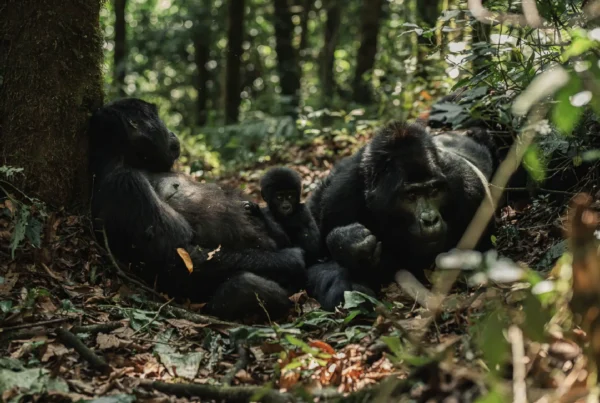
A typical group consists of one silverback, several females, and their young. Some larger troops may include subordinate blackback males who are not yet dominant but may take on leadership roles in the future. Every member plays a role. Mothers nurture and groom their infants, juveniles wrestle and play under the leafy canopy, and the silverback maintains order with minimal confrontation.
There is no constant fighting or violence. In fact, what surprises most observers is how peaceful and emotionally rich these interactions are. Grooming, soft vocalizations, and close physical contact are more common than displays of aggression. Conflict is rare and usually resolved through posturing or chest beating rather than real harm. It’s not a kingdom ruled by fear — it’s a family guided by respect.
Daily Life in the Forest: Foraging, Resting, Bonding
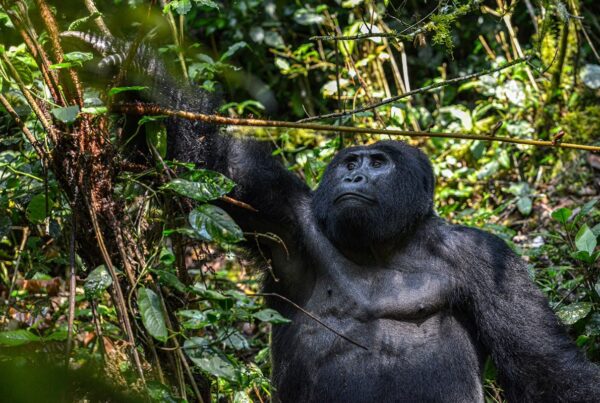
Gorillas are diurnal creatures, meaning they are active during the day. Mornings begin with foraging as they roam through the forest in search of leaves, fruits, stems, bark, and occasionally ants or termites. Gorillas are primarily vegetarian, and they spend a large portion of their day feeding — not just for nourishment, but as a communal activity that brings the group together.
After feeding comes rest. You’ll often see gorillas lying on their backs, arms folded, watching the treetops sway. Infants climb nearby, and mothers sit in silence, eyes half-closed. During these moments, grooming takes place — a vital ritual that cements social bonds, removes parasites, and soothes tension. It is in these quiet spaces that the true nature of gorillas reveals itself: calm, connected, and unhurried.
In the afternoon, the group may move again, feeding more before eventually building their nests. Each gorilla creates a fresh sleeping nest every evening using leaves and branches, often on the ground for silverbacks and higher up in the trees for juveniles. These nests are temporary homes — soft shelters that are part of a nightly routine practiced for generations.
Communication: The Language of the Wild
Gorillas do not speak, but they communicate in a hundred subtle ways. Their behaviour is a language — one of gestures, postures, eye contact, and low rumbling vocalizations called belch sounds, which signal reassurance and contentment. A mother may grunt softly to her infant. A silverback may growl to warn his group of approaching danger. A chest beat may come not from rage, but as a playful expression or a reminder of status.
Facial expressions carry meaning too. A fixed stare is a sign of threat, while a gentle glance is often a sign of curiosity or calm. When a gorilla yawns with bared teeth, it can signal tension or discomfort. These signals are universal across the species, allowing for a complex emotional vocabulary that binds the group together.
Humans who trek into gorilla territory are advised to mirror respectful gorilla behaviour — lowering their eyes, crouching to appear non-threatening, and moving slowly. This is not just for safety. It’s for communication. It’s an unspoken agreement between two intelligent species meeting without words, only presence.
Parenting and Play: Raising the Future of the Forest
One of the most moving aspects of gorilla behaviour in the wild is the tenderness of parenting. Gorilla mothers are deeply attentive, cradling their infants against their chests, nursing them, grooming them, and keeping them within reach for the first few years of life. The bond is unmistakable and deeply emotional.
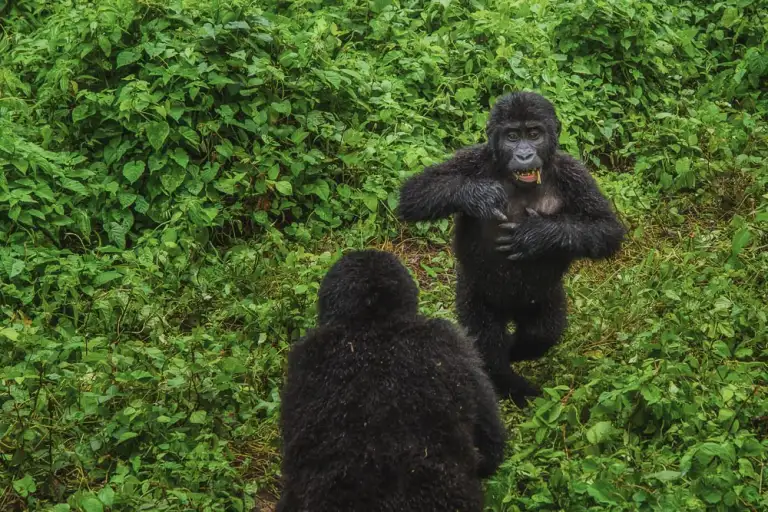
Fathers, especially silverbacks, play a protective role but often engage with the young in gentle, playful ways. Juvenile gorillas climb trees, roll in the underbrush, and wrestle in games that help them build strength and social skills. These play sessions are full of laughter-like vocalizations and mischief, offering some of the most heartwarming sights in the forest.
This parenting is not instinct alone — it is learned, passed down, and shaped by the social environment of the group. The way gorillas raise their young teaches us about empathy, patience, and the universality of care.
Conflict and Resolution: Power Without Bloodshed
While gorillas are strong and physically formidable, violence within groups is rare. Disputes over food, mating rights, or group movement are typically resolved with ritualized displays rather than real combat. A silverback may stand tall, beat his chest rapidly, stomp the ground, or pull at branches — all signals to defuse tension rather than escalate it.
When two males do fight, usually it is because one is attempting to challenge the leadership of another or take over a group. These encounters are intense but short-lived, and the loser often retreats rather than risk serious injury. The goal is not destruction but dominance — and once that is established, peace usually returns.
Even in moments of potential danger, such as when a group encounters humans or predators, gorillas first respond with alertness and vocal warnings. They prefer to avoid conflict altogether, a trait that reveals a powerful yet peaceful temperament.
Why Gorilla Behaviour Matters
Understanding gorilla behaviour in the wild is not just for scientists or safari-goers. It’s for anyone who wants to understand what still exists in the natural world when we let it thrive. Gorillas remind us that power can be quiet. That family is sacred. That empathy and order exist beyond humanity. Their societies are not chaotic. They are organized, emotional, and functional.
In every silverback’s stance, every mother’s glance, every juvenile’s laugh, there is a reminder that we are not so different after all. That perhaps the answers we seek — about balance, about care, about coexistence — are already being lived out, deep in the forests of East and Central Africa.
Frequently asked questions about gorilla behaviour in the wild
What does a silverback gorilla actually do during a gorilla trekking encounter?
During a typical 60-minute gorilla trekking encounter with a habituated mountain gorilla family, a silverback will most commonly be observed doing one or more of: feeding (stems, shoots, leaves, bark — mountain gorillas eat approximately 20–25 kg of vegetation per day and spend 40–50% of daylight hours feeding); resting and monitoring (sitting or semi-reclining, maintaining visual awareness of the family and the trekking group); moving through vegetation (silverbacks move at a pace that appears casual but covers ground efficiently — a group can travel 2–5 km in a day); brief displays (a short bipedal run, shoulder-shake, or chest beat that communicate authority or mild agitation — these are communication signals, not attacks, and the silverback will typically resume normal activity within seconds); and social interaction with females and infants (grooming, allowing infants to climb on his back, adjudicating minor disputes between family members). Silverbacks very rarely direct sustained attention at the trekking group — the family has been habituated to human presence and treats visitors as a low-significance part of the environment rather than a threat or novelty.
What does a gorilla chest beat mean?
The gorilla chest beat is a communication signal produced by alternating open-palm slaps to the chest that create a hollow resonant sound audible over long distances through the forest. It is not primarily a display of aggression toward humans or rival gorillas — it is a multi-purpose vocal and physical communication that conveys: location (other group members and neighbouring groups can locate the silverback auditorially); status and physical condition (the resonance quality conveys information about the silverback’s size and health); and situational state (mild excitement, response to disturbance, or social competition context). The chest beat is preceded by a standing posture and sometimes by plant-tossing and vocalisation — the full display sequence is ritualistic and communicative rather than precursory to physical attack. For trekking visitors, encountering a chest beat during the 60-minute visit is a genuinely thrilling and memorable moment — the sound at 5–7 metres in a forest clearing is profoundly physical. The ranger guide’s body language is the reliable indicator of whether the display requires any response from the trekking group (typically: stay still, maintain position, avoid direct eye contact).
How do mountain gorillas communicate with each other?
Mountain gorillas use a rich communication system combining vocalisation, posture, facial expression, touch, and olfactory signals. Vocal communication includes over 25 distinct documented vocalisations: the belch vocalisation (a low rumbling sound used during relaxed feeding — a positive contentment signal that trekkers frequently hear during the encounter); the bark (alarm or disturbance); the roar (escalated alarm or challenge); grunts and chuckles (used in social grooming and proximity situations); and the screams and shrieks of social conflict within the group. Postural communication is equally rich: direct staring is a dominance or challenge signal (trekkers are instructed to avoid sustained direct eye contact); looking away and presenting a turned-back posture signals submission; piloerection (hair standing up) signals agitation; and relaxed slouching with averted gaze signals indifference. Touch and grooming serve both parasite-removal functions and social bonding functions — who grooms whom and for how long is a reliable indicator of social relationships within the group. Olfactory signals from specialised scent glands are used in inter-group communication and territory marking.
What is the role of infant gorillas in the group during a trekking visit?
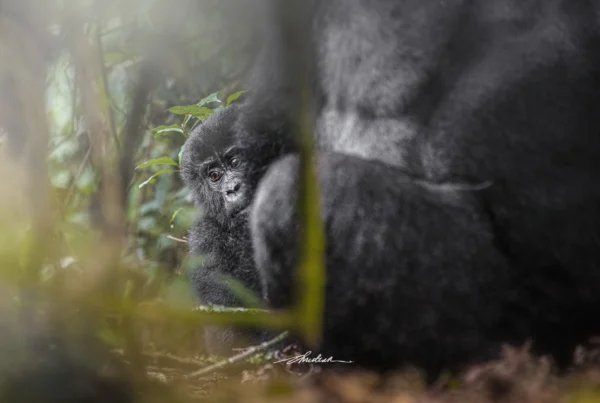
Infant and juvenile gorillas are among the most behaviorally active and visually engaging group members during a gorilla trekking encounter. Infants under 3 years old remain in near-constant physical contact with their mothers, carried on the back during travel and nursing on demand — an infant’s security is maintained entirely by proximity to the mother, and the mother’s positioning relative to the silverback and the trekking group reflects her assessment of safety for herself and her infant. Juveniles (3–6 years, post-weaning but pre-independent) are the most playful and exploratory group members: they will climb, tumble, chase each other, hang from branches, and sometimes approach the trekking group boundary with apparent curiosity before being recalled by a vocalisation from an adult. These juvenile behaviours are among the most frequently described as emotionally resonant by trekking visitors — the infant’s expression, the juvenile’s play posture, and the adult’s patient tolerance of the young animals’ antics are consistently reported as producing an immediate sense of recognition and connection across the species boundary.
How do mountain gorillas build their nests and why?
Mountain gorillas build a new sleeping nest every night — a fresh platform of bent and layered vegetation constructed at dusk in 5–10 minutes at whatever location the family has reached at the end of the day’s travel. Ground nests are the most common for mountain gorillas given their weight (silverbacks reach 200+ kg), though juveniles and females sometimes nest in the lower branches of large trees. Each adult and older juvenile builds their own nest; infants under 3 sleep with their mothers. The nest is not reused — a new construction is always built the next evening. The daily nest-building behaviour means that gorilla family locations are trackable the following morning by rangers following the abandoned nests and fresh trails from the previous night’s position. This daily nest-tracking is the first step of every gorilla trekking morning: the ranger team locates the previous night’s nest site at dawn and follows the family’s trail from there to find the current morning feeding location, which is where the trekking group meets them after the briefing station departure. The dung, hair, and vegetation disturbance at abandoned nest sites are used by researchers to monitor group size, health, and composition non-invasively.
Prepare for your gorilla encounter at Bwindi
- Uganda Gorilla Families — the specific habituated families whose behaviours this guide describes
- Gorilla Permit Guide — the permit for your 60-minute encounter with these behaviours in the forest
- Bwindi Sector Guide — which sector and family to request for the encounter
- Rwanda Gorilla Families — same species, same behaviours, different landscape in the Virungas
- Safari Itineraries — Uganda circuit built around the Bwindi gorilla trekking encounter
- Gorilla Myths and Fascinating Facts: Unveiling the Truth About Africa’s Gentle Giants
- Why Gorilla Trekking in Uganda Is Africa’s Most Unforgettable Wildlife Adventure
- 3 Days Congo Gorilla Trekking Safari: Raw Encounters in Africa’s Wildest Jungle
- Wildlife Safaris: What to See, Expect, Prepare & Plan — Plus Where to Go in Africa
- Gorilla Habitats and the Challenges They Face: The Struggle to Preserve Nature’s Gentle Giants
- African Wild Dogs in Uganda
- 50 Wild Animals You Must See on an African Safari
- African Safari Quotes 101 to Inspire Your Wildest Wanderlust Dreams
- 50 Incredible Safari Animals to See in Africa — A Complete Wildlife Guide
- Top African Wildlife Experiences