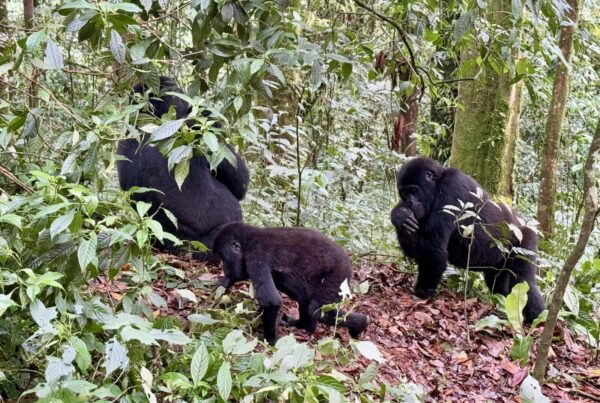
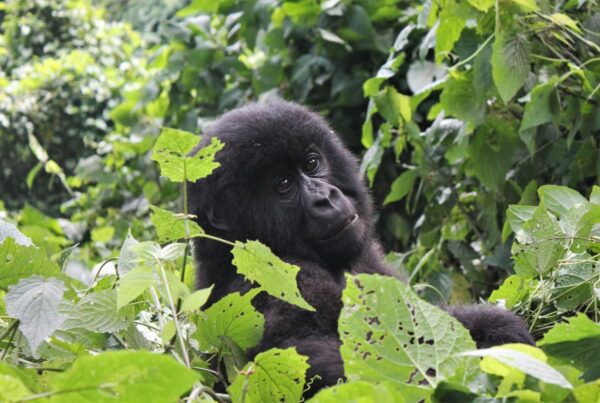
The Uganda gorilla trekking permit costs $800 for foreign non-residents — a number that stops many travellers before they look any further, and that almost universally strikes the same travellers as the best money they ever spent once they are back at the lodge after the trek. The question of whether it is worth the price has a real answer that goes beyond “it’s a once-in-a-lifetime experience” — the answer lies in what the encounter actually involves, what the alternatives are, and what the $800 pays for beyond your personal hour with a gorilla family. The complete gorilla safari cost guide breaks down the full trip budget, and the permit guide explains what the fee covers.
- Permit price: $800 USD (foreign non-residents); lower rates for East African residents and citizens
- What it covers: permit, ranger guide, armed escort, one hour with the gorilla family
- What it does NOT cover: accommodation, meals, transport, porter hire
- Cancellation policy: permit is non-refundable; date changes may be possible with advance notice through UWA
- Total trip cost: typically $2,500–$6,000+ per person depending on accommodation level and days in Uganda
If you have been sitting on the fence about gorilla trekking Uganda because of the cost, you are not alone. The Uganda gorilla permit is worth every dollar when you understand exactly what it covers, what the experience delivers, and why no other wildlife encounter on earth compares. This is a complete, honest breakdown of the value inside that 700-dollar permit.
What the 700-Dollar Uganda Gorilla Permit Actually Pays For
The Uganda Wildlife Authority sets the gorilla permit price at 800 USD for international visitors. That fee is not profit — it is conservation funding. A direct portion goes to Uganda Wildlife Authority rangers who patrol Bwindi Impenetrable Forest every single day, tracking gorilla family groups, monitoring for snares, and protecting the 459 remaining mountain gorillas from poaching. Another portion funds community revenue-sharing programs in the parishes surrounding the national park, compensating farmers for crop raids and funding local schools and health centres. Without that permit revenue, the gorilla population would not have rebounded from fewer than 250 individuals in the 1980s to over 1,000 today when combined with the Virunga population.
When you pay for a gorilla trekking permit in Uganda, you are not buying a theme-park ticket. You are buying one hour with one of the last 1,000 mountain gorillas on earth, and simultaneously paying the salaries of the people keeping those gorillas alive.
The One-Hour Rule: Is It Enough?
Most travellers fear the one-hour limit before they experience it. Almost none of them feel cheated afterward. Here is why: the hour starts the moment you sit down within seven metres of the gorilla family. The trek to reach them — which may take anywhere from 30 minutes to four hours — is not counted. When you arrive at the family and the lead ranger drops his pack and says “we are here,” time slows down. Gorillas eat, infants play, silverbacks rest. Ninety-five percent of travellers say the hour felt like three minutes. It ends too soon — and that is precisely what makes it precious.
Compare this to spending a full day on safari in a vehicle watching lions sleep in the distance at 400 metres. The gorilla hour is closer, more intimate, more emotional, and more memorable than virtually any other wildlife encounter on earth.
How Gorilla Trekking Uganda Compares to Rwanda
Rwanda charges 1,500 USD per gorilla permit. Uganda charges 800 USD. Both countries share the same Virunga mountain range gorilla families. Bwindi’s gorillas are a different population — more than half the world’s mountain gorillas — and the forest itself is arguably wilder and more dramatic than Volcanoes National Park. Uganda costs less, delivers a longer and more raw wilderness experience, and includes the same magical one-hour encounter. On pure value grounds, Uganda wins decisively.
The Trek Itself: What You Are Paying for Beyond the Gorillas
Your permit fee funds the entire operation: trackers who leave before dawn to locate the gorillas each morning, armed rangers for your safety, porters available to help with the climb, and the UWA infrastructure that keeps the park operational. You are also trekking through Bwindi Impenetrable Forest, a UNESCO World Heritage Site that shelters over 350 bird species, rare primates, and some of the oldest tropical forest on the African continent. The gorilla trek is set inside one of the most biodiverse forests on earth. The setting alone is worth the journey.
What Travellers Say After the Experience
Read the TripAdvisor reviews for gorilla trekking Uganda and a pattern emerges. Almost every review contains the phrase “once in a lifetime” or “best experience of my life.” You will find travellers who spent 30 days on safari across Kenya, Tanzania, and Uganda ranking the gorilla hour above everything else. You will find solo travellers, couples celebrating anniversaries, and groups of retirees who say it changed how they see the world. That is not marketing. That is the consistent testimony of people who were also initially hesitant about the price.
The Financial Reality: Breaking Down the Total Cost
The permit is 800 USD. A two-night stay near Bwindi in a mid-range lodge costs between 200 and 400 USD. Transport from Kampala or Entebbe adds another 100 to 200 USD per person if arranged privately. The full gorilla trekking experience — permit, accommodation, meals, and transport for two nights and one trek day — lands between 1,100 and 1,500 USD. Spread across the lifetime of the memory, that is less than the cost of many weekend breaks in Europe or the United States.
Is There a Cheaper Way to See Mountain Gorillas?
No. Mountain gorillas live in three countries: Uganda, Rwanda, and the Democratic Republic of Congo. Congo offers the lowest permit price but also the highest security risk — active conflict in parts of the region makes it impossible to recommend for most travellers. Rwanda is safe and excellent but costs almost double. Uganda is the most affordable safe option, and Bwindi offers a diversity of gorilla families and forest sectors that no other destination can match.
What You Would Pay for a Comparable Wildlife Experience Elsewhere
A polar bear expedition in Svalbard costs 5,000 to 8,000 USD. A great white shark cage dive in South Africa runs 300 to 600 USD for 20 minutes. A private game drive in the Okavango Delta costs 1,500 USD per day. A blue whale watching trip in Sri Lanka is 200 USD for a three-hour boat ride with no guarantees. The gorilla trek — 800 USD, near-100% success rate, one hour in contact range with an 800-pound silverback — is a bargain by any comparison.
Our Honest Verdict
Yes. Gorilla trekking is genuinely worth 700 dollars — or 800 dollars, which is the current permit price. It is worth it because the experience is irreplaceable. It is worth it because the money saves the species. It is worth it because you will talk about it for the rest of your life. We have been sending travellers to Bwindi for over a decade and we have never once had a client return and say it was not worth it. The only regret we hear, without exception, is from people who waited too long to book.
If you are ready to stop asking whether it is worth it and ready to start planning, contact us today. We will build your gorilla trekking Uganda itinerary, secure your permit, and make sure every dollar you spend delivers maximum value.
Why does a gorilla trekking permit cost $800?
The $800 price reflects both scarcity and conservation funding. Only 8 visitors per gorilla family per day are allowed, and Uganda has 22 habituated families in Bwindi — a hard daily ceiling that keeps the experience exclusive and limits disturbance to the animals. The revenue goes to Uganda Wildlife Authority to fund ranger operations, anti-poaching patrols, veterinary services, and the community revenue sharing programme that distributes 20% of park fees to surrounding communities. The price is set to make gorilla conservation financially self-sustaining without relying on donor funding alone.
What is the gorilla trekking experience actually like for the money?
You walk into one of the oldest forests on Earth, following a ranger who tracked the gorilla family since dawn. The trek takes between 2 and 8 hours depending on where the family has moved overnight. When you reach them, you spend exactly one hour at close range — typically 3–10 metres — with a family of 8–25 gorillas going about their morning: feeding, playing, grooming, resting. A silverback may be two arm lengths from you. Juveniles may climb directly over your head. The encounter is unhurried. Most visitors describe the hour as the most concentrated, singular wildlife experience of their lives, and report that the price was not the issue — the time was.
Is there a cheaper way to see mountain gorillas?
Rwanda’s permit costs $1,500 — nearly double Uganda’s price. The DRC’s Virunga National Park has historically offered a lower price but the security situation in eastern DRC makes this a genuinely high-risk option that most operators cannot recommend. Uganda at $800 is the most affordable option for seeing mountain gorillas in any safe, well-managed setting. There is no zoo alternative — mountain gorillas have never survived in captivity. The permit fee is the floor cost for the experience, not a premium add-on.
Can I visit multiple gorilla families to get more time?
You can book permits on consecutive days to visit different gorilla families — many visitors do exactly this to see two different family dynamics. Each day requires a separate $800 permit. The Gorilla Habituation Experience (GHE) at Rushaga sector offers up to four hours with a family that is still being habituated for tourism, at $1,500 per permit — a different experience designed for those who want more time. The standard one-hour encounter is the norm for the 22 fully habituated families, and the limit exists to manage stress on the animals.
Is the gorilla trek itself safe considering the cost?
Gorilla trekking is well-managed and the safety record is strong. Rangers are present throughout the encounter, the gorillas are habituated to human presence, and the safety protocols (7-metre distance, ranger positioning between group and silverback) are designed for situations where animals move unexpectedly. The physical risks of the trek itself — muddy slopes, steep terrain — are more relevant than animal behaviour risks. A porter significantly reduces the physical difficulty. Travel insurance covering emergency medical evacuation is recommended for all visitors given Bwindi’s remote location.
- Uganda Gorilla Permit at $800: Is It Really Worth It in 2026?
- Gorilla Trekking Uganda Is Cheaper Than People Think: Honest Breakdown
- Gorilla Trekking Cost in Uganda – 2025 Permit, Safari & Budget Breakdown
- Is Gorilla Trekking Worth the Money?
- The True Weight of a Giant: How Much Does a Silverback Gorilla Really Weigh?
- Is Uganda Gorilla Trekking Right for You? The Honest Self-Assessment
- Best Time for Uganda Gorilla Trekking 2026: Month-by-Month Breakdown
- Gorilla Trekking for Seniors: What You Really Need to Know
- What Happens If Gorillas Are Not Found on Trek? The Honest Truth
- How Much Does a Uganda Gorilla Safari Cost? Complete Budget Breakdown