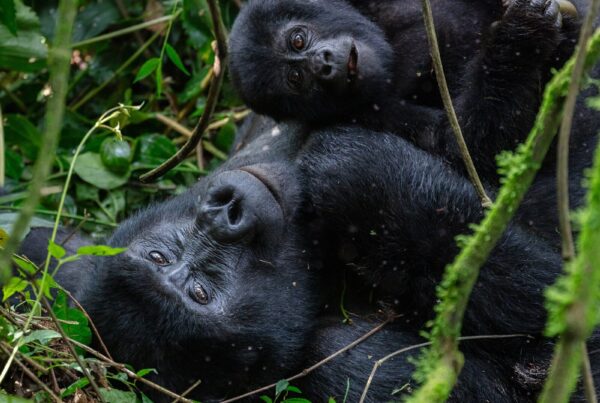
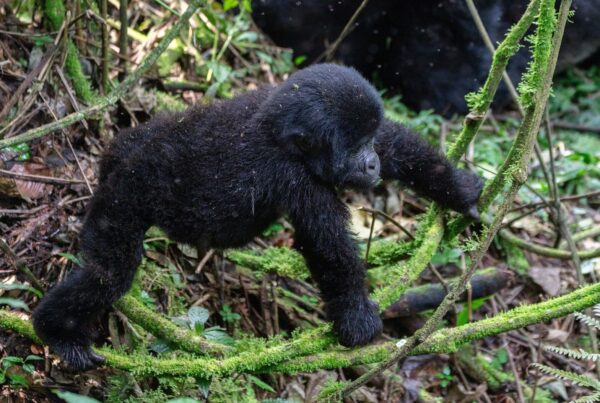
The gorilla species no one talks about is the Cross River gorilla — the rarest great ape on Earth, with a population of approximately 250 to 300 individuals living in a small area of montane forest on the border of Nigeria and Cameroon. While mountain gorillas receive enormous conservation attention and the chimpanzee has been the subject of decades of famous research, the Cross River gorilla (Gorilla gorilla diehli) is largely unknown to the general public — which is a shame, because its story illuminates the full picture of gorilla conservation challenges and the alarming fragility of great ape populations that lack the attention and resources that mountain gorillas have attracted.
The Four Gorilla Species
Most people who follow gorilla news are aware of mountain gorillas. Fewer know that gorillas are divided into two species and four subspecies, each occupying a different part of central and west Africa, each facing different conservation challenges, and each with a very different population status.
Western Gorilla (Gorilla gorilla)
The western gorilla species includes two subspecies: the western lowland gorilla (Gorilla gorilla gorilla), with a population estimated at 100,000 to 200,000 animals in the forests of Cameroon, Central African Republic, DRC, Gabon, Equatorial Guinea, and the Republic of Congo; and the Cross River gorilla (Gorilla gorilla diehli), with approximately 250 to 300 animals.
Eastern Gorilla (Gorilla beringei)
The eastern gorilla species includes the mountain gorilla (Gorilla beringei beringei) and Grauer’s gorilla (Gorilla beringei graueri, also called the eastern lowland gorilla), with a population of approximately 3,800 animals in the DRC.
The contrast in population numbers is stark: western lowland gorillas are relatively numerous (though “Vulnerable” on the IUCN Red List and subject to significant pressure); mountain gorillas have 1,100 animals and are “Endangered”; Grauer’s gorillas have 3,800 and are “Critically Endangered”; and Cross River gorillas have 250 to 300 and are “Critically Endangered” — the rarest great ape and the most immediately threatened of all gorilla subspecies.
The Cross River Gorilla: What Makes It Unique
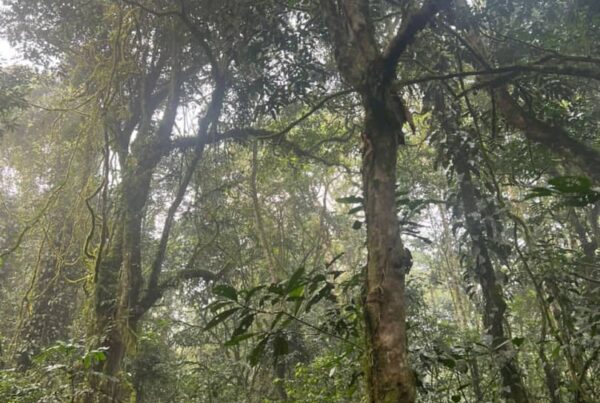
Cross River gorillas are physically distinct from western lowland gorillas in skull and tooth morphology, suggesting a long period of genetic isolation. They occupy montane and submontane forest at elevations of 150 to 1,600 metres on the border of Nigeria and Cameroon, a landscape that has been heavily impacted by human activity over centuries.
The Fragmentation Problem
The Cross River gorilla population exists not as a single connected population but as approximately 11 groups scattered across a fragmented landscape of forest patches separated by farmland, settlements, and infrastructure. This fragmentation reduces genetic exchange between groups (inbreeding risk), reduces the effective population size, and prevents the population’s resilience that comes from movement between subpopulations.
The contrast with mountain gorillas is instructive. Mountain gorillas occupy two large contiguous forest habitats. Cross River gorillas occupy scattered fragments. Even with similar total population numbers, the fragmented population is significantly more vulnerable because it lacks the ecological connectivity that allows individuals to move between groups.
The Human Pressure
The Cross River gorilla’s range is in one of the most densely populated regions of Africa. The forests they inhabit are surrounded by communities that depend on agricultural land, bushmeat hunting, and forest resources for their livelihoods. The gorillas are hunted for bushmeat, their infants are occasionally captured for trade, and their habitat is persistently reduced by agricultural expansion.
The conservation response to this pressure — community-based conservation, ecotourism development, agricultural intensification programs that reduce the need for new land clearing — is hampered by limited funding and the relative lack of international attention that the Cross River gorilla attracts compared to the mountain gorilla.
Why No One Talks About It
The Cross River gorilla’s relative obscurity has several explanations. It is visually similar to the western lowland gorilla, making it less photogenic distinct from other gorilla forms. It is highly shy and difficult to observe — unlike the habituated mountain gorillas of Bwindi, Cross River gorillas flee at human presence and are rarely seen in the wild. There is no gorilla trekking tourism built around them, no iconic documentary record, no Dian Fossey equivalent who made their story internationally known.
The absence of tourism means the absence of revenue, which means the absence of funded ranger programs, which means lower levels of protection, which means higher vulnerability. The mountain gorilla’s success story is partly a story about how tourism creates the financial foundation for effective conservation. The Cross River gorilla’s vulnerability is partly a story about what happens in the absence of that foundation.
What Cross River Gorillas Can Teach About Mountain Gorilla Conservation
The Cross River gorilla story is a cautionary tale and a comparison case for mountain gorilla conservation. It shows what a gorilla subspecies looks like without the tourism revenue, the international attention, the funded ranger program, and the veterinary infrastructure that mountain gorilla conservation has built over forty years. It is where mountain gorillas might have been if conservation had not intervened effectively.
It is also a reminder that the conservation success of mountain gorillas is not transferable automatically to their less-known relatives. Each population requires specific, sustained investment that must be built and maintained over decades. The Cross River gorilla’s 250 to 300 individuals represent a conservation emergency that is not receiving the resources it warrants.
The Full Picture of Gorilla Conservation
When you visit Bwindi to see mountain gorillas, you are participating in one of the conservation successes of the century. But the full picture of gorilla conservation is more complex and more precarious than that success story alone conveys. The Cross River gorilla is a reminder of what is at stake and what is still needed — not just in Uganda and Rwanda, but across the full range of gorilla habitat in West and Central Africa.
Uganda gorilla trekking permits are $800 per person. Contact Uganda Gorilla Trekking to book your permit. Come knowing the full story. The mountain gorilla success is real. The work is not finished.
Frequently Asked Questions
Uganda is home to the mountain gorilla (Gorilla beringei beringei), one of two subspecies of eastern gorilla. They live exclusively in the Virunga volcanic highlands (Uganda/Rwanda/DRC) and Bwindi Impenetrable Forest (Uganda only). Mountain gorillas are the only gorilla subspecies that cannot survive in captivity — every individual you can trek is a wild animal.
The standard gorilla trekking permit gives you exactly 1 hour with the gorilla family. This time begins when you make first contact with the family — the ranger signals the start. The Gorilla Habituation Experience gives 4 hours with a semi-wild family. The walk to find the gorillas can take 30 minutes to 5 hours depending on where the family has moved.
Stay calm, crouch down slowly, avoid direct eye contact, and remain quiet. Do not run — running triggers a chase response. Rangers accompanying your group manage close approaches. Habituated gorillas are accustomed to humans and almost never make contact, but a charging silverback is managed by staying still and following ranger instructions immediately.
A maximum of 8 visitors per habituated gorilla family per day for standard trekking. The Gorilla Habituation Experience has a maximum of 4 visitors per family per day. These limits are set by UWA to minimise stress on the gorilla families and maintain the quality of the experience.
Uganda is home to the mountain gorilla (Gorilla beringei beringei), one of two subspecies of eastern gorilla. They live exclusively in the Virunga volcanic highlands (Uganda/Rwanda/DRC) and Bwindi Impenetrable Forest (Uganda only). Mountain gorillas are the only gorilla subspecies that cannot survive in captivity — every individual you can trek is a wild animal.