Rwanda vs Uganda for Gorilla Trekking in 2026: Which Is Safer, Cheaper and Worth It?
The Rwanda vs Uganda gorilla trekking debate has been a staple of safari planning conversations for years. Rwanda offers slicker logistics, higher prices, and a polished tourism infrastructure. Uganda offers lower permit costs, more gorilla families, wilder terrain, and the option to combine with a broader East Africa wildlife circuit. In 2026, with some travellers hesitating about Uganda due to headlines, this comparison has taken on a new dimension — and the conclusion, for travellers who look carefully at the evidence, is more interesting than the headlines suggest.
The Permit Price Comparison
Rwanda’s gorilla trekking permit costs USD 1,500 per person. Uganda’s permit costs USD 700 per person. That difference — USD 800 per permit — is significant on any travel budget. For a couple, Uganda saves USD 1,600 on permits alone. For a group of four, the saving is USD 3,200. This cost differential has existed for several years and reflects Rwanda’s deliberate high-value, low-volume tourism strategy versus Uganda’s broader access approach. In 2026, with Uganda’s lodges offering additional value incentives due to reduced demand, the cost advantage of Uganda is even more pronounced than usual. For budget-conscious travellers or those who want to redirect money toward lodge quality or extra nights, Uganda’s permit pricing makes a substantial difference.
Safety: The Question Everyone Is Actually Asking
The implicit reason many travellers are asking this question right now is whether Uganda is “safe” compared to Rwanda. Rwanda’s consistent political stability, well-maintained infrastructure, and absence of recent health headlines have made it a default choice for travellers who prioritise predictability. This is a legitimate consideration. Rwanda is a genuinely well-run country with excellent tourism management. However, the specific comparison for gorilla trekking visitors needs to be made geographically rather than nationally. The question is not “is Rwanda safer than Uganda as a whole” but rather “is Volcanoes National Park in Rwanda safer than Bwindi in southwest Uganda right now.” When you frame it that way, the answer is more nuanced.
Southwest Uganda — the region containing Bwindi and Mgahinga — has no active health concerns, no elevated travel advisories, and no operational disruptions to gorilla trekking. It is separated from any current health situation in Uganda by hundreds of kilometres. The argument that Rwanda is “safer” for gorilla trekking in 2026 because of Uganda headlines requires ignoring the geography entirely. For the specific activity of gorilla trekking, both countries’ gorilla regions are operating normally and safely.
The Gorilla Family Experience: Uganda Wins on Volume
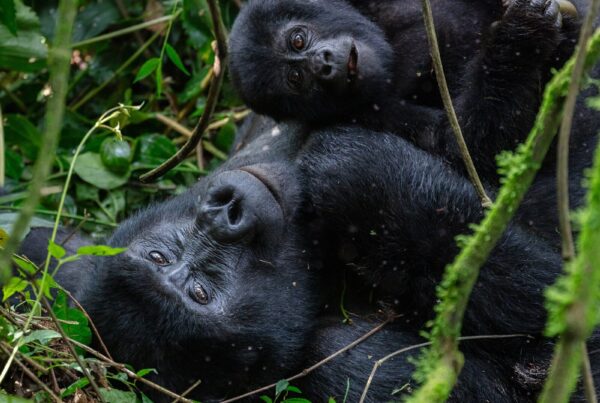
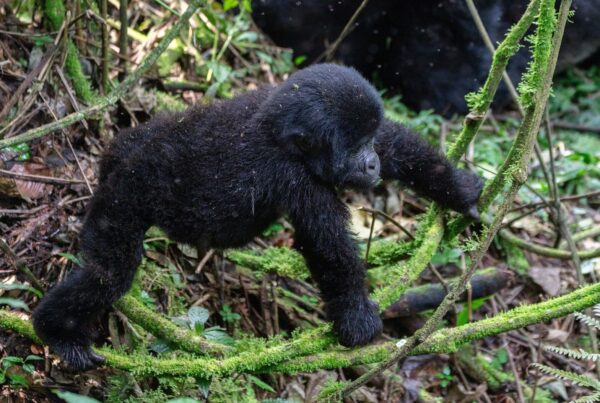
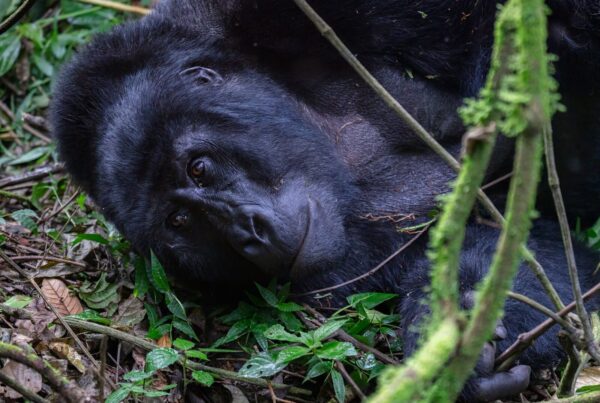
Rwanda’s Volcanoes National Park has approximately 12 habituated gorilla families available for tourism, supporting around 96 permits per day maximum. Uganda’s Bwindi has over 20 habituated families across four sectors plus one family at Mgahinga, creating significantly more permit capacity and family variety. The diversity of gorilla families in Uganda means you have a broader choice of experience — from the relatively accessible families near Buhoma to the strenuous but spectacular treks in Nkuringo, from the multiple-family availability of Rushaga to the high-altitude forest experience at Ruhija. Rwanda’s families are well-habituated and well-managed, but the sheer variety of the Uganda experience is difficult to match.
The Landscape and Wider Circuit
Rwanda’s gorilla trekking is set against the backdrop of the Virunga volcanoes — dramatic, beautiful, and photogenic. Uganda’s Bwindi offers a different aesthetic: the impenetrable ancient forest, deeply ravined, misty, and dense. Both are extraordinary. The wider circuit comparison favours Uganda significantly. Uganda allows you to combine gorilla trekking with chimpanzee tracking in Kibale, savanna wildlife in Queen Elizabeth, the dramatic Murchison Falls and Nile experience, and the extraordinary birdlife of the Albertine Rift. Rwanda’s circuit is more compact but more polished. For travellers who want depth of wildlife experience, Uganda’s circuit is unmatched in East Africa.
The 2026 Verdict
If you want the more polished, higher-cost, shorter-itinerary experience with maximum predictability, Rwanda is an excellent choice. If you want more gorilla families, lower permit costs, a wilder forest experience, and the ability to build a comprehensive East Africa wildlife itinerary, Uganda is the choice — and in 2026 specifically, Uganda is offering a combination of permit availability and lodge value that makes the decision clearer than it has been for years. The travellers who are choosing Uganda right now are not taking a risk. They are taking an opportunity. The gorillas do not care which side of the border you chose to visit from — but your wallet, your itinerary depth, and the intimacy of your experience probably do.
Frequently Asked Questions
Uganda is significantly cheaper. Uganda’s standard permit costs $800; Rwanda’s costs $1,500. For 4-hour gorilla habituation, Uganda charges $1,800 — Rwanda has no equivalent experience. The $700 saving on a standard permit is the primary reason most budget-conscious travellers choose Uganda.
Uganda. Bwindi and Mgahinga together have 20+ habituated gorilla families and issue more daily permits than Rwanda’s Volcanoes National Park. Uganda also offers the Gorilla Habituation Experience, which Rwanda does not. Rwanda’s advantage is accessibility — Volcanoes NP is 2 hours from Kigali airport.
Yes — this is a popular combination. The Kigali to Bwindi road journey takes approximately 4 hours via Kabale. Some visitors trek in Mgahinga (Uganda) one day and cross into Rwanda for Volcanoes the next. Note that your Uganda permit cannot be used in Rwanda and vice versa — separate permits are required.
Rwanda’s Volcanoes National Park offers easier access (2 hours from Kigali airport), high-end lodge infrastructure, and the Dian Fossey research legacy. Rwanda also offers golden monkey trekking in the same park. However, at $1,500 per permit, it costs nearly double Uganda’s $800 rate for the same 1-hour trek.
Uganda is home to the mountain gorilla (Gorilla beringei beringei), one of two subspecies of eastern gorilla. They live exclusively in the Virunga volcanic highlands (Uganda/Rwanda/DRC) and Bwindi Impenetrable Forest (Uganda only). Mountain gorillas are the only gorilla subspecies that cannot survive in captivity — every individual you can trek is a wild animal.