Uganda contains more species of mammals, birds, and primates per square kilometre than almost anywhere else on Earth, and the country’s landscapes — from the Rwenzori glacier peaks to the Bwindi rainforest to the savanna of Kidepo — are as varied as its wildlife. The photographs that come out of Uganda consistently surprise visitors who arrive expecting flat savanna and leave with images of mountain mist, forest giants, and lake shores that look nothing like East Africa’s popular image. This post explores what Uganda’s landscape and wildlife photography captures, and why serious photographers build itineraries around the country. See the Bwindi guide for gorilla photography specifics, and safari packages that combine Uganda’s major photographic destinations.
- Bird species: over 1,000 recorded — more than in all of North America combined
- Primate species: 13 — including chimpanzees, mountain gorillas, and red colobus
- Landscape range: glacier mountains (Rwenzoris), rainforest, wetland, savanna, crater lakes
- Best light: Uganda straddles the equator — golden hour is consistent year-round at roughly 6:30–7:30am and 6:00–6:30pm
- Shoebill stork: Mabamba Bay on Lake Victoria is one of the most reliable locations on Earth for this prehistoric-looking bird
Uganda photography captures landscapes, wildlife, and people that stop you in your tracks. The country sits at the heart of Africa and contains more biodiversity per square kilometre than almost anywhere else on Earth. From the mist-covered slopes of the Rwenzori Mountains to the glittering waters of Lake Victoria, from the ancient canopy of Bwindi Impenetrable Forest to the open savannahs of Queen Elizabeth National Park — Uganda delivers scenes that no camera can fully do justice to, yet every photographer who visits leaves with images that astonish their audiences back home.
The mountain gorillas of Bwindi
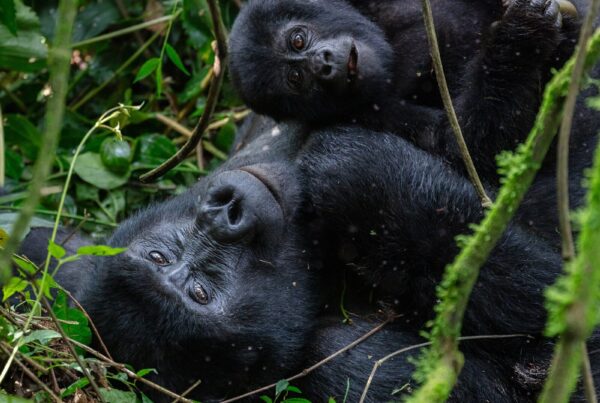
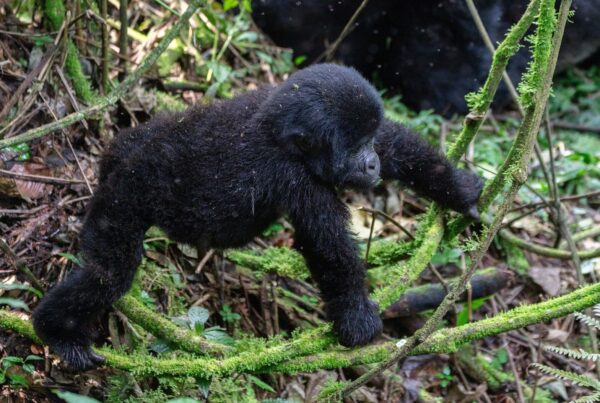
No collection of Uganda photographs is complete without the mountain gorillas. Bwindi Impenetrable Forest holds half of the world’s entire mountain gorilla population, and the encounters available to trekkers are among the most intimate wildlife experiences on the planet. Photographs from inside the forest show silverbacks resting against ancient tree trunks, mothers cradling newborns against their chests, and juveniles tumbling through undergrowth in games of chase. The quality of light in the forest creates a green, filtered glow that makes every image feel like something from a nature documentary.
The silverback in his natural setting
A silverback gorilla photographed in his natural setting is one of the most powerful images in wildlife photography. The contrast between his enormous physical presence and the delicate forest around him creates a tension that draws the eye immediately. Bwindi’s silverbacks — including famous family leaders like Rafiki, Bahati, and Rwigi — have been photographed thousands of times, yet each image feels fresh and urgent because every encounter is different.
Mother and infant: the most shared gorilla image
If there is one gorilla photograph that circulates across social media more than any other, it is a mother gorilla cradling her infant. The tenderness of the moment — the way a gorilla mother holds her young with the same instinct as a human parent — creates an emotional resonance that crosses language and culture. Uganda’s habituated gorilla families produce these moments regularly, and photographers who position themselves patiently are rewarded with images of extraordinary intimacy.
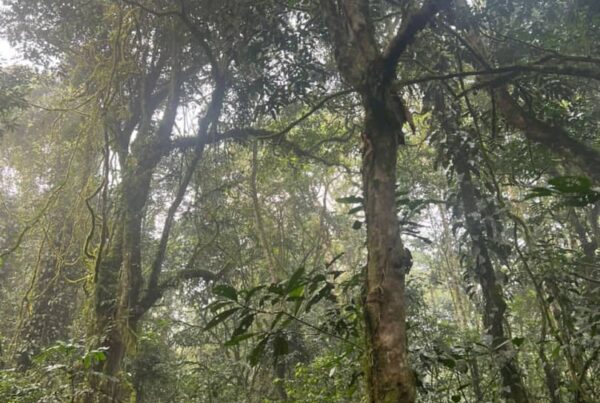
Bwindi Forest from the edge of the canopy
Before descending into the forest for a gorilla trek, trekkers often pause at the edge of the canopy and look out across a landscape that stretches to the horizon in every shade of green. Bwindi’s canopy is ancient, thick, and textured, rolling over the hills like a green ocean frozen in time. Photographs taken from this vantage point — particularly in early morning when mist still clings to the valleys — rank among the most reproduced landscape images in East African photography.
The Rwenzori Mountains: Africa’s snow-capped range
Few travellers outside Africa know that Uganda contains permanently snow-capped mountains. The Rwenzori range — called the Mountains of the Moon by ancient geographers — rises to over 5,100 metres and carries glaciers that have persisted for thousands of years. Photographs of the Rwenzoris in full view, with their white peaks reflected in the still waters of crater lakes below, represent some of the most dramatic landscapes in the entire African continent.
The crater lakes of western Uganda
Western Uganda’s crater lake district contains dozens of perfectly circular lakes formed by ancient volcanic activity. Photographed from above, the lakes appear as dark blue eyes set into green hills, creating a surreal and beautiful pattern that aerial photographers return to again and again. At dawn, mist rises from the lakes and drifts between the hills, creating an ethereal atmosphere that landscape photographers describe as among the best lighting conditions in Africa.
Chimpanzees in Kibale Forest
Kibale National Park contains the highest density of primates in Africa, and chimpanzee tracking here produces some of the most intense and expressive wildlife photographs in Uganda’s portfolio. Chimpanzees move fast, make noise, and engage in complex social behaviours that create a stream of photographic opportunities. Images of chimpanzees feeding in fig trees, grooming each other on the forest floor, or charging through the undergrowth with the whites of their eyes showing have become defining images of Uganda’s wildlife offering.
The Nile at Murchison Falls
Murchison Falls is one of the most powerful waterfalls in the world. At this point on the Victoria Nile, the entire river is compressed through a gap just 7 metres wide before exploding in a thunderous cascade down a 45-metre cliff. Photographs of the falls capture a sense of raw geological force — the mist rising into blue sky, the churning white water below, and the context of the surrounding savannah make this one of Uganda’s most dramatic single images.
Hippos and elephants in the Nile delta
Below the falls, the Nile broadens into a wide, slow river bordered by papyrus reeds and acacia trees. Hippos surface in clusters, blowing spray into the air. Elephants wade through shallows on the opposite bank. Nile crocodiles bask on sandbanks in their dozens. Boat safari photographers capture all of this in a single frame against sunset skies that turn the river copper and gold — images that define the romance of the African bush as completely as any photograph from the Serengeti.
Birds: Uganda’s overlooked visual spectacle
Uganda has more bird species than any other country in Africa: over 1,060 recorded species in a country smaller than the United Kingdom. For bird photographers, Uganda is arguably the best destination in the world. The shoebill stork alone — a prehistoric-looking bird with a shoe-shaped bill and a wingspan of over two metres — is worth the entire journey. Photographs of shoebills standing motionless in swamps, of crowned cranes dancing in mist, of African fish eagles swooping over Lake Victoria create a visual record of biodiversity that leaves professional ornithologists speechless.
The people and culture of Uganda
Uganda’s photographic appeal goes beyond wildlife and landscape. The country contains over 50 distinct ethnic groups, each with their own traditional dress, music, and ceremony. Portrait photographers working in Uganda’s rural communities — with permission and cultural sensitivity — capture images of extraordinary human dignity and beauty. Batwa community members in traditional dress near Bwindi, Buganda kingdom ceremonies in Kampala, fishermen hauling nets on Lake Victoria at dawn — these images tell the human story of one of Africa’s most culturally rich nations.
Kampala at dusk
Uganda’s capital is a city of seven hills, and photographed at dusk from any elevated position, it reveals a sprawling, energetic cityscape that challenges every preconception about African cities. The lights of Kampala spread across the hills as the sun sets behind the Rwenzori range on the horizon, and the combination of urban energy and natural beauty creates images that urban photographers find genuinely surprising.
Why Uganda photographs differently from other African destinations
Professional photographers who have worked across Africa consistently describe Uganda as visually distinct from its neighbours. The combination of extraordinary wildlife density, ancient forest, volcanic landscapes, and human warmth creates a photographic environment with no real parallel on the continent. Unlike the open savannahs of Kenya or Tanzania — where subjects are visible from distance and the photographic challenge is composition — Uganda offers close-up, intimate encounters in forest and wetland settings that reward patience and skill with images of unusual depth and emotion.
If you are planning a gorilla trekking safari to Uganda and want to create a photographic record that will astonish your audience, contact our team to build an itinerary that maximises the diversity and quality of your wildlife photography opportunities.
What makes Uganda photography different from other African safari photography?
Uganda’s wildlife photography combines subjects that exist in no other single country at this density: mountain gorillas in Bwindi (the only place in Uganda), chimpanzees in Kibale Forest (one of the highest-density chimp habitats in Africa), the Shoebill stork in Mabamba Bay swamp, tree-climbing lions in Queen Elizabeth National Park, and over 1,000 bird species throughout. Most East African safari destinations offer excellent savanna photography; Uganda adds mountain forest, tropical rainforest, and equatorial wetland that produce entirely different images.
What is the best time of year for photography in Uganda?
The dry seasons — June to September and December to February — offer the clearest light, better road access to remote areas, and less rain during game drives. Bwindi forest photography is possible year-round, though the long rains (March–May) can make forest light very dim. For bird photography specifically, the wet season brings migratory species from the northern hemisphere (November–April), significantly increasing species count. Wildlife photography in savanna parks like Queen Elizabeth and Murchison is best in the dry season when animals concentrate around water.
Where are the best photography locations in Uganda besides Bwindi?
Kibale National Park offers the best chimpanzee photography in Uganda — groups are habituated and tracking success is high. Mabamba Bay Wetland on Lake Victoria gives close encounters with Shoebill storks from a canoe, producing intimate photographs of one of Africa’s most sought-after birds. Queen Elizabeth National Park provides classic savanna photography with elephant, buffalo, hippo, and the unique tree-climbing lions of the Ishasha sector. Murchison Falls National Park photographs well for the falls themselves — where the Nile narrows to 7 metres — and for large mammal concentrations on the Albert Nile floodplain.
Is Uganda safe for photographers with expensive equipment?
Photography equipment is standard for visitors to Uganda’s national parks and no specific additional security measures are needed beyond normal travel precautions. Inside national parks, equipment security is not a concern — you are with a guide and in a vehicle for most safari activities. In Kampala, as in any major city, you should not display expensive equipment obviously in crowded urban areas. Most photographers carry equipment in discreet bags rather than obvious camera cases. Your tour operator handles vehicles and logistics so you are not managing equipment and navigation simultaneously.
Do I need a filming or photography permit for Uganda national parks?
Personal photography — for private use, social media, travel blogging — is covered by your national park entry fee and gorilla permit. Commercial filming for broadcast, documentary, or advertising purposes requires a separate Uganda Wildlife Authority commercial filming permit with different fees and conditions. If you are on a professional assignment, contact UWA before arrival. The distinction matters: a travel blogger documenting a personal trip is not commercial filming; a documentary crew with a production brief is.
- Lake Bunyonyi: Uganda’s most beautiful lake near Bwindi gorilla country
- Uganda Gorilla Trekking for Couples: The Most Romantic Safari on Earth
- Why Uganda Is the Most Biodiverse Country in Africa Per Square Kilometre
- Golden hour photography in Bwindi: how to capture the forest’s most beautiful light
- Why Gorilla Trekking in Uganda Is Africa’s Most Unforgettable Wildlife Adventure
- The World’s Most Famous Gorilla Tracking Experience: Why the USA Chooses Uganda
- The Only Spanish-Speaking Country in Africa
- Uganda Gorilla Trekking Nkuringo Sector: The Hardest and Most Dramatic
- Gorilla Trekking FAQs: 50 Most Asked Questions Answered
- Kampala to Kabale: All Ways to Travel to Gorilla Country