Updated
Bwindi Forest changes you Africa Serengeti different is one of Uganda’s outstanding natural or cultural attractions, drawing visitors in search of wildlife, scenery, and authentic African experiences. The Serengeti changes you in the way that great scale changes you — by making you feel appropriately small in the presence of something vast; the wildebeest migration, the endless horizon, the predator density at the peak of the season are experiences that recalibrate your sense of where you fit in the order of living things — but Bwindi Impenetrable Forest changes you differently: not by scale but by proximity, not by making you feel small but by making you feel like a specific kind of animal in the presence of another specific kind of animal that is not so different from you. Plan your Bwindi visit with a gorilla trekking permit and a 7-day Uganda gorilla safari.
- The difference: most wildlife encounters involve distance and quantity; gorilla trekking involves proximity and a single family; the intimacy is the point, not a compromise
- The 60-minute limit: Uganda Wildlife Authority enforces exactly one hour of contact time; the constraint is evidence-based; it shapes the experience in ways that unlimited time would not
- DNA: gorillas share 97% of human DNA; the encounter engages that similarity directly; it cannot be replicated by reading about it or watching a documentary
- Success rate: historically 95%+ — rangers track the family daily; the morning briefing includes the gorilla family’s last-known position from each Bwindi sector’s previous afternoon monitoring
The Serengeti changes you in the way that great scale changes you — by making you feel appropriately small in the presence of something vast. The wildebeest migration, the endless horizon, the predator density at the peak of the season: these are experiences that recalibrate your sense of what the natural world is capable of when it is allowed to operate on its own terms. The Serengeti gives you perspective by dwarfing you.
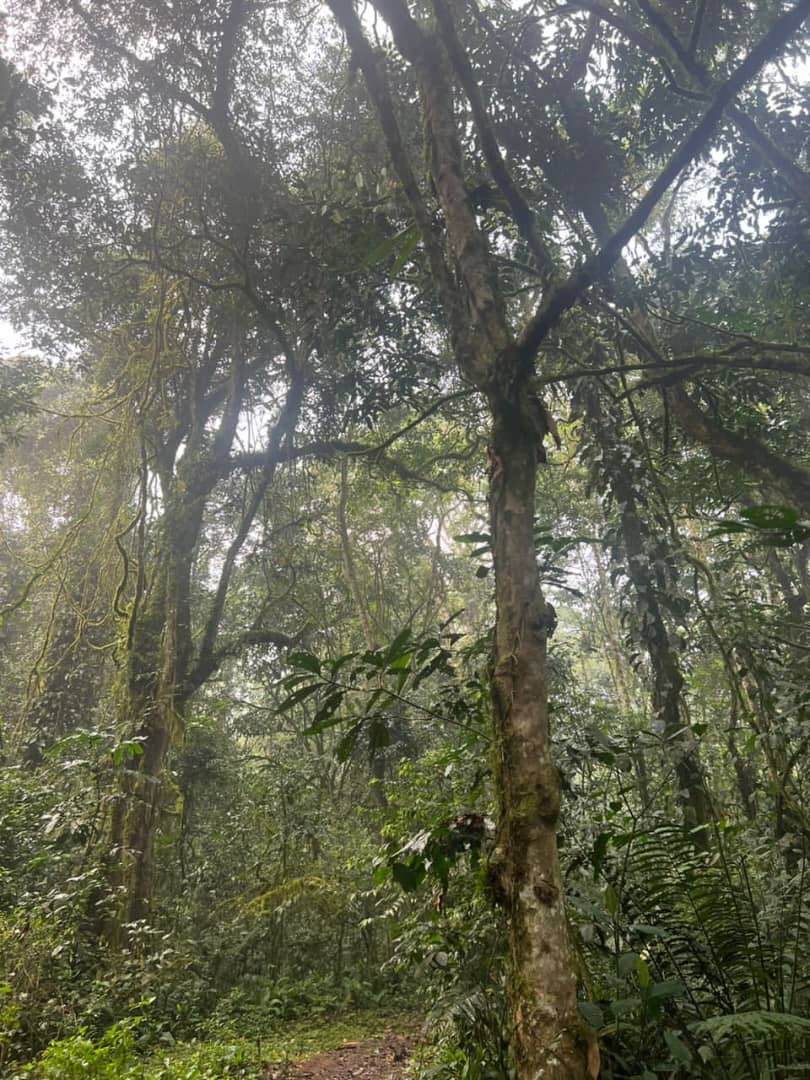
Bwindi changes you differently. Not by dwarfing you but by including you — by placing you inside a forest that existed before your species’ recorded history, in the presence of your closest living relatives, in a relationship of brief, proximate attention that contains a recognition with no exact parallel elsewhere in wildlife tourism. The Serengeti makes you feel small. Bwindi makes you feel related.
The Africa That Changes You: Not the Serengeti but the Bwindi Forest
The Different Kinds of Change
Travel changes people in different ways depending on what they encounter and how they encounter it. Scale changes you differently from intimacy. Distance changes you differently from proximity. Spectacle changes you differently from encounter. The Africa that changes you most deeply is not always the Africa that is most spectacular — it is the Africa that creates the most genuine contact between your experience and the experience of something genuinely other.
The Serengeti is spectacle at its finest. It is magnificent and it is worth seeing. But the contact it creates between you and the animals is mediated — the distance between the safari vehicle and the predator at the kill, the glass of the window, the road that is not the lion’s road — maintains a separation that the gorilla encounter does not maintain. You observe the Serengeti. You participate in Bwindi.
What Participation Means
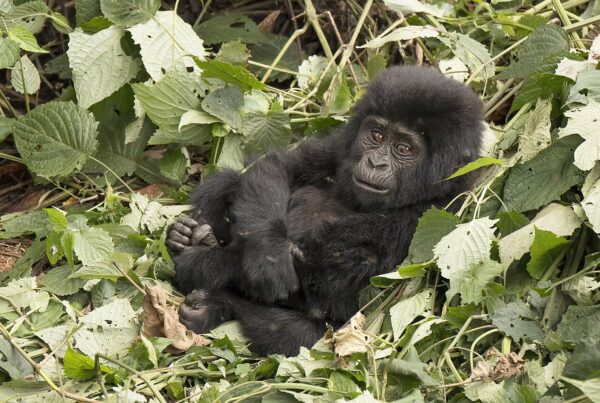
Participation in the gorilla encounter means being physically present in the same space as the gorilla family — not watching from a raised vehicle at a safe remove, but standing in the forest at the gorillas’ level, breathing the same air, with only the regulation eight-metre distance between you. The gorilla is aware of you as a specific presence, not a generic disturbance. You are part of its immediate environment for sixty minutes, and it accommodates you in the way that it accommodates the other elements of its environment — without particular interest, but without particular objection either.
Being accommodated rather than observed is a different experience. The gorilla family that treats your presence as unremarkable — that feeds, grooms, plays, and rests in your presence as if you are not particularly noteworthy — is demonstrating something about your place in its world that is more affecting than any demonstration of power or beauty could be. You are part of the scene, not a viewer of it. The change this produces is quiet and persistent.
Why Bwindi Is the Africa You Will Remember
The Serengeti is unforgettable in the way that the Grand Canyon is unforgettable — through scale, through the overwhelming quality of its beauty, through the way it insists on your attention. Bwindi is unforgettable in a different way: through intimacy, through recognition, through the specific moment when the gorilla looked at you and you understood that the distance between your species and theirs is measured in millions of years rather than in an unbridgeable gulf of nature. This understanding — that you are not separate from the natural world but a specific, recent variant of it — changes something foundational.
The Africa that changes you is not always the Africa that photographs best. Bwindi does not photograph like the Serengeti. But it changes you in ways the Serengeti cannot, because it puts you inside the story rather than in front of it. The $800 permit in 2027 is the price of entry to the Africa that changes you. Contact us to book it.
Why do people say Bwindi changes you differently from other wildlife experiences?
The accounts are specific and consistent across very different kinds of visitors. The proximity: the minimum approach distance is 7 metres; habituated gorillas approach closer; you are not watching through binoculars or from a vehicle — you are in the same physical space as the animal. The scale: a silverback mountain gorilla is physically massive in a way that photographs cannot convey; standing 7-10 metres from an animal of this size and intelligence in its own forest is categorically different from watching it on a screen. The awareness: the gorilla is looking at you; it is processing your presence; the awareness is bidirectional in a way that watching a migrating herd is not. Plan your visit: choose your Bwindi sector, understand the cost, and read what to expect before arrival.
Can I combine a gorilla trek in Uganda with a Tanzania Serengeti safari?
Yes — this is one of the most rewarding multi-country safari combinations in Africa. The combination: Uganda gorilla trekking at Bwindi plus Tanzania Serengeti gives you the intimate primate experience and the open-plains mega-fauna experience; they complement rather than duplicate each other. Logistics: Entebbe (Uganda) to Kilimanjaro or Arusha (Tanzania) by air; most visitors do Uganda first (ending in Kigali, Rwanda which is close to Bwindi) then fly to Tanzania; the circuit can be done in 10-14 days for a focused trip. Uganda extensions: before or after Bwindi, add Queen Elizabeth NP (tree-climbing lions, Kazinga Channel), Kibale Forest (chimpanzee trekking), or Mabamba Bay (shoebill stork). Operator advice: an accredited Uganda operator can coordinate the Uganda portion and connect you with a Tanzania partner.
Is Uganda worth visiting if I’ve already done Tanzania and Kenya?
The accounts of repeat Africa visitors who add Uganda are consistent: Uganda is not a lesser version of East Africa’s classic circuit but a categorically different experience. What Uganda adds: mountain gorillas at Bwindi are unavailable in Tanzania or Kenya; chimpanzee trekking in Kibale Forest is the world’s best habituated chimp experience; tree-climbing lions at Ishasha in QENP are found in few places globally; the shoebill stork at Mabamba Bay is one of Africa’s most sought-after birds. The crowds: Uganda has far fewer visitors than Tanzania and Kenya; at Kidepo Valley NP you may have the Narus Valley essentially to yourself; the absence of vehicle overcrowding at kills and sightings is a significant quality difference. The verdict: experienced Africa travellers consistently rate Uganda gorilla trekking as among the top 5 wildlife experiences anywhere on Earth.
What does gorilla trekking in Bwindi actually feel like during the first encounter?
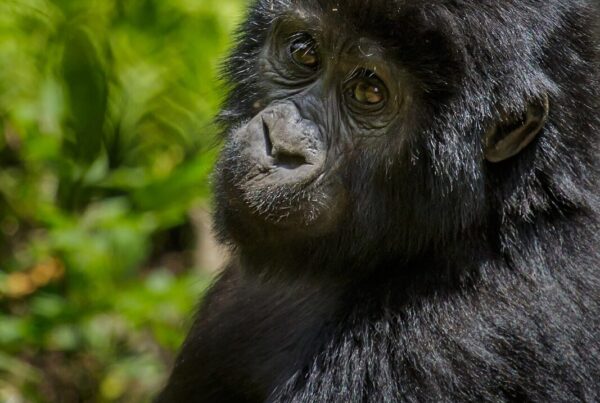
The first moments of the encounter are described consistently across many different kinds of visitors. The approach: the ranger signals the group to slow and stop talking; the vegetation thickens; there is sound before sight — branches moving, something heavy; then a shape resolves: black, large, moving deliberately; a gorilla. The first reaction: most people report a physical response (heart rate increase, something between fear and awe) that subsides quickly as the gorilla continues feeding without concern. The transition: within a few minutes the group adjusts; the ranger narrates; the initial shock softens into something quieter and more attentive; this transition is when the actual encounter begins. Read more: 30 things to know before gorilla trekking and the 5 most common mistakes to avoid.
How do I book a gorilla trek in Uganda?
The booking process is straightforward but requires advance planning. Permit booking: gorilla trekking permits cost USD 800 per person and are issued by Uganda Wildlife Authority; they can be booked directly through UWA or through an accredited Uganda tour operator. How far ahead: December, January, June, July, and August are peak months; book permits at least 3-4 months in advance for these periods; other months are available at shorter notice. What’s included: the permit covers one trek with one family for one group of up to 8 people; it does not include transport, accommodation, park entrance fees, or porter hire. Full cost: see the complete gorilla trekking cost breakdown.
- The Africa That Changes You: Not the Serengeti but the Bwindi Forest
- What the Loss of Bwindi Forest Would Mean for East Africa’s Climate
- What Makes Bwindi Different From Every Other African Forest
- Africa’s Remaining Intact Forests: Bwindi and Why It Must Be Protected
- African Golden Cat Uganda: Bwindi’s Secretive Forest Predator
- African forest elephants of Bwindi: the hidden giants of the impenetrable forest
- African mahogany and the forest giants of Bwindi: Uganda’s timber trees
- African wild ginger and other medicinal plants of Bwindi’s forest floor
- African buffalo in Bwindi: the large herbivore that shares the gorilla’s forest
- African golden cats: the elusive forest predator of Bwindi