Updated
permission spend money gorilla trekking Uganda experience is one of Africa’s most extraordinary wildlife experiences, connecting travellers with mountain gorillas in their natural forest habitat. There is a specific kind of purchase that many people find harder to make than an equivalent amount spent on practical necessities or ordinary pleasures: the large, deliberate, irreversible expenditure on a single extraordinary experience — and the USD 800 gorilla permit, plus the USD 2,500-3,500 total trip cost that a Uganda gorilla trekking safari typically represents, sits firmly in this category for most of the people who think seriously about making it. The hesitation is rational but the calculation it is based on is usually wrong in a specific way. See full gorilla trekking cost and accredited Uganda tour operators.
- Permit: USD 800 per person, fixed by Uganda Wildlife Authority; this is the single largest cost and cannot be reduced by any operator or negotiation
- Total trip (budget range): USD 2,200-2,800 for 5 days including permit, accommodation (mid-range), transport, and park fees; full details at gorilla trekking cost page
- Total trip (comfort range): USD 3,500-6,000+ for 5-7 days with lodge accommodation; some top lodges adjacent to Bwindi charge USD 600-1,200 per person per night
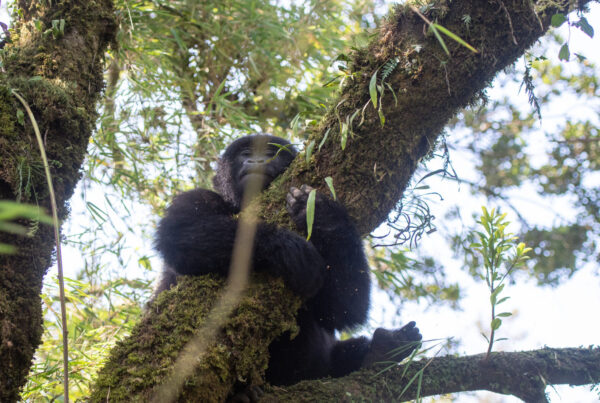
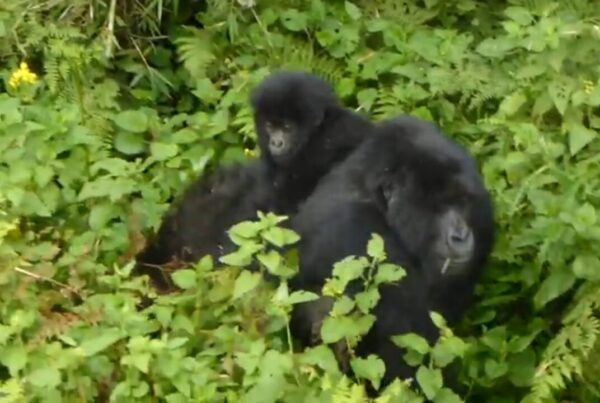
- Value equation: the gorilla encounter itself — 60 minutes with a habituated mountain gorilla family — is available nowhere else on Earth at any price; the USD 800 permit buys something without a substitute
There is a specific kind of purchase that many people find harder to make than an equivalent amount spent on practical necessities or ordinary pleasures: the large, deliberate, irreversible expenditure on a single extraordinary experience. The $800 gorilla permit — and the $2,500-$3,500 total trip cost surrounding it — falls into this category for many potential visitors. It is not that they cannot afford it. It is that they have difficulty giving themselves permission to spend that amount on something that exists only in memory and story once it is done.
Understanding this permission problem is the first step to resolving it. The barrier is psychological, not financial, and it can be addressed directly.
How to Give Yourself Permission to Spend Money on Something Unforgettable
The Experiential Spending Permission Problem
Most people have a relatively clear internal framework for what is permissible to spend on material goods: a car at this price is reasonable, a car at that price is extravagant. But the framework for experiential spending is less developed, less culturally reinforced, and more vulnerable to the specific anxiety that experiential purchases produce: the knowledge that the money is “gone” once the experience is over, with nothing tangible remaining.
This anxiety is not irrational but it is asymmetric. The memory of a great experience — the specific, vivid, decades-long memory that the gorilla encounter produces — is not nothing. It is arguably more valuable than most tangible objects purchased at equivalent cost, which depreciate in value and utility over the same time period. The asymmetry in the perceived “permanence” of tangible versus experiential purchases is a bias, not a truth.
Reframing the Expenditure
One useful reframing is to calculate the cost per year of memory. If the gorilla trekking experience at $800 permit cost (total trip $2,800 from Europe) produces a vivid, specific, rewarding memory that persists for thirty years, the cost is approximately $93 per year of experiential richness. Against this benchmark, the expenditure is easier to evaluate. $93 per year for a memory that is among the most significant and rewarding in your experiential inventory is, by any measure, good value.
Permission as a Practice
The permission to spend on unforgettable experiences is a practice — something that most people have to deliberately cultivate rather than something that comes naturally in a culture that reinforces material consumption over experiential investment. The research on this point is consistent: experiences produce more lasting wellbeing than equivalent material purchases. Knowing this does not automatically make it easier to grant the permission. But it provides the rational foundation on which the permission can be built.
The practical exercise is this: identify the specific concern that is blocking the permission. Is it the concern that the money could be used more practically? That something more important might come up? That you will feel guilty about the expenditure? That the experience might not live up to the cost? Each concern has a specific answer. The practical concern is addressed by the cost-per-year calculation. The guilt concern is addressed by the conservation value of the expenditure. The quality concern is addressed by the overwhelming testimony of people who have done it and describe it as worth every dollar.
The Decision That Grants Permission
The decision to book the trip — to pay the deposit, to commit to a specific date, to start the countdown — is the moment at which permission is granted. It cannot be granted in advance of the decision; it is the decision. Everything that comes after — the anticipation, the planning, the trip, the memory — follows from it. Contact us to begin the process. The permission is yours to give.
Is USD 800 for a gorilla permit really worth it?
The word “worth” does a lot of work in this question and deserves careful examination. Substitutability: mountain gorillas exist in the wild in one location — the high-altitude forests of Uganda, Rwanda, and DRC; there are no mountain gorillas in zoos; the Bwindi encounter is not a more expensive version of a cheaper option — it is the only option; if you want to meet a mountain gorilla in its own forest, this is the path. Comparison: USD 800 is approximately the cost of a weekend in a European city including flights; it is less than the cost of many outdoor adventure experiences (Antarctic expedition, Everest permit, trophy fishing charter); it is substantially less than a Rwanda gorilla permit (USD 1,500). The return visitors: a significant proportion of people who do gorilla trekking at Bwindi return within 5 years; this is the revealed preference of people who have seen what the money produces.
What is the research on spending money on experiences versus things?
The psychology of experiential versus material spending is a well-studied field. The finding: across multiple studies (Gilovich, Kumar, Van Boven, and others), people report higher and more durable satisfaction from spending money on experiences than on equivalent-cost purchases of objects. Why: experiences become part of your identity in a way that objects do not; the story of the gorilla encounter is yours for life in a way that a purchased object deteriorates; experiences are harder to regret because they cannot be returned or made obsolete. The anticipation value: research suggests that the pleasure of anticipating an experience is substantial and positive; the planning period of a gorilla trek to Bwindi — researching sectors, reading accounts, planning the itinerary — is itself a period of meaningful enjoyment before the trip. The regret asymmetry: studies consistently show that people regret experiences they did NOT have more than experiences they did; the person who went regrets nothing; the person who did not go often wishes they had.
How can I reduce the total cost of a gorilla trekking trip?
The permit price is fixed but other costs can vary. Travel period: shoulder season (October-November, March-May) has lower accommodation prices and cheaper flights; the gorilla experience is identical to peak season but with 15-30% lower accommodation costs at most lodges. Accommodation: mid-range guesthouses near Buhoma and Rushaga cost USD 80-180 per person per night versus USD 600-1,200 at top lodges; both types are adjacent to the same trekking sectors. Self-driving: renting a 4WD from Kampala and self-driving to Bwindi reduces transport costs but requires road confidence and navigation. What not to cut: the permit (fixed), a good ranger or guide (adds enormously to the experience), and a porter (around USD 15-20 and well worth it). Full breakdown: gorilla trekking cost 2025.
How do I plan a gorilla trekking trip for two people from Europe or the USA?
A two-person gorilla trek from Europe or the USA is well-established logistics. Flights: Entebbe International Airport (EBB) is the arrival point; direct flights from major European hubs (London, Amsterdam, Brussels, Istanbul); from the USA, connect through Nairobi, Addis Ababa, or Amsterdam. Visa: Uganda tourist visa obtainable online (USD 50 per person); on arrival at Entebbe for many nationalities. Entebbe to Bwindi: 6-8 hours by road via Mbarara; or 1 hour by charter flight to Kihihi or Kisoro airstrip; fly-in itinerary for time-limited visitors. Booking: use an accredited Uganda tour operator to handle permits, transport, and accommodation as a package; two people travelling independently will pay similar total costs with significantly more logistics burden.
What is the easiest way to book a gorilla trek in Uganda?
The simplest booking path is through an accredited operator. Step 1: contact an accredited Uganda tour operator; send your preferred dates, number of people, and budget range. Step 2: the operator secures the gorilla permits from UWA; this is the most time-sensitive step since peak-season permits go quickly. Step 3: the operator designs an itinerary combining the trek with other Uganda experiences (QENP, Kibale, Murchison) depending on your time and budget. Step 4: pay a deposit to confirm the booking; remainder on arrival or before departure depending on the operator. What to check: Uganda Tourism Board accreditation; ATTA membership; clear permit booking confirmation with your name; cancellation policy (COVID-19 taught operators and travellers that flexibility matters). Read: cost breakdown and what to know before you go.
- How to Give Yourself Permission to Spend Money on Something Unforgettable
- The Case for Spending Money on Experience Instead of Things: Uganda
- Community-run tourism near Bwindi: where to spend your money with maximum impact
- Why Gorilla Trekking in Uganda Is Africa’s Most Unforgettable Wildlife Adventure
- Unforgettable One-Day Rhino Trekking Safari Adventure
- Is Gorilla Trekking Worth the Money?
- Bwindi Forest Gorilla Trekking: An Unforgettable Journey
- Best Places to Travel Solo: Safe, Inspiring & Unforgettable Destinations
- How Long Do You Spend With Gorillas During the Trek? The One-Hour Rule Explained
- What Currency to Use in Uganda: Money, ATMs and Tipping Guide