The OM System OM-1 occupies a unique position in the gorilla photography toolkit in 2027 as the most weather-sealed camera system available — rated IP53 for dust and water resistance, tested to withstand sustained rain exposure that would damage most other systems — which makes it particularly valuable for Bwindi Impenetrable Forest where the word “impenetrable” refers to both the vegetation and the frequency of rain: a trek that begins in sunshine will almost certainly pass through fog, drizzle, or full tropical rain somewhere in its 2-8 hour duration, and the OM-1’s ability to operate without a rain cover in conditions that force other cameras into a bag is a meaningful practical advantage for serious gorilla photographers. Camera choice affects your gorilla trekking photography results; see also Uganda safari photography guides.
- Weather sealing: IP53 rated; the most weather-resistant mirrorless system available; can operate in sustained rain without a cover
- Sensor: Micro Four Thirds (MFT); 20.4 megapixels; smaller sensor than APS-C or full frame means 2x crop factor
- AF system: Quad Pixel AF with subject recognition including bird and animal detection
- Key gorilla advantage: the 2x crop factor means a 300mm lens gives 600mm equivalent reach; smaller system is lighter for a long trekking day
The OM System OM-1 (formerly under the Olympus brand, continuing under OM System branding) occupies a unique position in the gorilla photography toolkit in 2027. It is the most weather-sealed camera system available — rated IP53 for dust and water resistance, tested to work at temperatures down to -10C — and its smaller Micro Four Thirds sensor format, combined with the system’s exceptional telephoto lens range, creates a wildlife photography setup that is significantly lighter than full-frame alternatives without sacrificing the autofocus capability and burst speed that gorilla photography demands. For trekkers who prioritize low pack weight on a physically demanding trek, the OM-1 deserves serious consideration.
Why weather sealing matters at Bwindi
Bwindi Impenetrable Forest is genuinely wet. The forest sits at high elevation and creates its own microclimate of mist, rain, and humidity that threatens camera electronics with a persistence that photographers from drier climates do not always anticipate. Light rain during a gorilla encounter is not uncommon; heavy mist that coats every surface with moisture is the norm on many days. Equipment that is not weather-sealed is at genuine risk even inside a camera bag, and the stress of photographing with an unsealed camera in these conditions creates a background anxiety that detracts from the experience.
The OM-1’s IP53 weather sealing — combined with OM System’s PRO lenses which share the same sealing standard — means the camera-and-lens combination can be used in light rain, mist, and high humidity without anxiety. This weather resistance is a meaningful practical advantage in Bwindi’s conditions that photographers who have used other systems in the forest often appreciate retrospectively.
OM-1 specifications for gorilla photography
The OM-1’s 20.4MP stacked BSI CMOS sensor produces images with good dynamic range and acceptable noise at ISO 3200-6400, though it cannot match the full-frame sensor performance of the Sony A7 IV or Nikon Z8 at extreme ISO values. The 2x crop factor of the Micro Four Thirds format means that a 300mm lens on the OM-1 delivers the equivalent field of view of a 600mm full-frame lens — this is the key advantage of the system for wildlife photography, where reach is often the limiting factor.
The OM-1 shoots at 50fps in Pro Capture mode (a pre-buffer that saves frames from the half-second before you fully press the shutter) and 120fps in burst mode with electronic shutter — figures that far exceed full-frame competition at any price point. The OM-1’s five-axis IBIS is also among the best available, providing up to 8 stops of stabilization with compatible lenses, which substantially mitigates the smaller sensor’s light-gathering limitations.
OM-1 settings for gorilla trekking
Subject detection and AF
The OM-1 includes OM System’s AI-based subject detection that covers birds, mammals, motorsports, trains, and aircraft. For gorillas, set Subject Detection to Mammal and enable Eye Priority. Set AF mode to C-AF (Continuous AF) with AF Area set to All Zones to allow the camera to find subjects across the full frame. The OM-1’s AI subject detection is less precisely trained for primates than for typical domestic animals, but it provides reasonable tracking performance that improves with careful user customization of tracking sensitivity.
Pro Capture mode: the secret weapon
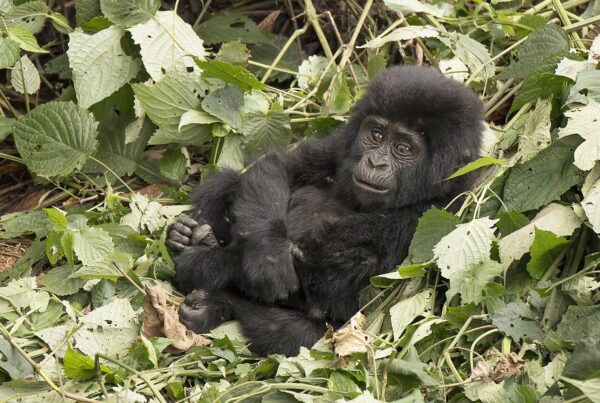
Pro Capture mode is the OM-1 feature most valuable for gorilla photography. When Pro Capture is enabled and you half-press the shutter, the camera continuously buffers frames at your set burst rate. When you fully press the shutter, it saves the buffered pre-capture frames plus your post-press frames, effectively capturing the moments immediately before you consciously fired the shutter. For unpredictable gorilla behavior — sudden chest beats, unexpected eye contact, a silverback rising quickly — Pro Capture captures the decisive moments that pure reaction time would miss.
Lens recommendations
The M.Zuiko Digital ED 300mm f/4 IS PRO delivers a 600mm equivalent field of view at only 1.475kg — significantly lighter than comparable full-frame 600mm options. Combined with the MC-20 2x teleconverter it provides a 1200mm equivalent at the cost of two stops of light. The M.Zuiko Digital ED 150-400mm f/4.5 TC1.25x IS PRO is the ultimate OM System wildlife lens, delivering 300-800mm equivalent range (with the built-in teleconverter extending to 1000mm equivalent) in a single optic at 2.0kg.
For photographers who prioritize pack weight and weather protection on their $800 gorilla trekking experience in 2027, the OM System OM-1 with a PRO telephoto lens represents the most complete combination of those priorities available in any camera system. The image quality trade-off versus full-frame is real but manageable, and for anyone who has struggled with heavy camera bags on steep Bwindi terrain, the weight savings are substantial enough to meaningfully improve the overall trekking experience.
How does the OM-1 weather sealing perform in Bwindi’s rain conditions?
The OM System OM-1’s IP53 weather sealing is the most comprehensive in the mirrorless camera market and has specific relevance for Bwindi’s conditions. What IP53 means: IP53 certifies resistance to dust ingress (5 = limited protection) and to water jets at any angle (3 = water falling at up to 60 degrees); in practical terms, the OM-1 can be used in sustained tropical rain without a rain sleeve and without risk to the electronics. The Bwindi context: Bwindi Impenetrable Forest has two rainy seasons (March-May and September-November) when rain is frequent; but even in dry season the forest generates its own fog and drizzle; a trek of 4+ hours will almost certainly encounter wet conditions at some point. The practical advantage: with the OM-1, when it starts raining during a gorilla encounter, you keep shooting; with a less-sealed camera, you either stop to fit a rain cover (losing shots during the gorilla hour) or risk the electronics. The competing systems: Nikon Z9 (IP-X rated, very good), Sony A1 (good sealing, but not IP-rated), Canon R3 (excellent sealing); all are strong but the OM-1 is specifically tested to an IP standard that these competitors are not.
How does the Micro Four Thirds sensor affect image quality for gorilla photography?
The Micro Four Thirds sensor of the OM-1 is smaller than APS-C or full frame sensors and this affects image quality in specific ways that gorilla photographers should understand. The 2x crop factor: MFT sensors are half the linear size of full frame (35mm); this means a 300mm lens on the OM-1 gives the equivalent field of view of a 600mm lens on full frame; a 150-400mm zoom (f4.5, OM System’s flagship telephoto) gives 300-800mm equivalent reach — exceptional reach for gorilla photography in a relatively compact system. Low light performance: the smaller sensor means more noise per pixel at high ISO than full frame; the OM-1 is rated for clean images up to ISO 3200-6400; in Bwindi’s dense forest where even midday light is dim, ISO 1600-3200 is typical; this is adequate for gorilla photography but full frame cameras (Sony A1, Nikon Z9, Canon R5) will produce cleaner high-ISO results. The reach-vs-quality trade-off: for gorilla photography at 3-10 metre distances in forest light, the OM-1’s reach advantage and weather sealing often outweigh the full frame noise advantage; the choice depends on whether your shots are limited more by reach or by light.
What OM System lenses work best for gorilla photography at Bwindi?
OM System (Olympus) has an excellent telephoto lens lineup that benefits from the 2x crop factor of MFT to deliver exceptional reach. The 150-400mm f4.5 TC1.25x PRO: OM System’s flagship super-telephoto zoom; with built-in 1.25x teleconverter gives 300-800mm equivalent reach; f4.5 is acceptably fast for forest light; exceptional image stabilisation (OM-1 has up to 7.5 stops IBIS combined with OIS); large and expensive but the optimal gorilla lens in the OM system. The 100-400mm f5-6.3 IS: a more affordable telephoto zoom giving 200-800mm equivalent; f6.3 at 400mm loses light in forest conditions; suitable for budget-conscious photographers. The 40-150mm f2.8 PRO: gives 80-300mm equivalent; the f2.8 maximum aperture is a significant advantage in low forest light; the shorter maximum reach limits use for more distant gorillas but the light-gathering advantage is real. Teleconverter use: the 1.4x teleconverter can be added to the 40-150mm or 100-400mm; adds 1 stop of light loss but extends reach; in Bwindi’s light conditions the trade-off is usually against adding a teleconverter.
How does the OM-1 autofocus perform for gorilla photography?
The OM System OM-1’s autofocus system is competitive with the best mirrorless cameras for wildlife subjects including primates. Quad Pixel AF: the OM-1 uses a Quad Pixel AF system with subject recognition; the subject recognition includes bird detection and animal detection; gorillas, as large primates, are typically detected as animals and the AF system will track and lock focus on the gorilla reliably in standard conditions. The forest challenge: gorilla photography in Bwindi is more AF-challenging than open savanna wildlife photography; the vegetation in the background and around the gorilla confuses subject-detection AF more than in open conditions; the AF system can sometimes track a vegetation element rather than the gorilla body. Manual override: experienced gorilla photographers use zone or spot AF selection rather than full subject tracking to maintain more control over what the camera focuses on; this is true of all camera systems, not just the OM-1. Continuous shooting: the OM-1 shoots at 50fps with electronic shutter or 10fps with mechanical shutter; this gives excellent burst capability for gorilla movement sequences.
Is the OM System OM-1 worth choosing over a Sony, Nikon or Canon for gorilla trips?
Choosing between the OM-1 and full-frame alternatives for a gorilla trek involves genuine trade-offs with no universally correct answer. Choose the OM-1 if: you are already invested in the OM System lens ecosystem; you prioritise weather sealing above all other considerations; you want maximum reach in a lighter, smaller package than a full-frame super-telephoto; you will be doing other outdoor sports or wet-condition photography where IP53 is valuable. Choose Sony A7R V, Nikon Z8, or Canon R5 if: you want the best high-ISO performance for forest light; you want maximum image quality for very large prints; you are already invested in those lens ecosystems. The honest assessment: in the 3-10 metre range of typical gorilla encounters, any of these systems will produce stunning images in the hands of a competent photographer; the limiting factor is almost always the quality of the gorilla encounter itself (how still, how positioned, how much light) rather than the camera. For non-specialists: bring whatever camera you own; excellent gorilla photography has been made with every camera generation from film to modern mirrorless.
- Rain photography in the gorilla forest: how to turn bad weather into compelling images
- Black & White Photography Techniques to Try on a Gorilla Safari
- Uganda Gorilla Trekking for Solo Travellers: The No-Group Option
- Uganda Gorilla Trekking from Kigali: The Cross-Border Option Explained
- Can You Take Photos of Gorillas? Photography Rules in Uganda
- Gorilla Trekking for Disabled Travellers: Accessibility Options in Uganda
- How to Get to Bwindi: Transport Options From Kampala and Entebbe
- How to Take the Best Gorilla Trekking Photos: Photography Tips
- Nairobi to Bwindi: Overland and Fly Options Compared
- Best Photography Spots in Uganda: Safari Photographers Guide