Rain in Bwindi is not the enemy of good photography—it is a creative opportunity that most trekkers fail to exploit because they are busy protecting their equipment and lamenting the weather. Some of the most atmospheric and distinctive gorilla photographs are made in rain: mist rising from the canopy, raindrops on gorilla fur, the dramatic contrast of a clearing in dense forest during a shower, the quality of light through rain-washed air that makes greens more saturated and shadows more defined. The technical challenges of rain photography are real and manageable; the creative results can be extraordinary.
Protecting your equipment in rain
Modern mirrorless and DSLR cameras from major manufacturers are weather-sealed to varying degrees. Full-frame Sony A7 series, Canon R series, and Nikon Z series bodies have robust weather sealing that handles light to moderate rain without significant risk. Some telephoto lenses have full weather sealing; kit lenses and cheaper telephotos often do not—the lens is frequently the weak point even on a weather-sealed body. Check your specific body and lens specifications before relying on weather sealing as complete protection.
A rain cover—a simple waterproof sleeve that fits over the camera and lens while leaving the controls and viewfinder accessible—is the most practical protection for sustained rain and adds less than 100 grams to your pack weight. Several designs are available from Peak Design, Lowepro, and specialist wildlife photography suppliers. For intervals between shots, a quick-dry microfibre cloth keeps the front element clear and absorbs the drips from the camera body that accumulate during extended shooting in rain.
Gorilla behaviour in rain: the photographic opportunity
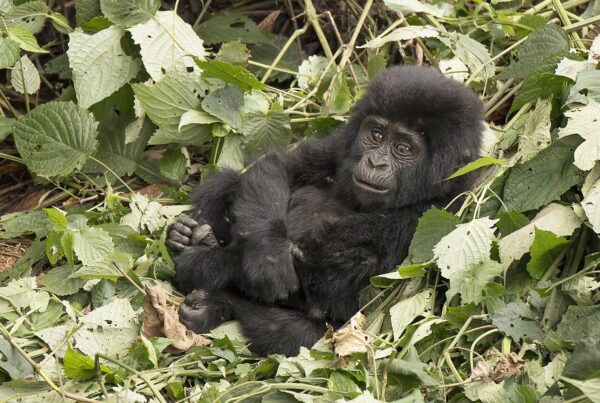
Gorillas in rain behave differently from gorillas in dry conditions. Rainfall often causes group members to cluster together, sitting hunched with their backs to the rain and their young tucked underneath them—creating intimate, compositionally satisfying groupings that spread-out dry-weather feeding does not produce. The silverback may adopt a stationary, stoic posture under the largest available tree, remaining still for extended periods—ideal for careful composition and extended exposure without motion blur risk.
Rain on gorilla fur creates a texture and visual weight that dry fur lacks: individual hair strands weighted with water, droplets visible against the dark coat, the sheen of wet black fur in diffuse forest light. These textures reward close telephoto work and produce images that convey the physical reality of the forest environment more vividly than images made in dry conditions. The gorilla that tolerates rain without seeking shelter—the young adult male sitting with equanimity while rain falls—is one of the most stoic and powerful images available in gorilla photography.
Atmospheric effects: mist and light after rain
The period immediately after rain is often the most photographic of all forest conditions. Mist rises from the canopy as solar heating evaporates surface water, creating layers of atmosphere that compress distance and add depth to forest views. The air is washed clean of dust and haze, and colours are more saturated than in dry conditions—the greens of ferns, moss, and canopy foliage at their most vivid against the grey-white of the mist. A wide lens aimed at the forest canopy with a mist layer between the camera and the background produces an image quality that dry, clear conditions cannot replicate.
Light rays penetrating the mist after rain—the “crepuscular rays” that photographers pursue specifically in humid forest environments—require the sun to be relatively low in the sky and a concentration of mist at mid-canopy height. On gorilla treks that begin at dawn and reach the gorilla family in the mid-morning, the timing is often optimal: the early morning rain that drenched the trail has passed, the sun is rising, and the mist is burning off—briefly creating the light conditions that every forest photographer hopes for. Having the camera ready during this transition, even before the gorilla family is reached, produces images that contextualise the encounter within its atmospheric landscape in ways that the gorilla encounter itself, occurring at closer range, may not allow.
- Gorilla Trekking Weather and Climate: When Rain and Sun Meet the Forest
- Weather at Bwindi Impenetrable Forest: temperature, rainfall and what to expect
- Uganda Primate Safaris: Journey Into the Forests Where We First Belonged
- Rain Gear for Gorilla Trekking: Poncho vs Jacket in Uganda’s Forest
- What Happens If It Rains During the Gorilla Trek in Uganda? Complete Guide to Trekking in Wet Weather
- Gorilla Trekking vs Amazon Rainforest: Two Great Nature Experiences
- I Turned 40 in Bwindi Forest With Gorillas: Why That Mattered
- Gorilla Trekking Uganda for Art Groups: Photography and Painting in the Forest
- The African Forest That Produces 40 Percent of the Continent’s Rainfall
- African Civet Uganda: Nocturnal Forest Animal Facts