Wilderness Is Not Exclusively for the Able-Bodied
The assumption that gorilla trekking is inaccessible to people with disabilities persists widely, discouraging many who would otherwise dream of encountering mountain gorillas. This assumption is not merely inaccurate; it reflects a limited understanding of both the accommodations available in Uganda and the creativity with which experienced guides and operators approach accessibility challenges. While gorilla trekking in Bwindi’s dense forest undeniably presents obstacles that do not exist in urban or built environments, these obstacles are not insurmountable for travellers with a range of physical disabilities.
Over the past decade, UWA and tour operators have developed increasingly sophisticated approaches to accommodating disabled trekkers. What was once considered impossible is now achievable for many individuals with mobility limitations, sensory impairments, and other disabilities. The key lies in honest communication about your specific needs, advance planning that allows operators to arrange appropriate support, and realistic expectations about what the experience will involve.
Understanding the Terrain Challenges
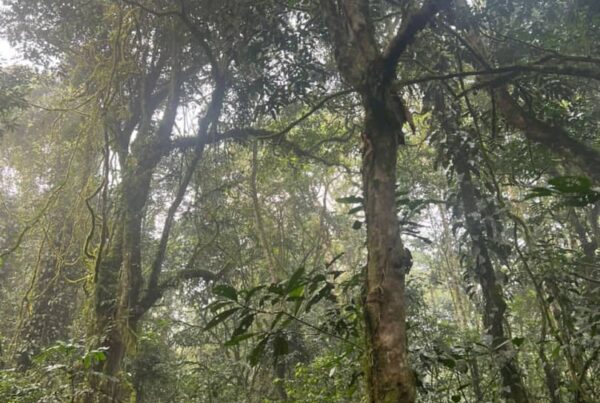
Bwindi Impenetrable National Park is not called impregnable for marketing purposes. The terrain genuinely challenges able-bodied trekkers, with steep slopes, narrow trails, mud, roots, rocks, and dense vegetation that must be pushed through or navigated around. For travellers using wheelchairs, walkers, or with limited lower-body mobility, these features present genuine barriers that require specialised solutions rather than mere determination.
The first step in planning an accessible gorilla trek is understanding exactly what your disability entails and how it interacts with forest terrain. A traveller who can walk short distances with crutches faces different challenges than someone who uses a manual wheelchair, who in turn faces different challenges than someone with a power wheelchair. Each situation requires individual assessment and tailored solutions.
The Sedan Chair Option
For trekkers who cannot walk the forest trails independently, the sedan chair offers a proven solution that has enabled hundreds of disabled travellers to reach gorilla families. A sedan chair is essentially a modified stretcher or portable seat carried by four porters, two at the front and two at the rear. The trekker sits securely in the chair while porters navigate the terrain, carrying their passenger through sections that would be impossible to traverse in a wheelchair or with walking aids.
The sedan chair requires advance arrangement, ideally several weeks before your trek, so that operators can recruit sufficiently strong porters and brief them on the specific requirements of your transport. Not all trekking sectors are equally suitable for sedan chair use; some routes are too narrow, steep, or technically challenging even for teams of four porters. Your operator will advise on the most appropriate sector based on your specific situation.
The cost of sedan chair transport is typically around three hundred to four hundred dollars, significantly more than standard porter assistance but representing a small fraction of the total trip investment. The fee is divided among the four porters, providing meaningful income for local workers while enabling an experience that many disabled travellers describe as life-changing.
Visual and Hearing Impairments
Travellers with visual impairments face different challenges than those with mobility limitations. The forest environment is inherently visual, and a trekker who cannot see misses the obvious cues that guide navigation and gorilla observation. However, guided assistance can transform the experience from one of exclusion to one of profound sensory engagement.
A dedicated guide or porter can provide verbal description of the terrain, warning about obstacles, describing the vegetation, and narrating the gorilla behaviour in real time. Many visually impaired trekkers report that the auditory and tactile dimensions of the forest, the sounds of birds and insects, the texture of bark and leaves, the smell of damp earth and vegetation, create an immersive experience that sighted trekkers, distracted by visual processing, may not fully appreciate.
For travellers with hearing impairments, the challenge is reversed. Gorilla trekking relies heavily on visual observation rather than auditory cues, so deaf trekkers may actually experience fewer barriers than in some other wildlife activities. However, communication with guides during safety briefings and on the trail requires accommodation. Written materials, visual signals, and pre-arranged communication protocols can ensure that deaf trekkers receive the same safety information and guidance as hearing trekkers.
Advance Planning and Operator Selection
The most critical factor in successful accessible gorilla trekking is choosing an operator with genuine experience in accommodating disabled travellers. Not all operators are equally equipped or willing to make the arrangements necessary for accessible trekking. When researching operators, ask specifically about their experience with disabled clients, the accommodations they have provided in the past, and whether they have relationships with porters trained in sedan chair use.
Be explicit about your disability and requirements during initial enquiries. Vague requests for accessible travel are less useful than detailed descriptions of your capabilities and limitations. If you use a wheelchair, specify whether it is manual or powered, its weight, and whether you can transfer to another seat. If you have limited walking ability, describe the distance and terrain you can manage independently. This information allows operators to recommend appropriate sectors, arrange suitable support, and set realistic expectations.
Lodge Accessibility Considerations
Accessibility does not end at the forest edge. Safari lodges near Bwindi vary enormously in their accessibility features. Some luxury lodges have been designed with universal access in mind, offering ramped entrances, accessible bathrooms, and ground-floor rooms. Others, particularly older or more rustic properties, may have steps, narrow doorways, and bathrooms that are impossible to navigate in a wheelchair.
When booking accommodation, verify accessibility features directly with the lodge rather than relying on website descriptions or third-party booking platforms. Photographs can be misleading, and what one property considers accessible may not meet your specific needs. Ask about step-free access to rooms, bathroom dimensions and grab rail availability, door widths, and whether accessible rooms have views comparable to standard rooms.
The Emotional Dimension of Accessible Trekking
Beyond the logistical arrangements, accessible gorilla trekking carries profound emotional significance for many disabled travellers. The experience represents not merely a wildlife encounter but an assertion of belonging in spaces that society often assumes are off-limits. Sitting before a silverback while carried in a sedan chair, or touching the bark of an ancient tree while a guide describes the gorilla family before you, these moments challenge assumptions about who wilderness belongs to.
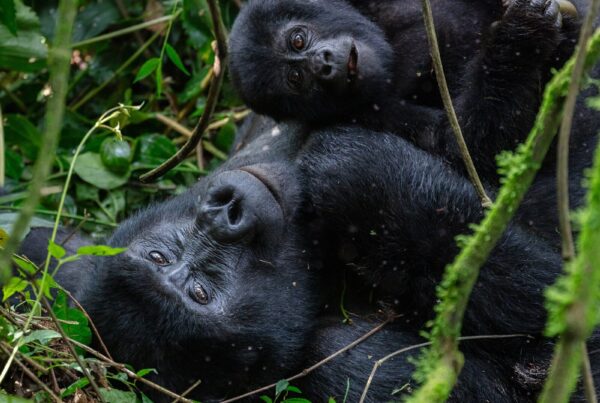
Guides and porters who work with disabled trekkers frequently describe these encounters as among the most rewarding of their careers. The ingenuity required to navigate challenging terrain, the teamwork among porters, and the visible emotional impact on trekkers create experiences that differ qualitatively from standard trekking. The gorillas themselves, of course, are indifferent to how you arrived. They meet your gaze regardless of whether you walked, were carried, or navigated by sound and touch.
Final Thoughts
Gorilla trekking is not universally accessible, and honesty about limitations is essential for both safety and satisfaction. Some disabilities genuinely preclude forest trekking, and no amount of accommodation can make Bwindi’s terrain navigable for everyone. But the circle of those who can participate is far wider than commonly assumed, and it expands each year as operators gain experience and UWA develops more inclusive policies.
If you have a disability and have assumed that gorilla trekking is beyond your reach, reconsider. Contact experienced operators, explain your situation honestly, and explore what is possible. The silverbacks of Bwindi do not discriminate. They welcome every human who reaches their forest with respect and wonder, regardless of how that human arrived or what assistance they required along the way.