TALK TO AN EXPERT +256 716 068 279 WHATSAPP OPEN NOW.
Wildlife Beyond Gorillas

De Brazza’s Monkey Uganda: The Rarest Primate You Can See

Home / Travel News, Stories & Tips / Tales from the Mist / De Brazza’s Monkey Uganda: The Rarest Primate You Can See

De Brazza’s monkey is one of the most strikingly beautiful primates in Africa and one of the most rarely seen on an ordinary Uganda safari itinerary. Its restricted habitat — swampy riverine forest and inundated forest along the DRC border — its cryptic behaviour, and its tendency to freeze and rely on camouflage rather than flee when threatened combine to make it genuinely difficult to encounter. But for those who seek it out in Semliki National Park or the forest swamps of western Uganda, the encounter delivers something extraordinary: a monkey so distinctive in appearance that it looks almost designed to be noticed, hidden in one of Africa’s most difficult habitats.

Physical Description

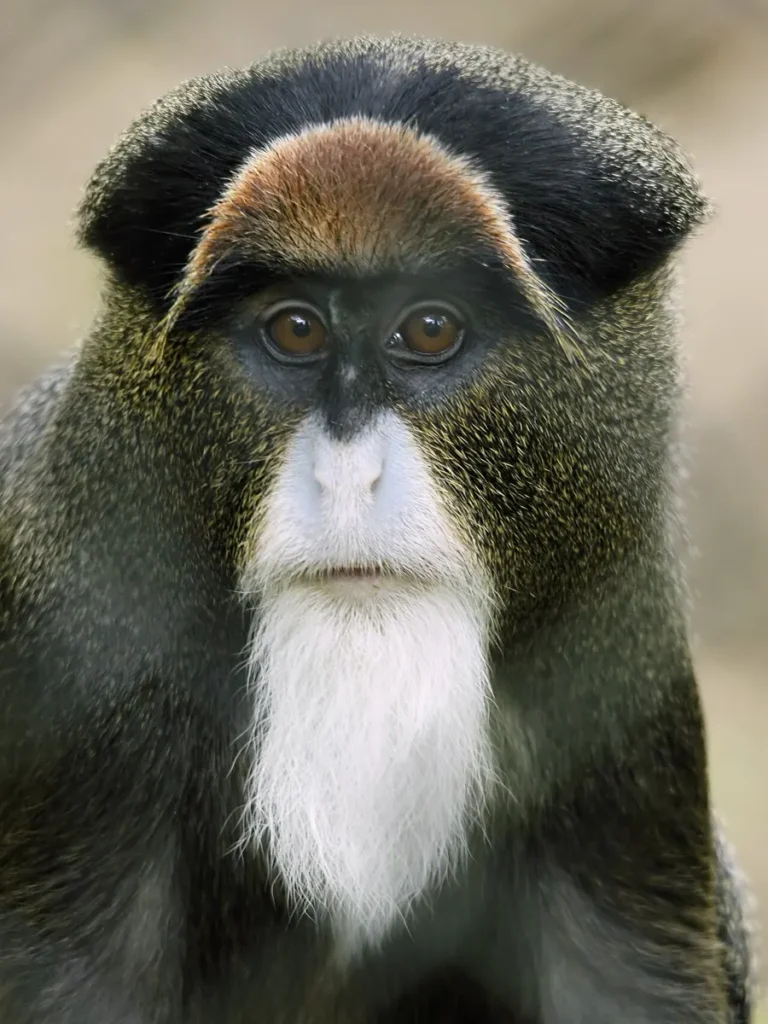
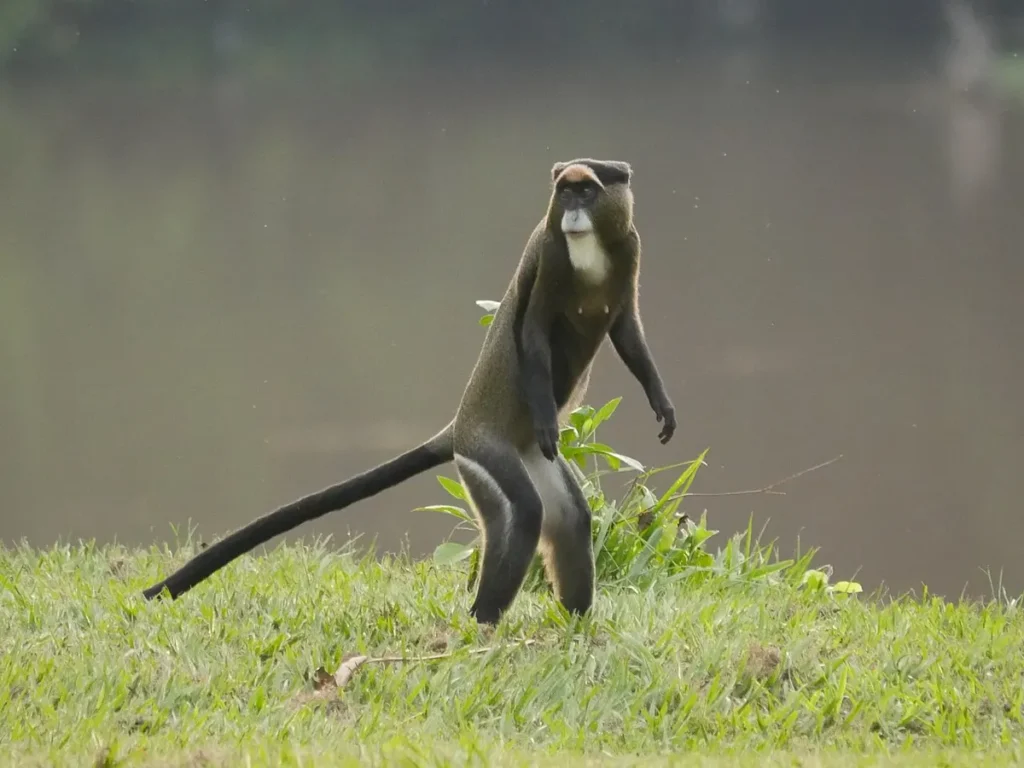
The De Brazza’s monkey (Cercopithecus neglectus) is a medium-large guenon weighing 4 to 8 kilograms. The face carries a combination of markings that make it one of the most distinctive of all African monkeys: a broad, rusty-orange brow band, a long white beard, and a white patch on the muzzle. The body is grey-olive above and white below, with a narrow white stripe on the thigh. The tail is long and dark. Adult males carry scent glands on the chest that they use to mark territory, and they have bright blue scrotal colouration similar to other guenons.

The combination of orange brow, white beard, and grey body makes De Brazza’s monkey unmistakable when seen — and apparently inconspicuous in the dappled light of dense riverine forest. The species is named after French explorer Pierre Savorgnan de Brazza, who documented it in the Congo basin in the 19th century.

Habitat and Cryptic Behaviour

De Brazza’s monkeys inhabit swampy, inundated riverine forest and dense gallery forest along permanent waterways. In Uganda, their range is restricted to the Semliki Valley and the forest systems along the Albertine Rift in the far west — Semliki National Park being the primary accessible site. They require forest with access to permanent water and show a strong preference for areas that most other mammals find difficult to move through.

Their primary defence strategy is concealment and freezing rather than flight. When a potential threat is detected, De Brazza’s monkeys freeze in position — sometimes for extended periods — relying on their cryptic colouration and the complexity of their forest habitat to avoid detection. This is in contrast to most guenons, which respond to threats with noisy alarm calls and rapid movement. The silence and stillness of De Brazza’s means they can be in an area for extended periods without any visible or auditory indication of their presence.

Social Structure

De Brazza’s monkeys are notable among guenons for their small group sizes — typically a single adult male, one to three females, and their offspring. This small, family unit structure is stable over long periods, with the adult male maintaining exclusive reproductive access within his territory. Groups are highly territorial and produce low-frequency calls used for territorial communication — calls that carry through dense riverine forest with greater efficiency than higher-frequency calls used by species in more open forest.

Seeing De Brazza’s Monkey in Uganda

Semliki National Park, in the far west of Uganda near the DRC border, is the most accessible site for De Brazza’s monkey encounters. The park’s forest along the Semliki River and its associated swamps provides ideal habitat. Guided walks with rangers who know the species’ behaviour and likely locations give the best chances. The search requires patience — De Brazza’s do not announce themselves. But finding one, that orange brow and white beard emerging from forest shadow — is one of the more remarkable primate encounters Uganda offers, combining genuine rarity with striking beauty in a habitat that is itself extraordinary.

Ready to experience Uganda’s mountain gorillas in 2026? Secure your gorilla permits early and let us craft a seamless safari tailored to your travel style, preferred trekking sector, and accommodation level. From luxury lodges to well-designed midrange journeys, every detail is handled for you. Every itinerary is carefully planned to maximize your time in the forest while ensuring comfort, safety, and unforgettable encounters.

Have questions about gorilla permits, travel dates, or the best itinerary for you? Speak with a safari expert and get clear, honest guidance to plan your trip with confidence.

When is the last time you had an adventure? African Gorillas!!! Up Close With Uganda’s Wild Gorillas Touched by a Wild Gorilla: An Unforgettable Encounter Inside Gorilla Families: Bonds, Hierarchies & Jungle Life Face to Face With a Silverback: The Wild Encounter You’ll Never Forget