TALK TO AN EXPERT +256 716 068 279 WHATSAPP OPEN NOW.
Wildlife Beyond Gorillas

Vervet Monkey Uganda: The Cheeky Campsite Visitor Facts

Home / Travel News, Stories & Tips / Tales from the Mist / Vervet Monkey Uganda: The Cheeky Campsite Visitor Facts

The vervet monkey is the most familiar primate on any Uganda savanna safari — ubiquitous, bold, intelligent, and entirely willing to exploit every opportunity that human presence provides. It has a reputation, not entirely undeserved, for being a nuisance: stealing food from campsite tables, raiding lodge kitchens, and approaching safari vehicles with the confidence of an animal that has learned exactly how patient humans are. But behind the opportunistic boldness lies one of the most scientifically significant primates in the world — a species whose alarm call system, social cognition, and stress physiology have contributed more to our understanding of primate behaviour and biology than almost any other species outside the great apes.

Physical Description

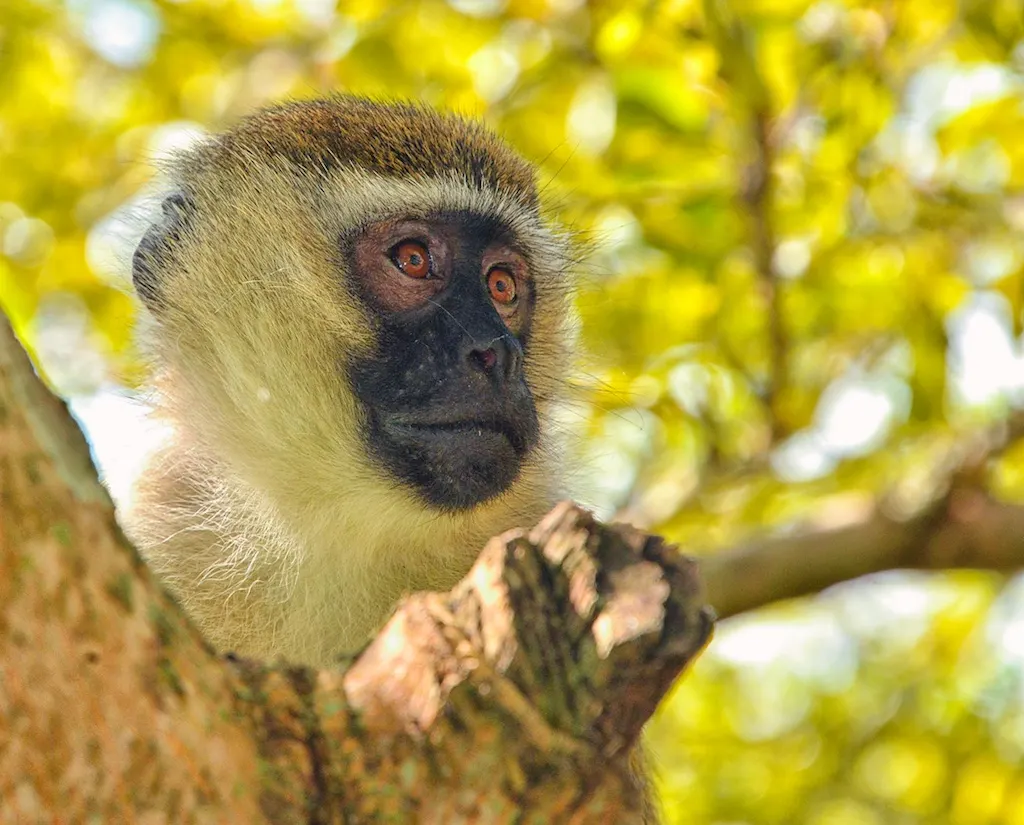
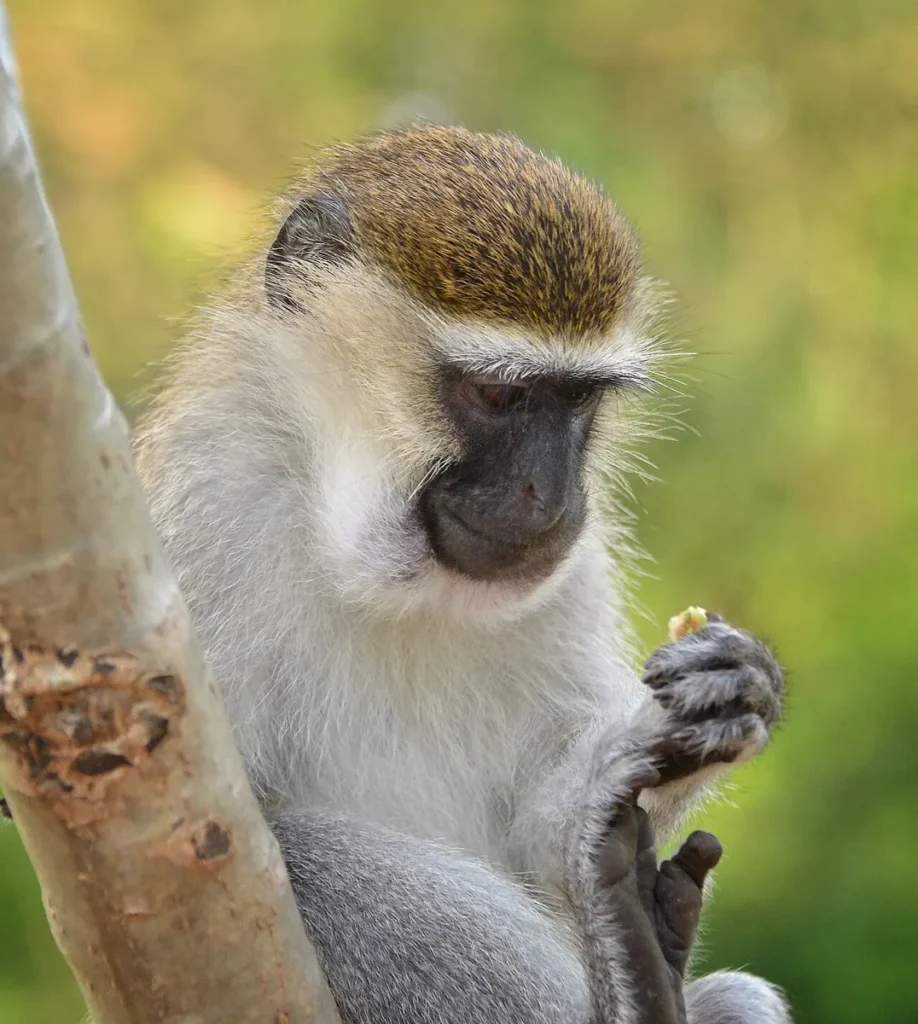
The vervet monkey (Chlorocebus pygerythrus) weighs 3.5 to 8 kilograms, with males larger than females. The coat is grey-green with a paler underside, a black face fringe, and white brow band. Males have bright blue scrotal colouration that serves as a visual status signal — more intensely coloured in dominant individuals — and red penile colouration. Infants are born black and transition to adult colouration over the first several months. The vervet’s appearance is familiar from countless documentaries and safari photographs, and it is one of Africa’s most immediately recognisable primates.

The Alarm Call System

The vervet monkey’s alarm call system is one of the most celebrated discoveries in animal behaviour research. Studies by Dorothy Cheney and Robert Seyfarth in the 1980s documented that vervets produce distinct alarm calls for different predator types: a specific call for aerial predators (eagles) causes the group to look up and move into dense cover; a different call for terrestrial predators (leopards and lions) causes the group to run into trees; a third call for snakes causes the group to look down and move away bipedally. Each call elicits the appropriate anti-predator response even when played back through a speaker in the absence of the predator — demonstrating that the calls carry semantic information about predator type rather than just general alarm level.

This finding — that a non-human species uses functionally referential calls that convey specific information about the external world — was a landmark in the study of animal cognition and communication. It shifted the debate about the uniqueness of human language and opened decades of research into meaning and reference in animal communication systems.

Social Intelligence and Stress Research

Robert Sapolsky’s long-term research on wild baboons — and comparative work with vervets — established that social rank, social bonds, and the quality of social relationships have profound effects on stress hormone levels, cardiovascular health, immune function, and lifespan in primates. Low-ranking animals, particularly in unstable dominance hierarchies, show chronic stress indicators that parallel those seen in lower socioeconomic status humans. The research has direct implications for understanding health disparities in human societies.

Vervet Behaviour at Uganda Lodges

Vervet monkeys are present in every Uganda savanna park and in most forest-edge habitats. At lodges and campsites, habituated individuals can be a nuisance if food is left unattended — they are quick, bold, and extremely difficult to deter once food-raiding behaviour has been established. Lodge staff at Queen Elizabeth, Lake Mburo, and Murchison Falls parks are experienced with vervet management, and visitors are routinely advised to keep doors and bags closed. Despite the occasional food theft, vervets are endlessly entertaining to observe: the social interactions, the alarm responses, the intelligence visible in their problem-solving behaviour. The vervet is the monkey that is everywhere in Uganda and never boring.

Ready to experience Uganda’s mountain gorillas in 2026? Secure your gorilla permits early and let us craft a seamless safari tailored to your travel style, preferred trekking sector, and accommodation level. From luxury lodges to well-designed midrange journeys, every detail is handled for you. Every itinerary is carefully planned to maximize your time in the forest while ensuring comfort, safety, and unforgettable encounters.

Have questions about gorilla permits, travel dates, or the best itinerary for you? Speak with a safari expert and get clear, honest guidance to plan your trip with confidence.

When is the last time you had an adventure? African Gorillas!!! Up Close With Uganda’s Wild Gorillas Touched by a Wild Gorilla: An Unforgettable Encounter Inside Gorilla Families: Bonds, Hierarchies & Jungle Life Face to Face With a Silverback: The Wild Encounter You’ll Never Forget