TALK TO AN EXPERT +256 716 068 279 WHATSAPP OPEN NOW.
Wildlife Beyond Gorillas

Potto Uganda: The Slow-Moving Nocturnal Primate Facts

Home / Travel News, Stories & Tips / Tales from the Mist / Potto Uganda: The Slow-Moving Nocturnal Primate Facts

The potto is one of Africa’s most unusual primates and one of the most rarely encountered. A nocturnal, slow-moving prosimian of dense forest canopy, the potto has evolved a lifestyle so radically different from the active, social primates most people associate with Africa that it barely registers on most safari itineraries. Yet it is present in Uganda’s forests, and for the determined wildlife observer willing to take night walks in forest habitats, it offers an encounter with a creature that seems to belong to a different epoch of primate evolution.

Physical Description

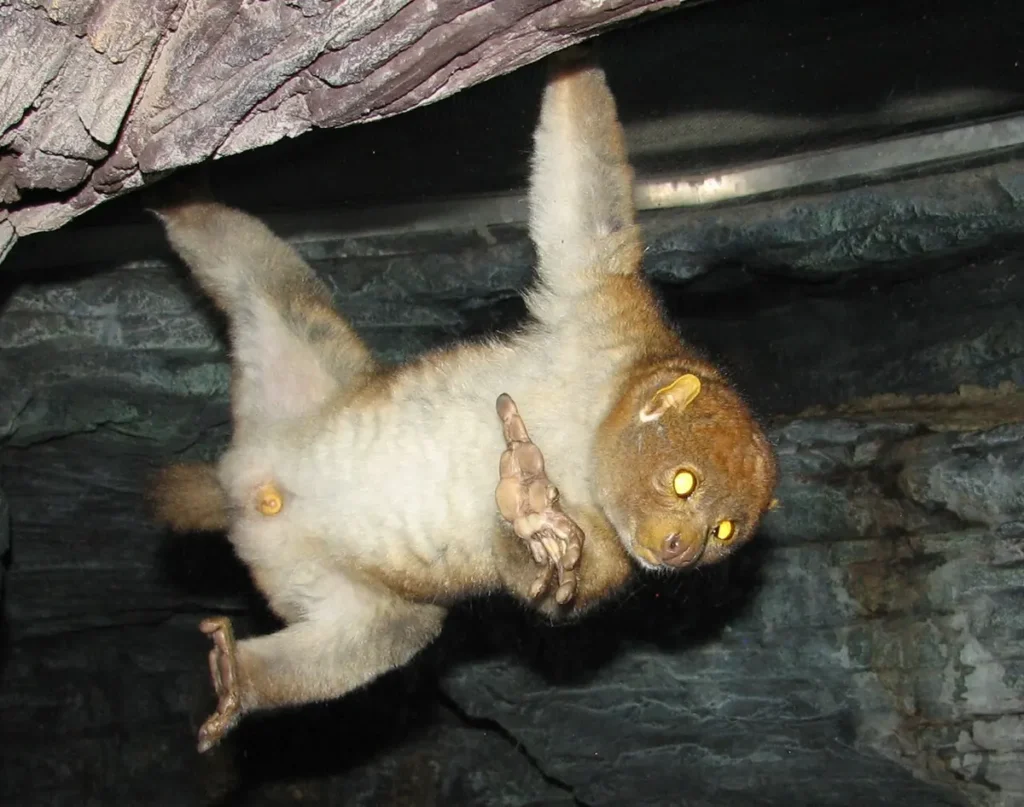
The potto (Perodicticus potto) is a stocky, bear-like prosimian weighing 600 grams to 1.6 kilograms. The coat is thick and woolly, varying from grey-brown to reddish-brown. The face is round and owl-like, with large eyes adapted for low-light vision. The most unusual physical feature is the scapular shield: a series of projecting cervical vertebrae in the neck and shoulder region that are covered by a thickened skin pad and used defensively — when threatened, the potto tucks its head down and presents this armoured region to the attacker. The shield can injure a predator’s mouth or paw effectively enough to deter further attack.

The potto’s grip is remarkable. Its hands are modified for a powerful, sustained grip — it can maintain a firm grip on a branch for extended periods without muscular fatigue, due to specialised locking tendons in the hand. This allows it to sleep and rest hanging from branches without the energy expenditure of active muscle engagement. The same grip strength makes it extremely difficult to remove from a branch when it does not wish to be handled.

Locomotion and Behaviour

The potto moves with deliberate slowness — a locomotion style called “slow arboreal quadrupedalism” that minimises noise, vibration, and visual detection. It moves one limb at a time, testing each grip before transferring weight. This extreme slowness, combined with its cryptic colouration and nocturnal habits, makes it effectively invisible in the forest canopy at night unless specifically sought with a spotlight. When a spotlight beam catches a potto, the large eye-shine reflection is distinctive — a pair of large orange-red eyes, motionless in the canopy, regarding the observer with apparent unconcern.

Pottos eat fruit, insects, small vertebrates, and plant exudates (gums and resins). They are solitary, with individuals maintaining overlapping home ranges and communicating primarily through scent marking. Contact between adults is limited primarily to mating encounters, though mother-offspring bonds persist for extended periods as the young potto rides on the mother’s back during foraging.

Prosimian Lineage

The potto belongs to the suborder Strepsirrhini — the “wet-nosed” primates that include lemurs, lorises, and galagos. These are the more ancient lineage of primates, representing the evolutionary baseline from which monkeys and apes diverged. The potto’s slow locomotion, nocturnal habits, and solitary lifestyle resemble the ancestral primate condition more closely than the active, social species that dominate Uganda’s forest daytime hours. Encountering a potto in the canopy at night is an encounter with primate history — a body plan and lifestyle that has persisted largely unchanged for tens of millions of years.

Seeing Pottos in Uganda

Pottos are present in Uganda’s forest habitats — Kibale, Bwindi, Budongo, and Mabira among others. They are exclusively nocturnal and require a spotlight for detection. Guided night walks in Kibale and Bwindi, conducted by rangers experienced in nocturnal wildlife, offer the best opportunities. The potto is typically encountered not by searching for movement but by scanning the canopy at close range with a powerful torch and watching for the distinctive large eye-shine. The encounter is brief — the potto’s response to light is usually to freeze or move slowly away rather than flee — but it produces a sighting of one of Africa’s most extraordinary and least-known primates.

Ready to experience Uganda’s mountain gorillas in 2026? Secure your gorilla permits early and let us craft a seamless safari tailored to your travel style, preferred trekking sector, and accommodation level. From luxury lodges to well-designed midrange journeys, every detail is handled for you. Every itinerary is carefully planned to maximize your time in the forest while ensuring comfort, safety, and unforgettable encounters.

Have questions about gorilla permits, travel dates, or the best itinerary for you? Speak with a safari expert and get clear, honest guidance to plan your trip with confidence.

When is the last time you had an adventure? African Gorillas!!! Up Close With Uganda’s Wild Gorillas Touched by a Wild Gorilla: An Unforgettable Encounter Inside Gorilla Families: Bonds, Hierarchies & Jungle Life Face to Face With a Silverback: The Wild Encounter You’ll Never Forget