

Updated
Golden monkey tracking in Mgahinga Gorilla National Park is a shorter, easier primate walk than gorilla trekking: you climb into the bamboo forest on the Virunga volcanoes with a ranger, find a habituated troop and spend an hour watching dozens of bright orange-and-black monkeys feed and leap through the bamboo. The permit is far cheaper than a gorilla permit — about US$60 for tracking plus park entry for foreign visitors — and it pairs perfectly with a gorilla trek in Mgahinga or southern Bwindi.
Golden monkeys live only in the Virunga volcanoes and a few nearby forests, and Mgahinga is Uganda’s place to see them. Here is what to expect and how to plan it.
Golden monkey tracking at a glance
| Details | |
|---|---|
| Where | Mgahinga Gorilla National Park, from Ntebeko near Kisoro |
| Permit (foreign non-residents) | About US$60 for tracking, plus park entry; around US$140 for the habituation experience |
| Walk | Usually 1–3 hours in total, at around 2,500 m and higher |
| Time with the monkeys | 1 hour (up to 4 hours on the habituation experience) |
| Minimum age | Reported as 15 by most sources, 12 by some; check when booking |
| Also in | Rwanda’s Volcanoes National Park |
What golden monkeys are
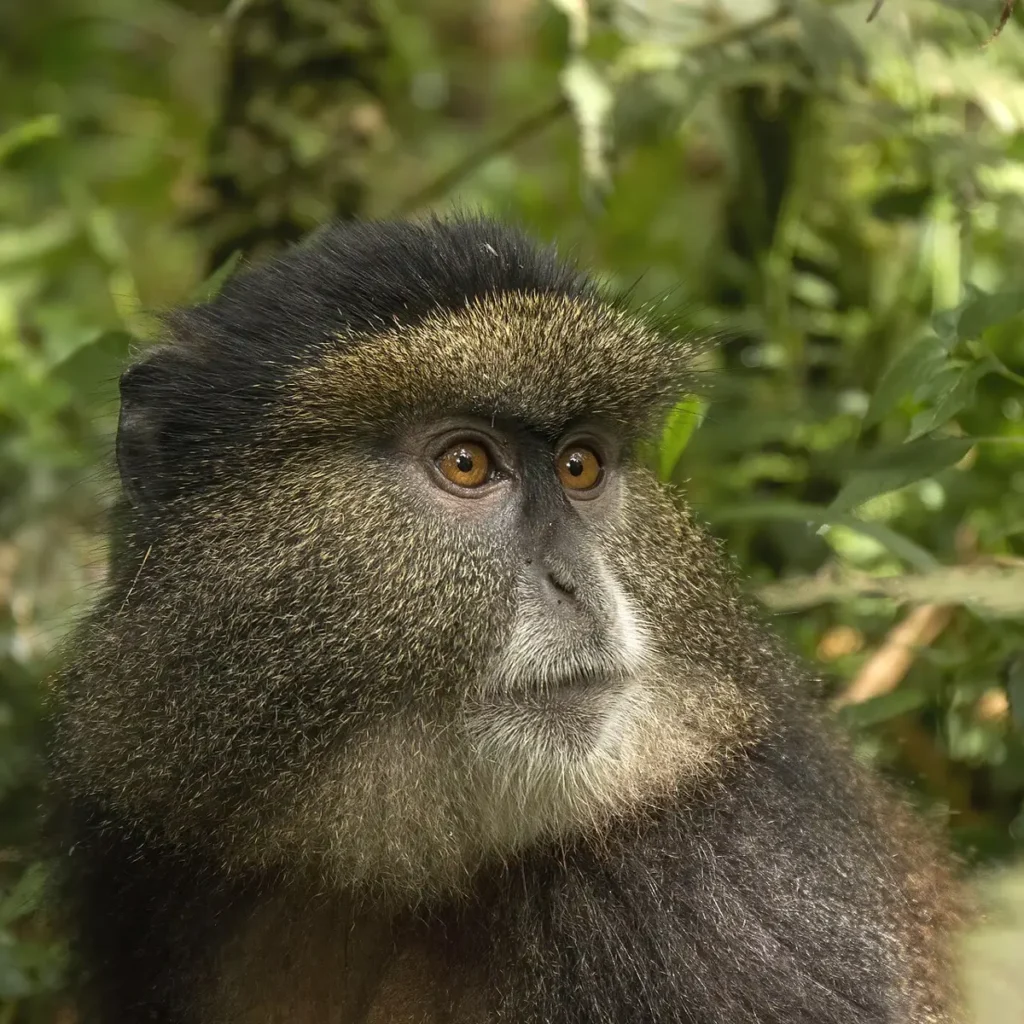
The golden monkey is a striking subspecies of the blue monkey, with a black face, a golden-orange back and flanks and a long dark tail. It is found only in the Albertine Rift highlands, mainly in the bamboo forests of the Virunga volcanoes shared by Uganda, Rwanda and Congo.
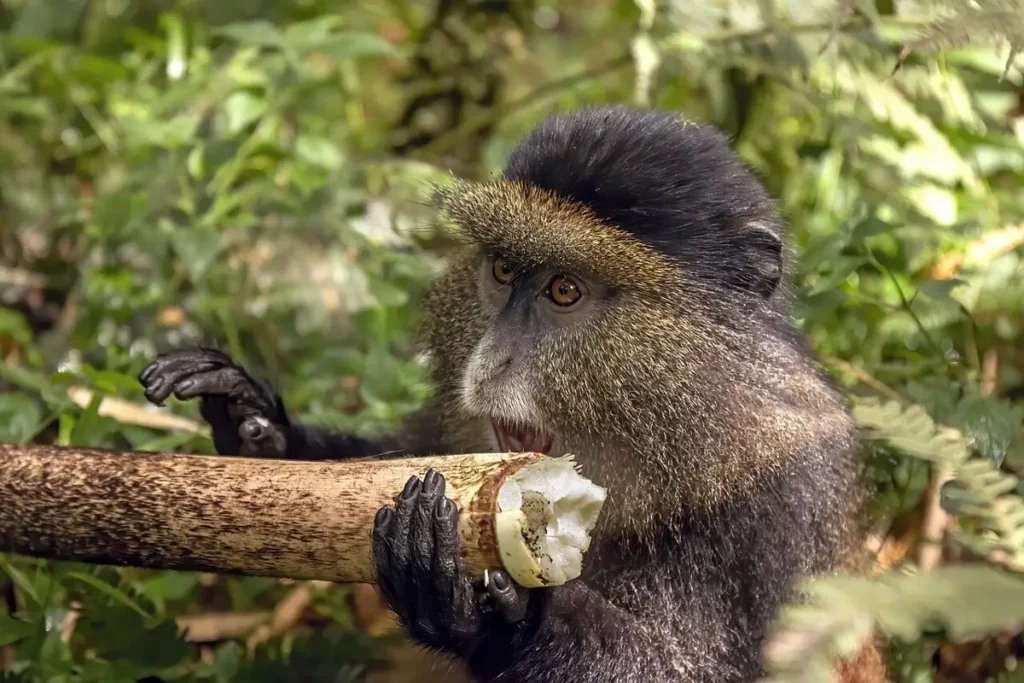
Bamboo shoots and leaves are its main food, along with fruit, flowers and insects, so its survival depends on the bamboo zone, which has shrunk as farms have spread up the mountainsides. It is listed as Endangered, which is one reason the habituated troops are carefully protected.
What the trek is like
Treks start from Ntebeko, Mgahinga’s park headquarters, about 30 minutes from Kisoro. After a briefing, you climb through farmland and old lava slopes into the bamboo, usually reaching the troop within an hour or two. The walking is gentler than most gorilla treks, though the altitude makes you breathe harder. Golden monkeys are fast, curious and constantly moving, so you watch them leap between bamboo stems, feed in pairs and chase each other, often only a few metres away.
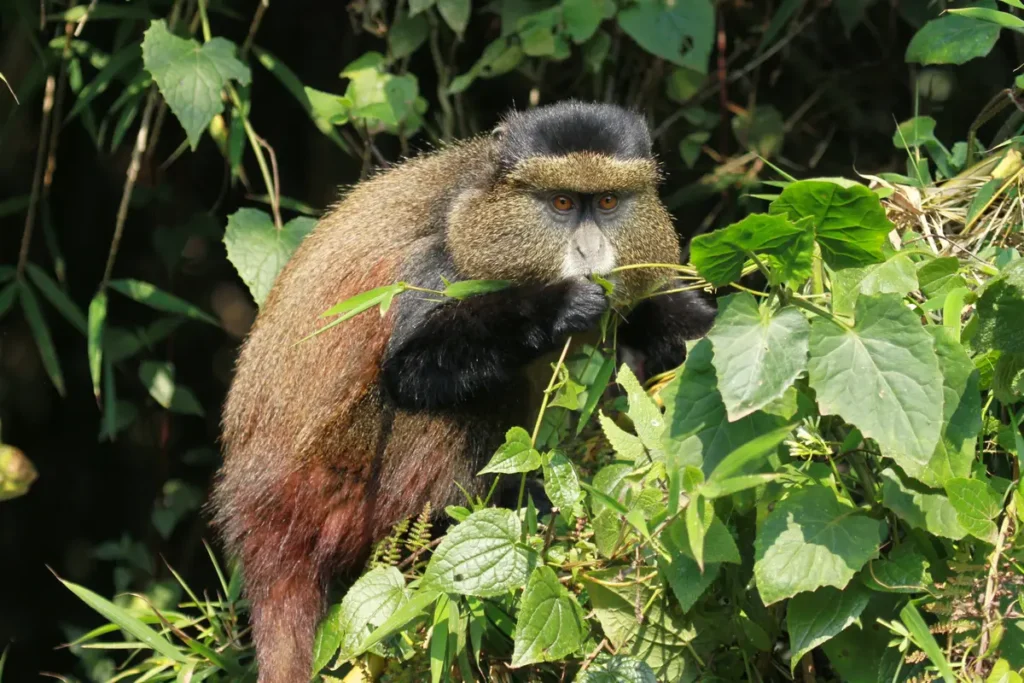
Photography is a fun challenge: the monkeys rarely stay still, and the bamboo filters the light. A fast shutter speed helps. As with gorillas, keep your distance, speak quietly and do not use flash. See photography spots in Uganda.
Golden monkey habituation experience
For a longer visit, the golden monkey habituation experience lets you spend up to four hours with researchers following a troop that is still being habituated. It suits photographers and anyone who wants more time to watch behaviour. It costs more than standard tracking, has limited places and is worth booking in advance.
Combining golden monkeys with gorillas
Golden monkey tracking fits easily into a southern gorilla trip. Mgahinga is about 30 minutes from Kisoro, 1.5–2 hours from Rushaga and 3–4 hours by road from Kigali, so many visitors trek gorillas in Rushaga, Nkuringo or Mgahinga and track golden monkeys on the next day.
It is also a good option on a rest day or for a family member who prefers a shorter walk. Mgahinga’s own gorilla family, Nyakagezi, and the volcano hikes on Muhavura, Gahinga and Sabyinyo add even more. See Mgahinga Gorilla National Park, Kigali to Bwindi and Mgahinga by road and activities near Bwindi.
When to go
Golden monkey tracking runs all year. Bamboo shoots appear during the rainy seasons, when the monkeys feed actively in the lower bamboo, while the drier months of June–September and December–February bring firmer paths. Mgahinga is cool at any time of year, so bring a warm layer and rain jacket. For packing, see our gorilla trekking packing list.
Frequently asked questions
Yes, especially if you are already in southern Uganda. It is lively, colourful and affordable, and a good contrast to the calm gorilla encounter.
No. Golden monkeys live in the Virunga bamboo forests, so in Uganda you track them in Mgahinga, not Bwindi.
Usually easier and shorter, though Mgahinga’s altitude makes you breathe harder on the climb.
Not comfortably. Plan them on separate days; both start in the morning and the walks can take several hours.










