Uganda is one of Africa’s most important coffee-producing nations and in 2027 it is the continent’s second-largest coffee exporter, a position built on a crop that is native to Uganda rather than introduced: Coffea canephora — Robusta coffee — grows wild on the shores and islands of Lake Victoria and has been part of the Buganda Kingdom’s culture long before European colonialism, used as a stimulant and chewed as beans rather than brewed, with the first export trade beginning in the late 19th century under British administration and the sector growing to produce both volume Robusta and increasingly valued specialty Arabica from the highland regions of Mt Elgon, the Rwenzori Mountains, and the Kigezi Highlands. Coffee connects Uganda’s culture to its Uganda safari experience; great coffee is found near Bwindi gorilla trekking areas.
- Main varieties: Robusta (Coffea canephora, ~80% of production, lowland Lake Victoria basin); Arabica (Coffea arabica, ~20%, highland regions)
- Main Arabica regions: Mt Elgon (Sipi Falls area, Bugisu cooperatives), Rwenzori Mountains (Fort Portal area), Kigezi (Kabale area near Bwindi)
- Export position: second-largest African coffee exporter after Ethiopia; the Uganda Coffee Development Authority (UCDA) regulates the sector
- Specialty scene: Endiro Coffee (Kampala), 1000 Cups Coffee (Kampala), and lodge-based specialty coffee near national parks
Uganda is one of Africa’s most important coffee-producing nations and in 2027 it is the continent’s second-largest coffee exporter. The country grows both Robusta and Arabica varieties, with Robusta dominating in the lowlands and Arabica thriving at higher altitudes near the Rwenzori Mountains and in the Elgon region. For visitors to Uganda, coffee is not just a drink — it is a window into the country’s agricultural economy, its cultural practices, and its growing specialty coffee scene. This guide covers Uganda’s coffee story and how to experience it.
Uganda’s Coffee History
Coffee has grown wild in Uganda for centuries — Robusta coffee is native to the Lake Victoria basin region and was consumed by local communities long before commercial cultivation began. Colonial-era British administrators recognized the commercial potential and encouraged plantation cultivation in the early 20th century. By independence in 1962 coffee was already Uganda’s primary export crop. The political instability of the Amin years (1971 to 1979) devastated the coffee industry but the crop recovered strongly after 1986 under President Museveni’s National Resistance Movement government. By 2027 Uganda exports over 6 million 60-kilogram bags of coffee annually, making it Africa’s second-largest producer after Ethiopia.
Robusta vs Arabica in Uganda
Robusta
Approximately 80 percent of Uganda’s coffee output is Robusta (Coffea canephora), grown primarily in the lowlands around Lake Victoria — the districts of Kampala, Mukono, Masaka, and Rakai. Uganda’s Robusta is considered among the world’s finest, with more complexity and a lower caffeine bitterness than Vietnamese or Indonesian Robusta. Specialty coffee roasters in Europe and North America increasingly specify Ugandan Robusta as a component in premium espresso blends. The native origin of Robusta in the Lake Victoria basin means Uganda has wild coffee diversity that is unique globally — ancient wild varieties grow in the forests around the lake.
Arabica
Uganda’s Arabica (Coffea arabica) grows at elevations above 1,500 meters — primarily on the slopes of the Rwenzori Mountains near Fort Portal and on the slopes of Mount Elgon in eastern Uganda. Both regions produce high-quality washed and natural-processed Arabica that scores well in specialty coffee evaluations. Mount Elgon coffee is known for its clean, bright acidity and floral aromatics. Rwenzori coffee has a fuller body and a mild, well-balanced character. Both are increasingly available from specialty coffee importers in Europe and North America.
Traditional Coffee Ceremony
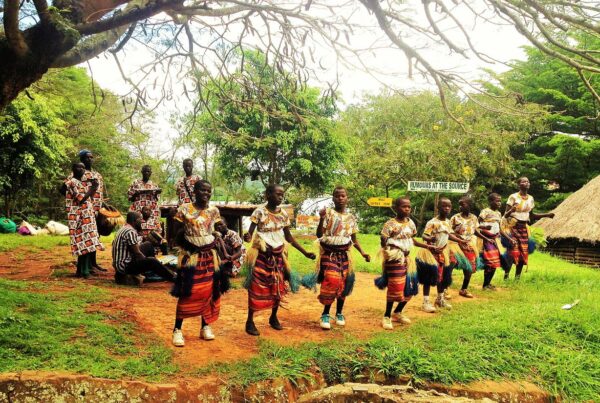
Among the Baganda people of central Uganda, roasted coffee beans have been used for centuries as part of formal greeting ceremonies and celebrations. Guests were welcomed with roasted coffee beans to chew — a practice called “emmwanyi” in Luganda. This tradition predates the brewing of coffee as a beverage in Uganda and reflects the deep cultural integration of the coffee plant into Ugandan social life. Some cultural tour operators in the Kampala region offer experiences that include the traditional coffee ceremony as part of a broader Buganda cultural tour.
The Specialty Coffee Scene in Kampala
Kampala has developed a small but genuine specialty coffee culture in 2027. Cafes including Endiro Coffee (which supports Ugandan coffee farmers through its sourcing model), 1000 Cups Coffee House, and several independent roasters serve Uganda’s own coffee with the care it deserves. Visiting one of these cafes in Kampala before heading to Bwindi gives you an introduction to Uganda’s coffee quality before experiencing the landscape where it grows. Ask for a pour-over of Ugandan single-origin and taste what the country’s highlands produce at their best.
Coffee Experiences Near Bwindi
The Rwenzori Mountains near Fort Portal are the closest coffee-growing region to the Bwindi gorilla circuit. Several lodges and tour operators in the Fort Portal area offer half-day or full-day coffee farm tours where you walk through the Arabica bushes, watch processing at a washing station, and roast and brew beans traditionally. This is one of the most immersive agricultural experiences available on a Uganda safari itinerary and connects visitors directly to one of the country’s most important crops.
Uganda’s coffee in 2027 deserves more attention from international visitors than it typically receives. It is grown on the slopes of some of the most beautiful landscapes in Africa, processed with increasing care and skill, and exported to specialty markets that recognize its quality. Drinking Ugandan coffee in Uganda — from a small farm in the Rwenzori foothills or a specialty cafe in Kampala — is one of the country’s authentic pleasures and a connection to an agricultural heritage that goes back centuries.
What makes Uganda Robusta coffee distinctive from other Robusta origins?
Uganda Robusta is widely considered the highest quality Robusta in the world by specialty coffee buyers and roasters who work with this species — a claim that requires explanation since Robusta is typically associated with lower-quality commodity coffee and espresso blending. The native advantage: Coffea canephora is native to the Lake Victoria basin; the biodiversity of wild Robusta varieties in Uganda is the highest in the world; this genetic diversity means Uganda produces Robusta with more complex flavour characteristics than the clonal monocultures of Vietnam (the world’s largest Robusta producer). Growing altitude: Uganda Robusta is grown at 1,000-1,500 metres in the Lake Victoria basin — higher than most other Robusta origins; altitude slows ripening and develops more complex sugars in the cherry. Washed processing: some Uganda Robusta is wet-processed (washed) rather than the dry (natural) processing typical of Vietnamese Robusta; washed Robusta has a cleaner, less harsh profile. The flavour: the best Uganda Robusta has dark chocolate, tobacco, and earthy notes with a rounded body and moderate bitterness — very different from the flat, harsh character of mass-market Robusta. The specialty use: European specialty roasters and baristas in the fine Robusta movement are increasingly sourcing Uganda Robusta as a single-origin espresso rather than a blending component.
What Uganda Arabica coffee regions produce the best specialty coffee?
Uganda’s Arabica coffee is produced in three main highland regions each with distinct environmental characteristics that shape the flavour profile. Mt Elgon (Bugisu region): the slopes of Mt Elgon on the Ugandan-Kenyan border; grown at 1,500-2,200 metres; the Bugisu Cooperative Union (BCU) has organised Arabica production here since 1954 — one of Uganda’s oldest coffee institutions; Sipi Falls, a tourist attraction on the Mt Elgon slopes, is surrounded by coffee farms and several lodges there offer coffee farm tours; Mt Elgon Arabica has bright acidity, citrus and blackcurrant notes. Rwenzori Mountains: the slopes of the Rwenzori above Fort Portal; grown at 1,500-2,100 metres; the Rwenzori Arabica is characterised by floral and stone fruit notes with a medium body. Kigezi (Kabale/Kisoro): the highlands surrounding Kabale and Kisoro, adjacent to Bwindi and Mgahinga; some of Uganda’s highest-altitude Arabica; the Kigezi Arabica benefits from the cool climate and volcanic soil of the Virunga foothills; visitors to Bwindi can visit coffee farms in this area as a community tourism activity.
Where can visitors experience specialty Uganda coffee in Kampala?
Kampala has developed a genuine specialty coffee scene over the last decade with cafes serving Uganda-sourced single-origin coffee prepared to international specialty standards. Endiro Coffee: Kampala’s most established specialty coffee chain; multiple locations including Ntinda, Bugolobi, and the Forest Mall; serves Uganda single-origin espresso and filter coffee; also operates a coffee education and sourcing program; the name “endiro” means “morning star” in Acholi. 1000 Cups Coffee: a Kampala specialty roaster and cafe focusing on Uganda and East African single origins; good place to try Uganda Robusta as a single-origin espresso alongside Uganda Arabica. Cafe Javas: Kampala’s most widely available cafe chain; more middle-market than specialty; reliable quality and air-conditioned comfort; present in most major Kampala malls. Hotel specialty coffee: the Serena Kampala, Sheraton Kampala, and several boutique hotels in Kololo and Nakasero serve high-quality coffee; Kololo is Kampala’s upscale residential area with the highest density of specialty cafes. Airport purchases: Entebbe International Airport has specialty Uganda coffee available for purchase at departure; roasted whole beans from Mt Elgon and Rwenzori are a meaningful souvenir.
How does coffee feature in Uganda’s cultural and historical identity?
Coffee’s cultural role in Uganda predates the export trade and commercial cultivation by many generations. The Buganda Kingdom and Robusta: Robusta coffee grows wild in the Lake Victoria basin; the Baganda used coffee beans before European contact — not as a brewed drink but as a stimulant chewed raw or mixed with other substances; the Buganda word for coffee (kahawa) is shared with Swahili and reflects the pre-colonial knowledge of the plant. Colonial export: coffee cultivation was organised and expanded under British administration; by the 1920s Uganda was exporting significant volumes of Robusta to European markets. Idi Amin and the coffee collapse: during the Amin period (1971-1979), Uganda was the world’s largest Robusta exporter; the political and economic collapse of the late Amin years devastated the sector; the coffee industry has been gradually rebuilding since the 1990s. The modern revival: Uganda is now the second-largest African coffee exporter and the government has targets to significantly increase production volume and specialty value by 2030.
Can visitors tour coffee farms in Uganda during a safari or gorilla trek?
Coffee farm visits are a genuine and accessible add-on to Uganda itineraries with farms available near several national park areas. Sipi Falls (Mt Elgon): Sipi Falls is a popular stopover on the eastern Uganda circuit and is surrounded by Arabica coffee farms; several Sipi-based operators offer guided coffee farm walks that cover harvesting, pulping, fermenting, and drying; this is one of Uganda’s best coffee tourism experiences. Bwindi/Kigezi area: community tourism programs near Bwindi sometimes include coffee farm visits as part of a half-day community experience; the Kigezi Arabica growing areas are accessible from Kabale or from Bwindi sector lodges. Rwenzori area (Fort Portal): the Fort Portal and Kibale area has coffee farms in the foothills of the Rwenzori; some lodges near Kibale National Park arrange visits as a cultural activity. What to expect: a coffee farm visit typically covers one hour of walking through the farm with a guide, seeing the coffee trees at various stages, and usually includes a tasting of locally processed coffee; the harvest season (October-January for Arabica) provides the fullest experience.
- Ugandan coffee: a world-class origin and how to drink it in the country
- Uganda’s coffee story: from Robusta on Lake Victoria’s shores to specialty arabica
- Wild coffee in Uganda: Coffea canephora and the forest origins of Robusta
- The Only Spanish-Speaking Country in Africa
- Kampala to Kabale: All Ways to Travel to Gorilla Country
- Addis Ababa to Kampala: Ethiopian Route to Gorilla Country
- Uganda vs Kenya Safari: Which Country Is Better for Wildlife in 2026?
- Kisoro Town Uganda: Gateway to Gorilla Country
- How to Get to Bwindi: Kampala and Entebbe to Gorilla Country
- The Biology Reason Why Gorilla Country Is the Safest Place in Uganda Right Now