Uganda is Africa’s largest exporter of Robusta coffee and one of the continent’s most significant Arabica producers. Coffee is woven into the country’s economic and social fabric—it is grown by approximately 1.7 million smallholder farming families, generates the largest share of Uganda’s agricultural export earnings, and has a cultural presence in the country’s daily life that goes far beyond the cup. Understanding Uganda’s coffee story—its wild origins, its colonial history, its contemporary specialty renaissance, and its connection to the landscape you are travelling through—enriches the experience of every cup you drink on your way to and from Bwindi.
Robusta: the wild origin
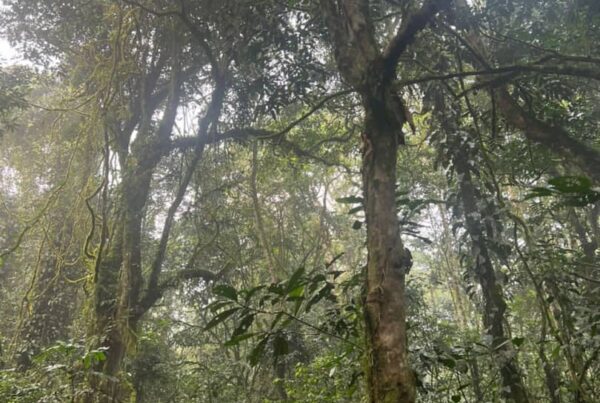
Uganda is the natural home of Coffea canephora—the Robusta species—which grows wild in the forests around Lake Victoria and the shores of Lake Albert, where it was used by local communities long before the colonial period. Robusta coffee has double the caffeine content of Arabica, a stronger and more bitter flavour profile, and significantly higher disease resistance—it tolerates the lower elevations, higher temperatures, and wet conditions of the Lake Victoria basin that would devastate Arabica plants. For most of the twentieth century, Ugandan Robusta was grown as a commodity crop—sold green, blended into commercial espresso and instant coffee formulations where its high caffeine and crema-producing properties added value without requiring the flavour nuance that specialty markets demand. The vast majority of Uganda’s export volume is still Robusta.
Arabica in the highlands
Coffea arabica was introduced to Uganda by colonial-era missionaries and agricultural officials who recognised that the country’s highland zones—particularly Mount Elgon in the east and the Rwenzori mountains in the west—offered the altitude (1,500–2,000 metres), temperature range, and rainfall patterns that Arabica requires. Mount Elgon Arabica has been grown in the slopes surrounding the mountain’s caldera for over a century, and the region now produces coffees with a distinctive floral, citrus-forward character that has attracted significant specialty buyer attention. Rwenzori highlands Arabica—grown on the slopes of Africa’s third-highest peak, often under shade trees in a forest-adjacent cultivation system that benefits both coffee quality and biodiversity—is among the most interesting Uganda specialty origin stories currently emerging in international specialty markets.
The specialty coffee revolution in Uganda
Uganda’s specialty coffee industry is young but growing rapidly. A combination of improved agronomic training for smallholder farmers, investment in wet milling infrastructure (which allows producers to process coffee as washed rather than natural-dried, producing cleaner flavour profiles), and the emergence of domestic specialty roasters and cafes has shifted the perception of Ugandan coffee from commodity origin to specialty origin. Kampala now has a genuine specialty coffee culture—cafes like Cafe Pap, Good African Coffee, and Endiro Coffee roast and serve single-origin Ugandan beans to a growing urban consumer base, while simultaneously exporting to international buyers. The Cup of Excellence competition, which judges green coffee at origin in annual competitions across producing countries, has not yet established an annual Uganda competition but the country’s specialty segment is developing the quality and traceability infrastructure that would make this possible.
Coffee and the journey to Bwindi
The road from Kampala to Bwindi passes through some of Uganda’s Robusta-growing heartland—the gently rolling hills south of Kampala where smallholder gardens of coffee bushes mix with banana, sweet potato, and cassava in the characteristic intercropping patterns of Uganda’s subsistence-plus-cash-crop agriculture. The coffee bushes are distinctive: dark glossy leaves, small white flowers in season, and the bright red or yellow of ripe cherries in harvest months (October–February for much of the Lake Victoria basin). Roadside communities sell green coffee in small sacks at market stalls. On an overland drive, the transition from the coffee-growing lowlands into the tea estates of the Ankole highlands—where flat-topped tea bushes replace the rounded coffee plants—is one of the visual markers of altitude change. Understanding what those crops are transforms a drive through agricultural landscape from a featureless interval between destinations into a readable story of Uganda’s rural economy.
Good African Coffee: a social enterprise model
Good African Coffee, founded by Andrew Rugasira in 2003, was one of the first Ugandan coffee businesses to develop a vertically integrated model—buying from smallholder farmers, processing, roasting, packaging, and selling directly to international retail markets under a Ugandan brand rather than selling green commodity beans to intermediary exporters. The model attracted significant international attention as a demonstration that African coffee could be branded, differentiated, and sold at premium retail prices in Western markets with more of the value captured in the country of origin rather than in the roasting and retail countries. Good African Coffee’s beans are now sold in major UK supermarkets and are available in specialty coffee shops internationally, and the model has influenced subsequent generations of Uganda coffee entrepreneurs who have sought to capture more of the value chain domestically.
Coffee at the lodge: what you are drinking
Most lodges near Bwindi serve Ugandan coffee—either a commercial Robusta blend or, at the better lodges, a sourced specialty Arabica from a named origin. It is worth asking what you are drinking. If the lodge serves a specific Uganda origin—Mount Elgon, Rwenzori, Sipi Falls—there is usually a story behind the sourcing relationship that connects the cup to a specific farming community. Some lodges have established direct relationships with nearby coffee cooperatives, and a portion of their coffee purchase goes directly to farmers who may live in the buffer zone communities around the park. The cup of coffee on your lodge veranda, tasting of fruit or chocolate or flowers depending on the variety and processing method, is in these cases a small piece of the same conservation-through-community-benefit logic that underlies the gorilla permit model. Coffee and gorillas, in Uganda, are not separate stories.
Buying Ugandan coffee to take home
Ugandan coffee is one of the most rewarding and packable souvenirs from a Bwindi trip. Specialty roasted beans in vacuum-sealed 250g bags—from Endiro Coffee, Good African Coffee, Kyagalanyi Coffee, or smaller artisan roasters—are available in Kampala’s specialty coffee shops and at the Entebbe airport retail section. They travel well, last two to four weeks at peak freshness after roasting, and provide a direct sensory connection to the landscape and the people you encountered. If you want green beans for home roasting—possible if you have a home drum or air roaster—some specialty suppliers in Kampala can source and package green Ugandan Arabica to order. Arriving home and roasting coffee from the origin you just visited is a form of memory-keeping that the palate does more vividly than almost any photograph.
- The Ugandan Coffee That Competes With Ethiopian: The Specialty Story
- The Nile Begins in Uganda: The Story of Lake Victoria’s Great River
- Uganda’s Crater Lakes: Volcanic History and Stunning Landscapes
- Uganda Coffee Guide: How Robusta Became the Country’s Pride
- Wild coffee in Uganda: Coffea canephora and the forest origins of Robusta
- Lake Bunyonyi vs Lake Kivu: The Ultimate African Summer Beach Escape
- The Kabaka’s Lake
- Lake Victoria Fishing Trip
- The 10 Largest Lakes in the World
- Uganda Gorilla Trekking Near Lake Bunyonyi: Lodges and Day Trips