The Bafumbira are one of Uganda’s smaller but culturally significant ethnic groups, living in Kisoro District in the extreme southwestern corner of the country where Uganda, Rwanda, and the Democratic Republic of Congo converge — they are the Ugandan branch of the Banyarwanda people, speak Kinyarwanda as their first language, share the cultural and historical identity of Rwanda’s Hutu and Tutsi communities, and live in the shadow of the Virunga volcanoes in one of the most scenically dramatic and ecologically important landscapes in Africa — the same landscape that shelters the mountain gorillas of Mgahinga Gorilla National Park and the wider Virunga Massif. The Bafumbira community context enriches Uganda safari visits to Mgahinga and Bwindi.
- Location: Kisoro District, southwestern Uganda; Kisoro town is the district capital
- Language: Kinyarwanda (also called Rufumbira in the Ugandan context); also speak Ugandan English and Swahili
- Ethnic identity: Ugandan branch of the Banyarwanda; closely related to Rwandan Hutu and Tutsi communities across the border
- National park proximity: Kisoro is the gateway town for Mgahinga Gorilla National Park (15km) and southern Bwindi (50km)
The Bafumbira are one of Uganda’s smaller but culturally significant ethnic groups, living in Kisoro District in the extreme southwestern corner of the country where Uganda, Rwanda, and the Democratic Republic of Congo converge. They are the Ugandan branch of the Banyarwanda people — sharing language, culture, and ancestry with Rwandans across the border. Their homeland sits directly beside Mgahinga Gorilla National Park and within reach of Bwindi Impenetrable Forest, making the Bafumbira among the communities most directly connected to Uganda’s gorilla trekking economy in 2027.
Who are the Bafumbira?
The name Bafumbira refers to the people of Bufumbira — the sub-region of Kisoro District that forms Uganda’s share of the Virunga volcanic highlands. They speak Kinyarwanda, which is mutually intelligible with Kirundi (spoken in Burundi) and closely related to other Great Lakes Bantu languages. Their culture, social organization, and spiritual practices closely mirror those of Rwanda, reflecting the fact that the colonial boundary between Uganda and Rwanda was drawn through an existing cultural zone rather than between different peoples.
The Bafumbira include three social strata inherited from pre-colonial Rwanda: the Batutsi (traditionally cattle herders), the Bahutu (traditionally farmers), and the Batwa (traditionally forest hunter-gatherers). The rigid social hierarchy that characterized pre-genocide Rwanda was never as entrenched in Bufumbira, and today these distinctions are culturally acknowledged but not socially enforced in the way they once were.
The Virunga landscape: home between volcanoes
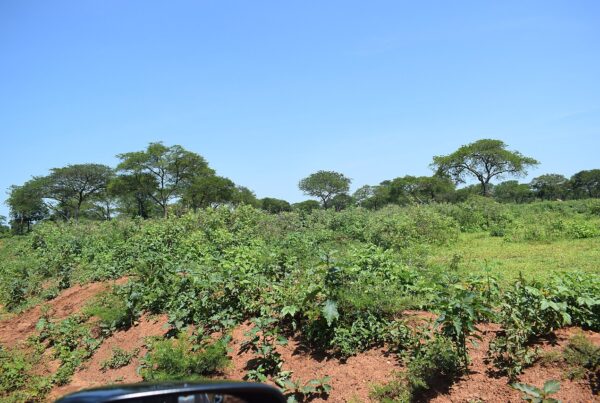
The Bafumbira homeland is extraordinarily dramatic. Eight volcanoes of the Virunga chain rise across the borders of Uganda, Rwanda, and DRC. Three of them — Muhavura, Gahinga, and Sabinyo — fall within Uganda’s Mgahinga Gorilla National Park. The volcanic soils of Kisoro are among the most fertile in East Africa, supporting dense agricultural populations on terraced hillsides that rise above 2,000 meters.
The landscape is visually stunning. Lush green terraces climb toward forested volcano slopes, patches of mist drift through the valleys, and the peaks of Muhavura and Gahinga are visible on clear mornings from Kisoro town. This scenery, combined with the area’s gorilla and golden monkey populations, makes Kisoro one of Uganda’s most compelling destinations for visitors seeking both nature and culture.
Bafumbira farming and food culture
Like most Great Lakes Bantu peoples, the Bafumbira are skilled farmers. The staple crops are beans, sorghum, sweet potatoes, and Irish potatoes — the last introduced during the colonial period and now deeply integrated into local cuisine. Banana cultivation is also important, both for food (plantain) and for brewing banana beer known as urwagwa (similar to Ugandan tonto).
Traditional Bafumbira meals are hearty and warming, suited to the cool highland climate. Ugali (stiff maize or sorghum porridge), beans, and roasted potatoes form the daily diet. Special occasions call for roasted goat, chicken stews, and the communal brewing and drinking of banana beer, which accompanies celebrations, funerals, and important meetings.
Imigongo art: the geometric tradition
One of the most distinctive cultural exports of the Bafumbira and their Rwandan relatives is imigongo art — a form of geometric painting created using cow dung mixed with natural pigments. The resulting patterns are bold black-and-white spirals, zigzags, and concentric designs with strong visual impact. Imigongo originated in Rwanda but is practiced by communities in Kisoro and serves as an important income source for women artists selling to tourists visiting Mgahinga and Bwindi.
The Bafumbira and gorilla conservation
The establishment of Mgahinga Gorilla National Park in 1991 displaced some Bafumbira communities from land they had farmed and from forest resources they depended on. The transition created significant tension between conservation goals and community livelihoods. Over the following decades, the Uganda Wildlife Authority and international conservation organizations worked to rebuild relationships through community benefit sharing programs.
Today, revenue from gorilla trekking permits — $800 per person in 2027 — flows back to Kisoro District communities through the Uganda Wildlife Authority’s revenue-sharing scheme. Local people are employed as rangers, guides, porters, and staff at tourism facilities. Cultural tourism enterprises run by Bafumbira communities have also developed around Kisoro town and near the park entrance.
Visiting Bafumbira communities near Mgahinga
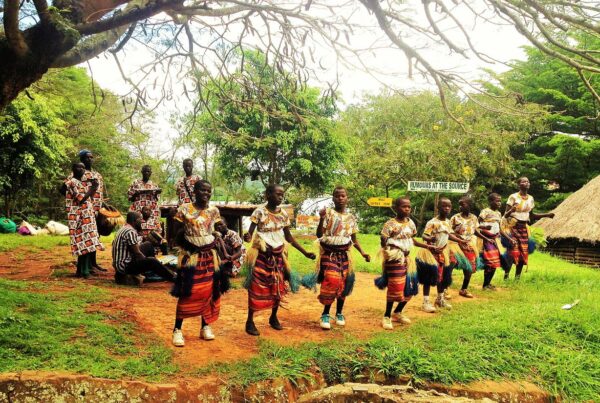
Kisoro town is the base for Mgahinga visits and a growing cultural tourism hub. Several community projects offer Bafumbira cultural experiences including traditional cooking lessons, farm walks, imigongo art workshops, and performances of intore dance (the warrior dance shared with Rwanda). The Travellers Rest Hotel, one of Uganda’s oldest lodges, has long served as a gathering point for visitors interested in both the gorillas and the surrounding human culture.
The Batwa Trail in Mgahinga is run by the Batwa people themselves and offers insight into how the forest’s original inhabitants lived before they were excluded by conservation. This trail, bookable separately from gorilla trekking, is one of the most moving cultural experiences available anywhere in Uganda.
Cross-border cultural connections
One of the unique features of visiting Kisoro is the opportunity to observe how culture flows across national borders. The Bafumbira visit Rwanda for markets and family events; Rwandan traders come to Kisoro. The language, food, music, and crafts are shared across the boundary. For visitors combining Uganda and Rwanda gorilla trekking in 2027, Kisoro makes an ideal crossing point where the two countries’ cultural and natural heritage overlap most visibly.
Who are the Bafumbira and how do they relate to Rwanda?
The Bafumbira are the Ugandan Kinyarwanda-speaking community of Kisoro District, and their relationship to Rwanda is one of the most complex cross-border ethnic situations in Uganda. Historical origin: the Bafumbira were part of the Rwandan kingdom territory before the colonial boundaries of British Uganda and German (then Belgian) Rwanda were drawn in the late 19th and early 20th centuries; the boundary placement separated communities that had previously been part of the same political unit. Language: the language spoken in Kisoro District is Kinyarwanda (the national language of Rwanda); in the Ugandan local context it is called Rufumbira; it is mutually intelligible with standard Kinyarwanda as spoken in Kigali. Within Rwanda’s categories: the Bafumbira community includes both Hutu and Tutsi-descended families who were separated from Rwanda by the colonial boundary; the social dynamics of the Rwanda-side Hutu-Tutsi relationship have had echoes in Kisoro particularly during the 1994 Rwanda genocide when refugees fled across the Virunga border. Ugandan identity: the Bafumbira are Ugandan citizens with full rights; they participate in Ugandan political and social life; their distinct identity is a source of cultural pride rather than political tension in ordinary times.
What is Kisoro like as a town and how does it serve gorilla trekkers?
Kisoro town is the district capital of Kisoro District and the primary service centre for visitors to Mgahinga Gorilla National Park and the southern Bwindi sector. Location: 520km from Kampala; altitude approximately 1,890m above sea level; surrounded by the Virunga volcanoes — Muhavura, Gahinga, and Sabyinyo are visible from the town on clear days. Character: Kisoro is a small highland market town; the main street has a mix of market stalls, small restaurants, guesthouses, and shops; it is busiest on market days (traditionally Saturday and Wednesday are the main market days). Accommodation range: from budget guesthouses in town to mid-range lodges and upmarket safari lodges in the hills overlooking the Virungas; Travelers Rest Hotel in Kisoro town is historically significant (it served the researchers of the first gorilla habituation era including connections to the Dian Fossey era). Distance to parks: Mgahinga headquarters is 15km from Kisoro; southern Bwindi (Nkuringo sector) is approximately 50km via unpaved highland road; Rushaga sector is closer at approximately 35km. Flying: Kisoro has a small airstrip with charter flight service from Entebbe (approximately 1 hour); this avoids the 8-10 hour road from Kampala.
What is the relationship between the Bafumbira and the Batwa?
The Bafumbira and the Batwa share the Kisoro District landscape but occupy very different historical and contemporary positions. The Batwa: the original forest-dwelling hunter-gatherer people of the Virunga and Bwindi forest ecosystems; they were evicted from Mgahinga Gorilla National Park at its establishment in 1991; they lost their forest homeland and are the most marginalised community in the Kisoro area. The Bafumbira: settled agriculturalists who have farmed the Kisoro highlands for centuries; they have a structured social organisation with clan systems and customary land tenure; they have benefited from conservation tourism more substantially than the Batwa because their agricultural settlements are more integrated into the lodge and service economy. Contemporary coexistence: the Batwa in Kisoro live in small communities at the forest edge and park boundary; some work as cultural guides for cultural experience programs at Mgahinga; others do casual labour; the Mgahinga Gorilla Trust works specifically with Batwa communities around Mgahinga. For visitors: both a Batwa cultural experience and engagement with Bafumbira community members are possible in a Kisoro-based itinerary.
What cultural experiences can visitors have with Bafumbira communities near Mgahinga?
Several structured cultural experiences connect visitors with Bafumbira community life in the Kisoro area. The Intore dance performance: the Intore warrior dance tradition, which crosses the Uganda-Rwanda border culturally as it does the Virunga landscape, is performed by community groups in the Kisoro area; lodges can arrange performances; the Uganda Wildlife Authority also organises cultural programs at Mgahinga headquarters. Village walks: some lodges in the Kisoro-Mgahinga area offer guided walks through Bafumbira highland farming communities; visitors see the intercropped potato and vegetable plots at 2,000m altitude, the mud-brick homesteads, and the terraced hillside farming methods that are identical to the techniques used across the border in Rwanda. Market visits: the Saturday market in Kisoro town is a Bafumbira highland market where local produce (Irish potatoes, beans, vegetables, bananas) are traded; craft items including woven baskets are also sold. Community homestays: some community tourism initiatives in Kisoro offer overnight homestays with Bafumbira families; meals, farming demonstrations, and conversation with a translator are included; ask at Kisoro lodges.
What is the landscape and ecology of the Kisoro highlands where the Bafumbira live?
The Kisoro highlands where the Bafumbira have farmed for centuries are among the most spectacular and ecologically significant landscapes in Uganda. The Virunga volcanoes: the three Ugandan Virunga peaks — Mt Muhavura (4,127m), Mt Gahinga (3,474m), and Mt Sabyinyo (3,669m) — dominate the landscape; they are extinct volcanoes and the mountain gorillas of Mgahinga live on their slopes. The altitude: Kisoro town itself sits at approximately 1,890m; the surrounding farmland ranges from 1,800m to 2,500m; the climate is cool (10-20 degrees Celsius), frequently misty, and distinct from the tropical lowlands that most visitors associate with Uganda. The farming system: the Bafumbira grow Irish potatoes as the primary food crop at these altitudes (the same Irish potato varieties introduced by Belgian colonialists to Rwanda now underpin Kisoro food security); intercropped with beans, peas, wheat, and vegetables. The forest edge: above the farmland the forest begins — first secondary montane forest, then the Hagenia-Hypericum zone of the Afromontane forest where the gorillas live; the transition from farm to forest happens abruptly at the park boundary and is visible from Kisoro town as a sharp green line on the volcano slopes.
- Bwindi Community Conservation: How Local People Protect Gorillas
- The Researcher Who Spent 10 Years Living Beside the Rushegura Family
- Ndere Cultural Center: Uganda’s Living Theatre of Heritage, Rhythm & Unity
- Kabaka’s Palace (Lubiri) – A Regal Journey Through Buganda’s Living Heritage
- How People with Limited Mobility Can Trek to See Gorillas
- The Deadliest Lions That Killed 1,500 People: The Njombe Man-Eaters
- The Only Spanish-Speaking Country in Africa
- Uganda Gorilla Trekking Myths: 12 Things People Get Completely Wrong
- Gorilla Trekking for People with Disabilities in Uganda
- Group Gorilla Trekking Uganda: Booking Tips for 8+ People