

Updated
Ndere Centre in Ntinda, north-east Kampala, is the home of the Ndere Troupe, Uganda’s best-known traditional dance company, and its evening shows are the easiest way to see music and dance from all over Uganda in one sitting. In about three hours you see drumming, xylophones, harps and fiddles and dances from Buganda, Busoga, Acholi, Ankole, Kigezi, Karamoja and beyond, presented with humour and short explanations in English.
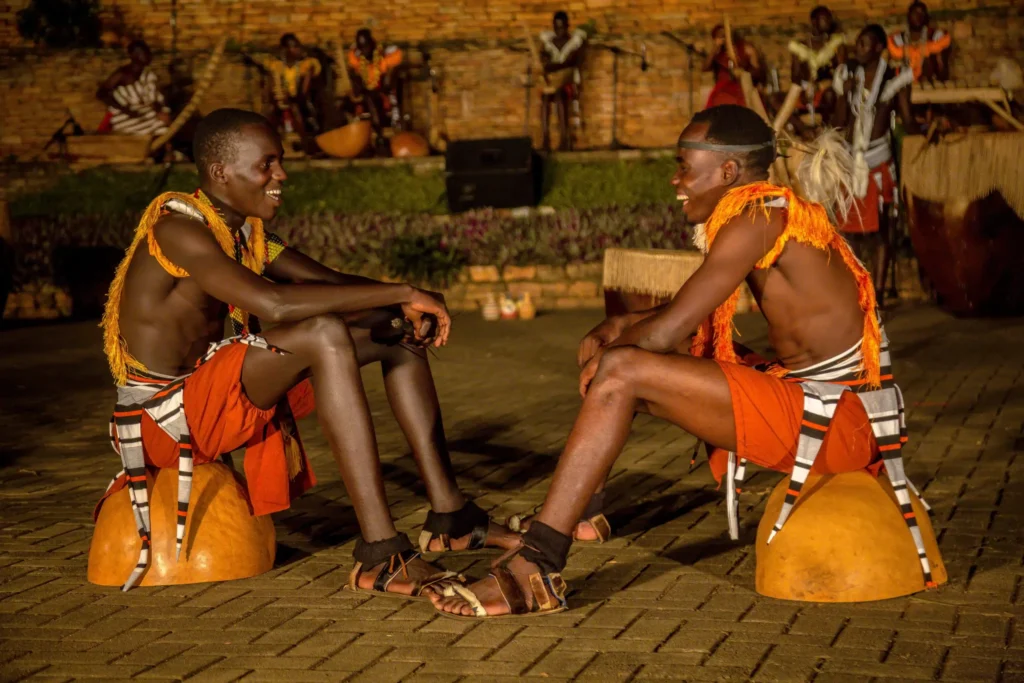
For gorilla trekkers it fits neatly into an arrival evening in Kampala or a last night before the flight home. This guide covers what the show includes, how to get there and how to fit it into a gorilla trip.
The Ndere Troupe
Stephen Rwangyezi, a teacher and theatre artist, founded the Ndere Troupe in 1984. Uganda was emerging from years of dictatorship and war, and many young people were growing up without knowing the music and dances of their own communities, let alone their neighbours’. Rwangyezi’s idea was to use performance to keep those traditions alive and to show Ugandans the richness of each other’s cultures. The troupe has toured widely abroad and later built its own centre in Kampala, with an open-air amphitheatre, gardens and a restaurant.
“Ndere” is the word for a flute in several Ugandan languages, and the troupe’s performers come from many regions. Many learned these forms as children in their home villages, and that shows in the confidence and energy of the dancing.

What you see and hear
Each show works as a tour of Uganda’s regions. From Buganda comes the bakisimba, danced with rapid hip movements to the beat of royal drums. You will usually also hear the amadinda, a large log xylophone played by several musicians at once in interlocking patterns. Busoga is represented by its own xylophone, the embaire, and by fast, joyful dances. From the north come Acholi dances such as larakaraka, a courtship dance performed with calabashes and whistles, accompanied by the adungu harp and the nanga zither.
From the west you may see the Banyankole ekitaguriro, whose arm movements echo the long horns of Ankole cattle, and the stamping, jumping ekizino of the Bakiga, the people who live around Bwindi. The Karimojong jumping dance from Karamoja is often a highlight, and the intore warrior dance shows the links between south-western Uganda and Rwanda. Between pieces, the presenters explain what each dance means and where it comes from, and they often bring audience members up to try the steps.
If you want to know more before you go, read our guides to Kiganda dance and the intore dance.

Show days, tickets and dinner
At the time of writing, public shows run on Wednesday and Friday evenings from 7pm and on Sunday from 6pm, and each lasts around three hours. Ugandans pay a lower rate than foreign visitors. In 2026 an adult international ticket for the main Wednesday show cost about US$30, with reduced prices for children and an optional buffet dinner of Ugandan dishes such as matoke, groundnut sauce, beans and grilled meat.
Schedules and prices change, so confirm with the centre or your tour operator before you go, and book ahead for weekends and holidays. Private performances for groups can also be arranged.
Evenings can be cool in Kampala, so bring a light layer. Photography is generally allowed, but use flash sparingly and do not block other people’s view.

Getting there
Ndere Centre is in the Ntinda–Kisaasi area, about 7 km north-east of central Kampala. Without traffic the drive takes around 20 minutes, but Kampala’s evening rush hour can easily double that, so leave early. Ride-hailing apps such as Uber and Bolt work in Kampala and are a safer choice at night than motorbike taxis (boda-bodas). If your tour includes a driver, it is easiest to ask them to drop you off and collect you. From Entebbe, about 40 km away, allow at least an hour and a half in the evening.
Fitting Ndere into a gorilla trip
Most gorilla itineraries pass through Kampala or Entebbe at the start and end. If your flight lands in the morning or early afternoon on a show day, Ndere makes a relaxed first evening before the long drive west. It works equally well on the last night, if your flight leaves the next day. Combine it with a daytime city tour of the Kasubi Tombs, the Kabaka’s Palace or the Namugongo Martyrs’ Shrine for a full day of Ugandan history and culture.
Seeing the dances in Kampala also adds meaning to what you meet later in the countryside. Community groups near Bwindi perform many of the same south-western dances in village settings, and our guide to Bakiga culture near Bwindi explains how to see them. For a city start built into a trip, see our gorilla trek with a two-day Kampala start.
Frequently asked questions
At the time of writing, on Wednesday and Friday evenings from 7pm and on Sunday from 6pm. Each show lasts about three hours. Check the current schedule before you go.
In Ntinda–Kisaasi, about 7 km north-east of central Kampala. Allow extra time for evening traffic.
Stephen Rwangyezi, a Ugandan teacher and theatre artist, founded it in 1984 to preserve and share the country’s traditional music and dance.
Yes, if you have an evening in Kampala. It shows dances from all over Uganda in one show and makes a lively start or end to a gorilla trip.










