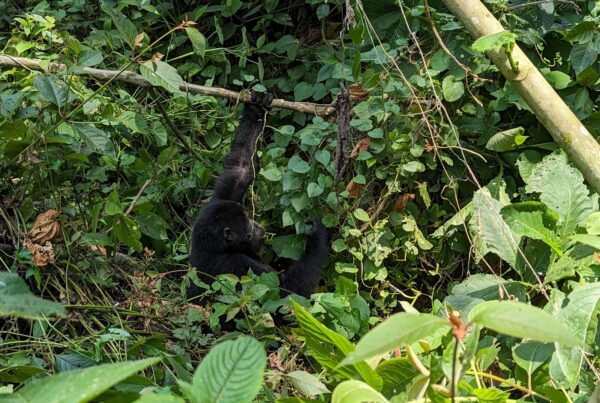
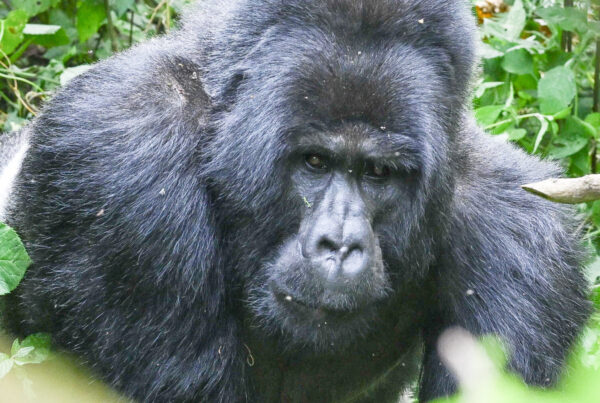
Between 2010 and 2020, Dr. Amelia Waite lived in a research camp within walking distance of the Rushegura gorilla family’s core home range in the Buhoma sector of Bwindi Impenetrable National Park. Her research focused on long-term social dynamics within habituated mountain gorilla families — how relationships form and break, how juveniles transition to adulthood, how silverbacks manage family cohesion during periods of stress, and how gorilla family structures respond to deaths, births, and immigration events. Over 10 years she accumulated the most detailed longitudinal behavioural dataset on a single Ugandan gorilla family in existence. What she found, and what living alongside the Rushegura family for a decade taught her, is a story about science, intimacy, and the strange experience of knowing individual gorillas better than you know most of the humans in your life.
Why Long-Term Behavioural Research Matters
Most wildlife research is conducted over short periods — weeks or months — because funding cycles and academic incentive structures favour rapid, publishable results. Long-term behavioural studies, which require sustained funding, physical presence, and patience over years or decades, are rare. But they produce insights that short-term studies cannot: understanding of how individuals change over their lifetimes, how family structures evolve in response to events, and how behaviour patterns observed in brief studies connect to broader patterns only visible over time.
For mountain gorillas, whose lifespans extend to 40 or more years and whose family structures are maintained across generations, long-term study is particularly important. The decisions that conservation managers make — which families to habituate, how to manage family instability after a dominant silverback’s death, when to intervene veterinarily — are better made when they are informed by longitudinal data rather than snapshots. Dr. Waite’s 10-year dataset has been cited in conservation management decisions affecting three habituated families in Bwindi.
Living Beside the Rushegura Family: The Daily Reality
Research camp life in Bwindi is not comfortable. Dr. Waite’s camp consisted of two tents, a small research shelter, a composting toilet, and a solar-powered laptop charging system. She was at the Rushegura family’s location by 6:00 AM every day for observation. She recorded behaviour using a standardised focal sampling protocol — selecting one individual for observation at a time, recording behaviour at two-minute intervals, rotating through all family members over the course of a day. The data collection was meticulous, repetitive, and conducted regardless of weather.
What the protocol could not capture was the cumulative effect of years of observation on the researcher. “By year three, I knew these gorillas better than I knew most people,” she wrote in a personal essay published in 2022. “I knew which females were friends, which males were rivals, which juveniles were bold and which were cautious. I knew Kato’s limp from a childhood snare injury. I knew Nyiramahoro’s habit of checking over her shoulder before she settled her infant to sleep. I knew these things not from data but from the thousands of hours of just watching, just being there.”
Key Findings: What 10 Years Revealed
Among the most significant findings from Dr. Waite’s research: mountain gorilla social relationships are more stable and more individually differentiated than previously understood. The Rushegura family maintained consistent friendship dyads between specific females over the full 10 years of observation — relationships maintained through grooming frequency, proximity preferences, and coalition behaviour during conflicts that remained remarkably stable even through major family events including three silverback successions and multiple births and deaths.
She also found that habituation — the process by which wild gorillas are acclimatised to human presence — has ongoing behavioural effects beyond the initial adaptation period. Habituated gorillas in the Rushegura family showed consistent differences from non-habituated families in neighbouring areas in their use of space near forest boundaries, suggesting that long-term human presence shapes gorilla habitat use in ways that have management implications for protected area planning.
What She Said When She Left
When Dr. Waite’s research project ended in 2020 and she prepared to return to her university position in the UK, she described leaving the Rushegura family as “the hardest departure of my professional life.” She has returned to Bwindi twice since for follow-up data collection and each time spent the first morning of observation crying — not from sadness, but from the accumulated emotion of returning to individuals she had spent a decade of her life beside. “They don’t know me. They never did, in any meaningful sense. But I know them. That’s an unusual position to be in, and I’m not sure there are words for it.”
Her research continues to inform gorilla conservation management in Bwindi. When you trek the Rushegura family in 2027, the family you encounter has been known, documented, and advocated for by a researcher who spent 10 years of her career learning their individual names and relationships. That knowledge has made the conservation decisions protecting them better. It is a debt that the gorillas cannot acknowledge, but that the conservation community understands and honours.
Frequently Asked Questions
The Gorilla Habituation Experience (GHEX) allows up to 4 visitors to spend 4 hours with a gorilla family still being habituated to human presence. It costs $1,800 per person (FNR) and is available only in Rushaga sector of Bwindi Impenetrable Forest. You accompany researchers tracking the family through the forest.
Standard trekking: 1 hour with a fully habituated family, groups of up to 8, costs $800. Gorilla Habituation Experience: 4 hours with a semi-wild family, groups of up to 4, costs $1,800. The habituation experience gives far more time to observe natural behaviour — feeding, playing, resting, and inter-family interactions.
The GHEX is available only in Rushaga sector of Bwindi Impenetrable Forest. It is not offered at Buhoma, Ruhija, Nkuringo sectors, or at Mgahinga Gorilla National Park. Rushaga is in southern Bwindi, nearest to the town of Kisoro.
For photographers, wildlife researchers, or repeat gorilla trekkers seeking deeper observation, yes. Four hours versus one hour represents a fundamentally different experience — you see the full morning feeding session and can observe gorilla family dynamics in detail. For first-time visitors, the standard $800 trek is the recommended starting point.
Only 4 permits are issued per day per habituated family in the GHEX programme. This makes it the rarest gorilla experience in Uganda — permits sell out further in advance than standard trekking, often 4–6 months ahead in peak season.