The tour operator who manages your Uganda gorilla trekking safari determines far more of the trip experience than most visitors realise at the booking stage — the difference between a well-organised private vehicle with a specialist naturalist guide who knows Bwindi’s bird species by call and the gorilla families’ individual characters, and a group transfer with a general driver who treats the trip as logistics management rather than wildlife interpretation, is the difference between a safari that delivers the full depth of Uganda’s wildlife landscape and one that delivers a permit and a basic tick-box experience. The logistical stakes are equally significant: permits are non-refundable, the western Uganda circuit involves multi-day remote travel with limited contingency infrastructure, and errors in accommodation booking, permit date coordination, or vehicle management have consequences that cannot be easily resolved from the road. Selecting the right operator requires specific due diligence beyond comparing website design and price. This guide provides a practical framework for evaluating Uganda gorilla trekking operators. For the permit that all itineraries are built around, see the permit guide.
Choosing a Uganda Safari Operator: Key Evaluation Points
- Uganda registration: Operator must be registered with Uganda Tourism Board (UTB) — verify the registration number
- Permit handling: Operator should show the specific UWA permit reference before departure
- Guide quality: Ask specifically whether the driver and the naturalist guide are the same person or different
- Vehicle type: Confirm 4WD with pop-top or roof hatch for game drive photography at Queen Elizabeth
- Reviews: TripAdvisor and Google reviews; ask for email contacts of 2–3 recent clients to call directly
- Red flags: pressure to pay full amounts immediately; no physical Uganda office; vague permit confirmation
The tour operator you choose for your gorilla trekking safari shapes virtually every aspect of your experience. A skilled, ethical operator transforms the complex logistics of Ugandan travel into a seamless journey, provides knowledgeable guides who enrich your understanding of what you are seeing, selects accommodation that matches your preferences and budget, and responds effectively when unexpected challenges arise. A poor operator, conversely, can turn what should be the trip of a lifetime into a frustrating series of mistakes, delays, and disappointments.
Yet many travellers approach operator selection with less care than they devote to choosing a restaurant for dinner. They book with the first operator who responds to an enquiry, or select based on price alone, or rely on glossy website photographs that reveal little about actual service quality. This guide provides a systematic framework for evaluating gorilla trekking operators, identifying the qualities that distinguish exceptional companies from mediocre ones, and asking the questions that reveal whether an operator genuinely understands and cares about your experience.
Why You Need an Operator at All
Some travellers wonder whether they need a tour operator at all. After all, gorilla permits can be booked directly with UWA, accommodation can be reserved online, and vehicles can be hired independently. For experienced African travellers with abundant time and high tolerance for logistical friction, independent travel is certainly possible.
However, for most visitors, an operator adds genuine value that justifies their fee. Operators have established relationships with UWA that facilitate permit bookings, particularly during peak season when demand exceeds supply. They know which lodges deliver on their promises and which look better in photographs than in reality. They employ drivers who know the roads intimately, including shortcuts, hazard areas, and the best places to stop. They provide guides who interpret gorilla behaviour, explain conservation context, and manage group dynamics during the trek.
Perhaps most importantly, operators provide backup when things go wrong. If your vehicle breaks down in a remote area, if your lodge reservation is lost, if you fall ill and need medical assistance, a reputable operator has the local knowledge and relationships to resolve problems quickly. Independent travellers facing these situations must rely on their own resourcefulness in an unfamiliar environment.
Essential Qualities of a Reputable Operator
Reputation is the foundation of operator quality, and reputation is built over years of consistent service delivery. Look for operators who have been in business for at least five years, with established track records that can be verified through independent reviews. New operators may offer attractive prices to build clientele, but they lack the experience and relationships that only time can develop.
Membership in professional associations provides some assurance of standards. The Association of Uganda Tour Operators represents the country’s leading safari companies and requires members to meet certain professional criteria. While membership is not a guarantee of excellence, non-membership may indicate a company that operates outside mainstream industry norms.
Responsiveness during the enquiry phase reveals much about an operator’s service culture. Do they respond promptly to emails? Do they answer your specific questions or send generic templated responses? Do they ask questions about your preferences, fitness level, and interests to tailor their proposal, or do they push a one-size-fits-all itinerary? The care with which an operator handles your initial enquiry typically reflects the care they will apply throughout your trip.
Red Flags to Watch For
Certain warning signs should disqualify an operator from consideration, regardless of how attractive their prices may seem. Prices significantly below market rates often indicate corner-cutting on vehicle maintenance, guide qualifications, lodge standards, or staff wages. A gorilla safari is not a commodity where the cheapest option delivers equivalent value. The differences between a reputable operator and a budget operation manifest in safety, comfort, and the quality of the overall experience.
Reluctance to provide detailed written itineraries is another serious concern. A professional operator should specify exactly which lodges you will stay at, which gorilla sector you will trek in, what meals are included, what vehicle you will travel in, and what happens in case of problems. Vague proposals that promise great experiences without specifying how those experiences will be delivered should be treated with suspicion.
Pressure to pay large deposits before contracts are signed or before you have received satisfactory answers to your questions is a significant red flag. Reputable operators typically require modest deposits to secure permits, with balance payments due closer to the travel date. They provide clear cancellation and refund policies in writing. Operators who demand immediate full payment or who lack formal booking contracts are operating outside professional norms.
Evaluating Proposals and Itineraries
When comparing operator proposals, look beyond the total price to understand what is actually included. One operator’s quote may appear higher than another’s, but if it includes superior lodges, a private vehicle rather than shared transport, park entrance fees that the cheaper quote excludes, or meals that the competitor charges separately, the higher quote may represent better value.
Examine the itinerary pacing carefully. Some operators pack too many activities into too few days, leaving you exhausted rather than enriched. Others include excessive driving time relative to activity time, turning your safari into a road trip with occasional wildlife viewing. A well-designed itinerary balances activity with rest, includes buffer time for delays and spontaneous opportunities, and does not require you to spend more hours in a vehicle than you do experiencing the places you came to see.
Ask specifically about the vehicle you will travel in. A comfortable, well-maintained four-wheel-drive with experienced driver makes long road journeys tolerable. An ageing vehicle with unreliable air conditioning and questionable maintenance makes those same journeys miserable and potentially dangerous. Request photographs of actual vehicles, not stock images from manufacturer websites.
Guide Quality: The Hidden Variable
The quality of your guide influences your safari experience more than any other single factor, yet it is the variable that travellers have least control over. You can research lodges, compare vehicle photographs, and read permit policies, but you cannot choose your individual guide in advance with most operators.
Ask operators about their guide recruitment and training processes. Do they employ permanent guides or contract freelance guides seasonally? Do guides receive ongoing training in wildlife behaviour, first aid, and customer service? How long do guides typically stay with the company? High guide turnover often indicates poor working conditions that affect service quality.
Some operators allow you to request specific guides if you have travelled with them before or have received recommendations. If you know a guide by reputation, mentioning this during booking may increase your chances of being assigned to them. However, guide assignments are often made close to the departure date based on availability, so specific requests cannot always be accommodated.
Financial Protection and Accountability
Travellers who book with operators in distant countries may worry about financial protection if the operator fails to deliver. Several practices reduce this risk. Pay by credit card or bank transfer rather than cash, as these payment methods may offer some recourse if services are not delivered. Obtain a detailed contract that specifies exactly what is included, what is excluded, cancellation policies, and refund procedures.
Some operators are bonded or insured through industry schemes that provide financial protection if the company becomes insolvent. Ask whether your operator participates in such schemes. While uncommon in Uganda, some international tour operators who sell Ugandan safaris include financial protection as part of their package.
Travel insurance that includes tour operator failure coverage provides additional protection. This coverage reimburses your costs if the operator ceases trading before your trip or fails to deliver the contracted services. Standard travel insurance policies may not include this coverage automatically, so verify before purchasing.
The Role of Reviews and References
Online reviews provide valuable insights into operator quality, but they must be interpreted critically. Reviews on operator websites may be curated or fabricated. Reviews on third-party platforms such as TripAdvisor, SafariBookings, or Google are more reliable but still subject to manipulation. Look for patterns across multiple reviews rather than relying on individual testimonials.
Request references from recent clients who have taken similar trips. Reputable operators should be willing to provide contact details for past clients who have agreed to serve as references. Speaking directly with someone who has experienced the operator’s service provides information that no website or review can match.
Social media and travel forums can also reveal operator reputation. Search for the operator’s name in gorilla trekking and African safari communities on Facebook, Reddit, or specialised travel forums. Negative experiences are often shared more readily than positive ones, so a preponderance of complaints should be taken seriously.
Final Thoughts
Choosing a gorilla trekking operator requires research, patience, and willingness to ask probing questions. The effort invested in operator selection pays dividends throughout your safari and for years afterward in the form of memories, photographs, and stories worth retelling. A poor operator can ruin a trip that cost thousands of dollars and represented years of dreaming. A good operator can elevate that same trip into something that exceeds even your highest expectations.
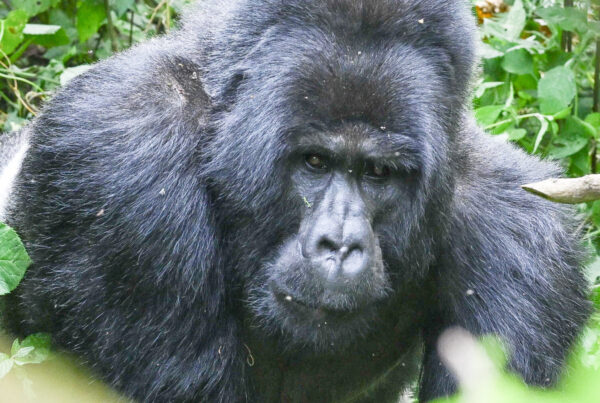
When you sit before a silverback in Bwindi’s forest, the operator who arranged your permit, selected your lodge, hired your guide, and managed the thousand logistical details that made the moment possible becomes part of the story. Choose that partner with the care they deserve, and the encounter they enable will reward your diligence many times over.
Frequently asked questions about choosing a Uganda gorilla trekking operator
What is the difference between a tour operator and a travel agent for Uganda gorilla trekking?
A Uganda-based tour operator owns or directly manages the ground operations of the safari — the vehicle, the driver-guide, the accommodation bookings, and the permit procurement — and carries legal responsibility for the service delivery on the ground. A travel agent (or international tour company reselling Uganda trips) acts as an intermediary: they book the trip through a Uganda ground operator, add a margin, and manage the client relationship from outside Uganda without owning the operational assets. The practical difference: when something goes wrong on the ground in Uganda (vehicle breakdown, accommodation issue, permit date error), the ground operator resolves it with their own resources; an international agent must instruct the ground operator remotely and has limited control over the resolution. Booking directly with a licensed Uganda-registered ground operator typically produces better value (no intermediary margin) and more direct accountability. International agents are valuable when they have a long-term relationship with a specific Uganda operator and can vouch for that operator’s service quality from multiple past trips — an agent who is genuinely familiar with the product is different from one simply selling what comes up in a search.
How do you verify that a Uganda tour operator is legitimate?
Verifying a Uganda tour operator’s legitimacy involves several specific checks. First: Uganda Tourism Board (UTB) registration — all legitimate Uganda tour operators must be registered with UTB and carry a UTB registration number. Ask for the registration number and cross-reference it against the UTB operator registry (accessible through the UTB website). Second: physical Uganda address and contact number — a legitimate Uganda-based operator has a physical office address in Kampala or Entebbe and a Uganda-country phone number, not only an international enquiry email. Third: permit reference confirmation — before departure, the operator should provide the specific UWA permit reference number for your gorilla trekking permit, confirming it was purchased in your name for the specified date. If the operator cannot provide a specific permit reference number, the permit has either not been purchased or is not in your name. Fourth: independent review verification — check TripAdvisor and Google reviews, looking specifically for reviews from independent travellers (not tour packages), and contact recent reviewers directly if possible. Fifth: payment terms — reputable operators accept a reasonable booking deposit (30–50%) with the balance due closer to travel; requiring full payment immediately before confirming trip details is a fraud warning sign.
What questions should you ask a Uganda gorilla safari operator before booking?
The most diagnostic questions to ask a Uganda gorilla trekking operator before booking are: (1) “Who specifically will be our driver-guide throughout the trip — are they an employee or a contracted freelancer, and what are their qualifications?” — this reveals whether you will have a consistent specialist guide or a rotating cast of freelancers. (2) “Can you provide the UWA permit reference number once you book it, and how long will that take after I pay the deposit?” — this tests whether the operator has an established UWA permit relationship or is vague about the permit procurement process. (3) “What vehicle will we use — please describe the make, year, and roof configuration?” — a legitimate safari vehicle should be a pop-top 4WD (Land Cruiser or similar) serviced for remote highland travel; a response that is evasive about vehicle specifics is a service quality warning. (4) “What is your emergency protocol if the vehicle breaks down en route to Bwindi?” — a professional operator has a contingency plan; an operator who has never considered this question is not professionally prepared. (5) “Can you give me contact details for two or three clients from the last three months who took a similar trip?” — willingness to provide client references is a strong positive signal; reluctance is a red flag.
Is it cheaper to book a gorilla trek through a local Uganda operator versus an international one?
Booking a gorilla trekking safari through a Uganda-registered ground operator is typically 15–35% cheaper than the same itinerary booked through an international tour operator, because the international operator adds their margin (and sometimes the margin of an intermediate booking platform) on top of the Uganda ground operator’s prices. The core Uganda costs — the UWA gorilla permit at USD 800, the accommodation at market rate, the vehicle and guide — are fixed regardless of who books them; the only variable is the profit margin applied by each layer in the booking chain. A visitor who identifies a reputable Uganda ground operator directly and books with them removes the international intermediary’s margin. The trade-off: an established international operator with a long-term relationship with a specific Uganda ground operator provides a degree of pre-screened quality assurance and a dispute resolution process in your home country’s jurisdiction if things go seriously wrong — a service that has value for some visitors, particularly those making their first African safari. For budget-conscious travellers comfortable with direct communication and direct payment to a Uganda-registered company, booking direct with a UTB-registered Uganda ground operator is the most cost-efficient approach.
What should a Uganda gorilla trekking safari quote include?
A professional Uganda gorilla trekking safari quote should include an itemised breakdown of: (1) gorilla trekking permit cost per person (USD 800 — clearly stated, not bundled in an aggregate trip price); (2) accommodation per night per person at the specific named properties, with the meal plan (typically full board — all meals included); (3) private safari vehicle and driver-guide per day (specified as private or shared); (4) Uganda Wildlife Authority park entry fees per person per day for each park visited; (5) any additional activity permits (chimp trekking USD 250, boat safari, etc.); (6) airport transfers at both ends; and (7) the operator’s service fee. What should not be bundled: the permit cost is a fixed government fee that should be transparent; operators who quote a single aggregate price without breaking out the permit are making it difficult to compare their service fee against competitors. Request an itemised quote if you receive an aggregate price — a legitimate operator will provide this. The itemised quote also confirms whether the permit cost is passed through at face value (USD 800) or marked up — it should be the face value UWA rate.
Find the right operator for your Uganda gorilla safari
- Gorilla Permit Guide — the permit that every operator quote is built around
- Uganda Gorilla Families — what a good operator helps you choose between for your trek day
- Bwindi Sector Guide — sector options your operator should discuss with you at booking
- Full Safari Cost Guide — benchmark costs to evaluate against operator quotes
- Safari Itineraries — Uganda itinerary structures to discuss with your operator
- How to Choose a Gorilla Trekking Tour Operator in Uganda
- Booking Gorilla Permits Through a Tour Operator vs Direct With UWA
- Accredited Gorilla Tour Operators Uganda: Full 2026 List
- Top Tour Operators for Combined Uganda & Rwanda Gorilla Tours
- Best Operators for Uganda Birding and Gorilla Combo Tours
- Top Uganda Birding Tours: Best Operators and Sites for Birders
- Cultural Tours in Uganda: Discover the Soul of the Pearl of Africa
- Sustainable Tourism: Protecting Our Planet While Exploring Its Wonders
- How to Get Your 3-Day Ngamba Island Chimpanzee Tour On the Go
- Uganda Safari Tour —12 Days: From Jungles to Savannah, a Journey That Stays With You