Updated
go to Uganda gorilla trekking is one of Africa’s most extraordinary wildlife experiences, connecting travellers with mountain gorillas in their natural forest habitat. You know the voice — it shows up when you read something about gorilla trekking in Bwindi Forest, it whispers when you see a photograph of a silverback unhurried and immense in the green light of the canopy, it is not loud and it does not demand but it simply persists through months and years of ordinary life — and the reasonable response to a persistent signal of that kind is to take it seriously and find out what it is pointing at. Answer it with a gorilla permit, 7-day Uganda itinerary, and an accredited Uganda operator.
- Permit cost: USD 800 per person; non-negotiable; set by Uganda Wildlife Authority; book early for peak months (June-Sept, Dec-Feb)
- Total trip cost: USD 2,200-4,000 per person for a 5-7 day trip including permit, accommodation, transport; see full cost breakdown
- Accessibility: suitable for ages 15-80+; regular fitness sufficient; porter support available; read what to expect
- What you are booking: 60 minutes with a habituated mountain gorilla family in a 25,000-year-old forest; no zoos contain mountain gorillas; this is the only way to see them
You know the voice. It shows up when you read something about gorilla trekking in Bwindi Forest. It whispers when you see a photo of a silverback, unhurried and immense, in the green light of the canopy. It is not loud. It does not demand. It simply persists — a quiet, consistent signal that this is something you should do, something that belongs in your life. The voice inside you that keeps saying go to Uganda is not random. Listen to it.
The Voice Inside You That Keeps Saying Go to Uganda: Listen to It
Where the Voice Comes From
The pull toward certain experiences is not arbitrary. We are drawn to things that resonate with something real in us — curiosity, a need for depth, a hunger for encounters that break through the surface of ordinary life. The fact that gorilla trekking keeps appearing in your thoughts, keeps returning despite months or years of other priorities, is information. It is your own intelligence telling you something matters.
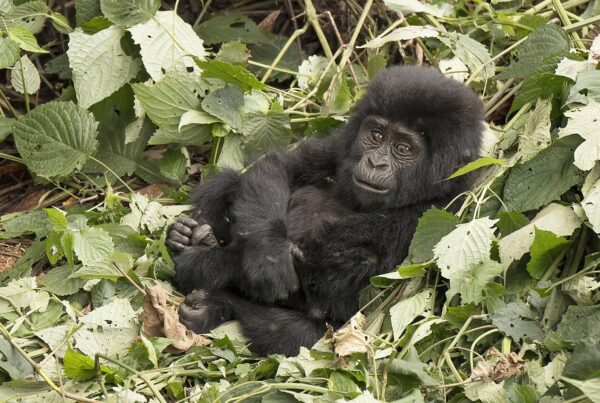
Mountain gorillas are one of the most remarkable species on Earth. They share 98.3 percent of their DNA with humans. They live in complex family groups with distinct personalities, long memories, and apparent emotional lives. They are critically endangered — fewer than 1,100 individuals remain in the wild — and yet their numbers are growing, largely because of the conservation infrastructure that gorilla trekking funds. The voice saying go is responding to all of this. It knows what matters before your rational mind catches up.
What Happens When You Do Not Listen
Most people have a list of things they meant to do. Places they meant to go. Experiences they meant to have. The list lives somewhere — in a notes app, in a drawer, in the back of their mind — and slowly, over time, items drift from “I will do this” to “I used to want to do this.” The voice does not disappear, but it gets quieter under the weight of other priorities, other obligations, other years.
People who did not go when they first felt the pull sometimes speak about it with a specific kind of regret — not grief, but a mild ongoing wistfulness, a sense of something unlived. Not because gorilla trekking is the only meaningful thing available, but because it represented something specific to them: a commitment to the kind of life where you say yes to the things that matter.
The People Who Listened
The people who went — the ones who booked despite the cost, despite the distance, despite the other claims on their time and money — almost universally describe it as one of the best decisions they ever made. Not just the trek itself, though the trek is extraordinary. The whole texture of the trip: the drive through the Ugandan highlands, the night sounds of the forest, the community interactions, the rangers’ stories, the quality of attention that Bwindi demands. They listened to the voice. The voice was right.
What Uganda Actually Looks Like
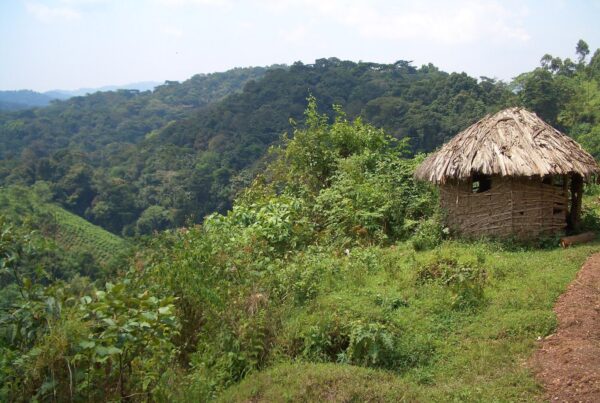
For those who have never been to East Africa, Uganda can feel abstract — a place in articles and documentaries rather than a real destination. It is real. The capital Kampala is a fast-moving, chaotic, genuinely fascinating city of seven hills. The country beyond it opens into landscapes that range from savanna to montane forest to the shores of the world’s second-largest lake. The western highlands around Bwindi — the Kigezi region, sometimes called the Switzerland of Africa — are extraordinary: green hills folding into each other, mist in the valleys, terraced farms climbing steep slopes.
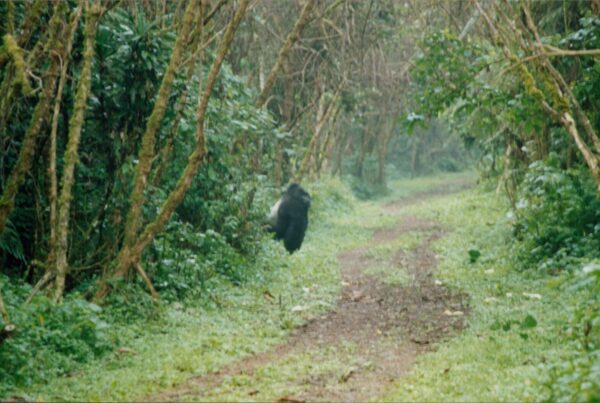
Bwindi Impenetrable Forest is one of the oldest forests in Africa — 25,000 years without significant interruption. Walking into it is a genuinely sensory experience. The density of vegetation, the soundscape, the quality of light. And somewhere inside it, a family of mountain gorillas is going about its morning — eating, resting, caring for young, moving through terrain they have known their whole lives.
Your Hour With the Gorillas
The Uganda Wildlife Authority permits one hour per trekking group per gorilla family per day. Eight trekkers maximum. Your $800 permit for 2027 buys that hour — and funds the rangers, the anti-poaching patrols, the veterinary program, and the community projects that make the whole conservation system work. The hour itself is beyond description in the way that only a few things in a lifetime are. You will try to describe it to people when you get back. You will find that language is not quite enough. That is also a sign you went to the right place.
The Practical Shape of the Trip
Listening to the voice does not mean leaping without looking. A gorilla trekking trip in 2027 is practical and well-organized. Fly into Entebbe International Airport. Transfer to Bwindi — a scenic eight-hour drive through the highlands, or a short charter flight. Choose your sector of the forest: Buhoma in the north, Ruhija in the east, or the Rushaga and Nkuringo sectors in the south, each with its own lodges and habituated gorilla families. Trek on your permit day. Add on days in Queen Elizabeth or Kibale if you want.
The entire trip — flights, permits, lodge, transfers, activities — typically runs between $3,500 and $6,000 per person depending on your accommodation choices and itinerary length. For most travelers, this is a once-in-a-decade trip. It is priced accordingly. It delivers accordingly.
The Voice Is Not Going Away
Here is something worth considering: the fact that you are reading this, the fact that this topic keeps returning to you, is not coincidence. Attention flows toward what matters. You are here, reading about gorilla trekking in Uganda, because part of you already knows this is something you should do. The question is whether you let that knowing translate into action, or whether you let it remain in the category of someday.
Someday is not a calendar date. It does not arrive. What arrives is now, and now, and now — and either you act in those nows or you don’t. The voice that keeps saying go to Uganda is not going to find another voice to say go through. It only has you. And you only have the present moment to act.
Listen to it. Book the trip. Go.
What is the first practical step to take if I want to go gorilla trekking in Uganda?
The first step is choosing your travel window rather than deciding on exact dates. Why: the gorilla permit is the fixed anchor around which everything else is built; you need to know which month you are targeting before you can meaningfully assess permit availability. Decide on a month: compare your annual leave or travel schedule against Uganda’s main seasons — dry months June-September and December-February are easier for the trek; wet months October-November and March-May are cheaper and quieter. Contact an operator: accredited Uganda tour operators can check permit availability for your month immediately; this takes a short email exchange. Check the sector: decide between Bwindi sectors (Buhoma for first-timers is the standard recommendation). Everything else — flights, accommodation, other parks — can be decided once the permit date is confirmed.
How do people typically describe the gorilla experience after they return?
The language people use is specific in ways that distinguish this from ordinary holiday descriptions. First-account specificity: gorilla trekking accounts at Bwindi are characterised by the use of specific detail — the name of the silverback, the particular juvenile that came closest, the exact moment of eye contact, the quality of light in the forest at that point; these are the markers of a strong episodic memory, not a general pleasant impression. The duration: people tell the story with the same specificity five years after the trip as they did on return; this is unusual for a holiday experience. The transformation claim: a proportion of gorilla trekkers describe the experience as having changed their perspective on the natural world or on what the range of available experiences in a life actually includes; this is a strong claim and one that comes up repeatedly in unsolicited accounts.
What makes Uganda gorilla trekking better value than Rwanda?
Uganda and Rwanda both offer mountain gorilla trekking but the cost difference is substantial. Permit price: Uganda USD 800; Rwanda USD 1,500; for two people this is USD 1,400 saved on permits alone. Forest quality: Bwindi is a complex, ancient montane forest with higher biodiversity than Rwanda’s Volcanoes NP afromontane zone; many visitors describe Bwindi as more atmospheric and wilder in feel. The gorilla encounter: identical in quality — 60 minutes with a habituated family; the same species in comparable forest; the difference is cost and surrounding environment, not encounter quality. Wildlife circuit: Uganda’s wider circuit — Kibale, QENP, Murchison Falls, Mabamba Bay — is richer and more diverse than Rwanda’s equivalent options. The hybrid option: many visitors fly into Kigali, cross to Bwindi by road (2.5 hours), and combine Uganda gorilla trekking with Rwanda gorilla trekking or Rwanda gorilla and Uganda’s wider circuit.
What health preparations do I need for Uganda gorilla trekking?
Health preparation is straightforward for Uganda. Yellow fever: required vaccination for entry into Uganda; the yellow fever certificate is checked at Entebbe airport; get vaccinated at least 10 days before travel. Malaria: prophylaxis recommended for all Uganda visitors; the major national parks including Bwindi are malaria-risk areas; consult your doctor or travel clinic for current recommended medication. Gorilla health protocol: if you have cold, flu, or respiratory symptoms in the 7 days before your trek you should not trek; gorillas are susceptible to human respiratory diseases; this is enforced by UWA; if you are denied entry for health reasons, ask your operator about rebooking options. Other vaccinations: hepatitis A, typhoid, and tetanus are generally recommended for East Africa; your travel clinic will advise based on your specific itinerary.
How long has Uganda been offering gorilla trekking to visitors?
Uganda’s gorilla trekking programme has a documented history spanning several decades. Early trekking: gorilla tourism in Bwindi began in the early 1990s as an alternative to the Virunga programme that had operated since the 1970s; Bwindi was gazetted as a national park in 1991 and gorilla trekking began at Buhoma shortly after. Growth: the number of habituated families has increased steadily; from the original Mubare group at Buhoma in 1993 to over 20 habituated families across four sectors today. The programme’s effect: the combination of habituation research and tourism revenue has contributed to the documented population growth from 254 individuals in 1981 to 1,063 in 2018; the programme is considered one of the successful models for wildlife tourism as conservation. For perspective: see 30 things to know and Uganda’s accredited operators.
- What Travel Influencers Are Saying About Uganda in 2026
- New Eco-Lodge Opens Inside Bwindi Forest in 2026: First Look
- The Craft Cooperative Funded by Gorilla Tourists: 80 Women Inside
- What Happens Inside a Gorilla Family When the Silverback Dies
- Owino Market Kampala: The Chaotic Sprawl and What Is Inside
- Uganda music scene: Afrobeats Ugandan pop and what to listen to
- Uganda proverbs: 20 sayings that reveal the Ugandan worldview
- Night sounds of Bwindi: what to listen for after dark in the gorilla forest
- How gorilla permit revenue is spent: inside Uganda Wildlife Authority’s budget
- The practice of deep listening in the forest: what a gorilla trek teaches about presence