Updated
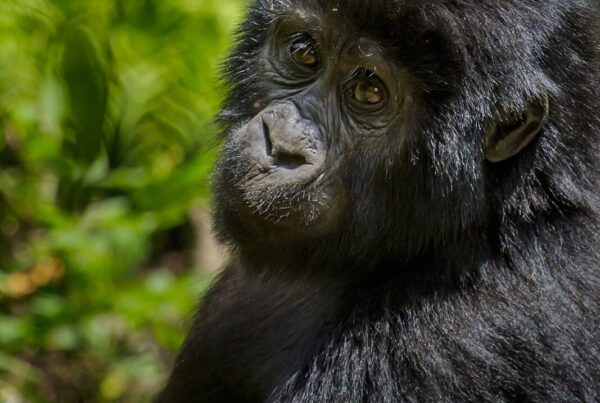
gorilla trekking Uganda story tell grandchildren is one of Africa’s most extraordinary wildlife experiences, connecting travellers with mountain gorillas in their natural forest habitat. There are stories we tell at dinner tables, at family gatherings, in the moments when conversation turns to what we have done and seen — and most travel stories fade: the resort was lovely, the city was fascinating, the food was remarkable — these are accurate reports that produce polite interest; then there is gorilla trekking in Uganda, which produces a story about the morning in Bwindi Impenetrable Forest when a silverback moved past you close enough to hear him breathe and you stood still in the ancient forest and understood something about the world that you had not understood before. Plan: gorilla permits, 7-day itinerary, accredited operators.
- The story’s specifics: Bwindi has 20+ named, habituated gorilla families; each has a silverback with a name and documented history; the ranger tells you who you are watching; the story has specific characters
- Why it lasts: the encounter creates a strong episodic memory — high novelty, full attention, physical engagement, emotional response; the same account told specifically 10 years later is the normal pattern
- The access: Bwindi gorilla trekking, USD 800 permit; full cost breakdown; 4 sectors to choose from
- The context: mountain gorillas number 1,063 worldwide; the conservation programme depends substantially on tourism revenue; the visit is both an experience and a contribution
There are stories we tell — at dinner tables, at family gatherings, in the moments when conversation turns to what we have done and seen. Most travel stories fade: the resort was lovely, the city was fascinating, the food was remarkable. These are accurate reports that produce polite interest and then dissolve into the general noise of other people’s experiences. Then there are the stories that people lean in for. The ones that start with “I was in this forest in Uganda, and…” and that, twenty minutes later, have everyone at the table quiet and attentive.
The gorilla trekking story is that kind of story. Not because it is dramatic or dangerous or unusual in the way that mountaineering or expedition travel can be. But because it describes a moment of genuine encounter with another kind of intelligence — a moment that listeners recognise as different from ordinary travel experiences, that touches something they respond to even without having been there. The gorilla story stays relevant across decades because what it describes is not a passing attraction but a fundamental human encounter with the rest of the natural world.
The Trip You Will Tell Your Grandchildren About: Gorilla Trekking in Uganda
What Makes a Story Worth Telling
The stories that endure across years and across generations share certain qualities. They involve a genuine journey — not just transportation but movement toward something that mattered. They involve a moment of revelation or encounter that changed something in the person who experienced it. And they carry a meaning that extends beyond the experience itself, connecting the personal moment to something larger about what it means to be human and alive.
The gorilla trekking story has all of these. The journey to Bwindi — the flight to Uganda, the long drive through the Ugandan highlands, the early morning trek through one of Africa’s most ancient forests — is a genuine journey with genuine effort and genuine anticipation. The encounter with the gorilla family is a moment of revelation that most visitors describe as unlike anything they have experienced before. And the meaning — the awareness of shared ancestry, of conservation, of the extraordinary improbability of a species that was heading toward extinction and is now recovering — extends the personal moment into something that feels part of a larger story about the world.
The Grandchildren Test
The grandchildren test is a useful heuristic for evaluating significant experiences: will this be something worth describing to people who were not born yet, to people who will hear about it without the context of the time and place in which it happened? Most experiences fail this test — they require context that makes them interesting only to contemporaries. The gorilla encounter passes it easily.
Thirty years from now, mountain gorillas will still be a critically endangered species whose recovery represents one of conservation’s more remarkable achievements. The Bwindi forest will still be there, or it will not — and either outcome will make the story of having seen it at this specific moment more rather than less significant. The gorillas themselves — the specific families, the individual animals — will be different, but the continuity of the species, if the conservation systems hold, will connect your experience to theirs.
The story of having stood in Bwindi in 2027 with a gorilla family will be, in thirty years, a story about a moment in conservation history that could have gone differently. That specificity — being there when it was still uncertain, when the outcome still depended on people choosing to show up — gives the story a weight that purely recreational experiences cannot carry.
Uganda as the Setting
Part of what makes the gorilla trekking story worth telling is the setting that surrounds it. Uganda is not a generic safari destination. It is a specific, complex, extraordinary country with a history that includes both devastating conflict and remarkable recovery, with landscapes that range from equatorial forest to volcanic highlands to the source of the Nile, and with a human culture of warmth and energy that leaves most visitors more affected by the people they met than they expected to be.
The story that begins in Bwindi does not end at the park gate. It includes the drive through the Kigezi Highlands with their terraced hillsides, the market in Kisoro with its cross-border traders, the birds visible from the vehicle window that were new species with every kilometre, and the rangers whose knowledge of the forest and the gorillas reveals a relationship between people and wildlife that challenges every assumption about conservation as a purely scientific enterprise.
Book the Story You Want to Tell
The gorilla permit at $800 in 2027 is the entry point to a trip that will become a story. Not a story about having been somewhere and having seen something — the kind of story that fades into the background of other people’s similar stories — but a story that remains specific and vivid and worth telling across decades. The gorilla that turned and looked at you. The forest that swallowed you in its green. The moment when you understood, in a way that reading had never produced, that you and the gorilla were related in a way that made the word “animal” feel suddenly and completely wrong.
Contact us for 2027 permit availability and let us help you plan the trip that will become the story your grandchildren will hear, and understand, and want to tell in their own time.
What makes the gorilla trekking story compelling to people who have not done it?
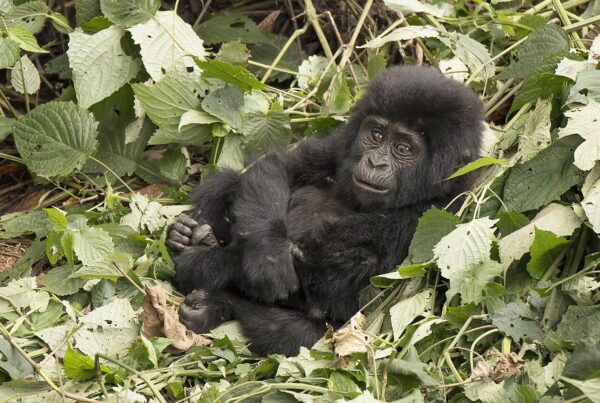
The story has properties that make it consistently engaging. The character: mountain gorillas are understood immediately by any audience — the silverback’s physical presence, the family dynamics, the infant — are familiar story elements that require no specialist knowledge to appreciate. The specifics: the trek itself has a narrative arc (preparation, ascent, finding the gorillas, the encounter, descent) that is a complete story structure; each element has vivid sensory content — the mud, the bird calls, the moment the ranger signals to stop. The uniqueness: the listener knows that gorilla trekking at Bwindi is not something they have done or that most people have done; the rarity of the experience gives the story weight that common travel experiences do not have. The survival: the fact that mountain gorillas are Endangered and the trekker visited them during the conservation recovery period gives the story a historical dimension that will become more significant over time.
What are the named gorilla families at Bwindi that trekkers can visit?
Bwindi’s gorilla families each have documented histories spanning decades. Buhoma sector families include: Mubare (the first habituated family, established 1993; named after Mubare Hill), Habinyanja, Rushegura, Katwe. Ruhija sector: Bitukura, Oruzogo, Kyaguliro (a research group studied by Max Planck Institute). Rushaga sector: the largest number of families at any Bwindi sector; includes Nshongi (the largest family, formerly with 36 members), Mishaya, Kahungye, Bweza, Busingye. Nkuringo sector: Nkuringo family, Christmas group. The ranger knows: on the morning of your trek, the ranger will tell you which family you are visiting and brief you on their current status; this is part of the encounter’s value — you know who you are watching. Sector guide: Bwindi sector comparison.
What do the conservation results of Bwindi gorilla trekking look like after 30+ years?
The 30-year results are the strongest argument for the programme. Population: 254 mountain gorillas in 1981; 1,063 in 2018 — a 4x increase over the period in which habituated trekking was developed; correlation is not causation but the conservation model is considered by IUCN as a contributing factor in the recovery. Habituation: from 1 habituated group (Mubare, 1993) to 20+ habituated families across four sectors at Bwindi and 1 at Mgahinga. Community sharing: 20% of permit revenue distributed to adjacent communities has funded schools, boreholes, and healthcare facilities in parishes around Bwindi since 2005; this economic stake in gorilla survival has measurably reduced poaching pressure. The downlisting: IUCN downlisted mountain gorillas from Critically Endangered to Endangered in 2018 — the only great ape to improve its conservation status in recent history; Uganda’s tourism programme is acknowledged as part of the reason.
How do I choose between the Bwindi gorilla trekking experience and the gorilla habituation experience?
The choice depends on what matters to you in the encounter. Standard trek (USD 800): 60 minutes with a fully habituated family; predictable encounter quality; 8 people maximum; available at all Bwindi sectors. Gorilla habituation experience (USD 1,800): up to 4 hours with a semi-habituated family; 4 people maximum; Rushaga sector only; the family is not yet fully at ease with humans so the encounter is more dynamic and less predictable; more photography time; almost always deeper penetration into the forest. Who chooses the standard: first-timers; those with limited budget; those for whom the 60 minutes is the desired scope. Who chooses habituation: wildlife photographers; those who have done the standard trek; researchers and serious enthusiasts wanting behavioural depth; see habituation experience details.
What is the practical itinerary for a 7-day Uganda gorilla and wildlife trip?
The 7-day circuit is Uganda’s most popular first-visit itinerary. Day 1: arrive Entebbe; optional afternoon at Mabamba Bay for shoebill; night Entebbe. Day 2-3: drive or fly to Kibale Forest; chimp trek Day 2 morning; Bigodi Wetland walk afternoon; night Kibale. Day 3-4: drive to Queen Elizabeth NP; afternoon game drive Kasenyi; Kazinga Channel boat Day 4 morning. Day 5-6: drive to Bwindi; gorilla trek Day 6 morning; afternoon rest. Day 7: drive to Entebbe (or fly Kisoro → Entebbe); evening flight. See the full 7-day itinerary and accredited operators.
- The Trip I Almost Did Not Take and Will Never Stop Talking About
- Gorilla Trekking Uganda: The Trip You Will Remember on Your Deathbed
- The value of silence during a gorilla encounter: what no guide will tell you to do
- Lake Victoria Fishing Trip
- What Makes Uganda Gorilla Trekking Different from Any Other Wildlife Trip
- Uganda Gorilla Trekking from London: The Full Trip Plan from Heathrow
- Uganda Gorilla Trekking Near Lake Bunyonyi: Lodges and Day Trips
- 3-Day Bwindi Gorilla Trekking Itinerary: Fly-In Express Trip
- Gorilla Trekking Anniversary Trip: Milestone Celebration Ideas in Uganda
- First-Timer’s Guide to Gorilla Trekking: What No One Tells You