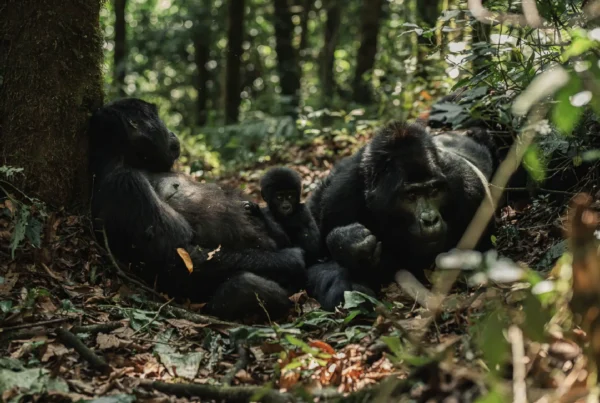
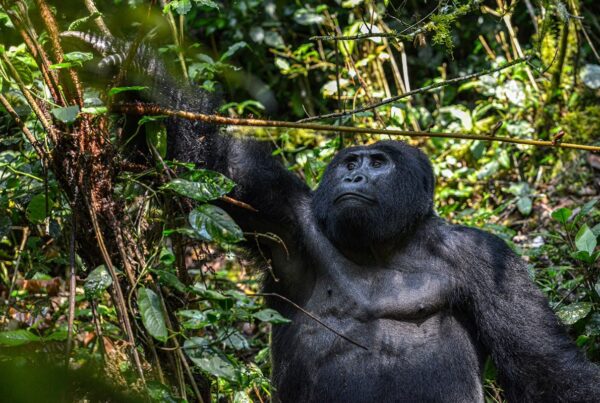
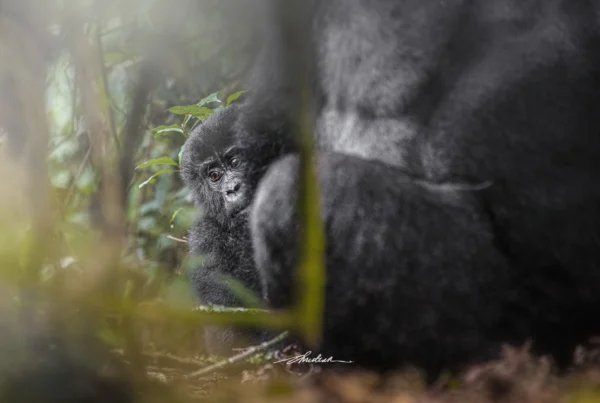
Gorilla trekking in Uganda is different from every other wildlife experience in the world — not in kind (it is still a wildlife encounter) but in the specific quality of mutual recognition that makes it unlike watching elephants at a water hole, unlike a whale watching boat, unlike any open-vehicle game drive across any African savannah — because the mountain gorilla is close enough to human intelligence and social structure that the encounter operates at the level of individual recognition rather than species observation. The silverback who turns to look at your group is not responding to movement or threat in the way that a lion, an elephant, or a chimpanzee does — it is making an assessment of each individual in the group that draws on social intelligence that is, in evolutionary terms, cousin to the social intelligence you are using to watch it. This is the quality that the photographs of the encounter do not convey and that every visitor who returns from Bwindi struggles to explain: not that the gorillas are impressive (they are), not that the forest is beautiful (it is), but that the encounter is with a being rather than a species. This guide explores what specifically makes gorilla trekking in Uganda the wildlife experience that visitors consistently describe as the most powerful of their lives, with the reference points from other wildlife experiences that help locate it in context. For the practical planning details, see the permit guide and the Bwindi sector guide.
What Sets Uganda Gorilla Trekking Apart
- Encounter type: Individual recognition, not species observation — each gorilla is a specific individual with a history
- Proximity: 7-metre minimum distance — closer than any other large wild animal encounter that is commercially available
- Duration: 60 minutes — longer than most wildlife encounters and entirely focused on one family
- Group size: Maximum 8 visitors — small enough for an intimate experience, not a crowd event
- Conservation context: Each permit funds the ranger system that protects the family you are visiting
- Repeat experience: every second visit with the same family is qualitatively different — the encounter has depth that grows with familiarity
Across Africa and beyond, wildlife travel offers countless memorable experiences. You can witness the Great Migration in Kenya and Tanzania, track predators across open savannahs, or explore wetlands filled with birdlife. Yet one experience consistently stands apart, both in depth and in impact—gorilla trekking Uganda what makes it different is a question that reveals why this journey feels unlike any other.
Uganda gorilla trekking is not just about seeing wildlife. It is about entering a living ecosystem, engaging physically with the environment, and encountering a species that reflects human behavior in powerful ways. The difference lies not in what you see, but in how you experience it.
The Experience Begins Before You See Anything
Most wildlife trips start with immediate sightings. You enter a park, and within minutes, animals appear across open landscapes. Gorilla trekking follows a completely different rhythm.
In understanding gorilla trekking Uganda what makes it different, the journey itself becomes the first defining factor. You begin with a briefing, then step into dense rainforest where visibility is limited and movement is guided rather than free. There are no guarantees of quick sightings. Instead, there is anticipation.
You walk through thick vegetation, navigate uneven ground, and listen carefully to the sounds around you. The forest surrounds you completely. This process creates a sense of immersion that begins long before the gorillas appear.
From Observation to Participation
Traditional wildlife trips place you in a position of observation. You sit in a vehicle, guided through landscapes while scanning for animals. The experience is visual, often distant, and shaped by movement across wide areas.
When exploring gorilla trekking Uganda what makes it different, the shift from observation to participation becomes clear. You are not just watching wildlife. You are part of the process of finding it.
Every step you take contributes to the experience. You follow trackers, adjust to terrain, and move at the pace of the forest. This active involvement transforms the journey from passive viewing into something more personal.
Close Proximity That Changes Perspective
One of the most powerful differences lies in proximity. On most wildlife trips, even when animals are visible, there remains a natural distance. Vehicles create a boundary, and animals often move away or remain cautious.
In gorilla trekking, that distance disappears.
Understanding gorilla trekking Uganda what makes it different means recognizing the significance of sitting just a few meters away from a gorilla family. There are no barriers beyond simple guidelines. The encounter feels immediate and real.
You observe details that are impossible to notice from afar. Facial expressions, small gestures, and interactions within the group become visible. This closeness changes how you perceive wildlife.
A Deep Emotional Connection
Another defining element of gorilla trekking Uganda what makes it different is the emotional response it creates.
Mountain gorillas share over 98 percent of human DNA. Their behavior reflects this connection in subtle but powerful ways. They form families, protect their young, and communicate through gestures and expressions that feel familiar.
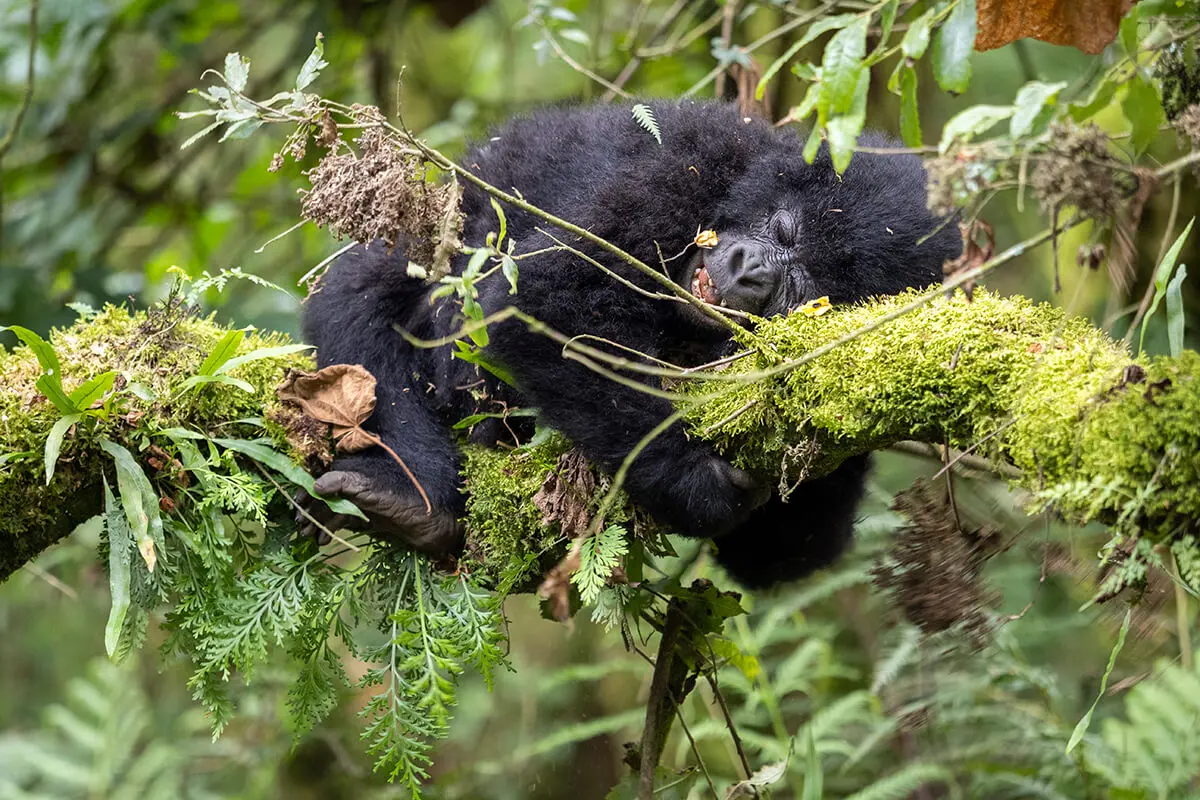
Travelers often describe moments where the experience feels less like observation and more like understanding. Watching a mother care for her infant or a juvenile play freely creates a sense of connection that goes beyond typical wildlife encounters.
This emotional depth is rarely found in other wildlife trips.
The Role of Effort in Shaping the Experience
Effort is a key factor in what makes this experience different.
Most wildlife trips are designed for comfort and accessibility. You move easily between locations, often without physical strain. Gorilla trekking introduces a different dynamic.
When considering gorilla trekking Uganda what makes it different, the physical effort becomes part of the value. You climb, walk, and adapt to the terrain. The trek may take hours, depending on the movement of the gorillas.
This effort creates anticipation. It builds a sense of achievement. And when the gorillas are finally found, the moment feels earned rather than expected.
An Environment That Fully Engages You
The environment of gorilla trekking is fundamentally different from other wildlife settings.
Savannah landscapes offer wide views and open space. They allow you to see animals from a distance and understand their movement across large areas.
In contrast, the rainforest environment in Uganda is dense and immersive. When examining gorilla trekking Uganda what makes it different, the forest itself becomes a central part of the experience.
You do not just see the environment. You feel it. The sounds, humidity, and limited visibility create a sense of presence that draws your attention inward. Every movement and sound becomes meaningful.
Time Spent with Wildlife
On most wildlife trips, sightings are often brief. Animals move, vehicles reposition, and the experience continues in search of the next encounter.
Gorilla trekking offers a different approach.
Once the gorillas are located, you spend one uninterrupted hour with them. This focused time allows for deeper observation and understanding. You are not rushing to the next sighting. You are fully engaged in the moment.
This extended interaction is a key element in understanding gorilla trekking Uganda what makes it different.
Exclusivity and Controlled Access
Gorilla trekking operates under strict conservation guidelines. Only a limited number of permits are issued each day, and group sizes remain small.
This controlled access ensures that the experience remains intimate and that the gorillas are protected.
When exploring gorilla trekking Uganda what makes it different, this exclusivity plays an important role. There are no crowds, no competition for space, and no disruption to the experience. Each group has its own moment.
A Direct Link to Conservation
Another important difference lies in the impact of the experience.
While many wildlife trips contribute to conservation through park fees and tourism, gorilla trekking has a direct and measurable effect. Permit fees support anti-poaching efforts, habitat protection, and community development.
Understanding gorilla trekking Uganda what makes it different includes recognizing this connection. The experience is not only meaningful for the traveler but also for the survival of the species.
This adds a layer of purpose that goes beyond tourism.
Consistency in Impact Across Travellers
What stands out in discussions of gorilla trekking Uganda what makes it different is the consistency of reactions.
Travelers from different backgrounds, with different expectations, often describe similar feelings after the experience. They speak of connection, perspective, and lasting memory.
This consistency suggests that the experience itself, rather than individual preference, drives its impact.
The Difference Between Seeing and Understanding
At its core, the distinction lies in the difference between seeing wildlife and understanding it.
Traditional wildlife trips allow you to see a wide range of animals in their natural environment. They provide scale, variety, and excitement.
Gorilla trekking offers something deeper. It allows you to observe behavior closely, to recognize patterns, and to feel a connection that extends beyond observation.
This is the essence of gorilla trekking Uganda what makes it different.
How This Experience Changes Travel Expectations
Many travelers return from gorilla trekking with a different perspective on wildlife travel.
After experiencing such close interaction and emotional depth, other wildlife encounters may feel more distant. This does not reduce their value, but it changes how they are perceived.
Gorilla trekking sets a new standard.
It shifts expectations from quantity to quality, from observation to connection.
Planning a Gorilla Trekking Experience That Reflects the Difference
To fully experience what defines gorilla trekking Uganda what makes it different, planning is essential.
Securing permits early ensures access to the experience. Choosing the right trekking sector based on your comfort level allows for a smoother journey. Staying close to the trekking area reduces logistical challenges and helps you focus on the experience itself.
Preparation also matters. Understanding the physical nature of the trek, packing appropriately, and approaching the experience with patience all contribute to a more meaningful outcome.
Book Your Gorilla Trekking Experience
If you want to understand firsthand gorilla trekking Uganda what makes it different, begin by planning early and securing your permit in advance. Choose travel dates that align with your preferred season, and select a trekking sector that matches your level of comfort and fitness.
Position yourself close to the trekking starting point to reduce early morning transfers, and allow enough time in your itinerary to fully experience the forest without rushing. Approach the journey with an open mindset, ready to engage with both the physical challenge and the emotional depth of the encounter.
With the right preparation, you move beyond simply visiting a destination and step into an experience that redefines what wildlife travel can be.
Frequently Asked Questions
Gorilla trekking and chimpanzee trekking (available at Kibale Forest NP in Uganda) are both primate encounters in forest habitat, but they produce fundamentally different experience qualities because gorilla and chimpanzee behaviour and social organisation are different in ways that directly affect what happens during the encounter. Chimpanzees are loud, active, arboreal, and fast-moving — a chimpanzee troop encounter at Kibale is dynamic and high-energy, with individuals moving rapidly through the canopy, vocalising at high volume, and engaging in the rapid-display behaviour that chimpanzee social organisation requires. The gorilla encounter is quieter, slower, and more grounded — a mountain gorilla family in the Bwindi forest is terrestrial (the silverback and most adults spend most time on the ground), deliberate in their movement, and tolerant of close human presence in a way that chimpanzees rarely are at comparable distance. The specific quality of the gorilla encounter that the chimpanzee encounter does not replicate: the stillness. Gorillas at rest are genuinely still, and their attention to the visitor group produces the quality of direct held gaze that chimpanzees, in their constant rapid movement, cannot replicate. Neither encounter is better — they are genuinely different in character, and Uganda’s ability to offer both within a single 10-day itinerary is one of the specific advantages of Uganda as a primate safari destination. Why do gorilla trekking visitors consistently rate it the best wildlife experience of their lives? The gorilla trekking encounter at Bwindi is rated by visitors as the most powerful wildlife experience of their lives with a consistency that is remarkable across different origin countries, different wildlife backgrounds, and different levels of prior Africa travel experience. The specific reasons visitors give for this rating cluster around a small number of themes. Proximity: the 7-metre minimum encounter distance is closer than any other commercially available large wild animal encounter — closer than lion game drive, closer than whale watching, closer than most chimp trekking encounters — and the proximity combined with the gorilla’s tolerance of human presence produces an intimacy that other wildlife encounters at greater distance do not. Reciprocal attention: most wildlife encounters are one-directional (visitor watches animal; animal is indifferent to visitor’s presence or is alarmed by it); the gorilla encounter is genuinely bilateral — the gorilla family, particularly the silverback, actively assesses the visitor group and the quality of that assessment is observable. Scale: the silverback’s physical size at close range surprises visitors who have only seen the species in photographs — adult male mountain gorillas weigh 150-200kg and stand 1.5-1.8m at full height; the encounter with this scale of animal at 7-10 metres produces a physical response in the visitor that smaller primates do not. The combination of these factors — proximity, reciprocal attention, and scale — within the structure of the 60-minute limited-access encounter creates the conditions for the specific quality of presence that visitors consistently describe as transformative. How does Rwanda gorilla trekking compare to Uganda gorilla trekking? Uganda and Rwanda gorilla trekking offer the same species (mountain gorilla) and the same encounter format (60 minutes, maximum 8 visitors, ranger-led) in adjacent but ecologically distinct habitats — differences that are real and matter for some visitors. The Virunga volcanic habitat (Rwanda’s Volcanoes NP and the DRC/Uganda Virunga extension): the gorillas range on volcanic mountain slopes with a distinctive vegetation profile including bamboo zones and the open Hagenia-Hypericum woodland at higher altitude; the landscape is more open and dramatic than Bwindi’s ancient forest, with volcanic cone silhouettes providing a backdrop visible from the trails; the trek begins at higher altitude (the Volcanoes NP trailheads are at 2,400-2,600m versus Bwindi’s 1,600-2,200m). Bwindi’s ancient forest habitat: a dense, ancient rain forest ecosystem with the specific character of a forest that has persisted through ice age cycles — darker, denser, more enclosed; the gorilla families are set within the forest interior rather than the more open Virunga habitat; the landscape drama is vertical and close rather than panoramic. The permit cost difference is significant: Uganda USD 800 versus Rwanda USD 1,500 per person. The quality of the gorilla encounter is comparable — both provide habituated families, experienced ranger guides, and the same 60-minute encounter structure. The choice between them is primarily a preference between the ecological and landscape character of the two habitats and the cost difference, not a quality difference in the encounter itself. What happens during the morning gate briefing before the gorilla trek? The morning gate briefing at the Bwindi sector gate is the 20-30 minute orientation session conducted by Uganda Wildlife Authority’s ranger team before the trekking groups depart — a session that most visitors are insufficiently briefed about in advance and that provides the context, rules, and family-specific information that makes the encounter intelligible. The briefing content: an introduction to the habituated gorilla families available that day and their current locations and compositions; the behavioural rules for the encounter (7-metre minimum distance, no flash photography, maximum 8 visitors per family, 60-minute encounter time, no eating or drinking in the presence of the gorillas, no sudden movements or loud noises, and the required response to a silverback approach or display — stand still, lower gaze, let the ranger manage); a fitness assessment where the ranger team asks each visitor about their fitness level and mobility to inform family assignment; and the family assignment itself, where the ranger group leader assigns each 8-person group to a specific habituated family based on the fitness assessment, the family’s current location, and the available permit holders for the day. The briefing is the most information-dense 20 minutes of the day and the visitor who pays full attention leaves with a specific family profile, a set of encounter rules that they understand the reasons for, and the confidence that comes from knowing what to expect rather than arriving at the forest edge without context. Is gorilla trekking worth the cost compared to other wildlife experiences? The USD 800 gorilla trekking permit is the most expensive per-activity wildlife experience in East Africa when compared to game drive entry fees, whale watching boat costs, or chimpanzee trekking permits — and it is worth it, in the specific sense that the experience it provides is not replicable at a lower cost or with a different animal. The permit cost buys: 60 minutes with a habituated mountain gorilla family (a species with a total wild population of approximately 1,000 individuals) at a proximity of 7 metres, in a protected ancient forest, managed by a ranger team whose operation the permit directly funds. The comparison that clarifies the value: a premium African game drive in a private conservancy in Kenya or Tanzania costs USD 150-400 per day per person and provides a good chance of seeing the same species (lions, elephants, leopards) that other visitors also saw on the same day in the same vehicle. The gorilla encounter cannot be compared directly because nothing else provides it — there is no alternative price point for a 60-minute close-range mountain gorilla family encounter. Visitors who arrive with a cost-comparison mindset almost universally leave without one. The consistent visitor verdict is that the experience exceeded the cost expectation regardless of the individual’s starting level of skepticism about the permit price — not because they revised their cost-consciousness but because the experience category is genuinely different from anything else they had paid for in travel. Start planning your Uganda gorilla trekking trip Gorilla Permit Guide — the permit that makes the encounter possible Uganda Gorilla Families — the specific families and individuals you may encounter Bwindi Sector Guide — sector comparison for planning your first or next gorilla trek Full Safari Cost Guide — complete trip budget from permit to flights Safari Itineraries — Uganda itineraries that place the gorilla encounter in a full circuit context Further Reading What Makes Bwindi Different From Every Other African Forest Are There Other Animals on the Gorilla Trek in Bwindi? Forest Wildlife Beyond the Gorillas Best Wildlife Encounters on Earth: Why Gorilla Trekking Makes Every List Gorillas Use Over 25 Different Sounds to Communicate With Each Other Why Gorilla Trekking Beats Every Other Wildlife Encounter on Earth The Experience Gap: Why Uganda Wildlife Is Different From East Africa Standard Mother’s Day Gorilla Trekking Uganda: Give Mum the Trip of a Lifetime How the $800 Uganda Gorilla Permit Compares to Other Wildlife Fees The Wildlife Experience That Makes Everything Else Feel Ordinary Best Day Trips From Kampala for Wildlife Lovers <
The gorilla trekking encounter at Bwindi is rated by visitors as the most powerful wildlife experience of their lives with a consistency that is remarkable across different origin countries, different wildlife backgrounds, and different levels of prior Africa travel experience. The specific reasons visitors give for this rating cluster around a small number of themes. Proximity: the 7-metre minimum encounter distance is closer than any other commercially available large wild animal encounter — closer than lion game drive, closer than whale watching, closer than most chimp trekking encounters — and the proximity combined with the gorilla’s tolerance of human presence produces an intimacy that other wildlife encounters at greater distance do not. Reciprocal attention: most wildlife encounters are one-directional (visitor watches animal; animal is indifferent to visitor’s presence or is alarmed by it); the gorilla encounter is genuinely bilateral — the gorilla family, particularly the silverback, actively assesses the visitor group and the quality of that assessment is observable. Scale: the silverback’s physical size at close range surprises visitors who have only seen the species in photographs — adult male mountain gorillas weigh 150-200kg and stand 1.5-1.8m at full height; the encounter with this scale of animal at 7-10 metres produces a physical response in the visitor that smaller primates do not. The combination of these factors — proximity, reciprocal attention, and scale — within the structure of the 60-minute limited-access encounter creates the conditions for the specific quality of presence that visitors consistently describe as transformative. How does Rwanda gorilla trekking compare to Uganda gorilla trekking? Uganda and Rwanda gorilla trekking offer the same species (mountain gorilla) and the same encounter format (60 minutes, maximum 8 visitors, ranger-led) in adjacent but ecologically distinct habitats — differences that are real and matter for some visitors. The Virunga volcanic habitat (Rwanda’s Volcanoes NP and the DRC/Uganda Virunga extension): the gorillas range on volcanic mountain slopes with a distinctive vegetation profile including bamboo zones and the open Hagenia-Hypericum woodland at higher altitude; the landscape is more open and dramatic than Bwindi’s ancient forest, with volcanic cone silhouettes providing a backdrop visible from the trails; the trek begins at higher altitude (the Volcanoes NP trailheads are at 2,400-2,600m versus Bwindi’s 1,600-2,200m). Bwindi’s ancient forest habitat: a dense, ancient rain forest ecosystem with the specific character of a forest that has persisted through ice age cycles — darker, denser, more enclosed; the gorilla families are set within the forest interior rather than the more open Virunga habitat; the landscape drama is vertical and close rather than panoramic. The permit cost difference is significant: Uganda USD 800 versus Rwanda USD 1,500 per person. The quality of the gorilla encounter is comparable — both provide habituated families, experienced ranger guides, and the same 60-minute encounter structure. The choice between them is primarily a preference between the ecological and landscape character of the two habitats and the cost difference, not a quality difference in the encounter itself. What happens during the morning gate briefing before the gorilla trek? The morning gate briefing at the Bwindi sector gate is the 20-30 minute orientation session conducted by Uganda Wildlife Authority’s ranger team before the trekking groups depart — a session that most visitors are insufficiently briefed about in advance and that provides the context, rules, and family-specific information that makes the encounter intelligible. The briefing content: an introduction to the habituated gorilla families available that day and their current locations and compositions; the behavioural rules for the encounter (7-metre minimum distance, no flash photography, maximum 8 visitors per family, 60-minute encounter time, no eating or drinking in the presence of the gorillas, no sudden movements or loud noises, and the required response to a silverback approach or display — stand still, lower gaze, let the ranger manage); a fitness assessment where the ranger team asks each visitor about their fitness level and mobility to inform family assignment; and the family assignment itself, where the ranger group leader assigns each 8-person group to a specific habituated family based on the fitness assessment, the family’s current location, and the available permit holders for the day. The briefing is the most information-dense 20 minutes of the day and the visitor who pays full attention leaves with a specific family profile, a set of encounter rules that they understand the reasons for, and the confidence that comes from knowing what to expect rather than arriving at the forest edge without context. Is gorilla trekking worth the cost compared to other wildlife experiences? The USD 800 gorilla trekking permit is the most expensive per-activity wildlife experience in East Africa when compared to game drive entry fees, whale watching boat costs, or chimpanzee trekking permits — and it is worth it, in the specific sense that the experience it provides is not replicable at a lower cost or with a different animal. The permit cost buys: 60 minutes with a habituated mountain gorilla family (a species with a total wild population of approximately 1,000 individuals) at a proximity of 7 metres, in a protected ancient forest, managed by a ranger team whose operation the permit directly funds. The comparison that clarifies the value: a premium African game drive in a private conservancy in Kenya or Tanzania costs USD 150-400 per day per person and provides a good chance of seeing the same species (lions, elephants, leopards) that other visitors also saw on the same day in the same vehicle. The gorilla encounter cannot be compared directly because nothing else provides it — there is no alternative price point for a 60-minute close-range mountain gorilla family encounter. Visitors who arrive with a cost-comparison mindset almost universally leave without one. The consistent visitor verdict is that the experience exceeded the cost expectation regardless of the individual’s starting level of skepticism about the permit price — not because they revised their cost-consciousness but because the experience category is genuinely different from anything else they had paid for in travel. Start planning your Uganda gorilla trekking trip Gorilla Permit Guide — the permit that makes the encounter possible Uganda Gorilla Families — the specific families and individuals you may encounter Bwindi Sector Guide — sector comparison for planning your first or next gorilla trek Full Safari Cost Guide — complete trip budget from permit to flights Safari Itineraries — Uganda itineraries that place the gorilla encounter in a full circuit context Further Reading What Makes Bwindi Different From Every Other African Forest Are There Other Animals on the Gorilla Trek in Bwindi? Forest Wildlife Beyond the Gorillas Best Wildlife Encounters on Earth: Why Gorilla Trekking Makes Every List Gorillas Use Over 25 Different Sounds to Communicate With Each Other Why Gorilla Trekking Beats Every Other Wildlife Encounter on Earth The Experience Gap: Why Uganda Wildlife Is Different From East Africa Standard Mother’s Day Gorilla Trekking Uganda: Give Mum the Trip of a Lifetime How the $800 Uganda Gorilla Permit Compares to Other Wildlife Fees The Wildlife Experience That Makes Everything Else Feel Ordinary Best Day Trips From Kampala for Wildlife Lovers <
Uganda and Rwanda gorilla trekking offer the same species (mountain gorilla) and the same encounter format (60 minutes, maximum 8 visitors, ranger-led) in adjacent but ecologically distinct habitats — differences that are real and matter for some visitors. The Virunga volcanic habitat (Rwanda’s Volcanoes NP and the DRC/Uganda Virunga extension): the gorillas range on volcanic mountain slopes with a distinctive vegetation profile including bamboo zones and the open Hagenia-Hypericum woodland at higher altitude; the landscape is more open and dramatic than Bwindi’s ancient forest, with volcanic cone silhouettes providing a backdrop visible from the trails; the trek begins at higher altitude (the Volcanoes NP trailheads are at 2,400-2,600m versus Bwindi’s 1,600-2,200m). Bwindi’s ancient forest habitat: a dense, ancient rain forest ecosystem with the specific character of a forest that has persisted through ice age cycles — darker, denser, more enclosed; the gorilla families are set within the forest interior rather than the more open Virunga habitat; the landscape drama is vertical and close rather than panoramic. The permit cost difference is significant: Uganda USD 800 versus Rwanda USD 1,500 per person. The quality of the gorilla encounter is comparable — both provide habituated families, experienced ranger guides, and the same 60-minute encounter structure. The choice between them is primarily a preference between the ecological and landscape character of the two habitats and the cost difference, not a quality difference in the encounter itself. What happens during the morning gate briefing before the gorilla trek? The morning gate briefing at the Bwindi sector gate is the 20-30 minute orientation session conducted by Uganda Wildlife Authority’s ranger team before the trekking groups depart — a session that most visitors are insufficiently briefed about in advance and that provides the context, rules, and family-specific information that makes the encounter intelligible. The briefing content: an introduction to the habituated gorilla families available that day and their current locations and compositions; the behavioural rules for the encounter (7-metre minimum distance, no flash photography, maximum 8 visitors per family, 60-minute encounter time, no eating or drinking in the presence of the gorillas, no sudden movements or loud noises, and the required response to a silverback approach or display — stand still, lower gaze, let the ranger manage); a fitness assessment where the ranger team asks each visitor about their fitness level and mobility to inform family assignment; and the family assignment itself, where the ranger group leader assigns each 8-person group to a specific habituated family based on the fitness assessment, the family’s current location, and the available permit holders for the day. The briefing is the most information-dense 20 minutes of the day and the visitor who pays full attention leaves with a specific family profile, a set of encounter rules that they understand the reasons for, and the confidence that comes from knowing what to expect rather than arriving at the forest edge without context. Is gorilla trekking worth the cost compared to other wildlife experiences? The USD 800 gorilla trekking permit is the most expensive per-activity wildlife experience in East Africa when compared to game drive entry fees, whale watching boat costs, or chimpanzee trekking permits — and it is worth it, in the specific sense that the experience it provides is not replicable at a lower cost or with a different animal. The permit cost buys: 60 minutes with a habituated mountain gorilla family (a species with a total wild population of approximately 1,000 individuals) at a proximity of 7 metres, in a protected ancient forest, managed by a ranger team whose operation the permit directly funds. The comparison that clarifies the value: a premium African game drive in a private conservancy in Kenya or Tanzania costs USD 150-400 per day per person and provides a good chance of seeing the same species (lions, elephants, leopards) that other visitors also saw on the same day in the same vehicle. The gorilla encounter cannot be compared directly because nothing else provides it — there is no alternative price point for a 60-minute close-range mountain gorilla family encounter. Visitors who arrive with a cost-comparison mindset almost universally leave without one. The consistent visitor verdict is that the experience exceeded the cost expectation regardless of the individual’s starting level of skepticism about the permit price — not because they revised their cost-consciousness but because the experience category is genuinely different from anything else they had paid for in travel. Start planning your Uganda gorilla trekking trip Gorilla Permit Guide — the permit that makes the encounter possible Uganda Gorilla Families — the specific families and individuals you may encounter Bwindi Sector Guide — sector comparison for planning your first or next gorilla trek Full Safari Cost Guide — complete trip budget from permit to flights Safari Itineraries — Uganda itineraries that place the gorilla encounter in a full circuit context Further Reading What Makes Bwindi Different From Every Other African Forest Are There Other Animals on the Gorilla Trek in Bwindi? Forest Wildlife Beyond the Gorillas Best Wildlife Encounters on Earth: Why Gorilla Trekking Makes Every List Gorillas Use Over 25 Different Sounds to Communicate With Each Other Why Gorilla Trekking Beats Every Other Wildlife Encounter on Earth The Experience Gap: Why Uganda Wildlife Is Different From East Africa Standard Mother’s Day Gorilla Trekking Uganda: Give Mum the Trip of a Lifetime How the $800 Uganda Gorilla Permit Compares to Other Wildlife Fees The Wildlife Experience That Makes Everything Else Feel Ordinary Best Day Trips From Kampala for Wildlife Lovers <
The morning gate briefing at the Bwindi sector gate is the 20-30 minute orientation session conducted by Uganda Wildlife Authority’s ranger team before the trekking groups depart — a session that most visitors are insufficiently briefed about in advance and that provides the context, rules, and family-specific information that makes the encounter intelligible. The briefing content: an introduction to the habituated gorilla families available that day and their current locations and compositions; the behavioural rules for the encounter (7-metre minimum distance, no flash photography, maximum 8 visitors per family, 60-minute encounter time, no eating or drinking in the presence of the gorillas, no sudden movements or loud noises, and the required response to a silverback approach or display — stand still, lower gaze, let the ranger manage); a fitness assessment where the ranger team asks each visitor about their fitness level and mobility to inform family assignment; and the family assignment itself, where the ranger group leader assigns each 8-person group to a specific habituated family based on the fitness assessment, the family’s current location, and the available permit holders for the day. The briefing is the most information-dense 20 minutes of the day and the visitor who pays full attention leaves with a specific family profile, a set of encounter rules that they understand the reasons for, and the confidence that comes from knowing what to expect rather than arriving at the forest edge without context. Is gorilla trekking worth the cost compared to other wildlife experiences? The USD 800 gorilla trekking permit is the most expensive per-activity wildlife experience in East Africa when compared to game drive entry fees, whale watching boat costs, or chimpanzee trekking permits — and it is worth it, in the specific sense that the experience it provides is not replicable at a lower cost or with a different animal. The permit cost buys: 60 minutes with a habituated mountain gorilla family (a species with a total wild population of approximately 1,000 individuals) at a proximity of 7 metres, in a protected ancient forest, managed by a ranger team whose operation the permit directly funds. The comparison that clarifies the value: a premium African game drive in a private conservancy in Kenya or Tanzania costs USD 150-400 per day per person and provides a good chance of seeing the same species (lions, elephants, leopards) that other visitors also saw on the same day in the same vehicle. The gorilla encounter cannot be compared directly because nothing else provides it — there is no alternative price point for a 60-minute close-range mountain gorilla family encounter. Visitors who arrive with a cost-comparison mindset almost universally leave without one. The consistent visitor verdict is that the experience exceeded the cost expectation regardless of the individual’s starting level of skepticism about the permit price — not because they revised their cost-consciousness but because the experience category is genuinely different from anything else they had paid for in travel. Start planning your Uganda gorilla trekking trip Gorilla Permit Guide — the permit that makes the encounter possible Uganda Gorilla Families — the specific families and individuals you may encounter Bwindi Sector Guide — sector comparison for planning your first or next gorilla trek Full Safari Cost Guide — complete trip budget from permit to flights Safari Itineraries — Uganda itineraries that place the gorilla encounter in a full circuit context Further Reading What Makes Bwindi Different From Every Other African Forest Are There Other Animals on the Gorilla Trek in Bwindi? Forest Wildlife Beyond the Gorillas Best Wildlife Encounters on Earth: Why Gorilla Trekking Makes Every List Gorillas Use Over 25 Different Sounds to Communicate With Each Other Why Gorilla Trekking Beats Every Other Wildlife Encounter on Earth The Experience Gap: Why Uganda Wildlife Is Different From East Africa Standard Mother’s Day Gorilla Trekking Uganda: Give Mum the Trip of a Lifetime How the $800 Uganda Gorilla Permit Compares to Other Wildlife Fees The Wildlife Experience That Makes Everything Else Feel Ordinary Best Day Trips From Kampala for Wildlife Lovers <
The USD 800 gorilla trekking permit is the most expensive per-activity wildlife experience in East Africa when compared to game drive entry fees, whale watching boat costs, or chimpanzee trekking permits — and it is worth it, in the specific sense that the experience it provides is not replicable at a lower cost or with a different animal. The permit cost buys: 60 minutes with a habituated mountain gorilla family (a species with a total wild population of approximately 1,000 individuals) at a proximity of 7 metres, in a protected ancient forest, managed by a ranger team whose operation the permit directly funds. The comparison that clarifies the value: a premium African game drive in a private conservancy in Kenya or Tanzania costs USD 150-400 per day per person and provides a good chance of seeing the same species (lions, elephants, leopards) that other visitors also saw on the same day in the same vehicle. The gorilla encounter cannot be compared directly because nothing else provides it — there is no alternative price point for a 60-minute close-range mountain gorilla family encounter. Visitors who arrive with a cost-comparison mindset almost universally leave without one. The consistent visitor verdict is that the experience exceeded the cost expectation regardless of the individual’s starting level of skepticism about the permit price — not because they revised their cost-consciousness but because the experience category is genuinely different from anything else they had paid for in travel. Start planning your Uganda gorilla trekking trip Gorilla Permit Guide — the permit that makes the encounter possible Uganda Gorilla Families — the specific families and individuals you may encounter Bwindi Sector Guide — sector comparison for planning your first or next gorilla trek Full Safari Cost Guide — complete trip budget from permit to flights Safari Itineraries — Uganda itineraries that place the gorilla encounter in a full circuit context Further Reading What Makes Bwindi Different From Every Other African Forest Are There Other Animals on the Gorilla Trek in Bwindi? Forest Wildlife Beyond the Gorillas Best Wildlife Encounters on Earth: Why Gorilla Trekking Makes Every List Gorillas Use Over 25 Different Sounds to Communicate With Each Other Why Gorilla Trekking Beats Every Other Wildlife Encounter on Earth The Experience Gap: Why Uganda Wildlife Is Different From East Africa Standard Mother’s Day Gorilla Trekking Uganda: Give Mum the Trip of a Lifetime How the $800 Uganda Gorilla Permit Compares to Other Wildlife Fees The Wildlife Experience That Makes Everything Else Feel Ordinary Best Day Trips From Kampala for Wildlife Lovers <