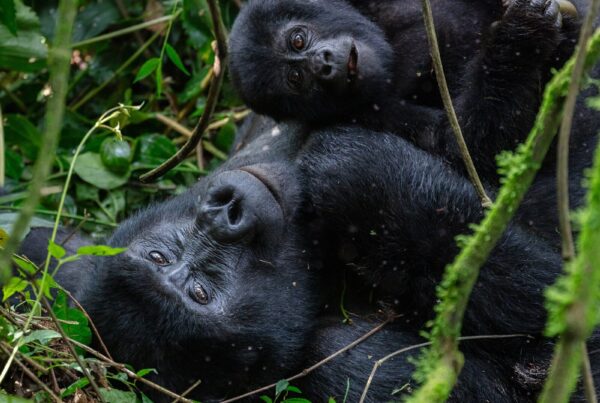
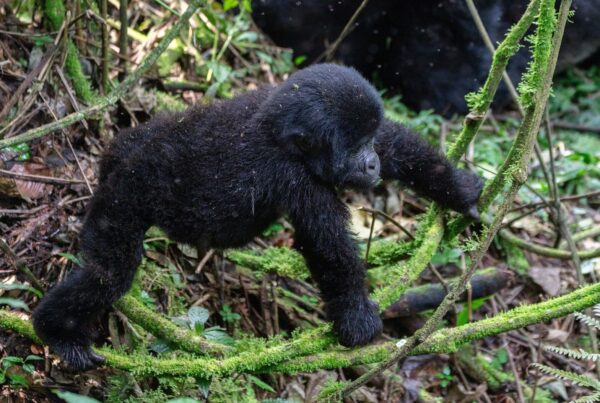
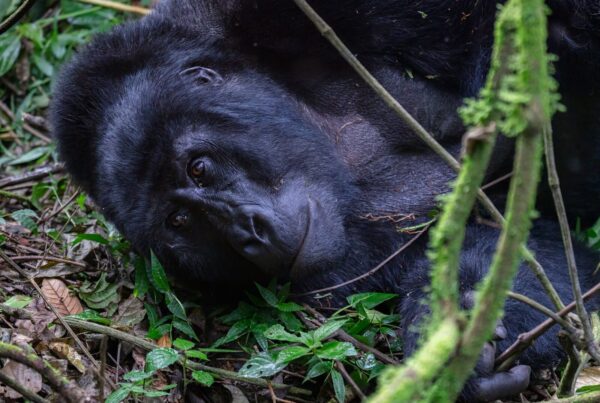
The most memorable gorilla trekking moments of 2025 were not the ones that went as planned — they were the silences, the unexpected encounters, and the instants when a silverback made eye contact and looked away without concern. These are the moments that wildlife photographers and first-time trekkers alike describe most often when they try to explain what gorilla trekking is actually like. The full trekking guide covers what to expect, and the gorilla families introduces the specific groups behind these encounters.
- Primary location: Bwindi Impenetrable National Park, Uganda
- Peak clarity season: June–August and December–January (dry seasons)
- Photography rules: no flash; silent shutter mode recommended
- Best moments: typically in the first 10–20 minutes of the 1-hour viewing window
- Group size: maximum 8 visitors per gorilla family per day
Gorilla trek moments in 2025 produced photographs and stories that circulated far beyond the wildlife and travel communities. Every year, the 12 habituated gorilla families in Bwindi Impenetrable Forest and the three habituated groups in Mgahinga Gorilla National Park generate encounters of extraordinary power and intimacy. Some are predictable — the silverback resting in a clearing, the family moving in single file through the undergrowth. Others are completely unrepeatable — a chance encounter that happened once, in a particular combination of light and animal behaviour and human presence, and will never happen again in quite the same way.
1. A silverback crossed the path 30 centimetres from the first trekker
In January 2025, a group of eight trekkers in Bwindi’s Ruhija sector had a moment that their guide described as one of the closest encounters he had witnessed in fifteen years of leading treks. The silverback of the Oruzogo family, returning from a feeding site, chose to cross the trail at the exact moment the group was passing. He moved with complete calm, not adjusting his route for the humans — who froze as instructed by the ranger. The photographs taken in those seconds — the silverback’s face in profile at arm’s length, his knuckles on the path next to a trekker’s boot — were shared thousands of times across wildlife photography platforms in the weeks that followed.
Why close encounters happen and what they mean
Habituated mountain gorillas have been conditioned over years of daily ranger contact to accept human presence without stress or aggression. When a silverback crosses a path 30 centimetres from a human visitor, it is not a safety failure — it is evidence that habituation has succeeded. The gorilla is not frightened. He has assessed the situation, found no threat, and continued with his day. The ranger present ensures that the human visitors behave appropriately. The result is a moment of extraordinary intimacy between two species that is only possible in a handful of locations in the world.
2. Twins playing in morning mist
Twin gorilla births are exceptionally rare — they occur in roughly 1 to 2 percent of gorilla births, and the survival rate for gorilla twins is lower than for single infants because gorilla mothers struggle to carry and nurse two infants simultaneously. In April 2025, a pair of juvenile twins from Bwindi’s Bitukura family were photographed playing together in morning mist, their dark shapes tumbling across a patch of cleared undergrowth while mist swirled around them. The photographs — capturing the extraordinary rarity of the twins’ existence alongside the playful vitality of the animals themselves — became some of the most widely shared gorilla images of the year.
3. A ranger comforting a lost infant
In March 2025, a ranger in the Rushegura sector found a young gorilla infant that had become separated from his family group during a heavy rainstorm. The infant — approximately eight months old — was distressed and vocalising loudly. The ranger, following strict protocol, maintained physical distance while guiding the infant’s movements to help reunite it with the group. The photographs taken during this process — the infant’s frightened face, the ranger’s calm presence, the eventual reunion with the mother — told a complete story about the relationship between conservation staff and the animals they protect.
4. The Kyaguliro family crossing a stream
Mountain gorillas avoid deep water, but streams and small rivers within their territory must be crossed regularly. In June 2025, the Kyaguliro research group in Bwindi’s Ruhija sector was photographed crossing a stream in sequence — the silverback leading, pausing to assess the crossing, then stepping across on exposed rocks, followed by each family member in order of social rank. The photographs of the crossing — particularly the image of a mother gorilla crossing with her infant clinging to her back — were described by one wildlife photography judge as among the finest gorilla images produced in any year.
The order of crossing and what it reveals
The order in which gorilla family members cross an obstacle — a stream, a fallen log, a section of dense undergrowth — reveals the social structure of the group with perfect clarity. The silverback always goes first, establishing safety before the rest of the family follows. High-ranking females and their infants follow next. Lower-ranking females, juveniles, and blackbacks bring up the rear. This hierarchy, visible in every photograph of a crossing event, communicates the complexity of gorilla social organisation in a single image.
5. A gorilla infant discovering its reflection in a puddle
One of the most widely shared gorilla photographs of 2025 was taken in August by a trekker in the Bwindi Nkuringo sector. A young gorilla infant — perhaps 18 months old, in the early stages of independent movement — paused at the edge of a muddy puddle and stared at its own reflection. The moment lasted perhaps 10 seconds before the mother moved on and the infant scrambled to follow. The photograph captured the infant mid-stare, its expression one of puzzled curiosity that any parent of a young child would immediately recognise.
6. A silverback chest beat at close range
A silverback gorilla performing a full chest-beat display is one of the most physically impressive behaviours in the animal kingdom. The chest beat — performed by striking the cupped palms against the chest in rapid alternation — produces a sound that can be heard over a kilometre away and serves to communicate the silverback’s strength and dominance to rival males. In September 2025, the silverback of Bwindi’s Mubare family performed a full display 20 metres from a trekking group, and the photographs and video captured in those moments — the silverback rising to his feet, the display beginning, the sound reverberating through the forest — were extraordinary documentation of this rarely photographed behaviour.
7. Three generations in one frame
In October 2025, a photographer in the Buhoma sector captured what wildlife photography editors described as a technically and emotionally perfect gorilla image: a silverback, his adult daughter, and her newborn infant, all visible in a single frame, three generations of a family group resting together in afternoon light. The silverback’s silver back occupies the left of the frame. The adult female faces the camera directly. And the newborn, just weeks old, is pressed against its mother’s chest, eyes closed, entirely unaware of anything beyond its mother’s warmth. The image summarises everything that gorilla conservation has achieved and everything it is working to protect.
8. The unexpected rainstorm and how the family responded
Experienced gorilla guides know that a rainstorm in Bwindi creates some of the most unusual gorilla behaviour available to observers. Mountain gorillas do not like rain — unlike chimpanzees, who sometimes play in light rain, gorillas consistently seek shelter during downpours. In November 2025, a rainstorm caught a trekking group mid-encounter with the Habinyanja family, and the photographs taken as the gorillas moved rapidly to shelter beneath the dense canopy documented a side of gorilla behaviour rarely captured — the sudden urgency of the movement, the mothers pulling infants close, the silverback pressing forward with unusual speed to find protection.
9. A gorilla and a butterfly
Sometimes the most memorable gorilla photographs are not the ones showing power or drama but the ones capturing a moment of quiet unexpected beauty. In December 2025, a large male gorilla in Bwindi’s Nkuringo sector was photographed sitting quietly in a shaft of morning light when a butterfly landed on his knuckle and remained there for several seconds. The gorilla paid the butterfly no attention at all. The photograph — the gorilla’s enormous hand, the tiny butterfly, the shaft of forest light — was described by one photography editor as the most perfectly composed wildlife photograph they had seen in a decade.
10. The final trek before permit numbers were temporarily restricted
In December 2025, a temporary restriction on permit numbers for the Bwindi Nkuringo sector — implemented to allow a gorilla family time to settle after unusual movement patterns — created additional demand for permits in other sectors. The last trek before the restriction was implemented produced photographs of unusual quality, taken by a group that included two professional wildlife photographers who had specifically planned their trip around this sector. The photographs they published afterwards — of the Nkuringo family in full afternoon light in a clearing rarely used — stand as documentation of a fleeting moment in the ongoing story of mountain gorilla conservation in Uganda.
What is the most photographed moment during a gorilla trek?
The silverback sitting upright and scanning the group is the most widely photographed moment on a gorilla trek. Other frequently captured shots include juvenile gorillas playing in trees, mothers nursing infants, and gorillas feeding on leaves at close range. The quality of light inside the forest is often low, so fast lenses produce the strongest results.
When during the trek do the most memorable moments happen?
Most trekkers report that the first 10 to 20 minutes of the one-hour viewing window produce the most intense encounters. Gorillas are often closer to the group early in the viewing period before settling into feeding or resting routines. Juvenile activity tends to peak during midday rest periods when young gorillas play while adults sleep.
Can I share gorilla trekking photos on social media?
Yes, there are no restrictions on sharing gorilla trek photos publicly. Many visitors post on Instagram, YouTube, and travel blogs. The only photography restriction on the trek itself is no flash — the camera must not disturb the gorillas during the visit. Images of habituated gorilla families are widely shared and help drive conservation awareness globally.
Is video allowed on a gorilla trek?
Video recording is permitted throughout the one-hour viewing period. Flash is prohibited in both photo and video mode. Many trekkers find that stepping back from the camera and observing without a screen between them and the gorillas produces the strongest personal memories, even if it means fewer shots.
What camera is best for gorilla trekking?
A mirrorless or DSLR camera with a 70–200mm zoom lens covers most gorilla distances comfortably. The forest is dimly lit, so a fast lens (f/2.8 or f/4) performs better than a slower telephoto. Compact system cameras and smartphones also produce strong results at close range when gorillas come within 3–5 metres of the group.
- Why Gorilla Trekking in Uganda Is Africa’s Most Unforgettable Wildlife Adventure
- The World’s Most Famous Gorilla Tracking Experience: Why the USA Chooses Uganda
- Uganda Gorilla Trekking for Couples: The Most Romantic Safari on Earth
- Uganda Gorilla Trekking Nkuringo Sector: The Hardest and Most Dramatic
- Gorilla Trekking FAQs: 50 Most Asked Questions Answered
- Nkuringo Sector Bwindi: The Toughest & Most Rewarding Trek
- Nkuringo Sector Bwindi: The Most Remote Gorilla Trek
- We Almost Cancelled Our Gorilla Trek Due to Fear: What We Found Instead
- 50 Stunning Photographs That Prove Uganda Is the Most Beautiful Country on Earth
- The Most Shared Gorilla Trekking Photos of 2025: A Visual Roundup