Everything a first-time gorilla trekking visitor needs to know before arriving at the Bwindi sector gate can be organised around a handful of practical categories: what the permit is and how to get it, where Bwindi is and how to get there from Entebbe, what the trek physically involves and what preparation makes it manageable, what happens during the 60-minute encounter and what behaviour the encounter requires, and what the experience will be like in the aftermath when most visitors find that language becomes inadequate to explain what they witnessed. This guide covers all of these in the plain-language, specific-detail format that a first-timer needs — not the marketing language of “once-in-a-lifetime” and “bucket list” that describes the category without informing the preparation, but the practical information that produces a visitor who arrives at the Bwindi sector gate understanding exactly what to do and what to expect. For the permit booking mechanics, see the permit guide; for the sector comparison, see the Bwindi sector guide.
First-Timer Quick Reference: Uganda Gorilla Trekking
- Step 1: Book the permit (USD 800, through UWA or a licensed operator) — this is the first action, not the last
- Step 2: Book the lodge at the sector immediately after permit confirmation — premium lodges fill with permit availability
- Step 3: Arrange transport from Entebbe/Kampala to Bwindi (9-10 hours road, or domestic flight to Kihihi)
- Step 4: Physical preparation — 5-7km daily walks with elevation gain in the 3-4 weeks before travel
- Step 5: Pack correctly (waterproof boots, long clothing, rain jacket, porter hire at the gate for USD 15)
- The encounter: 60 minutes with the family, 8 visitors maximum, ranger guide manages all positioning and distance
Planning your first gorilla trekking safari can feel complex, especially when you want everything to go right. From permits and trekking difficulty to choosing the right location and timing, there are many details to understand before you travel. This guide is designed specifically for anyone searching for Uganda gorilla trekking first timer information and looking for a complete, practical breakdown of the experience.
Uganda offers one of the most rewarding and accessible gorilla trekking experiences in Africa. The country combines a high population of mountain gorillas, well-managed trekking systems, diverse landscapes, and flexible accommodation options. For first-time travelers, this creates a balance between adventure and comfort.
Understanding how everything works in advance removes uncertainty and allows you to focus on what truly matters—the experience itself.
What Gorilla Trekking Means for a First-Timer
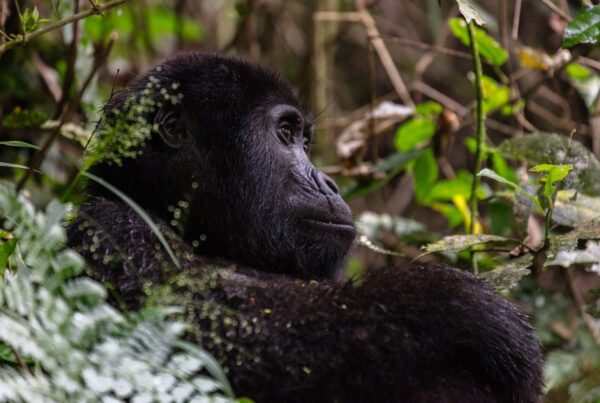
Gorilla trekking is not a typical safari activity. It does not involve sitting in a vehicle or viewing wildlife from a distance. Instead, it places you directly inside the natural habitat of mountain gorillas.
As a Uganda gorilla trekking first timer, you will hike through tropical rainforest under the guidance of experienced rangers and trackers. The goal is to locate a habituated gorilla family and spend one hour observing them in their natural environment.
“Habituated” means the gorillas have gradually become comfortable with human presence. This process takes years and allows visitors to observe them safely without disrupting their behavior.
Uganda offers this experience in two key locations:
Bwindi Impenetrable National Park
Bwindi is the main destination for first-time trekkers. It is home to the largest number of gorilla families and offers multiple trekking sectors, each with different terrain and accessibility levels.
Mgahinga Gorilla National Park
Mgahinga is smaller and less crowded. It offers a quieter experience with stunning volcanic scenery, ideal for travelers seeking exclusivity.
Understanding the Trekking Day: Step by Step
Knowing what happens during the day helps any Uganda gorilla trekking first timer feel prepared and confident.
Arrival and Morning Briefing
Your day starts early at the park headquarters. Rangers provide a briefing covering safety rules, trekking expectations, and gorilla behavior. You are then assigned to a gorilla family based on your fitness level and group size.
Entering the Forest
You begin your trek with guides and trackers. The forest environment is dense, humid, and alive with sound. Trails are not always clear, and guides may cut through vegetation to create paths.
Tracking the Gorillas
Trackers move ahead to locate the gorillas and communicate with your group. The trek can take anywhere from one hour to several hours depending on where the gorillas are.
The Gorilla Encounter
Once the gorillas are found, you approach slowly and quietly. You then spend one hour observing them—watching their behavior, movements, and interactions.
This is the highlight of the entire experience.
How Difficult Is Gorilla Trekking for First-Timers
Many travelers worry about the physical challenge. The reality is that Uganda gorilla trekking first timer experiences are manageable with basic preparation.
The terrain includes:
- Steep slopes
- Muddy trails
- Thick vegetation
- High humidity
Treks can be short or long depending on gorilla location. Some groups find gorillas within an hour, while others may trek for several hours.
How to Prepare
- Engage in light walking or cardio before your trip
- Pack proper hiking boots
- Stay hydrated
Why Hiring a Porter Helps
Porters assist with carrying bags and offer physical support on steep terrain. They also provide encouragement and stability, which is especially helpful for first-time trekkers.
Gorilla Trekking Permits Explained
Permits are mandatory and form the core of your booking.
For 2026, the pricing remains:
- USD 800 (Foreign Non-Residents)
- USD 700 (Foreign Residents)
- UGX 300,000 (East African Citizens)
Each permit includes:
- Park entry
- Ranger and guide services
- One hour with a gorilla family
For a Uganda gorilla trekking first timer, securing permits early is essential. Availability is limited, and popular dates sell out quickly.
Best Time to Go Gorilla Trekking
Uganda allows gorilla trekking all year, but seasonal differences matter.
Dry Season (Best for First-Timers)
June to September and December to February offer easier trekking conditions. Trails are less slippery, and visibility is better.
Wet Season (Fewer Crowds)
March to May and October to November bring rain. Trails become more challenging, but the forest is greener and less crowded.
For first-timers, dry months provide a more comfortable experience.
What to Pack for Your First Gorilla Trek
Packing correctly improves comfort and performance during your trek.
Key essentials for a Uganda gorilla trekking first timer include:
- Waterproof hiking boots
- Long trousers and long-sleeved shirts
- Rain jacket or poncho
- Gloves for gripping vegetation
- Insect repellent
- Sunscreen
- Drinking water and snacks
Neutral colors such as green, brown, and khaki are recommended.
Health and Safety Guidelines
Strict rules protect both visitors and gorillas.
- Maintain at least 7 meters distance
- Do not trek if you are sick
- Avoid sudden movements
- Follow ranger instructions at all times
- No flash photography
These measures reduce stress on gorillas and prevent disease transmission.
What Makes Gorilla Trekking Special for First-Timers
For a Uganda gorilla trekking first timer, the emotional impact often exceeds expectations.
Gorillas behave in ways that feel familiar. They interact as families, show curiosity, and display clear social bonds. Watching them at close range creates a connection that is difficult to describe.
This is not just a wildlife sighting. It is a shared moment.
Choosing the Right Trekking Sector
Selecting the right sector improves your overall experience.
Buhoma
The most accessible and popular sector. Ideal for first-timers who want easier terrain and established infrastructure.
Ruhija
Higher altitude and quieter. Suitable for travelers who prefer fewer crowds.
Rushaga
Offers the highest number of gorilla families and access to the habituation experience.
Nkuringo
More physically demanding but offers dramatic scenery.
For most first-time travelers, Buhoma or Rushaga provide the best balance.
Accommodation for First-Time Travelers
Staying close to your trekking sector simplifies logistics.
What to Look For
- Proximity to park headquarters
- Comfortable rooms for post-trek recovery
- Reliable meals and early breakfast service
Both midrange and luxury lodges offer excellent options.
Choosing the right lodge reduces stress and enhances your experience.
How to Get to Gorilla Trekking Areas
By Air
Domestic flights from Entebbe to Kihihi or Kisoro are the fastest option. They reduce travel time and are ideal for first-time visitors.
By Road
Driving takes 8–10 hours but offers scenic views of Uganda’s countryside. It suits travelers who want a more immersive journey.
Common Mistakes First-Timers Should Avoid
Many Uganda gorilla trekking first timer travelers face avoidable challenges:
- Booking permits too late
- Underestimating trekking difficulty
- Wearing inappropriate footwear
- Choosing accommodation far from trekking points
Proper planning eliminates these issues.
Gorilla Habituation Experience for First-Timers
Some first-time travelers consider the gorilla habituation experience.
This allows up to four hours with gorillas instead of one.
Permit cost: USD 1,800
It offers deeper interaction but requires more time and physical effort. For most first-timers, standard trekking is sufficient.
Combining Gorilla Trekking with Other Experiences
Uganda allows you to build a complete safari.
Popular additions include:
- Chimpanzee trekking in Kibale Forest
- Game drives in Queen Elizabeth National Park
- Boat safaris along Kazinga Channel
These experiences complement gorilla trekking and create a diverse itinerary.
Booking Your Uganda Gorilla Trekking Safari
Planning early ensures a smooth experience for any Uganda gorilla trekking first timer.
What to Secure First
- Gorilla permits
- Accommodation near your trekking sector
- Transport (air or road)
- What to Consider
- Travel dates and season
- Fitness level and preferred sector
- Budget (midrange or luxury)
A well-planned itinerary ensures you avoid last-minute challenges and fully enjoy the experience.
Key Booking Tips
- Book permits at least 3–6 months in advance
- Align your lodge with your trekking sector
- Confirm all logistics before arrival
Proper booking transforms your trip from stressful to seamless.
Making the Most of Your First Gorilla Trek
To fully enjoy your Uganda gorilla trekking first timer experience:
- Take your time during the trek
- Listen to your guides
- Stay present during the one-hour encounter
- Focus on the experience, not just photos
The more present you are, the more meaningful the experience becomes.
Frequently asked questions from first-time Uganda gorilla trekking visitors
What is the first thing to do when planning Uganda gorilla trekking?
The first action in planning Uganda gorilla trekking is to book the permit — not to search for flights, not to research lodges, not to read trip reports, but to actually initiate the permit booking process through Uganda Wildlife Authority’s online portal or through a licensed Uganda safari operator. This sequence matters because the permit is the scarcest element of the trip: with 8 visitors per habituated family per day and approximately 170-200 daily permits available across all of Bwindi’s families, the total daily permit supply is fixed and popular dates at popular sectors fill in advance. Booking flights speculatively for a Uganda trip date without a confirmed permit and then discovering the permits are exhausted for those dates is a common and expensive planning mistake. The booking sequence that works: decide your travel window; determine your preferred sector (Buhoma for ease of access and best lodge infrastructure, Rushaga for most family choices); initiate the permit booking through UWA’s ugandawildlife.org portal or through a licensed operator who has access to operator permit allocations; once the permit date is confirmed, book the sector lodge for the trekking night and arrival night; then book international flights with the confirmed permit date as the fixed reference. Everything in the trip is built around the permit date. Start there.
What happens at the Bwindi sector gate on the morning of the trek?
The Bwindi sector gate morning routine begins approximately 30-45 minutes before the trekking groups depart into the forest, typically at 7:30-8:00am. The sequence: all permit holders for the day assemble at the briefing area adjacent to the sector gate; a Uganda Wildlife Authority ranger conducts the group briefing covering encounter rules (7-metre distance, no flash, no sudden movements, group formation, 60-minute time limit), safety procedures, and the specific character of the families available that day; passports are checked to confirm the 15-year minimum age requirement; visitors are asked to self-assess their fitness level (fit and well, moderate fitness concerns, or specific mobility limitations) to inform family assignment; and families are assigned based on the fitness assessment, available permit holders, and the families’ current ranging positions communicated by the early-morning tracker team. Most sector gates have a craft cooperative where you can buy community-made items before departure and a basic toilet facility; arrive with your kit ready (pack packed, boots on, camera charged) so the pre-departure time is spent in the briefing rather than organising gear. The morning briefing is one of the most information-rich parts of the day and the visitor who pays full attention is significantly better prepared for the encounter than the visitor who treats it as administrative overhead before the main event.
What should a first-time visitor do during the 60-minute gorilla encounter?
The 60-minute gorilla encounter is the reason for the entire journey, and using it well requires deliberate management of the competing pulls of photography, pure observation, social interaction with the other group members, and the encounter rules that the ranger is enforcing. The approach that most experienced repeat visitors recommend to first-timers: do not shoot continuously from the first moment of contact. The first 10-15 minutes, put the camera away or at your side and observe — identify the individual gorillas in the family, locate the silverback’s position and assess his engagement with the group, notice the juveniles, register the forest quality and light. This observation period is not wasted photography time; it is the period in which you learn what the family is doing so that when you do start shooting, you are making intentional photographs of specific moments rather than a continuous burst of undifferentiated contact. Follow the ranger guide’s positioning instructions immediately and without hesitation — the ranger is managing the group’s position relative to the family’s movement and the silverback’s attention, and a visitor who is slow to respond or who positions independently disrupts the management of the whole group’s safety and experience. Accept the unpredictability of the encounter: the family may move suddenly, the silverback may advance, the juvenile you were photographing may disappear into vegetation — these are not failures of the experience but the actual experience. The gorilla encounter cannot be curated by the visitor; it can only be received. Receive it.
How do first-time visitors typically describe the gorilla encounter afterwards?
First-time gorilla trekking visitors returning from the Bwindi encounter describe it with a consistent vocabulary that is notable for what it is not: it is not the vocabulary of excitement (“amazing!”, “incredible!”) that characterises most positive travel experiences, but the vocabulary of significance — words like “profound,” “humbling,” “changed me,” “I don’t know how to explain it.” The most common specific description: the moment of direct eye contact with a gorilla (usually the silverback, though females and juveniles also make this contact) in which the visitor has the specific experience of being seen and assessed by an intelligence that is recognisably of the same family as their own. This is the quality that photographs cannot convey: the reciprocal nature of the attention, the sense of mutual recognition rather than observation. Most first-time visitors also describe a specific physical stillness that comes over them during the encounter — not the frozen stillness of fear but the stillness of complete attention — as a noted surprise. And most describe difficulty explaining the encounter to people who have not done it, which they attribute not to inadequacy of language but to the encounter being in a category of experience for which the standard vocabulary of excitement and spectacle is genuinely inappropriate. The most consistent visitor verdict: “I didn’t expect to feel what I felt.” That response, repeated across thousands of visitors of different backgrounds and expectations, is the most reliable description of what the encounter is.
What are the most common mistakes first-time gorilla trekkers make?
The most common mistakes first-time Uganda gorilla trekking visitors make are consistently documented in visitor accounts and ranger observations, and most of them are preventable with the right pre-trip preparation. Camera settings mistakes: arriving at the encounter with camera settings appropriate for open-air game drives (low ISO, fast shutter based on bright light conditions) rather than forest interior settings (high ISO, minimum 1/250s shutter for movement) — the most common technical failure producing blurred or underexposed forest images. Equipment unreadiness: camera batteries not fully charged the night before, memory cards full, rain cover not accessible — these produce the moment when the gorilla is in perfect position and the camera is unavailable. Physical underpreparation: not doing the fitness preparation that makes the trek manageable — visitors who arrive physically unprepared spend the approach trek in anxiety rather than anticipation, and arrive at the family too fatigued to observe well. Over-photography: spending the entire 60 minutes shooting continuously and emerging with 500 similar photographs and the sense that the camera was between them and the experience the whole time. Not hiring a porter: the USD 15 porter hire removes the pack weight and provides physical support on steep sections that makes the trek day significantly more comfortable — the visitors who don’t hire a porter on a long steep day consistently describe it as their main regret. And one rule-violation mistake: using flash in the encounter after being specifically told not to at the briefing — this happens, the gorillas react negatively, and the ranger ends the encounter early for the whole group.
Everything a first-timer needs to plan their Uganda gorilla trek
- Gorilla Permit Guide — the first step: booking the permit
- Bwindi Sector Guide — sector and lodge selection for first-time planning
- Uganda Gorilla Families — the families you may encounter and their individual character
- Full Safari Cost Guide — complete trip budget for first-time planning
- Safari Itineraries — Uganda itineraries designed for first-time gorilla trekking visitors
- Gorilla Trekking Age Limit: Everything You Must Know Before Booking Your Safari
- Uganda Gorilla Trekking from Kigali: The Cross-Border Option Explained
- Uganda Gorilla Trekking 2027: Everything You Need to Book Now
- Gorilla Trekking from Canada: Everything You Need to Plan
- How Many People Are Allowed Per Gorilla Family Per Day: Uganda’s Strict Limit Explained
- Gorilla Trekking Group Size: Maximum People Per Trek in Uganda Explained
- How Long Do You Spend With Gorillas During the Trek? The One-Hour Rule Explained
- What Time Does Gorilla Trekking Start? Schedules Explained for Uganda
- Can You Use a Drone in Bwindi? Drone Laws in Uganda Explained
- What Is the Gorilla Trekking Age Limit? Uganda Rules Explained