Uganda’s endangered wildlife list includes some of the world’s most critically at-risk animals: mountain gorillas (still classified as Endangered on the IUCN Red List despite population recovery from under 300 individuals in the 1980s to over 1,000 today — recovery entirely dependent on continued protection), chimpanzees (Endangered across their whole West and Central African range, with Uganda’s Kibale forest holding one of the highest chimpanzee densities of any protected area on Earth), African forest elephant (distinct from savannah elephant and critically endangered across Central Africa, with Uganda’s western forest patches holding small groups), and Rothschild giraffe (critically endangered, with Murchison Falls National Park containing one of the three significant wild populations globally). This guide covers the endangered, vulnerable, and near-threatened species present in Uganda, their specific conservation challenges, why Uganda’s protected area system has been more successful than most African countries at recovering species from critically low numbers, and what role gorilla tourism specifically plays in the conservation economics that fund the protection systems. For the gorilla trekking permit that directly funds Bwindi’s conservation infrastructure, see the permit guide; for the gorilla families and their population history, see the gorilla families guide.
Uganda’s Most Significant Endangered Species
- Mountain gorilla (Endangered): 1,000+ individuals globally; all in Bwindi and Virungas — entire global population in Uganda, Rwanda, DRC
- Chimpanzee (Endangered): Pan troglodytes — Kibale has ~1,500, one of Africa’s highest forest densities
- Rothschild giraffe (Endangered): ~2,700 globally; Murchison Falls holds ~1,500+
- African wild dog (Endangered): occasional records from northern Uganda parks — not a resident population
- Shoebill stork (Vulnerable): 5,000–8,000 globally; Uganda holds an estimated 50% of the total population
- Grey crowned crane (Endangered): Uganda’s national bird — wetland drainage is the primary threat
Uganda’s Endangered Wildlife – The Fight to Preserve a Vanishing Heritage
Endangered Animal Species in Uganda — Uganda, often celebrated as the “Pearl of Africa,” is home to one of the richest tapestries of biodiversity on the continent. Within its lush forests, expansive savannahs, and mountain ranges lie species found nowhere else on Earth. But behind the postcard beauty is a troubling reality—a growing number of Uganda’s wild animals are quietly slipping toward extinction. Human activity, habitat loss, climate change, and illegal wildlife trade are pushing some of the country’s most iconic creatures to the brink. The story of endangered animals in Uganda is not just one of loss, but also of resilience, determination, and an urgent call for protection before these species become only memories.
The Mountain Gorilla – A Conservation Icon Still at Risk
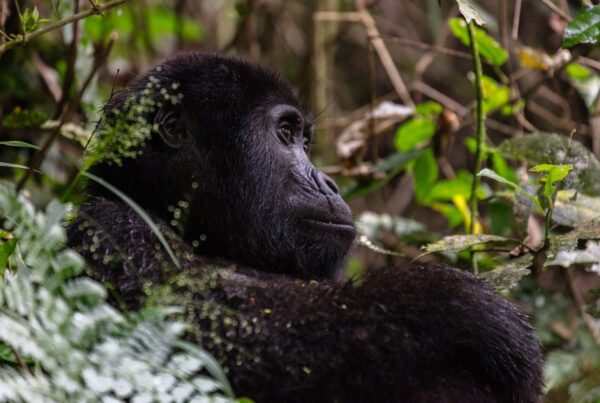
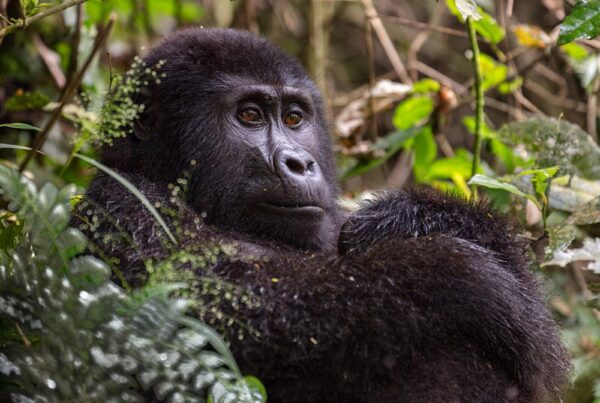
The mountain gorilla is one of Uganda’s most famous and closely protected species. Found primarily in Bwindi Impenetrable National Park and the Mgahinga Gorilla National Park, these majestic primates have become a symbol of successful conservation efforts. However, despite recent population increases, they remain endangered. The threat of disease transmission from humans, shrinking habitat due to agriculture, and the risk of poaching continue to loom.
Their survival hinges not only on protected areas but also on the delicate balance of coexistence with nearby communities. Gorilla tourism has played a pivotal role in funding their conservation, but the species still walks a narrow path between stability and decline.
African Elephant – Caught Between Tradition and Modern Threats
The African elephant, both savannah and forest subspecies, remains endangered in Uganda. Their range includes parks like Queen Elizabeth, Murchison Falls, and Kidepo Valley, but their numbers are under constant pressure. Ivory poaching and habitat fragmentation are the most immediate dangers, coupled with increased conflict as elephants wander into farmlands, often destroying crops and triggering retaliation.
Though anti-poaching measures have intensified and elephant corridors are being explored to reduce human-wildlife conflict, elephants in Uganda remain a vulnerable population whose survival demands continuous vigilance and innovation.
African Leopard – Elusive, Mysterious, and Fading
Leopards are among the most adaptable big cats in the world, but in Uganda, their numbers are in sharp decline. They are classified as vulnerable and face mounting challenges as forest cover diminishes and prey species are depleted. The leopard’s stealthy nature makes them hard to study, but they are increasingly at risk due to trophy hunting pressures and conflict with livestock owners.
They are found in isolated pockets across Uganda, particularly in forest reserves and national parks, yet their future is uncertain. Without stronger protections and public awareness of their ecological role, leopards could vanish from many parts of Uganda where they once thrived.
Shoebill Stork – The Majestic Giant of Uganda’s Wetlands
The shoebill stork is one of the most extraordinary birds in Uganda, known for its prehistoric appearance and powerful presence in the country’s papyrus wetlands. Despite being a popular sighting for birdwatchers, this rare species is endangered due to wetland degradation, illegal capture for trade, and disturbance from human activity.
Its stronghold lies in areas like the Mabamba Swamp, but this fragile habitat is increasingly under threat. Conservation of the shoebill is tied to preserving Uganda’s dwindling wetland ecosystems—vital not only for wildlife but for water filtration and flood protection.
Pangolin – The Most Trafficked Mammal in the World
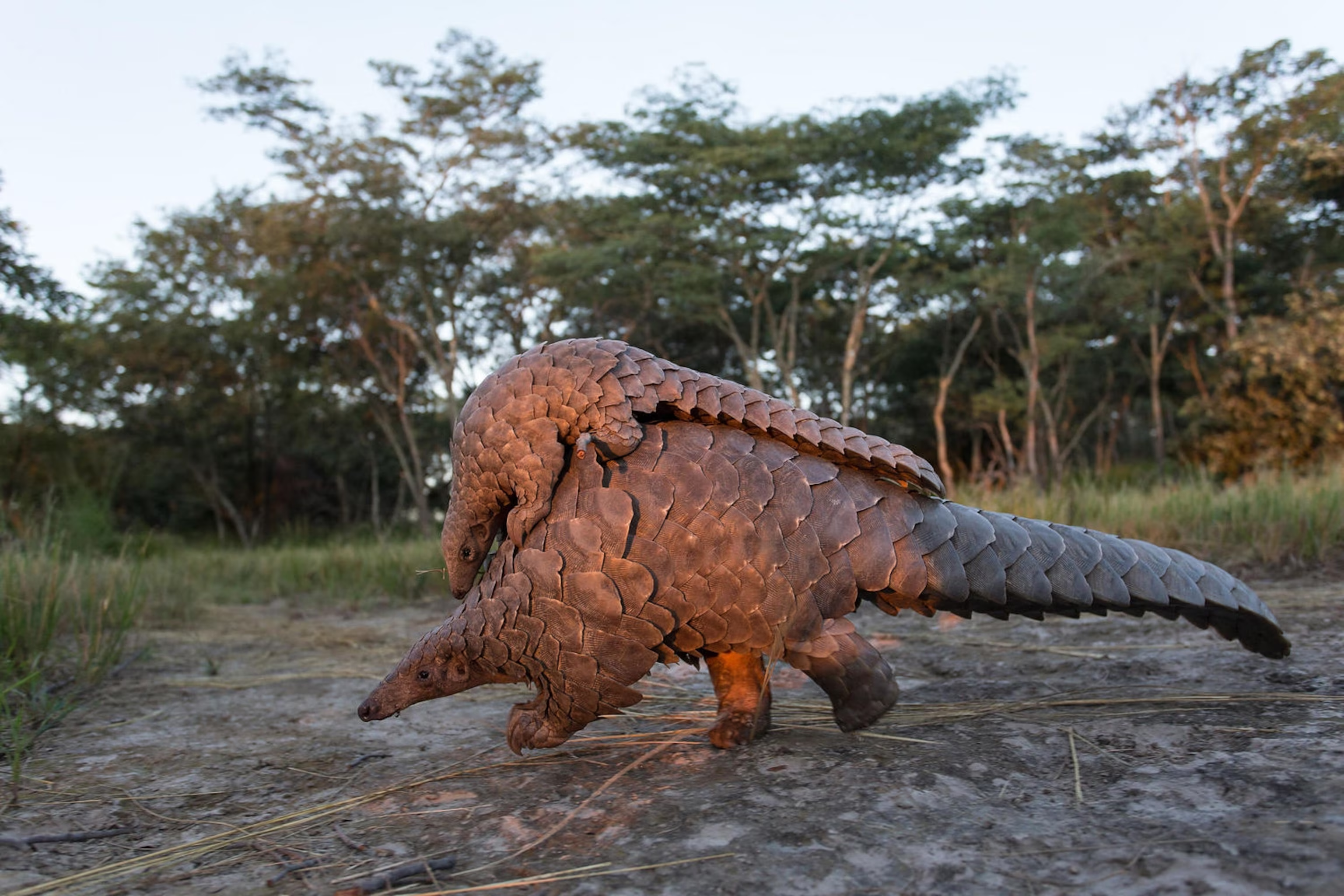
Often unseen and underestimated, the pangolin is critically endangered in Uganda. All four African species are found in the country, with the ground pangolin being the most commonly reported. These shy, nocturnal creatures are heavily hunted for their scales, which are falsely believed to have medicinal value in some cultures.
Pangolin trafficking is rampant, and although it is illegal, the demand continues to drive them toward extinction. The lack of awareness about pangolins makes their conservation especially challenging, requiring more education and stronger enforcement of anti-trafficking laws.
Rhinos – A Reintroduction Success Still in Fragile Balance
Uganda once had both black and white rhinos roaming freely, but they went extinct in the wild by the 1980s due to poaching. Today, they are slowly making a comeback through dedicated breeding programs on private conservation ranches. While nearly 50 rhinos now live in protected sanctuaries, they remain critically endangered and are not yet present in Uganda’s open wild spaces.
Their future depends on long-term breeding success, robust protection, and eventual reintroduction into national parks—a process that will take years and significant investment to ensure success.
Chimpanzees – Intelligent, Empathetic, and Under Threat
Chimpanzees are one of Uganda’s closest genetic relatives and are found in forests like Kibale, Budongo, and parts of Bwindi. Though they attract research and tourism, chimpanzees are endangered due to deforestation, illegal pet trade, and disease transmission.
They live in complex social groups, exhibit tool use, and have emotional depth—traits that make their decline not only an ecological tragedy but a moral one. Conservation strategies must include forest preservation, public education, and greater protection of chimpanzee habitats to ensure their survival.
Other At-Risk Species – A Tapestry of Fragility
Beyond these headline species, Uganda is home to a range of lesser-known but equally endangered animals. These include the golden cat, grey crowned crane, sitatunga, African grey parrot, and certain species of frogs, bats, and reptiles. Many of them face the same challenges—habitat loss, hunting, pollution, and climate disruption.
The true danger lies not only in the extinction of individual species but in the collapse of ecological systems that depend on the diversity and interdependence of all these creatures. Every species lost takes with it a piece of Uganda’s ecological soul.
A Call to Action – Protecting Uganda’s Wild Future
Uganda stands at a crossroads. With its incredible biodiversity and emerging reputation as a leader in eco-tourism, it has both the responsibility and the opportunity to safeguard its endangered animals. Conservation is no longer optional—it is essential for tourism, for ecological health, and for future generations.
By strengthening laws, supporting community-based conservation, expanding protected areas, and promoting environmental education, Uganda can reverse the tide. Every action taken today to protect these endangered species is an investment in a more balanced, vibrant, and sustainable future.
Frequently Asked Questions
Mountain gorillas (Gorilla beringei beringei) remain classified as Endangered on the IUCN Red List as of the most recent assessment, despite being one of the few large mammals to have shown genuine population recovery over the past four decades. The total global population of mountain gorillas is approximately 1,000+ individuals (the 2018 census recorded 1,063 in the combined Bwindi-Virungas range), up from fewer than 300 in the 1980s when the species was widely considered on the path to extinction within decades. The recovery is directly attributable to protection systems: intensive anti-poaching patrol infrastructure funded substantially by gorilla trekking permit revenue (USD $800 per visitor at Bwindi), veterinary intervention for injured and sick individuals, and community benefit-sharing programmes that reduced poaching incentives in border communities. Despite recovery, the Endangered classification is maintained because the entire global population exists in a single small geographic area shared between three countries, making it vulnerable to disease outbreak, political instability, climate change, and any large-scale land use change in the Bwindi-Virunga corridor. Why are chimpanzees endangered in Uganda? Chimpanzees (Pan troglodytes) are classified as Endangered across their entire range, with Uganda’s populations under pressure from two primary threats: habitat loss through forest clearance for agriculture (Uganda has one of the fastest deforestation rates in Africa, driven by agricultural expansion and charcoal production); and community conflict at forest edges, where chimpanzees raid crops and face retaliatory killing. Kibale Forest National Park holds approximately 1,500 chimpanzees in an estimated 375 km² of forest, representing one of the highest chimpanzee densities on the continent — this is largely the result of the park’s consistent protection since formal gazettal. Outside protected areas, Uganda’s chimpanzee population in forest fragments is declining. The Ngamba Island Chimpanzee Sanctuary on Lake Victoria (a rehabilitation facility for orphaned chimpanzees) and Chimpanzee Trust community conservation programmes in the Kibale area represent the specific Uganda conservation responses to these threats. Kibale’s chimpanzee trekking revenue directly funds the ranger system that maintains the park’s boundary integrity. Where can you see Rothschild giraffes in Uganda and why are they rare? Rothschild giraffes (Giraffa camelopardalis rothschildi), also called Baringo or Ugandan giraffes, are classified as Endangered with approximately 2,700 individuals remaining in the wild. Uganda’s Murchison Falls National Park holds over 1,500 Rothschild giraffes — the largest single population and representing more than half the global total of this subspecies. This makes Murchison Falls arguably the most important location for Rothschild giraffe conservation globally. The subspecies is distinguished by its spot pattern (more defined, with no spots below the knee, giving the legs a characteristic creamy pale lower section) and its height (among the tallest giraffe subspecies, with males reaching over 5.5m). The Rothschild’s rarity relative to the more common Masai giraffe (found in Kenya and Tanzania) means that visitors who see giraffes at Murchison Falls are seeing one of the rarest large mammals in the world — not the abundant wildlife species that the visual similarity to common giraffes might suggest. What is the conservation status of the shoebill stork in Uganda? The shoebill stork (Balaeniceps rex) is classified as Vulnerable on the IUCN Red List with an estimated global population of 5,000–8,000 mature individuals. Uganda holds an estimated 50% of the global shoebill population — making it the single most important country for this species. Shoebills are found in Uganda’s papyrus swamp and reed-wetland habitats: Mabamba Swamp near Entebbe (the most accessible and reliably visited site, approximately 1.5 hours from Entebbe airport), the Murchison Falls National Park Nile delta section (where they hunt lungfish in the papyrus), and scattered wetland sites in western Uganda including the Lake Albert margin and Semuliki area. The primary threats to shoebills in Uganda are wetland drainage for agriculture, papyrus harvest, and human disturbance during breeding. The shoebill’s presence in Uganda’s conservation tourism infrastructure has been significant — it has become one of the most requested single-species birding targets globally, generating specific tourism revenue for the Mabamba community wetland management group that protects the key Entebbe-area population. How does gorilla trekking tourism help endangered species conservation in Uganda? Uganda’s gorilla trekking permit system generates substantial revenue that directly funds the protection infrastructure for mountain gorillas and, by extension, the broader Bwindi forest ecosystem. At USD $800 per permit per person, with approximately 180 daily permits available at Bwindi across all sectors, the permit system generates approximately USD $50+ million per year for Uganda Wildlife Authority (UWA) at full capacity — revenue that funds anti-poaching patrol units, veterinary teams for gorilla health monitoring, ranger training and equipment, community benefit-sharing programmes in the villages adjacent to Bwindi, and park infrastructure. A formal requirement under UWA’s revenue-sharing model directs 20% of park entry fees to local communities, reducing local incentives for poaching and habitat encroachment. The mountain gorilla’s recovery from under 300 to over 1,000 individuals is one of the clearest case studies globally for tourism-funded conservation delivering measurable conservation outcomes for an Endangered species — and it provides the funding model reference point that advocates for similar programmes for other species cite in conservation policy arguments. Contribute to Uganda’s endangered species conservation through gorilla trekking Gorilla Permit Guide — the USD $800 permit is the primary conservation funding mechanism for Bwindi Uganda Gorilla Families — the specific mountain gorilla families whose recovery makes this guide possible to write Bwindi Sector Guide — the park that holds the world’s largest mountain gorilla population Rwanda Gorilla Families — the Virunga population on the other side of the Bwindi-Virunga corridor Safari Itineraries — itineraries combining gorilla trekking with shoebill, chimp, and Rothschild giraffe encounters Further Reading The 10 Most Endangered Animals in Africa and How Tourism Helps Them Red Colobus Monkey Uganda: Endangered Kibale Forest Species Rothschild’s Giraffe Uganda: The Most Endangered Giraffe Subspecies Uganda’s Most Rare Animals: 10 Species Almost No One Has Seen Queen Elizabeth National Park Animals: Complete Species Checklist Murchison Falls National Park Animals: Full Species List 2027 Lake Mburo National Park Animals: Zebra and Complete Species Guide Kibale Forest Animals: Beyond Chimps the Full Species Guide How to explain endangered species to children: lessons from the mountain gorilla Explaining gorilla conservation to children: making endangered species real <
Chimpanzees (Pan troglodytes) are classified as Endangered across their entire range, with Uganda’s populations under pressure from two primary threats: habitat loss through forest clearance for agriculture (Uganda has one of the fastest deforestation rates in Africa, driven by agricultural expansion and charcoal production); and community conflict at forest edges, where chimpanzees raid crops and face retaliatory killing. Kibale Forest National Park holds approximately 1,500 chimpanzees in an estimated 375 km² of forest, representing one of the highest chimpanzee densities on the continent — this is largely the result of the park’s consistent protection since formal gazettal. Outside protected areas, Uganda’s chimpanzee population in forest fragments is declining. The Ngamba Island Chimpanzee Sanctuary on Lake Victoria (a rehabilitation facility for orphaned chimpanzees) and Chimpanzee Trust community conservation programmes in the Kibale area represent the specific Uganda conservation responses to these threats. Kibale’s chimpanzee trekking revenue directly funds the ranger system that maintains the park’s boundary integrity. Where can you see Rothschild giraffes in Uganda and why are they rare? Rothschild giraffes (Giraffa camelopardalis rothschildi), also called Baringo or Ugandan giraffes, are classified as Endangered with approximately 2,700 individuals remaining in the wild. Uganda’s Murchison Falls National Park holds over 1,500 Rothschild giraffes — the largest single population and representing more than half the global total of this subspecies. This makes Murchison Falls arguably the most important location for Rothschild giraffe conservation globally. The subspecies is distinguished by its spot pattern (more defined, with no spots below the knee, giving the legs a characteristic creamy pale lower section) and its height (among the tallest giraffe subspecies, with males reaching over 5.5m). The Rothschild’s rarity relative to the more common Masai giraffe (found in Kenya and Tanzania) means that visitors who see giraffes at Murchison Falls are seeing one of the rarest large mammals in the world — not the abundant wildlife species that the visual similarity to common giraffes might suggest. What is the conservation status of the shoebill stork in Uganda? The shoebill stork (Balaeniceps rex) is classified as Vulnerable on the IUCN Red List with an estimated global population of 5,000–8,000 mature individuals. Uganda holds an estimated 50% of the global shoebill population — making it the single most important country for this species. Shoebills are found in Uganda’s papyrus swamp and reed-wetland habitats: Mabamba Swamp near Entebbe (the most accessible and reliably visited site, approximately 1.5 hours from Entebbe airport), the Murchison Falls National Park Nile delta section (where they hunt lungfish in the papyrus), and scattered wetland sites in western Uganda including the Lake Albert margin and Semuliki area. The primary threats to shoebills in Uganda are wetland drainage for agriculture, papyrus harvest, and human disturbance during breeding. The shoebill’s presence in Uganda’s conservation tourism infrastructure has been significant — it has become one of the most requested single-species birding targets globally, generating specific tourism revenue for the Mabamba community wetland management group that protects the key Entebbe-area population. How does gorilla trekking tourism help endangered species conservation in Uganda? Uganda’s gorilla trekking permit system generates substantial revenue that directly funds the protection infrastructure for mountain gorillas and, by extension, the broader Bwindi forest ecosystem. At USD $800 per permit per person, with approximately 180 daily permits available at Bwindi across all sectors, the permit system generates approximately USD $50+ million per year for Uganda Wildlife Authority (UWA) at full capacity — revenue that funds anti-poaching patrol units, veterinary teams for gorilla health monitoring, ranger training and equipment, community benefit-sharing programmes in the villages adjacent to Bwindi, and park infrastructure. A formal requirement under UWA’s revenue-sharing model directs 20% of park entry fees to local communities, reducing local incentives for poaching and habitat encroachment. The mountain gorilla’s recovery from under 300 to over 1,000 individuals is one of the clearest case studies globally for tourism-funded conservation delivering measurable conservation outcomes for an Endangered species — and it provides the funding model reference point that advocates for similar programmes for other species cite in conservation policy arguments. Contribute to Uganda’s endangered species conservation through gorilla trekking Gorilla Permit Guide — the USD $800 permit is the primary conservation funding mechanism for Bwindi Uganda Gorilla Families — the specific mountain gorilla families whose recovery makes this guide possible to write Bwindi Sector Guide — the park that holds the world’s largest mountain gorilla population Rwanda Gorilla Families — the Virunga population on the other side of the Bwindi-Virunga corridor Safari Itineraries — itineraries combining gorilla trekking with shoebill, chimp, and Rothschild giraffe encounters Further Reading The 10 Most Endangered Animals in Africa and How Tourism Helps Them Red Colobus Monkey Uganda: Endangered Kibale Forest Species Rothschild’s Giraffe Uganda: The Most Endangered Giraffe Subspecies Uganda’s Most Rare Animals: 10 Species Almost No One Has Seen Queen Elizabeth National Park Animals: Complete Species Checklist Murchison Falls National Park Animals: Full Species List 2027 Lake Mburo National Park Animals: Zebra and Complete Species Guide Kibale Forest Animals: Beyond Chimps the Full Species Guide How to explain endangered species to children: lessons from the mountain gorilla Explaining gorilla conservation to children: making endangered species real <
Rothschild giraffes (Giraffa camelopardalis rothschildi), also called Baringo or Ugandan giraffes, are classified as Endangered with approximately 2,700 individuals remaining in the wild. Uganda’s Murchison Falls National Park holds over 1,500 Rothschild giraffes — the largest single population and representing more than half the global total of this subspecies. This makes Murchison Falls arguably the most important location for Rothschild giraffe conservation globally. The subspecies is distinguished by its spot pattern (more defined, with no spots below the knee, giving the legs a characteristic creamy pale lower section) and its height (among the tallest giraffe subspecies, with males reaching over 5.5m). The Rothschild’s rarity relative to the more common Masai giraffe (found in Kenya and Tanzania) means that visitors who see giraffes at Murchison Falls are seeing one of the rarest large mammals in the world — not the abundant wildlife species that the visual similarity to common giraffes might suggest. What is the conservation status of the shoebill stork in Uganda? The shoebill stork (Balaeniceps rex) is classified as Vulnerable on the IUCN Red List with an estimated global population of 5,000–8,000 mature individuals. Uganda holds an estimated 50% of the global shoebill population — making it the single most important country for this species. Shoebills are found in Uganda’s papyrus swamp and reed-wetland habitats: Mabamba Swamp near Entebbe (the most accessible and reliably visited site, approximately 1.5 hours from Entebbe airport), the Murchison Falls National Park Nile delta section (where they hunt lungfish in the papyrus), and scattered wetland sites in western Uganda including the Lake Albert margin and Semuliki area. The primary threats to shoebills in Uganda are wetland drainage for agriculture, papyrus harvest, and human disturbance during breeding. The shoebill’s presence in Uganda’s conservation tourism infrastructure has been significant — it has become one of the most requested single-species birding targets globally, generating specific tourism revenue for the Mabamba community wetland management group that protects the key Entebbe-area population. How does gorilla trekking tourism help endangered species conservation in Uganda? Uganda’s gorilla trekking permit system generates substantial revenue that directly funds the protection infrastructure for mountain gorillas and, by extension, the broader Bwindi forest ecosystem. At USD $800 per permit per person, with approximately 180 daily permits available at Bwindi across all sectors, the permit system generates approximately USD $50+ million per year for Uganda Wildlife Authority (UWA) at full capacity — revenue that funds anti-poaching patrol units, veterinary teams for gorilla health monitoring, ranger training and equipment, community benefit-sharing programmes in the villages adjacent to Bwindi, and park infrastructure. A formal requirement under UWA’s revenue-sharing model directs 20% of park entry fees to local communities, reducing local incentives for poaching and habitat encroachment. The mountain gorilla’s recovery from under 300 to over 1,000 individuals is one of the clearest case studies globally for tourism-funded conservation delivering measurable conservation outcomes for an Endangered species — and it provides the funding model reference point that advocates for similar programmes for other species cite in conservation policy arguments. Contribute to Uganda’s endangered species conservation through gorilla trekking Gorilla Permit Guide — the USD $800 permit is the primary conservation funding mechanism for Bwindi Uganda Gorilla Families — the specific mountain gorilla families whose recovery makes this guide possible to write Bwindi Sector Guide — the park that holds the world’s largest mountain gorilla population Rwanda Gorilla Families — the Virunga population on the other side of the Bwindi-Virunga corridor Safari Itineraries — itineraries combining gorilla trekking with shoebill, chimp, and Rothschild giraffe encounters Further Reading The 10 Most Endangered Animals in Africa and How Tourism Helps Them Red Colobus Monkey Uganda: Endangered Kibale Forest Species Rothschild’s Giraffe Uganda: The Most Endangered Giraffe Subspecies Uganda’s Most Rare Animals: 10 Species Almost No One Has Seen Queen Elizabeth National Park Animals: Complete Species Checklist Murchison Falls National Park Animals: Full Species List 2027 Lake Mburo National Park Animals: Zebra and Complete Species Guide Kibale Forest Animals: Beyond Chimps the Full Species Guide How to explain endangered species to children: lessons from the mountain gorilla Explaining gorilla conservation to children: making endangered species real <
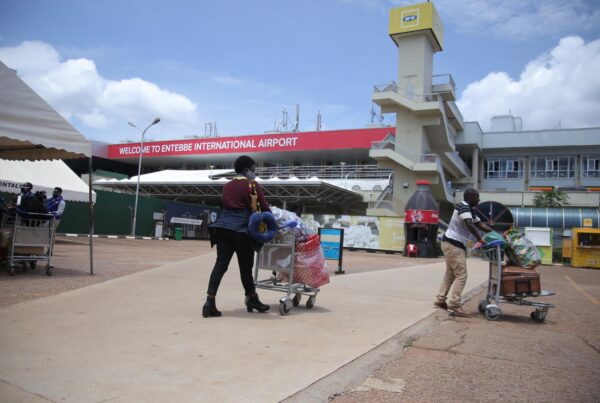
The shoebill stork (Balaeniceps rex) is classified as Vulnerable on the IUCN Red List with an estimated global population of 5,000–8,000 mature individuals. Uganda holds an estimated 50% of the global shoebill population — making it the single most important country for this species. Shoebills are found in Uganda’s papyrus swamp and reed-wetland habitats: Mabamba Swamp near Entebbe (the most accessible and reliably visited site, approximately 1.5 hours from Entebbe airport), the Murchison Falls National Park Nile delta section (where they hunt lungfish in the papyrus), and scattered wetland sites in western Uganda including the Lake Albert margin and Semuliki area. The primary threats to shoebills in Uganda are wetland drainage for agriculture, papyrus harvest, and human disturbance during breeding. The shoebill’s presence in Uganda’s conservation tourism infrastructure has been significant — it has become one of the most requested single-species birding targets globally, generating specific tourism revenue for the Mabamba community wetland management group that protects the key Entebbe-area population. How does gorilla trekking tourism help endangered species conservation in Uganda? Uganda’s gorilla trekking permit system generates substantial revenue that directly funds the protection infrastructure for mountain gorillas and, by extension, the broader Bwindi forest ecosystem. At USD $800 per permit per person, with approximately 180 daily permits available at Bwindi across all sectors, the permit system generates approximately USD $50+ million per year for Uganda Wildlife Authority (UWA) at full capacity — revenue that funds anti-poaching patrol units, veterinary teams for gorilla health monitoring, ranger training and equipment, community benefit-sharing programmes in the villages adjacent to Bwindi, and park infrastructure. A formal requirement under UWA’s revenue-sharing model directs 20% of park entry fees to local communities, reducing local incentives for poaching and habitat encroachment. The mountain gorilla’s recovery from under 300 to over 1,000 individuals is one of the clearest case studies globally for tourism-funded conservation delivering measurable conservation outcomes for an Endangered species — and it provides the funding model reference point that advocates for similar programmes for other species cite in conservation policy arguments. Contribute to Uganda’s endangered species conservation through gorilla trekking Gorilla Permit Guide — the USD $800 permit is the primary conservation funding mechanism for Bwindi Uganda Gorilla Families — the specific mountain gorilla families whose recovery makes this guide possible to write Bwindi Sector Guide — the park that holds the world’s largest mountain gorilla population Rwanda Gorilla Families — the Virunga population on the other side of the Bwindi-Virunga corridor Safari Itineraries — itineraries combining gorilla trekking with shoebill, chimp, and Rothschild giraffe encounters Further Reading The 10 Most Endangered Animals in Africa and How Tourism Helps Them Red Colobus Monkey Uganda: Endangered Kibale Forest Species Rothschild’s Giraffe Uganda: The Most Endangered Giraffe Subspecies Uganda’s Most Rare Animals: 10 Species Almost No One Has Seen Queen Elizabeth National Park Animals: Complete Species Checklist Murchison Falls National Park Animals: Full Species List 2027 Lake Mburo National Park Animals: Zebra and Complete Species Guide Kibale Forest Animals: Beyond Chimps the Full Species Guide How to explain endangered species to children: lessons from the mountain gorilla Explaining gorilla conservation to children: making endangered species real <
Uganda’s gorilla trekking permit system generates substantial revenue that directly funds the protection infrastructure for mountain gorillas and, by extension, the broader Bwindi forest ecosystem. At USD $800 per permit per person, with approximately 180 daily permits available at Bwindi across all sectors, the permit system generates approximately USD $50+ million per year for Uganda Wildlife Authority (UWA) at full capacity — revenue that funds anti-poaching patrol units, veterinary teams for gorilla health monitoring, ranger training and equipment, community benefit-sharing programmes in the villages adjacent to Bwindi, and park infrastructure. A formal requirement under UWA’s revenue-sharing model directs 20% of park entry fees to local communities, reducing local incentives for poaching and habitat encroachment. The mountain gorilla’s recovery from under 300 to over 1,000 individuals is one of the clearest case studies globally for tourism-funded conservation delivering measurable conservation outcomes for an Endangered species — and it provides the funding model reference point that advocates for similar programmes for other species cite in conservation policy arguments. Contribute to Uganda’s endangered species conservation through gorilla trekking Gorilla Permit Guide — the USD $800 permit is the primary conservation funding mechanism for Bwindi Uganda Gorilla Families — the specific mountain gorilla families whose recovery makes this guide possible to write Bwindi Sector Guide — the park that holds the world’s largest mountain gorilla population Rwanda Gorilla Families — the Virunga population on the other side of the Bwindi-Virunga corridor Safari Itineraries — itineraries combining gorilla trekking with shoebill, chimp, and Rothschild giraffe encounters Further Reading The 10 Most Endangered Animals in Africa and How Tourism Helps Them Red Colobus Monkey Uganda: Endangered Kibale Forest Species Rothschild’s Giraffe Uganda: The Most Endangered Giraffe Subspecies Uganda’s Most Rare Animals: 10 Species Almost No One Has Seen Queen Elizabeth National Park Animals: Complete Species Checklist Murchison Falls National Park Animals: Full Species List 2027 Lake Mburo National Park Animals: Zebra and Complete Species Guide Kibale Forest Animals: Beyond Chimps the Full Species Guide How to explain endangered species to children: lessons from the mountain gorilla Explaining gorilla conservation to children: making endangered species real <