The comparison of Uganda gorilla trekking against other safari experiences — the Serengeti wildebeest migration, the Amboseli elephant herds, the Okavango Delta mokoro excursion, the Victoria Falls adrenaline circuit — is not a question about which experience is objectively better but about which experience is right for the specific visitor asking the question, with a set of real differences in experience character, cost, logistics, and what each delivers that the “it’s all amazing” non-answer that most safari marketing provides does not actually help the planning decision. This guide provides the honest comparative assessment: what Uganda gorilla trekking offers that no other safari destination does, what it does not offer that some alternatives do, and the specific visitor profile for whom Uganda gorilla trekking is the right first-priority destination versus the visitor for whom a different experience should take precedence. For the Uganda permit specifics, see the permit guide.
Uganda Gorilla Trekking vs Other Safaris: Key Comparison
- Uganda gorilla trekking advantage: Unique species encounter not available at lower cost anywhere, active physical involvement, small group
- Serengeti/Masai Mara advantage: Volume of wildlife visible across open terrain; the classic “African safari” photographic landscape
- Uganda gorilla trekking limitation: Single-species focus for the permit day; limited open-air game in the Bwindi sector itself
- Cost comparison: Uganda permit USD 800 + mid-range lodge USD 150-300/night vs Kenya/Tanzania full-service safari USD 400-800/night
- Best combination: Uganda gorillas + Queen Elizabeth NP large mammals covers both primate encounter and open safari experience
- Bottom line: the Bwindi gorilla encounter is not replaceable by any other safari experience — the decision is whether it is the right priority for this trip
Africa offers some of the most celebrated wildlife experiences on Earth. From the vast plains of the Serengeti to the wetlands of the Okavango Delta, travelers have endless choices when planning a safari. Yet one comparison continues to dominate search and decision-making: Uganda gorilla trekking vs safari.
For many travelers, the question is simple—should you choose a traditional safari with game drives, or invest in a gorilla trekking experience in Uganda? The answer is not just about preference. It is about the type of experience you want, the level of connection you seek, and the impact the journey leaves behind.
This detailed guide breaks down the differences, strengths, and realities of both options, helping you understand why Uganda gorilla trekking often stands above every other safari experience.
Understanding the Core Difference
At its core, the comparison of Uganda gorilla trekking vs safari comes down to how you experience wildlife.
Traditional safaris focus on observation. You travel in a vehicle, often across open landscapes, searching for animals such as lions, elephants, giraffes, and leopards. The experience is visual, expansive, and often fast-paced.
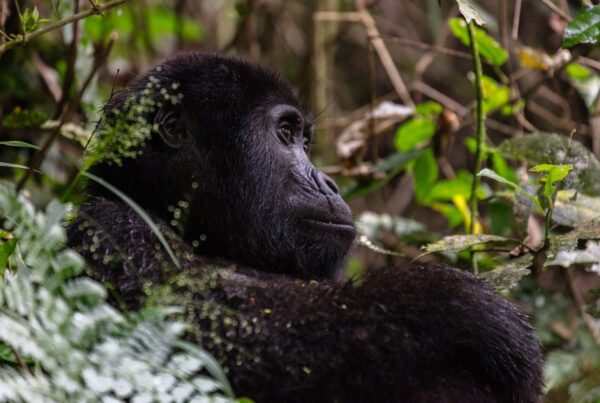
Gorilla trekking is immersive. You leave the vehicle behind and enter the forest on foot. You follow tracks, navigate terrain, and eventually encounter a gorilla family at close range. The experience is physical, personal, and deeply engaging.
This difference defines everything else.
Wildlife Interaction: Distance vs Connection
One of the most important distinctions in Uganda gorilla trekking vs safari is the level of interaction.
Traditional Safari Experience
On a game drive, wildlife sightings often occur at a distance. Even when vehicles get close, there is always a separation. The interaction is observational, and animals may move quickly or remain partially hidden.
Gorilla Trekking Experience
Gorilla trekking offers proximity that is unmatched. You may sit just a few meters away from a gorilla family, observing their behavior in silence. There are no barriers beyond simple rules designed to protect both humans and gorillas.
This closeness creates a connection that traditional safaris rarely achieve.
Emotional Impact: Spectacle vs Intimacy
Traditional safaris deliver spectacle. Seeing a lion hunt or a herd of elephants crossing a river is dramatic and powerful.
However, when comparing Uganda gorilla trekking vs safari, the emotional depth of gorilla trekking stands out.
Gorillas behave in ways that feel familiar. They care for their young, interact socially, and express emotions that are easy to recognize. Watching these behaviors up close creates a sense of connection that goes beyond wildlife viewing.
Many travelers describe gorilla trekking as transformative, while traditional safaris are often described as exciting and memorable.
The Effort Factor: Comfort vs Adventure
Another key difference in Uganda gorilla trekking vs safari is the level of effort required.
Game Drives
Game drives require minimal physical effort. You sit in a vehicle, often for several hours, while guides navigate the terrain. This makes safaris accessible to almost all travelers.
Gorilla Trekking
Gorilla trekking requires physical participation. You hike through dense forest, sometimes for several hours, navigating steep and uneven terrain.
This effort is part of the experience. It creates anticipation and makes the encounter feel earned. For many travelers, this adds significant value.
Landscape and Environment
The environments of these experiences differ significantly.
Safari Landscapes
Traditional safaris take place in open savannahs, grasslands, and wetlands. These landscapes allow wide visibility and large-scale wildlife movement.
Gorilla Trekking Environment
Gorilla trekking takes place in dense rainforest. Visibility is limited, but the environment feels alive and immersive. Every sound, movement, and detail becomes part of the experience.
In the comparison of Uganda gorilla trekking vs safari, the forest setting offers a more intimate and immersive environment.
Wildlife Variety vs Depth of Experience
Traditional Safari
Safaris offer variety. You may see dozens of species in a single day, including the Big Five and many other animals.
Gorilla Trekking
Gorilla trekking focuses on a single species—the mountain gorilla. However, the depth of the encounter far exceeds a typical wildlife sighting.
This creates a trade-off in Uganda gorilla trekking vs safari: variety versus depth.
Time Spent with Wildlife
On a safari, sightings can be brief. Animals may move quickly, and vehicles often continue searching for other species.
With gorilla trekking, once the gorillas are located, you spend a full hour with them. This uninterrupted time allows for deeper observation and understanding.
This extended interaction is one of the strongest advantages in Uganda gorilla trekking vs safari comparisons.
Cost Comparison
Cost plays a significant role in decision-making.
Traditional Safari Costs
Safari costs vary widely depending on location and luxury level. Budget, midrange, and luxury options are all available.
Gorilla Trekking Costs
Gorilla trekking requires a permit, which costs USD 800 in Uganda for foreign non-residents. This makes it a premium experience.
However, when comparing Uganda gorilla trekking vs safari, the value lies in the uniqueness of the experience rather than the cost alone.
Exclusivity and Access
Gorilla trekking is highly controlled. Only a limited number of permits are issued each day, and group sizes are small.
Traditional safaris can involve multiple vehicles at popular sightings, especially during peak seasons.
This exclusivity gives gorilla trekking an advantage in Uganda gorilla trekking vs safari discussions.
Photography Experience
Safari Photography
Open landscapes provide excellent opportunities for wide-angle and wildlife photography. Lighting conditions are often ideal.
Gorilla Photography
Forest conditions can be challenging due to low light and dense vegetation. However, the proximity to gorillas allows for intimate and powerful images.
Each experience offers different photographic rewards.
Conservation Impact
Both experiences contribute to conservation, but in different ways.
Gorilla trekking has a direct and measurable impact. Permit fees support gorilla protection, anti-poaching efforts, and community development.
Traditional safaris support conservation through park fees and tourism revenue, but the impact is often less direct.
This makes gorilla trekking a strong choice for travelers interested in meaningful conservation.
Accessibility and Suitability
Traditional Safari
Suitable for all ages and fitness levels. It is ideal for families, older travelers, and those seeking comfort.
Gorilla Trekking
Requires moderate fitness and has a minimum age limit of 15 years. It suits travelers willing to engage physically.
This difference is central to the Uganda gorilla trekking vs safari decision.
Flexibility and Itinerary Design
Traditional safaris offer flexibility. You can adjust routes, extend game drives, and visit multiple parks.
Gorilla trekking is fixed. Your permit is tied to a specific date and location.
However, gorilla trekking can be combined with traditional safaris to create a balanced itinerary.
The Verdict: Which One Is Better?
The comparison of Uganda gorilla trekking vs safari does not lead to a simple answer. Both experiences offer value, but they serve different purposes.
Traditional safaris deliver variety, comfort, and iconic wildlife sightings.
Gorilla trekking delivers depth, connection, and a rare encounter that cannot be replicated elsewhere.
If the goal is to see as many animals as possible, a safari may be the better choice.
If the goal is to experience something profound and unforgettable, gorilla trekking stands above.
Why Gorilla Trekking Often Wins
For many travelers, gorilla trekking becomes the highlight of their entire African journey.
It offers:
- Close proximity to wildlife
- Emotional connection
- Physical engagement
- Conservation impact
These elements combine to create an experience that goes beyond traditional tourism.
Combining Both Experiences
The best approach is often not choosing between Uganda gorilla trekking vs safari, but combining them.
A well-planned itinerary can include gorilla trekking alongside game drives in Uganda’s savannah parks. This provides both depth and variety.
Travelers can experience the intimacy of gorilla encounters and the excitement of traditional safaris in one journey.
Planning Your Experience
When deciding between Uganda gorilla trekking vs safari, consider:
- Your fitness level
- Your interest in wildlife interaction
- Your budget
- Your travel goals
Planning ahead ensures that you choose the experience that aligns with your expectations.
Book Your Gorilla Trekking or Safari Experience
Ready to choose between Uganda gorilla trekking vs safari or combine both into one unforgettable journey?
Start by securing your gorilla permits early, selecting the right trekking sector, and aligning your accommodation with your itinerary. Planning ahead ensures availability, better logistics, and a smoother experience.
Whether you want the depth of gorilla trekking, the variety of a classic safari, or a combination of both, the right preparation transforms your trip into a seamless and rewarding African adventure.
Frequently asked questions about Uganda gorilla trekking vs other safari destinations
Should I do Uganda gorilla trekking or the Serengeti wildebeest migration first?
The choice between Uganda gorilla trekking and the Serengeti wildebeest migration as a first major Africa safari experience is one of the most common prioritisation questions that first-time Africa visitors face, and the honest answer depends on which type of wildlife experience is the primary motivation. The Serengeti migration (Tanzania) is the world’s largest terrestrial wildlife movement — 1.5 million wildebeest crossing the Mara River in the July-October season — a spectacle of scale and drama that produces the iconic African wildlife photography that most people associate with “going on safari.” It is genuinely spectacular and nothing else in East Africa replicates the scale of the migration. Uganda gorilla trekking is not a spectacle — it is an intimate, close-range encounter with an individual animal that produces a different and in most visitors’ assessment, more powerful emotional experience. The practical differentiation: if the visitor’s primary image of “what I want from Africa” is the dramatic open savannah wildlife spectacle with elephants, lions, and wildebeest, the Serengeti delivers that more completely than Uganda. If the visitor’s primary interest is in primate intelligence, conservation engagement, and the physical and emotional experience of the forest encounter with the world’s most humanlike wildlife, Uganda delivers something that the Serengeti cannot. Many visitors do both eventually and consistently report the gorilla encounter as the more personally affecting of the two.
How does Uganda compare to South Africa as a safari destination?
Uganda and South Africa serve different safari visitor profiles in a way that makes direct comparison less useful than understanding the specific differences. South Africa (primarily Kruger National Park and the private game reserves bordering it) offers the most accessible and logistically easy Big Five safari experience in Africa — excellent road infrastructure, English-speaking, direct flights from European hubs, no malaria risk in many reserve areas, and predictable year-round Big Five sightings (lion, leopard, elephant, buffalo, rhino) in open woodland and savannah habitat. The South Africa safari is the entry point that most first-time Africa visitors from Europe and North America default to for valid reasons. Uganda offers what South Africa cannot: mountain gorillas and chimpanzees in their natural forest habitat, and the specific quality of the great ape encounter that no South African safari destination provides. Uganda also has the Big Five equivalent in conservation context — Queen Elizabeth NP has elephant, buffalo, hippo, lion, and leopard — but not at the density and accessibility of Kruger. The typical visitor journey: South Africa as the first Africa safari (accessible, predictable, excellent introduction to the continent), Uganda as the destination that deepens the Africa experience through the primate encounter. The sequence is not obligatory — some visitors do Uganda first — but the South Africa entry and Uganda deepening is a common and well-supported itinerary pattern.
What does Uganda gorilla trekking offer that no other safari experience can match?
Uganda gorilla trekking offers three things that no other commercially available safari experience provides in combination: a close-range encounter with mountain gorillas (a species with a total wild population of approximately 1,000 individuals, found only in the Virunga mountains and Bwindi Forest); the specific quality of bilateral attention between visitor and gorilla that makes the encounter feel mutual rather than observational; and the physical immersion in Bwindi’s ancient highland forest that is ecologically distinct from any open-air savannah game drive. The mountain gorilla encounter cannot be experienced in any zoo or wildlife park — the species is not kept in captivity anywhere in the world; the only way to see mountain gorillas is to go to Bwindi or the Virunga range. The bilateral attention quality — the gorilla family, particularly the silverback, visibly assessing the visitor group with the kind of evaluative attention that primate social intelligence produces — is the specific experiential difference between gorilla trekking and any game drive. An elephant charges because it is alarmed; a lion walks because it is indifferent; a gorilla silverback turns to look at you because it is making a social calculation, and that calculation is discernible to a human observer in a way that no other large wild animal’s behaviour is. This is what visitors are trying to describe when they say the gorilla encounter “felt different” — the encounter operates at the level of mutual recognition rather than predator-prey or threat-flight dynamics.
What are the limitations of Uganda gorilla trekking compared to other safaris?
Uganda gorilla trekking has genuine limitations relative to other safari experiences that honest planning requires acknowledging. The permit-day limitation: the gorilla trek day is physically demanding and focused entirely on the single family encounter — it is not a full-day wildlife observation day in the way that a Serengeti game drive or a Kruger self-drive day is; you trek to the family, spend 60 minutes with them, and return to the lodge. The limited savannah game at Bwindi: the forest sector around the trekking gates does not offer open-terrain large mammal wildlife; the gorilla trek day is a forest day, not a multi-species day. This limitation is addressed by combining Bwindi with Queen Elizabeth NP (2-3 hours drive), which provides the open-terrain game drive experience with hippos, elephants, buffalo, and lions. The physical fitness requirement: gorilla trekking requires a level of fitness and mobility that open-vehicle game drives do not, limiting access for visitors with mobility constraints. The weather variability: the highland forest weather at Bwindi is genuinely unpredictable; rain during the trek is common in any season and requires preparation. None of these limitations change the assessment that the gorilla encounter is worth doing — they are the trade-offs that a well-planned Uganda itinerary accommodates by combining Bwindi with the open-terrain parks that complete the safari experience.
Who is Uganda gorilla trekking right for, and who should prioritise something else?
Uganda gorilla trekking is right for: visitors whose primary wildlife interest is in primate intelligence and great ape encounters; visitors who want an active, physically engaged travel experience rather than a passive vehicle-based one; visitors for whom conservation engagement and direct contribution to species protection is part of the motivation for the trip; visitors who want the wildlife experience that most people who have done it consistently describe as the most powerful of their lives; and visitors who are prepared to invest USD 800 in a single wildlife encounter because they understand what that encounter is. Uganda gorilla trekking is not the right first priority for: visitors whose primary image of Africa is the open savannah game drive with the Big Five in dramatic landscape (the Serengeti or Masai Mara delivers this more fully); visitors with significant mobility limitations that make the steep forest trek physically inaccessible; visitors who are primarily interested in beach and relaxation travel with wildlife as a secondary element (the classic East Africa beach extension to a Mombasa or Zanzibar property after a Masai Mara circuit may be more appropriate); and visitors for whom the USD 800 permit represents a meaningful financial strain that would reduce the rest of the trip quality. The honest assessment: the gorilla encounter is irreplaceable for the visitor who is drawn to it; for the visitor who is not sure, a well-planned Uganda circuit combining Bwindi with Queen Elizabeth and Kibale delivers enough diversity to confirm whether the primate encounter is as powerful for them as the universal visitor response suggests it will be.
Plan your Uganda gorilla safari
- Gorilla Permit Guide — the permit booking process for the encounter this guide describes
- Uganda Gorilla Families — the families you will encounter at each sector
- Bwindi Sector Guide — sector comparison for planning your visit
- Full Safari Cost Guide — Uganda vs other safari destination cost comparison
- Safari Itineraries — Uganda itineraries that combine gorilla trekking with open-safari parks
- Top Reasons to Visit Uganda Over Other African Safari Destinations
- Gorilla Trekking Cost in Uganda – 2025 Permit, Safari & Budget Breakdown
- Unforgettable One-Day Rhino Trekking Safari Adventure
- How to Secure Your 1-Day Jinja Safari On the Move
- What a 3-Day Uganda Wildlife and Cycling Safari Did to My Family Was Beyond Anything We Expected
- OMG!! If It’s Safari, I’ve Been Missing Out: How This 5-Day Uganda Primate Safari Made Me Feel It All
- Why a 2-Day Uganda Wildlife and Cycling Safari Is the Perfect Business Break
- Top Activities to Complement Your Uganda Gorilla Safari
- Self-Drive Safaris in Uganda
- How to Plan a 2-Day Chimpanzee Safari in Uganda