Updated
Gorilla Habitats and the Challenges They Face — Understanding the nature of gorilla habitats—and the mounting challenges they face—is key to appreciating both the beauty and the fragility of these remarkable animals. Mountain gorillas are specialists in the most complete ecological sense: they exist in a single highland forest system (the Bwindi-Virunga Albertine Rift corridor, spanning Uganda, Rwanda, and DRC at elevations between 1,500 and 3,700 metres) that covers approximately 790 square kilometres of total range — an area smaller than the city of Los Angeles — and they are so completely adapted to this specific forest type’s vegetation, altitude, and climate that they cannot be kept in captivity, because no captive environment has been able to replicate the specific nutritional requirements, social complexity, and ranging needs of a species that moves through several square kilometres per day consuming up to 34 kg of vegetation from hundreds of plant species whose seasonal availability they have tracked for thousands of years. This guide covers where gorilla species live across Africa (mountain, eastern lowland, western lowland, and Cross River subspecies), the specific characteristics of each habitat type, the conservation threats that differ by subspecies and region, what the habitat data tells us about the limits of population recovery, and why habitat protection — not just anti-poaching — is the long-term critical variable for gorilla survival. For the mountain gorilla families that live in Bwindi’s forest specifically, see the families guide.
Gorilla Habitat: Key Facts
- Mountain gorilla range: Bwindi-Virunga highland corridor — approx. 790 km² total, 1,500–3,700m elevation
- Cannot be held in captivity: no mountain gorillas exist in any zoo — all conservation is in-situ
- Primary threats to habitat: agricultural encroachment, charcoal production, human population growth around park periphery
- Eastern lowland gorilla (Grauer’s): DRC Congo Basin — population estimated at 3,800 (down from 17,000 in 1990s)
- Western lowland gorilla: Central/West Africa — population 100,000–150,000 but fragmented and declining
- Mountain gorilla habitat fully contained within protected national parks — habitat protection law is a critical survival mechanism
A Deep Look into Where Gorillas Live—and What Threatens Their Survival
Hidden beneath the emerald canopies of Africa’s oldest rainforests and rugged volcanic slopes lies one of the world’s most emotionally captivating wildlife experiences: the natural habitat of gorillas. These powerful yet gentle primates do not live in zoos or laboratories of the wild—they thrive in some of the most complex, fragile, and breathtaking ecosystems on Earth. From the misty peaks of Uganda’s Bwindi Impenetrable Forest to the rain-soaked lowlands of the Congo Basin, gorillas are deeply tied to the lands they inhabit. But their survival is not secure. The habitats they call home are under immense pressure, and every inch of forest lost is a step closer to extinction.
Gorilla Habitats and the Challenges They Face — Understanding the nature of gorilla habitats—and the mounting challenges they face—is key to appreciating both the beauty and the fragility of these remarkable animals.
Where Gorillas Live: A Habitat of Mountains, Forests, and Silence
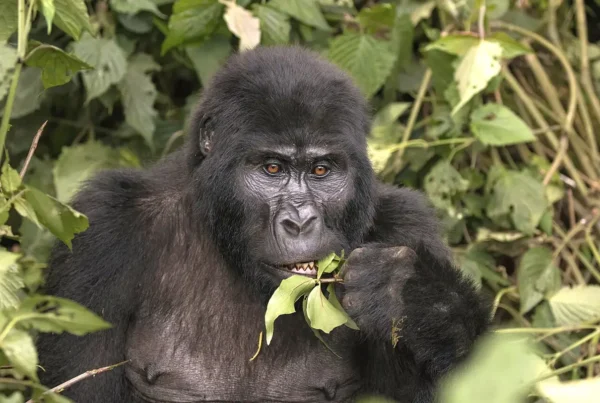
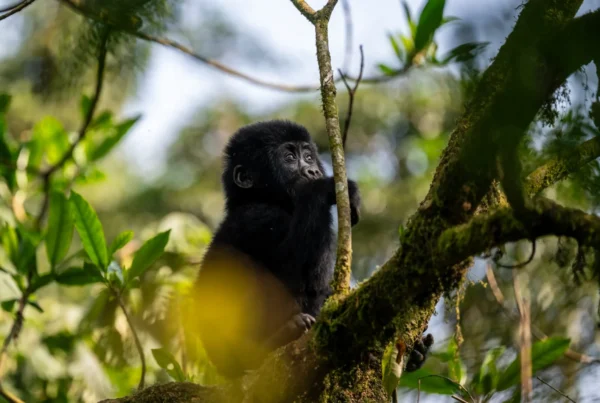
Gorillas live in dense tropical and subtropical forests across central and eastern Africa. Their habitat is rich in biodiversity, layered in complexity, and full of the quiet, earthy rhythms of life undisturbed. For mountain gorillas—found in Uganda, Rwanda, and the Democratic Republic of Congo (DRC)—the high-altitude regions of Bwindi Impenetrable National Park and the Virunga Mountains form their last remaining sanctuaries. These forests, cloaked in mist and moss, offer thick vegetation, varied elevation, and a moderate climate that supports their slow, deliberate way of life.
Lowland gorillas, including the western and eastern subspecies, live at lower altitudes across the vast Congo Basin. Their environment is flatter, hotter, and even more vast—stretching across countries like Cameroon, Gabon, Republic of Congo, and the Central African Republic. Here, the canopy is their roof, and the earth beneath their knuckles holds centuries of life and memory.
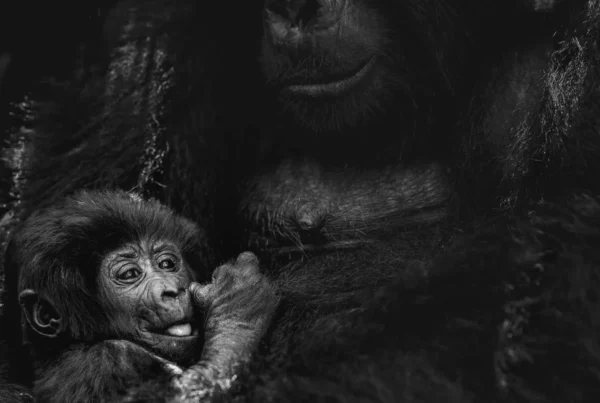
These habitats are not just physical spaces. They are emotional landscapes—places where gorillas raise their young, forage for food, form bonds, grieve losses, and live out entire lifespans largely unseen by humans. But these once-impenetrable forests are no longer safe from intrusion.
Habitat Loss: The Slow Disappearance of Gorilla Homelands
One of the gravest threats to gorilla habitats is deforestation. Across Africa, forests are being cleared at alarming rates for agriculture, charcoal production, logging, and settlement expansion. As human populations grow, especially in regions bordering protected areas, the demand for land increases. Smallholder farmers often encroach into gorilla territory, cutting trees to grow food or raise cattle. Commercial logging and mining—especially for minerals like coltan, gold, and diamonds—open deep scars in what were once untouched ecosystems.
In Uganda’s Bwindi, pressure on the forest edge remains constant. While the government and conservation partners have made significant strides in protecting core gorilla zones, buffer zones are still at risk. In the Congo Basin, logging roads open up remote areas to hunting, illegal wildlife trade, and further deforestation. The result is fragmented habitats—isolated patches of forest that cannot support large, genetically diverse gorilla populations.
For gorillas, the consequences of habitat loss are devastating. They are slow breeders, living in close-knit family groups that rely on vast home ranges to feed and shelter themselves. As forests shrink, food sources become scarcer, stress levels increase, and the risk of inbreeding and disease transmission rises.
Human-Wildlife Conflict: Sharing the Border of Survival
As humans and gorillas increasingly share overlapping territories, conflict becomes inevitable. Farmers living near national parks sometimes find gorillas raiding their crops—an act driven by habitat pressure, not aggression. These interactions can create resentment and lead to retaliation, endangering both gorillas and the delicate relationship between people and conservation efforts.
Moreover, poverty plays a complex role. In regions where communities lack access to education, employment, and basic services, the incentive to engage in illegal logging, bushmeat hunting, or land clearing is high. For conservation to work, the needs of people living around gorilla habitats must be addressed as part of the solution. Protected areas cannot function as isolated fortresses—they must be integrated with sustainable development goals that uplift both nature and local lives.
Poaching and Illegal Wildlife Trade
Though gorillas are not typically hunted for meat as widely as some other animals, they are still victims of poaching. In some regions, gorillas are killed for bushmeat, traditional medicine, or captured alive for the illegal pet trade. Even more tragically, poachers targeting other species often set traps—such as wire snares—that unintentionally injure or kill gorillas. Infants orphaned by poaching suffer immensely, losing the familial structure essential to their survival and emotional well-being.
Rangers and anti-poaching patrols, particularly in Uganda, Rwanda, and the DRC, have made incredible sacrifices to protect these animals. But the threat remains ever-present, especially in politically unstable regions where law enforcement is weak or absent.
Disease Transmission: A Hidden, Growing Risk
One of the more recent but increasingly dangerous challenges facing gorilla habitats is disease—particularly those that can jump from humans to gorillas. As our genetic relatives, gorillas are highly susceptible to many human illnesses. Even something as mild as a cold or flu can prove fatal to a gorilla.
The rise in ecotourism—especially gorilla trekking—has brought both funding and visibility to conservation, but it has also increased the risk of disease transmission. This is why Uganda’s wildlife authorities have strict rules for trekking: visitors must keep a distance of at least seven meters, wear masks, avoid contact if unwell, and spend no more than one hour with the gorillas. These rules aren’t just about etiquette—they are life-saving measures.
Climate Change: The Invisible Shift
Climate change may not leave scars as visible as chainsaws or bullet wounds, but its impact is quietly altering gorilla habitats. Rising temperatures, shifting rainfall patterns, and increased frequency of droughts and floods affect the availability of food, water, and nesting materials. Entire forest compositions may change over time, disrupting the delicate balance gorillas rely on. In mountainous habitats like those in Uganda and Rwanda, warming could push suitable vegetation zones higher, shrinking the viable living area for mountain gorillas.
Moreover, climate stress can intensify other threats. Crops may fail, increasing pressure on forests. Water scarcity may drive wildlife and people into closer contact. Disease patterns may shift, introducing new threats to already vulnerable populations.
A Path Forward: Hope Rooted in Action
Despite the immense challenges, there is hope. Uganda has become a shining example of how gorilla conservation can succeed when habitat protection, community empowerment, and sustainable tourism work together. Gorilla populations in Bwindi have slowly increased thanks to strict habitat management, community revenue sharing, and consistent research. Initiatives like eco-tourism, conservation education, and alternative livelihoods are proving that gorillas and humans can coexist—and even thrive—when given the right support.
But the work is far from over. Preserving gorilla habitats requires relentless commitment. It calls for international cooperation, local leadership, stronger environmental policies, and the global traveler’s willingness to travel responsibly. Every tree saved, every trap removed, every dollar spent wisely on sustainable tourism is a step toward keeping the forest alive—and with it, the last great apes of Africa.
Gorilla Habitats and the Challenges They Face: The Struggle to Preserve Nature’s Gentle Giants
Frequently asked questions about gorilla habitats and conservation challenges
Where do mountain gorillas live and what is their total habitat range?
Mountain gorillas (Gorilla beringei beringei) live in two geographically separated sub-populations: the Bwindi population in Uganda (approximately 459 individuals), entirely within Bwindi Impenetrable National Park; and the Virunga population (approximately 604 individuals) distributed across Volcanoes National Park in Rwanda, Mgahinga Gorilla National Park in Uganda, and Virunga National Park in DRC. Together, these populations occupy approximately 790 square kilometres of highland forest in the Albertine Rift at elevations between 1,500 and 3,700 metres. This is an extraordinarily small total range for a species of this size — the entire mountain gorilla range is contained within an area smaller than many individual African protected areas. The small range size means that any significant habitat disturbance, political instability, or disease event affecting the core protection areas has disproportionate population-level impact compared to more widely distributed species.
Why can’t mountain gorillas be kept in zoos like other gorillas?
Every attempt to maintain mountain gorillas in captivity has ended in the gorillas’ deaths — the species has not survived in any zoo or captive environment, which is why there are no mountain gorillas in any zoo in the world. The reasons are multiple: mountain gorillas are highly specialised for their specific high-altitude forest diet, which involves consuming large volumes of specific plant species (bamboo shoots, wild celery, thistles, galium vines) in combinations and quantities that cannot be replicated in captivity; they require the specific temperature, humidity, and altitude ranges of their mountain forest habitat; they live in large, complex social groups with ranging patterns covering several square kilometres daily; and they are exceptionally susceptible to human respiratory pathogens that are endemic in zoo environments. The conservation implication is significant: unlike species where captive breeding provides a population insurance policy (lowland gorillas, rhinoceros, cheetah), mountain gorilla conservation has no ex-situ backup — the entire species exists only in the wild, and habitat protection is the only viable conservation strategy.
What are the main threats to gorilla habitats?
The primary threats to gorilla habitat vary by species and region. For mountain gorillas at Bwindi and the Virunga mountains, the main ongoing habitat threats are: agricultural encroachment on park boundaries (the human population density around Bwindi is among the highest in Uganda, creating constant pressure on the park edge); charcoal production (illegal forest clearing for charcoal remains a significant threat despite park enforcement, particularly in the DRC Virunga sector); and long-term climate change affecting the highland forest’s vegetation composition and seasonal availability of key gorilla food species. For eastern lowland gorillas (Grauer’s gorilla) in DRC, armed conflict and the resulting breakdown of park management has allowed large-scale habitat destruction — the population fell from an estimated 17,000 in the mid-1990s to approximately 3,800 by 2015, primarily driven by habitat loss during conflict periods. For western lowland gorillas, habitat loss to commercial agriculture, logging concessions, and oil palm expansion across the Congo Basin is the primary threat, alongside bushmeat hunting pressure.
How does climate change affect mountain gorilla habitat?
Climate change affects mountain gorilla habitat through several mechanisms that are already detectable in the Albertine Rift monitoring data. Rising temperatures at the highland elevations where gorillas live are shifting the altitude range of suitable vegetation — mountain gorillas are adapted to cool temperatures (Bwindi’s mean temperature is 7–15°C at trekking elevations) and cannot thermoregulate effectively in significantly warmer conditions. As ambient temperatures rise, the lower boundary of suitable cool-climate forest shifts upward in altitude, potentially compressing the available habitat range. Changes in rainfall seasonality affect the availability of key food species — bamboo shoots, which are a seasonally critical food source for some Bwindi gorilla families, are particularly sensitive to rainfall timing. The Albertine Rift’s glaciers on the Rwenzori Mountains (adjacent to the gorilla range) have retreated significantly over the 20th century, indicating consistent regional warming. Conservation planning for mountain gorillas increasingly incorporates climate projections as a variable alongside the more immediately visible human pressure threats.
What is the difference between mountain gorillas and lowland gorillas?
Mountain gorillas and lowland gorillas are related but ecologically and physically distinct subspecies. Mountain gorillas are larger-bodied than western lowland gorillas, have longer, thicker fur adapted to cold highland temperatures (their coat insulates against temperatures as low as 2–3°C), and have shorter arms relative to body length. Western lowland gorillas (the subspecies held in zoos worldwide) have more brownish, shorter fur, are generally smaller, and live in the tropical lowland forest of central and west Africa at low elevations. Eastern lowland gorillas (Grauer’s gorilla) are the largest subspecies by body mass and live in the eastern DRC’s medium-altitude forests. Mountain gorillas live at the highest elevations of any great ape — their highland forest habitat is dramatically different from the warm, humid lowland forests where lowland gorillas live. The mountain gorilla population is the smallest (1,063 individuals across the full range) and the most geographically constrained, making it the most conservation-critical subspecies despite being the best-monitored.
Visit the gorillas in their natural habitat
- Uganda Gorilla Families — the habituated families living in Bwindi’s highland forest
- Bwindi Sector Guide — the specific habitat zones within Bwindi where trekking occurs
- Gorilla Permit Guide — visit and support the in-situ conservation that protects this habitat
- Rwanda Gorilla Families — the Virunga volcano habitat population
- Safari Itineraries — full Uganda itinerary in the Albertine Rift wildlife corridor
- Gorilla Behaviour in the Wild: Understanding the Gentle Giants of Africa
- Gorilla Myths and Fascinating Facts: Unveiling the Truth About Africa’s Gentle Giants
- Travelers from Campania Say They Can’t Stop Thinking About Their Gorilla Trekking Experience in Uganda
- Travel Advisories for Uganda: What Governments Say and What They Mean
- Are Mountain Gorillas Only in Uganda? Where Else They Live and How Populations Compare
- Do Gorillas Drink Water? How They Stay Hydrated in the Forest
- Mountain Gorilla Conservation Challenges Today
- We Share 98.3% DNA With Gorillas — And They’re Perfectly Healthy in Bwindi
- Gorillas Grieve: They Have Been Seen Sitting Beside Dead Group Members
- Mountain Gorillas Never Leave Bwindi or Virunga: Why They Cannot Migrate