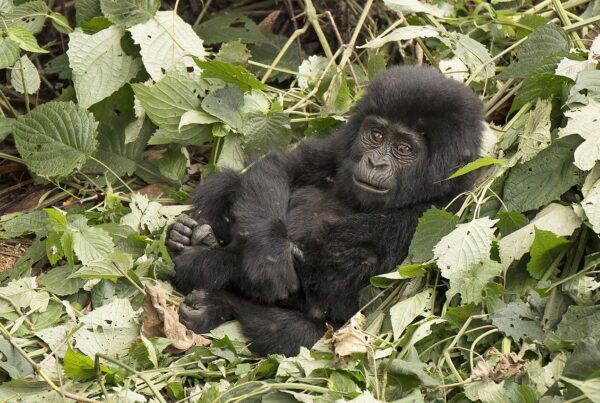
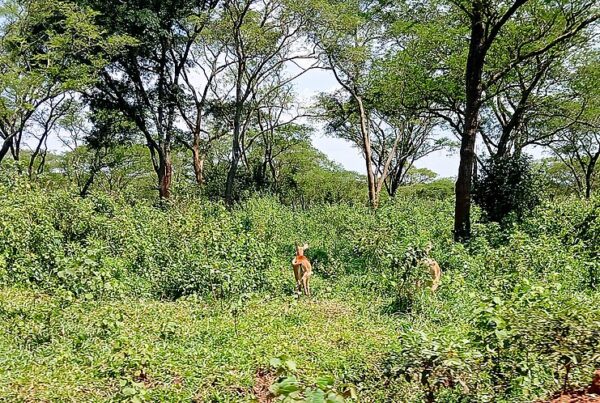
Uganda and Rwanda are the world’s two most accessible mountain gorilla trekking destinations, divided by the Virunga volcanic range and a common border that many gorilla trekking visitors cross to experience both countries in the same trip — the mountain gorilla population is shared across Bwindi Impenetrable Forest (Uganda), Mgahinga Gorilla National Park (Uganda), and Volcanoes National Park (Rwanda), with individual gorillas moving freely across borders while their respective human permit quotas are managed by each country’s wildlife authority independently. The choice between Uganda and Rwanda as the primary gorilla trekking destination involves genuinely different trade-offs on permit price, gorilla family diversity and access options, accommodation character, landscape variety, and the broader wildlife programme available in each country beyond the gorilla encounter itself. This guide compares both destinations honestly and without a predetermined answer. For Uganda permits, see the permit guide; for Rwanda gorilla families, see the Rwanda families page.
Uganda vs Rwanda Gorilla Trekking: Key Comparison
- Uganda permit price: USD 800 per person (Bwindi/Mgahinga)
- Rwanda permit price: USD 1,500 per person (Volcanoes NP) — USD 700 more than Uganda
- Gorilla families available: Uganda: 20+ habituated families across 4 Bwindi sectors + Mgahinga; Rwanda: 12 habituated families at Volcanoes NP
- Gorilla Habituation Experience: Uganda only — 4 hours with a habituating family (USD 1,500)
- Non-gorilla wildlife: Uganda significantly richer — chimps, big 5 game, shoebill; Rwanda more limited
- Combined Uganda-Rwanda trip: possible and popular — cross-border permit packages available
Uganda and Rwanda are the two most accessible mountain gorilla trekking destinations in the world, sharing the Virunga volcanic range and the broader Albertine Rift mountain gorilla habitat across a border that visitors regularly cross for combined gorilla experiences in both countries. The choice between Uganda and Rwanda as the primary gorilla trekking destination is one that every gorilla trekking visitor must address, with the decision turning on permit price, gorilla family diversity and access, accommodation quality, landscape character, and the broader wildlife programme available in each country. This guide compares Uganda and Rwanda gorilla trekking honestly across every relevant dimension.
1. Permit Price — Uganda Is Significantly More Affordable
- Uganda standard gorilla trekking permit: USD 800 per person
- Rwanda standard gorilla trekking permit: USD 1,500 per person — USD 700 more than Uganda
- For a family of four, Uganda’s permit saving totals USD 2,800 versus Rwanda
- Uganda also offers the gorilla habituation experience at USD 1,500 — unavailable in Rwanda at any price
- The USD 700 per-person permit saving is the most frequently cited reason experienced visitors choose Uganda
The most quantifiable difference between Uganda and Rwanda gorilla trekking is the permit price — Uganda Wildlife Authority charges USD 800 per person while Rwanda Development Board charges USD 1,500, a USD 700 per-person differential representing a significant cost advantage for Uganda across any group size. For a couple the saving is USD 1,400; for a family of four, USD 2,800 — a sum representing a substantial portion of most visitors’ accommodation budget. Rwanda’s higher permit price was a deliberate positioning decision by the Rwanda Development Board establishing Rwanda’s gorilla trekking as a premium, low-volume product — a strategy successfully differentiating Rwanda at the luxury tier while making Uganda the more accessible option for the majority of gorilla trekking visitors who evaluate value as part of their destination decision.
Uganda also offers the gorilla habituation experience permit at USD 1,500 — a four to six hour encounter with a semi-habituated gorilla family at Bwindi’s Rushaga sector that has no equivalent in Rwanda regardless of price. Rwanda’s permit structure provides only the standard one-hour gorilla encounter format. For visitors who want the deepest possible gorilla encounter rather than the most polished lodge experience surrounding a shorter encounter, Uganda’s habituation permit adds a value dimension entirely absent from Rwanda’s product offering. The combined effect of lower standard permit pricing and the exclusive habituation experience makes Uganda the superior value proposition for the overwhelming majority of gorilla trekking visitors approaching the comparison honestly.
Uganda’s price advantage is decisive for most visitors: Unless a specific Rwanda luxury lodge, the Rwanda tourism brand, or a cross-border itinerary requirement drives the decision, Uganda’s USD 700 per-person permit saving combined with the exclusive gorilla habituation experience makes Uganda the stronger gorilla trekking value proposition for the overwhelming majority of international visitors.
2. Gorilla Family Access — Uganda Has More Habituated Families
- Bwindi Impenetrable NP Uganda: approximately 20 habituated gorilla families across 4 trekking sectors
- Volcanoes National Park Rwanda: approximately 12 habituated families in a single sector system
- Uganda’s 4 Bwindi sectors provide geographically diverse settings with distinct forest characters
- More Uganda permit supply reduces booking competition — easier to secure preferred dates
- Uganda’s Mgahinga Gorilla NP provides a fifth Virunga volcanic zone trekking option
Uganda’s gorilla trekking infrastructure provides access to approximately 20 habituated gorilla families across four Bwindi sectors and one Mgahinga sector — the largest and most diverse portfolio of habituated gorilla trekking access anywhere in the world. Rwanda’s Volcanoes National Park has approximately 12 habituated families in a single contiguous sector administered through a more centralised permit system. The greater number of habituated families in Uganda translates to more daily permit spaces across more sectors, reducing booking competition intensity during peak season periods. For visitors booking within a few months of travel dates, Uganda’s greater supply provides significantly more flexibility than Rwanda’s more constrained permit inventory.
The geographic diversity of Uganda’s four Bwindi trekking sectors — Buhoma in the north, Ruhija in the east, Rushaga in the south, and Nkuringo on the southwest ridge — provides different forest landscape characters, different gorilla family personalities, and different accommodation contexts making the sector choice a meaningful personal decision. Rwanda’s single Volcanoes sector, while providing a spectacular volcanic landscape backdrop, does not offer the same ecological diversity, forest character variation, or accommodation style range across different access points. For visitors interested in the diversity of the gorilla trekking experience itself, Uganda’s multi-sector structure rewards more differentiated and personally tailored choice than Rwanda’s more uniform single-sector system.
Uganda’s permit supply advantage matters practically: Booking gorilla permits for Uganda versus Rwanda is consistently easier for Uganda during peak season months — more families, more sectors, and more daily spaces mean that visitors beginning the process three to six months before travel have reasonable probability of securing preferred dates in Uganda, while Rwanda’s demand-to-supply ratio frequently produces unavailability for preferred date combinations at equivalent booking lead times.
3. Broader Wildlife Programme — Uganda Wins Decisively
- Uganda has 20 primate species; Rwanda has fewer primate species and less primate encounter diversity
- Uganda’s national parks offer lions, elephants, buffalo, hippo, giraffe, and full Big Five wildlife
- Rwanda has no comparable savannah wildlife park — Rwanda’s safari is primarily gorilla-focused
- Kibale chimpanzee trekking in Uganda is unmatched; Rwanda’s Nyungwe Forest is impressive but smaller
- A 14-day Uganda itinerary delivers gorillas, chimps, and savannah wildlife Rwanda cannot match
The broader wildlife context of a Uganda gorilla trekking itinerary is dramatically richer than Rwanda’s equivalent — a country where the national park wildlife programme extends far beyond gorilla trekking into chimpanzee encounters at Kibale, savannah Big Five wildlife at Queen Elizabeth and Murchison Falls, Rothschild’s giraffe exclusive to Uganda among western East African countries, and the extraordinary Kidepo Valley wilderness. Rwanda’s wildlife programme is almost entirely concentrated on gorilla trekking at Volcanoes National Park and golden monkey trekking in the same park — the broader savannah wildlife dimension available in Uganda is simply absent from Rwanda’s national park portfolio. Akagera National Park in eastern Rwanda has lions, elephants, and hippos, but its wildlife density is substantially lower than Uganda’s equivalent savannah parks and requires a significant cross-country detour.
The practical consequence is that a Uganda gorilla safari itinerary can encompass gorilla trekking, chimpanzee trekking, savannah Big Five wildlife, Rothschild’s giraffe, extraordinary birding, and Nile white water rafting within a 10 to 14 day programme without leaving the country. A Rwanda gorilla safari attempting to match this wildlife breadth must cross into Uganda for the chimpanzee and savannah wildlife components or accept a significantly narrower programme. For visitors who want the gorilla encounter in the context of a comprehensive African wildlife safari, Uganda is not merely better than Rwanda — it is in a completely different programme category for the diversity and richness of the total wildlife experience alongside the gorilla encounter.
Rwanda is a gorilla destination; Uganda is a complete safari destination: Rwanda’s gorilla trekking product is excellent within its narrower scope, but Uganda provides gorilla trekking in the context of a full-spectrum East Africa wildlife experience that Rwanda cannot replicate. If your Africa trip is exclusively focused on gorilla trekking with no interest in broader wildlife, Rwanda’s price premium is more defensible. If you want gorilla trekking within a comprehensive safari, Uganda wins without contest.
4. Accommodation and Infrastructure — Rwanda’s Luxury vs Uganda’s Authenticity
- Rwanda’s Volcanoes NP has world-class luxury lodges: Singita Kwitonda, One and Only, Bisate Lodge
- Uganda’s Bwindi luxury tier is excellent but smaller in scale and less architecturally distinctive
- Uganda’s mid-range accommodation is more varied and more authentically community-linked
- Rwanda’s Kigali hospitality infrastructure is more sophisticated than Kampala’s equivalent
- Uganda’s community linkage and landscape immersion compensate for Rwanda’s polish advantage
Rwanda’s luxury lodge development around Volcanoes National Park has been dramatic and deliberate — properties including Singita Kwitonda Lodge, One and Only Gorilla’s Nest, and Bisate Lodge represent some of the finest luxury safari accommodation in Africa, with architectural ambition and service standards that have raised the benchmark for luxury gorilla lodge accommodation globally. Uganda’s Bwindi luxury tier provides excellent accommodation but at a smaller scale and with less architecturally self-conscious aesthetic than Rwanda’s most dramatic properties. For visitors whose accommodation experience is as central to the safari as the wildlife encounter, Rwanda’s luxury lodge advantage is genuine and may justify the price premium for guests who will appreciate this dimension significantly.
Uganda’s accommodation advantage lies in the authenticity and community integration of its mid-range tier — lodges like Nkuringo Walking Safaris and the community guesthouses adjacent to Bwindi’s sectors operate with direct community ownership or benefit structures that Rwanda’s commercially driven luxury market has not replicated at equivalent depth. The mid-range Uganda traveller pays less than the Rwanda luxury visitor and stays in accommodation more directly connected to the conservation community economy — a combination that many visitors who prioritise responsible tourism find more satisfying than Rwanda’s premium product positioning regardless of design quality differential. Uganda’s landscape immersion — sitting on a lodge verandah with Bwindi’s forest valley below in a setting that still feels genuinely remote — provides an authenticity that some Rwanda luxury lodges lose to the polish of the managed experience.
Rwanda for luxury property design; Uganda for authentic community connection: The accommodation choice tracks the broader destination question — Rwanda’s luxury polish is more consistent and architecturally impressive, while Uganda’s authenticity and community integration are more directly connected to the conservation story. Neither quality is objectively superior — the right choice depends on which dimension the individual visitor values most in the total gorilla safari experience.
5. The Verdict: Which Destination Is Better?
- Choose Uganda for: best value, more gorilla access, broader wildlife, habituation experience, community authenticity
- Choose Rwanda for: finest luxury lodge design, most polished tourism brand, shorter trekking distances
- Choose both for: the complete Virunga gorilla experience across two countries in one itinerary
- For most visitors comparing honestly: Uganda delivers more wildlife value per dollar spent by a significant margin
- The best destination depends on priorities — but Uganda wins on most objective comparative criteria
An objective analysis of the key criteria consistently favours Uganda for the majority of gorilla trekking visitors approaching the decision with genuine comparative analysis. Uganda’s USD 700 per-person permit saving, greater number of habituated families, exclusive gorilla habituation experience, far broader wildlife programme, lower total trip cost, and authentic community-linked accommodation infrastructure together constitute a destination advantage that Rwanda’s superior luxury lodge design and more polished tourism brand do not fully offset for most visitors. The specific visitors for whom Rwanda wins are those prioritising luxury property design quality, Rwanda’s national narrative and cultural programme, the shorter trekking distances at Volcanoes, or a combined Uganda-Rwanda cross-border itinerary where both countries contribute equal value.
The best answer for visitors who can accommodate the additional time and budget is the combined Uganda-Rwanda gorilla itinerary — three to four nights at Bwindi for the Uganda gorilla experience and two Rwanda gorilla nights at Volcanoes, creating a programme providing encounters with gorilla families in both countries’ distinct forest environments. The contrast between Bwindi’s enclosed ancient forest and Volcanoes’ more open volcanic highland setting, the difference in gorilla family characters between the two countries’ habituated populations, and the richness of crossing the Uganda-Rwanda border through the Virunga volcanic skyline create a two-country experience more complete than either country alone provides. For visitors with the time and inclination for the full circuit, the Uganda-versus-Rwanda question has a straightforward answer: both, in sequence, with Uganda as the primary destination and Rwanda as the complementary extension completing the mountain gorilla story across its full geographic range.
Uganda wins for most visitors; Rwanda wins for luxury-first priorities; both wins for completeness: Choose based on your specific priorities, budget, and available time. Both destinations deliver extraordinary gorilla encounters with the same species in related habitats — the differences are real but are differences of context, price, and programme breadth rather than encounter quality for the gorilla trekking hour itself, which is exceptional in both countries for exactly the same reasons.
Whatever combination you choose, the mountain gorilla is the beneficiary — and every visitor who spends one extraordinary hour with a wild gorilla family in the Albertine Rift forest understands exactly why both Uganda and Rwanda have invested so deeply in making that encounter possible and so sustainably rewarding for the communities and conservation programmes whose continued commitment makes the next thousand visitors’ permits worth booking.
Frequently asked questions about Uganda vs Rwanda gorilla trekking
Is gorilla trekking cheaper in Uganda or Rwanda?
Gorilla trekking is significantly cheaper in Uganda than in Rwanda on permit cost alone. Uganda’s standard gorilla trekking permit costs USD 800 per person. Rwanda’s standard gorilla trekking permit at Volcanoes National Park costs USD 1,500 per person — USD 700 more per permit than Uganda, or USD 2,800 more for a family of four trekking in both countries. The Gorilla Habituation Experience (GHE) in Uganda — a 4-hour encounter with a habituating family that is not available in Rwanda at all — costs USD 1,500 per person in Uganda. On total trip cost including accommodation, Rwanda’s lodges near Volcanoes NP (particularly the luxury properties like One&Only Gorilla’s Nest, Bisate Lodge, and Sabyinyo Silverback Lodge) tend toward the ultra-luxury price tier that adds to the permit premium. Uganda has a broader range of accommodation at mid-range and budget tiers near Bwindi’s sectors. The decision between Uganda and Rwanda on cost grounds is clear: Uganda is substantially more affordable for the same core gorilla trekking experience.
Are gorilla encounters better in Uganda or Rwanda?
The gorilla encounter quality in Uganda and Rwanda is comparable for the standard one-hour trekking experience — both countries operate to the same UWA/RDB protocols, with the same 8-visitor maximum per gorilla family per day, the same 1-hour time limit with the family, and the same 7-metre minimum approach distance enforced by the ranger guide. The encounter variables that determine quality (family activity levels, terrain, weather, vegetation density at the encounter site) are similar across both countries’ trekking areas. Uganda offers a quantitative advantage in family selection: with 20+ habituated families across four Bwindi sectors and Mgahinga, Uganda has significantly more permit inventory and a wider range of families with varying character and accessibility. Rwanda’s 12 families at Volcanoes NP are in more open volcanic forest terrain where gorillas are sometimes more visible and the encounter terrain is less steep than some Bwindi sectors. Rwanda also has the specific advantage of proximity to Kigali (2 hours) — the logistics are simpler for a short-stay gorilla trekking trip, while Uganda’s Bwindi requires a 6–8 hour drive from Kampala or a domestic flight. The honest answer: the gorilla encounter itself is extraordinary in both countries, and neither is objectively better — the choice turns on the other factors.
Can you do gorilla trekking in both Uganda and Rwanda in the same trip?
Yes — combined Uganda-Rwanda gorilla trekking in the same trip is popular and logistically straightforward because the two gorilla trekking areas are geographically adjacent: Bwindi Impenetrable Forest (Uganda) and Volcanoes National Park (Rwanda) are approximately 2–3 hours apart by road through the Cyanika or Katuna border crossings. The standard combined itinerary allocates 2–3 nights at Bwindi for Uganda gorilla trekking, then crosses into Rwanda for 2–3 nights at Volcanoes NP. The East Africa Tourist Visa (USD 100) covers Uganda, Rwanda, and Kenya in a single visa — making the border crossing straightforward for nationals of most countries. The price for the combined trip is the sum of both permits (USD 800 Uganda + USD 1,500 Rwanda = USD 2,300 for two separate encounters), plus two separate sets of accommodation and transfers. The combined trip is most compelling for visitors for whom experiencing both countries’ different landscapes and lodge cultures is part of the appeal — the volcanic cone backdrop of Volcanoes NP is visually distinct from Bwindi’s highland forest character, and seeing both in the same trip provides a genuine appreciation of the breadth of mountain gorilla habitat.
Is Uganda or Rwanda better for wildlife beyond gorilla trekking?
Uganda is significantly richer than Rwanda for wildlife experiences beyond gorilla trekking. Uganda’s national parks offer: chimpanzee tracking at Kibale Forest (the world’s highest chimpanzee density in a protected area); big-game drives at Queen Elizabeth National Park (lion, elephant, buffalo, Uganda kob, hippo, and the famous Ishasha tree-climbing lions); Nile riverine wildlife at Murchison Falls (hippo, crocodile, elephant, and the Murchison Falls boat safari as one of Africa’s great wildlife boat experiences); and shoebill stork encounters at Mabamba Swamp and other sites (Uganda is consistently rated the world’s best country for shoebill encounters). Rwanda’s wildlife beyond gorillas is limited to Nyungwe Forest chimpanzee trekking (good but less reliable than Kibale) and Akagera National Park in the east (a recovering savannah park with reintroduced lion, rhino, and elephant, genuinely good but not at the scale or wildlife density of Queen Elizabeth or Murchison Falls). For a trip primarily motivated by the gorilla encounter with limited time, Rwanda’s simpler logistics are a real advantage. For a wildlife-rich trip that extends well beyond the gorilla trek, Uganda provides the far fuller programme.
What is the Gorilla Habituation Experience and why is it only in Uganda?
The Gorilla Habituation Experience (GHE) is a Uganda-exclusive gorilla encounter that places visitors with a gorilla family that is still in the process of habituation — acclimatisation to regular human presence — rather than a fully habituated family. The GHE allows 4 hours with the habituating family (versus the standard 1 hour with fully habituated families), conducted with the research team that manages the habituation programme. The rationale for 4 hours: habituating families cover more terrain and behave less predictably than habituated families, so the extended time compensates for the less concentrated encounter and allows the visitor to experience the gorilla family’s natural ranging behaviour over a morning rather than a 60-minute static encounter. The GHE costs USD 1,500 per person at Uganda Wildlife Authority (double the standard permit price) and is available at Rushaga sector in Bwindi. Rwanda does not offer an equivalent experience because Rwanda Development Board does not currently operate a habituation programme that admits public visitors — all Volcanoes NP permits are for fully habituated families on the standard 1-hour format. For adventure-oriented visitors and those for whom extended time with the gorillas is the primary objective, the Uganda GHE has no equivalent anywhere else in the world.
Make your Uganda vs Rwanda gorilla trekking decision
- Uganda Gorilla Permit Guide — the USD 800 Uganda permit booking process
- Rwanda Gorilla Families — the Rwanda families at Volcanoes NP for comparison
- Uganda Gorilla Families — the 20+ Uganda families at Bwindi and Mgahinga
- Full Safari Cost Guide — complete Uganda gorilla trip cost versus Rwanda cost comparison
- Safari Itineraries — combined Uganda-Rwanda gorilla trekking itinerary options
- Gorilla Trekking Uganda vs Rwanda: Which Should You Choose
- Self-Drive vs Guided Gorilla Tours in Uganda: Which Is Better?
- Uganda vs Kenya Safari: Which Country Is Better for Wildlife in 2026?
- Uganda vs Rwanda Gorilla Trekking: Which Should You Choose?
- Rwanda vs Uganda for Gorilla Trekking in 2026: Which Is Safer, Cheaper and Worth It?
- Gorilla Trekking vs the Serengeti: Which Is the Better Wildlife Experience?
- Uganda vs Rwanda: Which Country Should You Visit for Gorillas?
- Kigali to Entebbe: Flight vs Overland — Which is Better in 2027?
- Chimpanzee trekking in Kibale vs gorilla trekking in Bwindi: which is better?
- Top Gorilla Trekking Destinations in Uganda – Bwindi vs. Mgahinga 2025