The Karamojong are the dominant people of Uganda’s arid northeastern region of Karamoja — semi-nomadic cattle pastoralists who have maintained a distinct cultural identity, a deep relationship with their livestock, and a system of social organisation built entirely around cattle ownership, cattle raids, and cattle-based bride wealth for centuries despite being surrounded by an increasingly settled Uganda. Kidepo Valley National Park, one of Africa’s most remote and spectacular wildlife destinations, sits at the heart of Karamojong territory — making a visit to Kidepo an immersive encounter with both the wildlife of Uganda’s semi-arid north and the pastoral culture of the Karamojong. See Uganda safari packages that combine gorilla trekking with a Kidepo extension.
- Location: northeastern Uganda — Moroto, Kotido, Abim, Amudat, Napak, Nakapiripirit districts
- Livelihood: semi-nomadic cattle pastoralism — cattle are the basis of wealth, status, and bride wealth
- Population: approximately 1.2 million people across Karamoja sub-region
- Language: Karamojong (Eastern Nilotic family); related to Turkana (Kenya) and Toposa (South Sudan)
- Dress: minimal traditional dress; women wear elaborate bead jewellery; men carry spears and stools
- Wildlife connection: Kidepo Valley NP is surrounded by Karamojong communities
The Karamojong are among the most distinctive and resilient peoples in East Africa. Living in Uganda’s arid northeastern region of Karamoja, they have maintained a semi-nomadic pastoral lifestyle for centuries, following their cattle across sweeping savannah plains and rocky hillsides. Visiting Karamoja in 2027 means stepping into a world that operates on rhythms older than modern borders — a world defined by cattle, community, and a profound connection to the land.
Who are the Karamojong?
The Karamojong, sometimes spelled Karamoja, are a Nilotic people who migrated into present-day Uganda from southern Ethiopia centuries ago. They are closely related to the Maasai of Kenya and Tanzania, the Turkana of Kenya, and the Toposa of South Sudan — all sharing a common Ateker ancestry and a deep cultural emphasis on cattle as wealth, status, and spiritual currency.
Today the Karamojong number approximately 1.5 million people spread across Moroto, Napak, Abim, Kotido, Amudat, Nakapiripirit, and Nabilatuk districts. The region sits in a rain shadow created by Mount Elgon and the Timu Forest, making it drier and hotter than most of Uganda. This environment has shaped everything about Karamojong life — from their architecture to their diet to their spiritual beliefs.
Cattle as the centre of Karamojong life
For the Karamojong, cattle are not simply livestock. They are the foundation of social identity, the currency of bride wealth, the offering in spiritual ceremonies, and the measure of a man’s worth. A Karamojong elder with a large herd commands deep respect. Young men prove their readiness for marriage and leadership partly through their relationship with cattle.
Herding is a male responsibility. Young boys begin learning cattle care from an early age and graduate to full herding duties in their teenage years. During dry seasons, moran (young warriors) travel long distances with cattle in search of water and pasture, sometimes crossing into Kenya. Women and elders remain at the manyatta — the semi-permanent homestead — tending to goats, cultivating small plots of sorghum and millet, and maintaining family life.
The manyatta: home in the savannah
A traditional Karamojong manyatta consists of a circular cluster of low mud-and-thatch huts enclosed by a thick thorn-bush fence called a kraal. The fence keeps cattle inside at night and protects against predators and raids. Each household within the manyatta has its own sleeping hut, cooking area, and small granary. The central space is reserved for cattle at night.
Manyattas are deliberately impermanent. When pasture around a settlement becomes depleted, the community moves. The thorn-bush fence is left behind; the huts may be partially dismantled. This mobility is not poverty — it is environmental wisdom accumulated over generations.
Karamojong dress and adornment
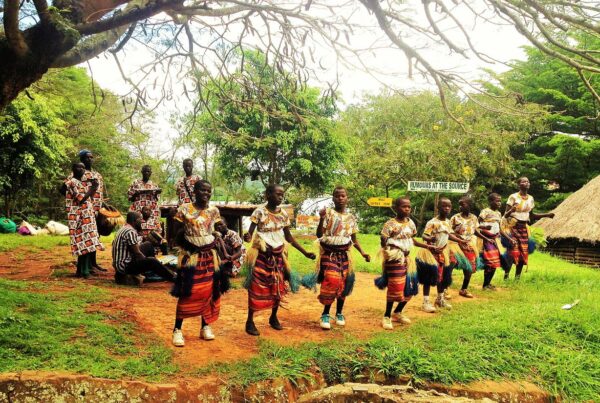
Traditional Karamojong dress is one of the most visually striking in Uganda. Men traditionally wear a single sheet of cloth — often red, blue, or checked — draped over one shoulder, leaving much of the body exposed. This reflects the hot climate and a cultural aesthetic that values physical form and strength. Warriors carry spears and small stools that double as seats and headrests to protect elaborate clay hairstyles.
Women wear layered skirts made from animal skins or cloth and decorate themselves with elaborate beaded necklaces, bracelets, and anklets. Beadwork among Karamojong women communicates marital status, age, and clan identity. The weight of beads worn by some women is considerable — a sign of wealth and beauty simultaneously.
Religion and spiritual beliefs
The Karamojong believe in Akuj, a supreme God associated with rain and sky. Akuj is approached through prayer and sacrifice, often involving the slaughter of an ox or goat. Elders serve as intermediaries between the community and Akuj, particularly in times of drought, disease, or conflict. Prayers for rain are among the most important communal spiritual acts.
Ancestral spirits also play a role in Karamojong belief. The spirits of respected elders are thought to remain near their homesteads and can bring blessings or misfortune depending on how the living behave. Rituals marking birth, initiation, marriage, and death all involve specific ceremonies designed to honor or appease both Akuj and ancestral forces.
Karamojong initiation ceremonies
Male initiation is a central event in Karamojong society. Boys transition to warrior status through ceremonies that involve cattle slaughter, communal feasting, and the blessing of elders. The newly initiated warrior takes on new responsibilities: protecting the community, raiding rival groups if necessary, and caring for the cattle herds. Initiation marks the beginning of adult identity and the right to marry.
Visiting Karamoja as a tourist in 2027
Karamoja is one of Uganda’s least-visited regions and one of its most rewarding for culturally curious travelers. The Ugandan government and various NGOs have worked to improve security in the region after a period of serious armed conflict in the 2000s and early 2010s. Today Karamoja is significantly safer and more accessible, with cultural tourism slowly developing around Moroto town.
Community cultural visits can be arranged through local operators in Moroto, the regional capital. These visits typically include time in a manyatta, demonstrations of cattle herding, traditional dance performances, and the opportunity to buy authentic beadwork directly from makers. Kidepo Valley National Park sits in the far north of Karamoja and offers some of Uganda’s best big-game viewing alongside cultural encounters with the Ik people of the Timu Forest highlands.
Responsible tourism in Karamoja
Visiting Karamoja requires sensitivity. The region has experienced real hardship — drought, famine, conflict, and displacement. Photographing people requires permission and ideally some form of fair exchange. Buying crafts directly from makers rather than from middlemen ensures money stays in the community. Working with a local guide from Moroto who has community connections is both ethically important and practically useful for navigating the region safely and respectfully.
The Karamojong represent a living tradition of resilience and cultural depth that has survived enormous pressure. A visit to their homeland in 2027 offers a perspective on human adaptation and identity that is impossible to find anywhere else in Uganda.
Who are the Karamojong and where do they live in Uganda?
The Karamojong are the collective name for several related ethnic groups — including the Jie, Bokora, Pian, Matheniko, Dodoth, and others — who inhabit the Karamoja sub-region of northeastern Uganda. Karamoja covers approximately 27,000 square kilometres of semi-arid savannah and dry woodland, bordered by Kenya to the east and South Sudan to the north. The Karamojong speak Eastern Nilotic languages closely related to the Turkana of Kenya and Toposa of South Sudan — all part of the broader Ateker cluster of cattle-keeping peoples who spread across the East African semi-arid zone several centuries ago. Total population across the sub-region is approximately 1.2 million, though population counts in nomadic communities are inherently approximate.
Why is cattle so central to Karamojong culture?
For the Karamojong, cattle are simultaneously economic capital, social currency, spiritual connection, and daily sustenance. A man’s wealth and social standing are measured in cattle owned. Bride wealth (bride price) is paid in cattle — a marriage negotiation is fundamentally a cattle transaction. Cattle blood and milk provide daily nutrition alongside meat. Cattle are sacrificed at ceremonies, funerals, and rainmaking rituals. The movement of cattle drives the pastoral cycle — in the dry season, young men (karacuna) move with herds to distant water sources while older men, women, and children remain at the permanent homesteads (manyattas). This cattle-centred worldview shapes every major decision in Karamojong life.
Is Karamoja safe for tourists to visit?
Karamoja has become significantly more accessible for tourists following Uganda government disarmament programmes in the 2000s and 2010s that reduced the prevalence of illegal firearms that had historically fuelled cattle raiding between communities. Kidepo Valley National Park — the main tourist attraction in the region — is considered safe and receives visitors year-round. Community cultural visits to Karamojong manyattas near Kidepo are offered by lodges there and are conducted with prior arrangement and community consent. Remote areas of Karamoja beyond established tourist routes are not recommended for independent travel without local guidance. Check current Uganda Tourism Board advisories before visiting.
What wildlife is found in Kidepo Valley in Karamojong country?
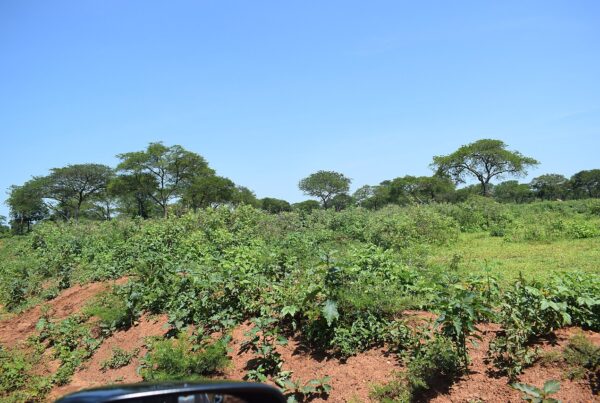
Kidepo Valley National Park holds several species found nowhere else in Uganda, including cheetah (Uganda’s only wild cheetah population), caracal, aardwolf, and greater kudu. The park also holds large elephant herds, buffalo, zebra, eland, Rothschild’s giraffe, lion, and leopard. Over 475 bird species have been recorded including ostrich, secretary bird, Abyssinian ground hornbill, and various dry-country specialists. The combination of exceptional wildlife and the Karamojong cultural landscape makes Kidepo one of Africa’s most distinctive safari experiences — remote but increasingly served by air connections from Kampala and Entebbe.
How does Karamojong dress and appearance identify them?
Traditional Karamojong dress is minimal by the standards of Uganda’s other ethnic groups — reflecting the hot, dry climate of the northeast. Men traditionally wear a blanket or cloth wrap (worn Roman toga-style over one shoulder), carry a wooden stool, and are armed with spears. Women wear heavily layered bead necklaces covering the neck and upper chest, along with skirts of hide or cloth. The bead patterns worn by Karamojong women are complex social signals — indicating marital status, clan, age group, and personal achievements. The elaborateness of a woman’s bead adornment reflects both personal wealth and social standing. Many Karamojong men and women have also adopted contemporary Ugandan dress in town settings while maintaining traditional dress for ceremonies and daily pastoral life.
- Gorillas in Popular Culture and Media: From Myth to Modern Day Icons
- Uganda Food Dishes You Should Try: A Taste of Tradition, Culture, and Heart
- Tipping Culture for Gorilla Guides in Uganda: What to Give
- What Ugandans Eat for Breakfast: Food Culture Before the Safari
- How Uganda Feeds Itself Despite Being Landlocked: An Agriculture Miracle
- Buganda Kingdom Culture: The Customs of Uganda’s Largest Ethnic Group
- Batwa People: Forest Culture and What Remains After Displacement
- Acholi Culture: The Music, Dance and Traditions of Northern Uganda
- Uganda funeral culture: how death is mourned in different communities
- Uganda naming ceremonies: how babies are named in different cultures