The Baganda — the people of the Buganda Kingdom — are Uganda’s largest single ethnic group, making up approximately 16 to 17 percent of the national population and historically dominant in central Uganda including Kampala and the Lake Victoria basin, and the Buganda Kingdom is one of the Great Lakes region’s most sophisticated and historically documented traditional states, organised around a kabaka (king), a system of 52 clans each with a specific totem animal, a hierarchy of chiefs, a lukiiko (parliament), and a complex set of customs governing greetings, gift-giving, marriage, land tenure, and social interaction that remain active in 2027 and shape how Kampala’s modern city functions alongside the traditional kingdom structures. Understanding Buganda enriches every Uganda safari and gorilla trekking itinerary.
- Population: approximately 5-6 million Baganda; ~16-17% of Uganda’s population; the single largest ethnic group
- Territory: Buganda Kingdom encompasses central Uganda including Kampala; traditional boundaries include the north and west shores of Lake Victoria
- Clan system: 52 clans (ebika), each with a totem animal (omuziro) and a secondary totem; people of the same clan cannot marry each other
- Current kabaka: Kabaka Ronald Muwenda Mutebi II, enthroned in 1993 after the restoration of the traditional kingdoms; the Buganda Kingdom is officially recognised by the Uganda government
The Baganda — the people of the Buganda Kingdom — are Uganda’s largest single ethnic group, making up approximately 16 to 17 percent of the national population and historically dominant in central Uganda including Kampala and the Lake Victoria basin. Their kingdom, the Buganda Kingdom, is the most institutionalized and powerful of Uganda’s traditional kingdoms, with the Kabaka (king) as its constitutional monarch and the Lukiiko (parliament) as its legislative body. Understanding Buganda culture gives visitors to Uganda a foundation for understanding the country’s social fabric, its history, and much of what they observe in everyday Ugandan life. This guide covers the key cultural features.
The Kabaka and the Kingdom Structure
The Kabaka of Buganda is one of Africa’s most enduring traditional monarchs. The Buganda Kingdom traces its royal lineage back approximately 800 years. The current Kabaka, Ronald Muwenda Mutebi II, ascended the throne in 1993 after the kingdom was restored following two decades of abolition under President Obote (1966) and subsequent political suppression. The Kabaka is not a political head of government — Uganda is a republic with an elected president — but he is the cultural and symbolic leader of the Baganda people and commands deep respect and loyalty from his subjects. Visiting the Kabaka’s palace at Lubiri, the Royal Tombs at Kasubi, or the Buganda Parliament at Bulange gives visitors access to this living institution.
The Clan System
Buganda society is organized around a clan system of 52 clans (emituba), each with a totem animal, a specific social role, and a territory of origin. Clans are patrilineal — children belong to their father’s clan. Clan identity is fundamental to Buganda social organization — it governs marriage (clans must marry outside their own), inheritance, naming, and social obligations. A Muganda person’s clan is as important as their name in establishing who they are and where they belong in the social order. Visitors who spend time with Baganda families will often be asked about their “clan equivalent” — an invitation to locate yourself symbolically within the system.
Traditional Greetings and Respect
The Baganda are known for an elaborate greeting protocol that expresses respect through physical posture and duration of acknowledgment. Women traditionally kneel when greeting elders and men of senior status; men may kneel, bow, or clasp both hands when greeting someone of higher rank. These greetings are not mere formality — they communicate respect in a culture that places enormous value on hierarchy and proper social acknowledgment. Visitors are not expected to know or follow these protocols exactly, but awareness of them helps explain behavior you will observe in Ugandan social settings and prevents inadvertent disrespect through cultural ignorance.
Food Culture in Buganda
Buganda food culture is closely tied to the banana — matoke in particular — which reflects the central role of banana cultivation in the kingdom’s agricultural economy. The Baganda traditionally eat with their right hand, and sharing food from a communal dish is a gesture of acceptance and inclusion. Offering food to a guest is a fundamental expression of hospitality. Refusing food offered by a Buganda host is considered impolite unless done gently with genuine explanation. Tonto (banana beer) features in ceremonies and social gatherings. The rolex, Uganda’s most beloved street food, is a product of Kampala street culture that draws on Buganda’s banana and the Indian chapati — a neat metaphor for how Buganda culture absorbs and adapts outside influence.
The Kasubi Tombs
The Kasubi Tombs UNESCO World Heritage Site in Kampala is the most important cultural site associated with the Buganda Kingdom. It is the burial site of four Kabakas and was built in the traditional Buganda architectural style — a massive thatched circular structure supported by a forest of wooden poles. The site suffered a devastating fire in 2010 and has been undergoing restoration since. It remains an active religious and cultural site where the royal spirits are believed to reside and where ceremonies are conducted. Visitors are welcome to tour the outer areas with a guide and the experience gives direct access to Buganda’s architectural and spiritual heritage.
Buganda culture in 2027 is alive, assertive, and confident in its identity. The kingdom’s restoration in 1993 reinvigorated cultural practice after decades of suppression, and visitors who engage with Buganda culture — through a palace visit, a cooking experience, a traditional ceremony, or simply a conversation with a Muganda person about their clan — connect with one of Africa’s most sophisticated and enduring cultural traditions.
What is the Buganda clan system and how does it organise society?
The Buganda clan system is one of the most sophisticated and actively functioning traditional social organisation systems in East Africa. The 52 clans (ebika): every Muganda belongs to one of 52 clans; clan membership is inherited patrilineally (through the father); a child’s clan is fixed at birth and cannot be changed. The totem (omuziro): each clan has a primary totem animal (omuziro) that clan members may not eat or kill; for example, the Fumbe clan’s totem is the civet cat; the Nkima clan’s totem is the colobus monkey; the totem functions as both a clan identifier and a spiritual protector. The marriage rule: members of the same clan cannot marry each other regardless of how distant the relationship; this rule prevents close-kin marriage across a large clan without requiring knowledge of specific family trees; when meeting a potential partner, the first question is “what is your clan?” to establish compatibility. Clan roles: specific clans have specific roles in the Buganda Kingdom — one clan provides the royal drummers; another provides the royal navigators on Lake Victoria; another is responsible for the enthronment ceremony; these hereditary roles create a complex interdependency between clans.
What are the most important Buganda Kingdom customs and ceremonies?
Buganda Kingdom maintains a rich ceremonial calendar of customs that remain actively practised in 2027. The Kabaka’s birthday: an annual celebration at the Lubiri (palace) in Mengo, Kampala; a major public event attended by thousands of Baganda; features bwola dancing, traditional performances, and public addresses by the Kabaka. The kwanjula (introduction): the formal marriage introduction ceremony where the groom’s family visits the bride’s family; highly formalised with specific roles for each family member; the giving of gifts to the bride’s family, the negotiation of bride price, and the formal acceptance of the couple; one of the most important social events in a Muganda’s life. Okukyalira ensuku (visiting the garden): a traditional practice related to thanking someone for hospitality. Royal drums (mujaguzo): the royal drums of the Buganda Kingdom are instruments of state power; their beating signals royal authority and significant events; the preservation and playing of the royal drums is the responsibility of a specific clan. Enthronment: the enthronment of a new Kabaka is one of the most elaborate traditional ceremonies in East Africa; the last was in 1993 when Mutebi II was enthroned after the restoration of the kingdoms.
What is the historical relationship between Buganda and the British colonial system?
The Buganda Kingdom’s relationship with British colonialism was uniquely collaborative compared to most African kingdoms and this shaped both Uganda’s colonial history and the Buganda Kingdom’s contemporary position. The 1900 Buganda Agreement: the British Protectorate’s agreement with the Buganda Kingdom in 1900 is one of the most significant colonial-era documents in East Africa; it formalised Buganda’s status within the Protectorate and crucially created the Mailo land tenure system that allocated freehold land to Buganda chiefs and the Kabaka; this land grant made the Buganda elite the largest private landowners in central Uganda. Buganda as colonial collaborator: the British used Buganda as a base and partner for administering other parts of Uganda; Baganda chiefs were appointed as administrators in non-Buganda areas; this created lasting inter-ethnic tensions that are still felt. Post-independence tension: the relationship between the Buganda Kingdom and the post-independence Ugandan state has been complex; Kabaka Mutesa II was Uganda’s first president and was overthrown by Milton Obote in 1966; the kingdoms were abolished; they were restored in 1993 under Museveni as cultural (not political) institutions.
What Buganda cultural sites can visitors see in and around Kampala?
Kampala is built on the hills of the Buganda Kingdom’s heartland and has several significant Buganda cultural sites accessible to visitors. The Kasubi Tombs: the royal burial site of four Buganda Kabakas including Mutesa I, Mwanga II, and Mutesa II; a UNESCO World Heritage Site; the main building (Muzibu-Azaala-Mpanga) is a remarkable thatched structure of organic materials that is a living ceremonial space; the tombs are managed by the Buganda Kingdom and are tended by a community of widows of the Kabakas. The Lubiri Palace (Mengo): the current Kabaka’s palace in Mengo, Kampala; portions of the grounds are accessible to visitors; a small museum explains Buganda Kingdom history. Namirembe Cathedral: the Anglican cathedral on Namirembe Hill; a central institution of Buganda Kingdom Christian history; the burial site of several early Buganda Anglican martyrs. Rubaga Cathedral: the Catholic cathedral on Rubaga Hill; the site of the White Fathers’ mission from the 1870s. The Uganda Museum: on Kira Road, Kampala; has an ethnographic section with Buganda cultural artefacts, bark cloth demonstrations, and Kingdom history displays.
What social etiquette should visitors understand when interacting with Baganda people?
Understanding basic Buganda social customs makes interactions more meaningful and avoids inadvertent disrespect. Greetings: greetings are important in Buganda culture; the Luganda morning greeting is “Wasuze otya?” (How did you sleep?); the response is “Bulungi” (well); taking time to greet properly before any business or request is expected and appreciated. Age and respect: elders are shown particular respect; young people greel elders by kneeling; women traditionally kneel to greet men in formal settings; visitors are not expected to follow this practice but should understand its cultural meaning when they see it. The offering of food and drink: accepting food and drink offered by a Ugandan host is important; refusing hospitality without a clear explanation can be taken as rejection of the relationship; if you cannot eat what is offered, a polite explanation is well received. Clan conversation: Baganda enjoy discussing their clan identity; asking someone their clan and learning what the totem animal is creates an immediate connection and signals your genuine interest in their culture.
- The Kingdom That Ruled Uganda for 500 Years: Buganda History
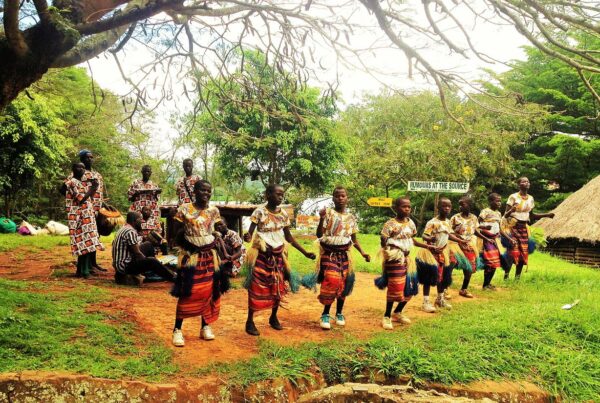
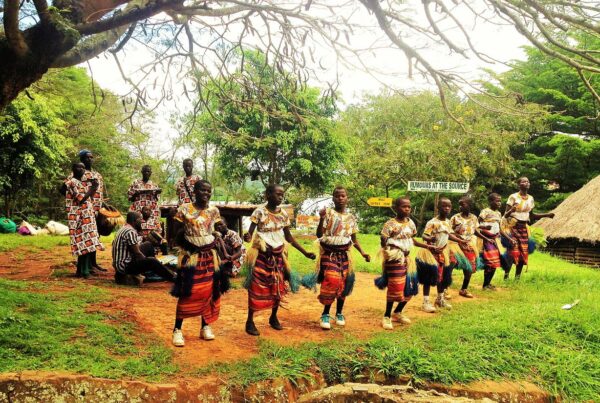
- Kiganda dance: the traditional performance of the Buganda Kingdom
- Buganda Kingdom coronation day: the cultural celebration guide
- Uganda’s kingdom system: the Buganda, Ankole, Bunyoro, and Toro kingdoms
- The Buganda kingdom: the most powerful traditional kingdom in Uganda’s history
- Gorillas in Popular Culture and Media: From Myth to Modern Day Icons
- Duties of a Silverback in a Gorilla Group: The Weight of Leadership in the Wild
- Gorilla Group Formation and Dynamics: The Deep Bonds That Shape Life in the Forest
- Uganda Food Dishes You Should Try: A Taste of Tradition, Culture, and Heart
- Kabaka’s Palace (Lubiri) – A Regal Journey Through Buganda’s Living Heritage